Wisdom Bank - Samir K Brahmachari: From Rs. 2 Math Solutions to Nation-First Science
You’ve done everything right—followed the path laid out for you, worked hard, tried to stay focused. And yet, it feels like the odds are stacked against you. Maybe you’re juggling financial pressure with academic stress. Maybe you've hit a setback that wasn't even your fault. Or maybe, deep down, you're wondering if any of it is actually going to work out.
If that’s you, you’re not alone. And more importantly—you’re not doomed.
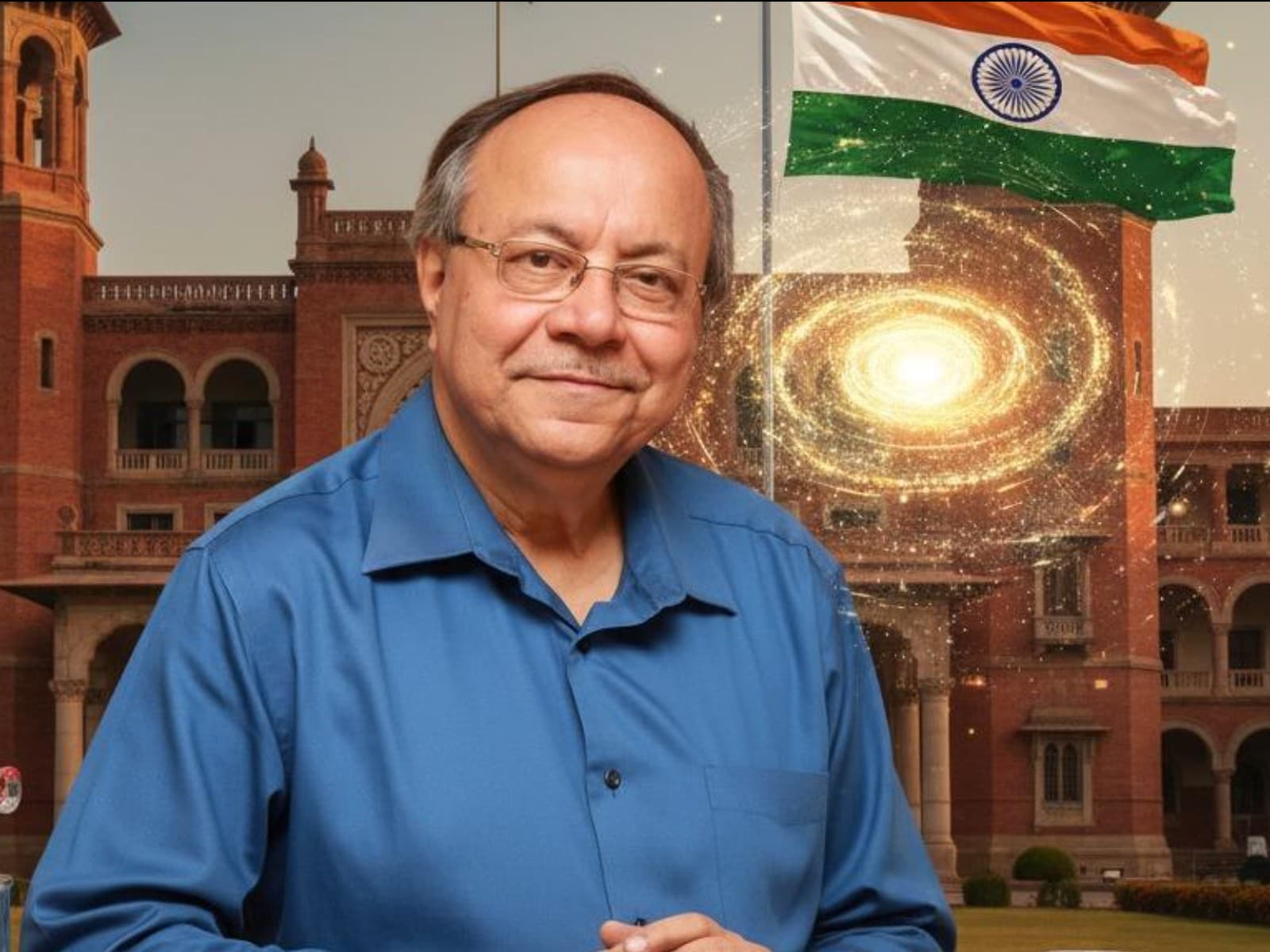
This is the story of someone who started just like you. Born into a middle-class Indian family, raised with strong values but limited means, and fuelled by a desire to stand on his own two feet—Samir’s journey is a masterclass in resilience. He didn’t inherit a silver spoon, nor was his path smooth. What he did have was something far more powerful: a relentless belief in himself.
In this blog, you'll learn how he turned adversity into action. How he dealt with failure. How he made bold choices—including marrying the person he loved and building a life on his own terms. And how all of this led to one undeniable truth: your circumstances don’t define you—your mindset does.
Early Life & Financial Independence
Samir was born into a middle-class family—four sons, two daughters, and a father in government service. Life was modest but stable. Still, from an early age, he noticed something that stuck with him: his elder brothers’ life decisions—what they studied, what careers they chose—were all influenced by their financial dependence on their parents.
He didn’t want that for himself.
At just 15, while still in school, Samir made a quiet promise to himself: “I’ll earn my own money. I’ll make my own decisions.” It wasn’t just about pride—it was about freedom. He had seen how dependency could shape someone’s entire life, and he was determined to take a different path.
But being independent wasn’t easy. He often ranked top of his class, but rarely got his report card—because his tuition fees were overdue. While others celebrated results, he was dealing with embarrassment. Instead of letting it defeat him, he used it as fuel.
He started tutoring other students, earned a national scholarship, and even began selling solved maths problems to publishers. ₹2 for the small ones, ₹4 for the big ones. During the 1971 Bangladesh war, he translated an English chemistry book into Bengali to make some extra money. If there was a way to turn knowledge into income, he found it.
Samir never asked for anything from his parents—not because he didn’t value them, but because he wanted to build a life where he chose what to study, where to live, and whom to marry.
Financial independence wasn’t just a necessity. It became a mindset—one that gave him the power to shape his own future, rather than react to it.
The Power of Self-Belief
Samir didn’t have a fallback plan. No family inheritance. No powerful connections. What he did have was conviction—the unshakable belief that he could build something from nothing.
And that belief got tested, over and over.
He pursued science, the subject he loved most, and excelled in mathematics and the sciences. But in school he neglected English and Bengali, which later pulled down his overall performance. Despite ranking among the very best in science, he narrowly missed a first-class degree at university because of a mass error in a practical exam, where the entire batch was wrongly given zero.
That one clerical mistake cost him his National Science Talent scholarship.
For most students, that might have been the end of the road. But not for Samir. He chose to see the bigger picture. Instead of chasing marks, he immersed himself in learning—reading entire books, not just exam chapters.
When he set his sights on Bangalore for a research fellowship, he didn’t even have the required marks for an interview. All he carried with him was ₹200 from his eldest brother—meant only for train fare—and an unshakable belief: “This is where I belong.”
The Indian Institute of Science initially turned him away on account of his grades. But once the professors met him, they recognised his potential. Rules were bent, and the Council of Scientific and Industrial Research (CSIR) was asked to grant a special waiver. After all, true talent doesn’t always fit the system—it challenges it.
Years later, in a remarkable full-circle moment, Samir would go on to lead CSIR as its Director General—the very institution that once had to be convinced to give him a chance.
If there’s one thing this part of his story teaches, it’s this: Self-belief won’t shield you from failure—but it will carry you through it.
Dealing with Failure and Injustice
Some failures sting more than others. Not because you didn’t try hard enough—but because you did everything right and still lost.
For Samir, that moment came during his undergraduate years. He had his eyes set on becoming a university gold medallist. He was one of the top students in science across the state. But during one of his practical exams, something went terribly wrong—an administrative mix-up led to the entire college receiving 0 out of 80.
That single error dropped his overall marks to 59.7%. Just below the cut-off. Just enough to lose his hard-earned national scholarship.
Years later, he discovered the truth: the lab samples had been switched between the morning and afternoon batches. A mistake. A bureaucratic error. An injustice that changed the course of his life.
He didn’t protest. He didn’t spiral. He just moved forward.
And that’s where Samir stands apart.
Instead of obsessing over what he couldn’t change, he doubled down on what he could: his effort, his mindset, his preparation. He read more. Learned deeper. And when he applied to do his PhD at the Indian Institute of Science, he didn't let that past mistake define his worth.
Even when they initially denied him due to the missing first-class, he showed up again. And when he finally got in—with a waiver from CSIR—they didn’t just admit a student. They unknowingly opened the door to their future Distinguised Alumni Awardee in the Centenary Year.
What could have been the end of his academic path became the foundation of his legacy.
Because here’s the truth: life isn’t fair. But how you respond to that unfairness? That’s where your power lies.
The Role of Nationalism and Purpose
For Samir, science was never just about research. It was about serving the nation.
That might sound idealistic in today’s world, where career moves are often based on money, prestige, or convenience. But for him, purpose always came before position. The decision to stay in India, despite international offers, wasn’t made because of limitations—it was made out of belief.
His mother, who never finished school, had a powerful vision: her children should do something truly exceptional. Not just for themselves, but for their country. She dreamed of doctorates and gold medals—not for status, but for impact. That vision became part of Samir’s DNA.
When many of his peers went abroad to chase opportunities, he stayed. Not because he had to. But because he wanted his work to matter here, on home soil.
Even the small details of his life echoed that commitment. His mother passed away on 15th August. His father on 26th January. The two most symbolic days in Indian history—Independence Day and Republic Day. A coincidence, yes. But one he never forgot.
Nationalism, for Samir, wasn’t loud or performative. It was quiet, consistent, and deeply woven into how he lived. And that commitment often came at a cost—he admits that being “too nationalist” has made it harder at times to be accepted abroad or even within India’s own systems.
But he never let that stop him.
Because when you’re driven by purpose—not applause—you’re willing to make sacrifices.
Choosing the Right Life Partner
When you're building a life from scratch, every decision counts. And for Samir, choosing a life partner was just as strategic—and just as personal—as choosing a career path.
He was clear from the start: if he was going to do science in India, on a modest salary, he needed a partner who believed in the same mission—and who could hold her own financially and intellectually.
In a family where arranged marriages were the norm, and where most women stopped working after marriage, Samir quietly broke the mould. He married for love, not tradition. He chose someone not just for who she was, but for what they could build together.
His wife wasn’t just supportive—she was exceptional in her own right. A gold medallist from both Bangalore and MSc from Madurai University. Best PhD thesis at the Indian Institute of Science. The kind of person who, as he puts it, fulfilled both his dreams and his mother’s.
And here’s what makes this remarkable: Samir didn’t leave this choice to fate. He had a clear idea of what kind of partner would match his purpose, his ambition, and his life values. And he waited until he found it.
Because he knew: the right partner doesn’t just support your journey—they shape it.
Destiny vs Determination
Samir’s story is a masterclass in determination. But it’s not a fairy tale.
Because for all his planning, perseverance, and passion—he’ll be the first to tell you: destiny still plays a role.
Yes, he worked hard. Yes, he made bold choices. But sometimes, things happened that were beyond him. Like the clerk who quietly approved the waiver that allowed him into the Indian Institute of Science. Or the full-circle moment when he became Director General of CSIR—the same institution that once questioned whether he was qualified.
You can make thousands of decisions, take all the right steps, and still be at the mercy of something bigger.
But here’s the key difference: Samir never waited for destiny to act. He showed up first.
When he left a secure professorship in Bangalore to take on the challenge of building a new research institute in Delhi—a risky move few understood—he did it with full awareness. No guarantees. Just a gut feeling and a belief that it mattered.
And when failure struck, he didn’t crumble. He got more focused. Resilience wasn’t just a response—it was a habit.
In his own words: “Giving up is not an option. I don’t give up.”
Because even when destiny holds the final say, your determination decides how far you’ll go before it does.
Key Takeaways for the Reader
Samir’s story isn’t just inspiring—it’s instructional. Behind every success, there’s a mindset. And if there’s one thing you take away from his journey, let it be this:
1. Financial independence builds freedom of choice. Earn early. Learn to provide for yourself. It’s not about money—it’s about power over your own decisions.
2. Self-belief is non-negotiable. You won’t always have the credentials. You won’t always get the recognition. But if you believe in your ability to figure it out, you’re already ahead.
3. Failure is not the end—it’s the beginning of resilience. Even if the system fails you, don’t fail yourself. Learn deeper. Show up again. Be too valuable to ignore.
4. Purpose makes the hard road worth walking. When you know why you’re doing something—whether it’s for your country, your family, or your future—you’ll find the strength to keep going.
5. Who you choose as your partner matters. A lot. Pick someone who shares your values, supports your mission, and brings strength, not just comfort. It’s one of the most impactful decisions you’ll ever make.
6. You can shape your path—but destiny still plays a role. Make your move anyway. Prepare for the best, act in the face of uncertainty, and let the chips fall where they may. But always, always show up.
If this profile stayed with you, here is where the thinking behind it lives.