Wisdom Bank — Colonel Sandeep K Singh: When Now Is All There Is
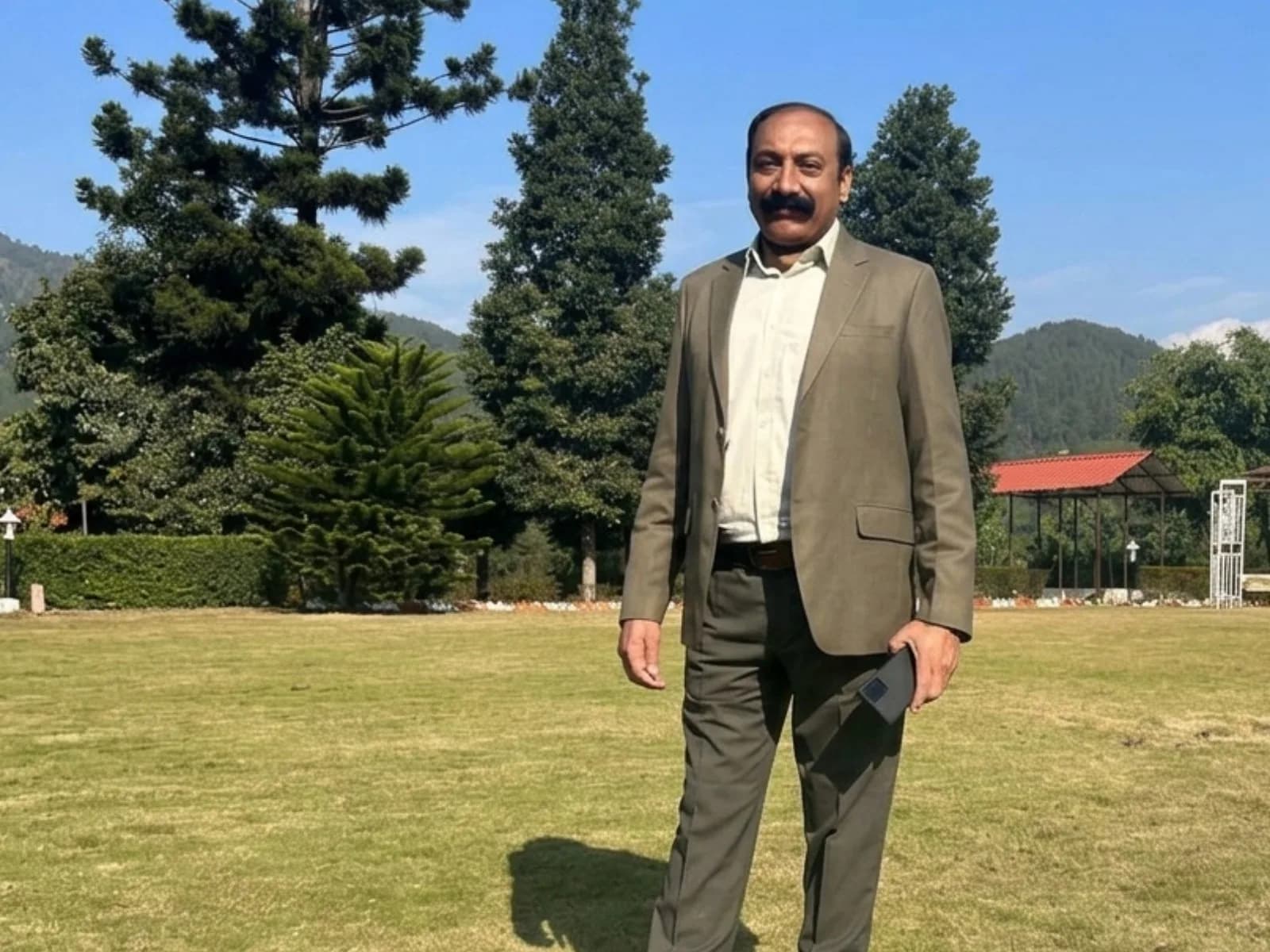
You live everywhere except where you are.
Your mind is never quite settled in the present. It's replaying yesterday's conversation, the one you handled badly. It's rehearsing tomorrow's meeting, the one you're anxious about. It's in last month's mistake, next year's worry, the decision you haven't made, the words you wish you'd said differently. You are physically here, but mentally you're scattered across a timeline that exists only in your head.
Most people live this way their entire lives. Moving through the present whilst inhabiting the past or future. Half-present in every conversation. Partially focused on every task. Never fully here because here feels too small, too mundane, too incomplete.
And then there are people who have no choice.
People for whom the present moment isn't a philosophical concept or a meditation practice. It's a survival requirement. Where distraction doesn't mean you miss something important. It means someone dies.
Colonel Sandeep K Singh spent thirty years learning what most people never discover: that the past offers nothing useful when bullets are flying. That the future is a fantasy when your body is shutting down from cold. That all you actually have, all you've ever had, is this moment.
Not the moment you're planning for. Not the one you're regretting. This one.
The one where your life depends on being completely, uncompromisingly present.
What Sanskars Teach Without Words
Some people spend years figuring out who they are. Sandeep never had that problem.
When his father suggested he apply for engineering entrance exams, medical college, the usual competitions that ambitious families push their children towards, Sandeep didn't argue. He simply didn't appear for them. Not once. His focus was singular, almost stubborn in its clarity. The defence forces. Nothing else made sense.
"It was with my sanskars," he says when asked where this certainty came from. "From the time I became aware of the world, these values were already there."
Sanskars. The word doesn't translate cleanly. It's not quite values, not quite upbringing, not quite cultural inheritance. It's closer to something imprinted, something that shapes you before you have language for it. Integrity and loyalty towards the nation weren't concepts he learnt in school or picked up from books. They were simply there when he became aware of himself.
Some principles announce themselves. Others are just present, like bone structure.
He joined the Infantry. The Jat Regiment. The foot soldiers, as he calls them. Not the ones who soften targets from the air or bombard from thirty kilometres away. The ones who walk into the fire and capture the ground. the Queen of Battle, they call it. Infantry doesn't win from a distance. You walk onto the ground and refuse to leave.
It's the kind of role that requires a specific temperament. Not everyone can do it. Not everyone wants to. But for Sandeep, there was never a question of wanting or not wanting. It was simply what he was built for.
The choice, if you can call it that, was made before he was old enough to articulate why.
When the Thought Seeped In
October 1996. His first posting to Kashmir.
They landed in the evening. Had dinner in the mess. The kind of welcome you get when you're new to an operational area, officers making small talk, the rhythm of normality before the reality sets in. Then the message came. Movement reported in a village. A few kilometres out. They needed to move immediately.
Sandeep had never seen an AK-47 in person before. The weapon existed in reports, in briefings, in the abstract language of threat assessments. But holding one, feeling its weight, understanding how it fired — that was new. For infantry, this isn't a problem. The basic principles of firing are universal. Pick up any weapon, understand where the bullet goes, adjust accordingly. So he picked it up. The weapon had been zeroed by the previous unit, the sighting wasn't to his preference, but that's manageable. Fire once, see where it lands, correct your aim.
They cordoned the village. As an officer, he was in the first ring. The inner perimeter. The one closest to the targets.
That's when it happened.
Shots from inside the building. Not aimed at a distant target. Aimed at him. The bullets passed close enough to hear. Phew. Phew. One to his left. One to his right. And his first thought, the completely honest thought he remembers even now, was confusion bordering on disbelief.
"Yeh kya ho raha hai?" he thought. We've fired so many rounds in training. The bullet goes from here to the target. That's how it works. But bullets coming towards us? "Aisa toh kabhi humne socha hi nahi." Never imagined it. Never even considered it as a possibility.
More rounds. Passing close. Close enough that the sound was visceral, not abstract. He was behind cover, but the reality was inescapable. This wasn't a range. This wasn't practice. Someone on the other side was trying to kill him, and the only thing between intention and outcome was accuracy and luck.
People were watching him. His men. Gauging his reaction. The first impression continues through your entire tenure, he knew that. Show fear now, and that's what they'll remember. Show hesitation, and that's the story they'll tell.
And then, in the middle of the chaos, a thought from the Bhagavad Gita surfaced. Not word for word. Not like reciting scripture. Just the essence of it, arriving fully formed: The bullet with your name on it will come no matter what. The bullet without your name cannot hit you, no matter how close it passes.
It wasn't divine intervention. It wasn't faith overriding fear. It was something more practical. A framework that made the situation survivable. If the bullet is meant for you, it will find you whether you're behind cover or standing in the open. If it's not, it will miss even if it passes within inches.
The thought seeped in. Within a minute or two, maybe less. And once it settled, something fundamental shifted.
"Then there was no looking back thereafter," he says. "Phir toh gazab ho gaya."
They stayed in that sector for two and a half years. Did what needed to be done. The fear didn't vanish, but it stopped dictating. Because once you accept that the next moment is genuinely unknowable, that your life is not in your hands in the way you thought it was, you stop negotiating with it.
You just move forward.
Next Moment Ka Kisne Dekha Hai?
Life in operational areas has a rhythm most people never encounter. Darkness so complete you cannot see two metres ahead. Snow falling on a moonless night. Moving through narrow lanes where every window is a potential firing position. Walking in single-file formation, one metre between each soldier, because bunching up makes you an easy target.
You don't know if you'll come back from patrol. You don't know if the next corner holds an ambush. You don't know if the intelligence is accurate or if you're walking into a setup.
You don't know.
And at some point, that stops being terrifying and starts being clarifying.
"We live for the day," Sandeep says. "Jo beet gaya wo toh beet gaya. We can't do anything about it. Jo aana hai, I don't know even the next moment."
This isn't philosophical speculation. This is operational reality. When he would address his men, give them motivation talks, take their pulse to understand what was going on in their heads, he would tell them directly. Sometimes with affection, sometimes with a reprimand, sometimes with the blunt force that military life permits. And he would always come back to the same point.
"Next moment ka kisne dekha hai?" Who has seen the next moment?
He would tell them: Look, I'm standing here talking to you right now. But I don't know if I'll finish this sentence. You might be the ones carrying me back. I might be the one carrying you. We make plans, we think about tomorrow, we have to, otherwise how do we move forward? But the next moment is not in our hands.
This isn't fatalism. It's the opposite. Fatalism is passive. This is hyperactive presence. When the future is genuinely unknowable, when the past is genuinely finished, all that remains is what you're doing right now. The task in front of you. The man next to you. The ground under your feet.
When you're on a mission, family doesn't exist. Not because you don't love them, but because thinking about them in that moment gets someone killed. Your focus cannot be divided. Ten men, twenty-five men, their lives are in your hands and your thought process. If your attention drifts to home, to children, to anything beyond the immediate task, you've already failed them.
"Hamare ko kuch dhyaan mein aata hi nahi us waqt," he says. Nothing else comes to mind at that time. Not your own life. Not your family. Even if you're injured, even if you're bleeding, you won't feel the pain. You keep moving until your body stops permitting it.
"Ya toh soldier khada hota hai, ya pada hota hai. Ghutne nahi tekta."
A soldier either stands or falls. He doesn't kneel.
This is what gets taught, what gets absorbed, what becomes the operating system. Not through lectures but through necessity. You learn to live in the present because the present is all there is. The past offers nothing useful. The future is unknowable. All that exists is this breath, this step, this decision.
And once you learn that, you can't unlearn it.
Judged from This Moment Forward
He commanded men for thirty years. Jat Regiment soldiers. Some came from difficult backgrounds. Some arrived late. Some got into fights over money they'd lent each other, transactions that weren't supposed to happen in the army but happened anyway. Some were troublemakers. Some had histories.
In three decades, Colonel Sandeep K Singh never once used his red pen.
The red pen is power. Magisterial authority. An officer can punish a soldier administratively. Fourteen days rigorous imprisonment. Twenty-eight days. Confinement to the quarter guard, no salary for the duration, a mark on the record that follows them. It's legal. It's within regulations. Many officers use it.
He never did.
Not because he was soft. He wasn't. He would punish them physically when they needed it, make them pay for mistakes through exertion, through drills that left them exhausted. But he wouldn't touch their salary. Because when you stop a soldier's pay, his child at home goes without milk. His wife has to explain why there's no money this month. "Papa ko problem hai," she says. The problem is with the father, but the child suffers.
"Why punish the child?" he would ask. "Us bacche ne kya bigada?" What did the child do wrong?
Physical punishment sorts out the individual. Financial punishment punishes the family. And families had done nothing wrong.
This distinction mattered to him in a way that revealed something deeper. When you live completely in the present moment, when past and future dissolve into now, you see clearly who is responsible for what. The soldier made a mistake. The soldier pays. Not his family. Not some future version of him carrying a permanent mark. The man standing in front of you, right now, accountable for what he did, right now.
He would take their measure differently. Sit with them. Talk. Not formal counselling sessions but real conversations where he could understand what was going on in their heads. And he would tell them something that few officers said.
"Aaj se pehle badmash the, pandit the, chhod do us baat ko."
Whatever you were before today, leave it behind. I'm not concerned with your past history. Someone can come and tell me you did this or that before, I won't believe it. I will judge you only on what you do in front of me, starting now. You have a chance to improve or a chance to fall. That's in your hands.
Your past is finished. Your future hasn't happened. What you do today, that's what builds tomorrow.
This wasn't kindness. It was clarity. The same clarity that allowed him to wait in freezing water without thinking about home, that let him walk into darkness without dwelling on what happened last week. The present is all there is. Judge people from where they are, not where they've been.
He believed something else too. He believed that your word mattered more than any document, any agreement, any legal paper.
"Law or paper documents, agreement has no value in my opinion," he says. "Your word is more powerful. If you speak, you should live to that."
Papers mean court cases. Years of litigation. But your word, "zubaan ki keemat" — the value of your word — that's immediate. That's binding. And if a man's word means nothing, what does he have?
This was the standard he held himself to. This was the standard he expected from others. Not because it was idealistic, but because it was the only way to function when the next moment is unknowable. You can't build trust on contracts that take months to enforce. You need people whose word is solid right now, because right now is all you have.
It worked. For thirty years, it worked. His men knew where they stood. They knew he would judge them fairly, from this moment forward. They knew he wouldn't destroy their families over mistakes. They knew his word was binding.
And they followed him into darkness.
That's what credibility looks like. Not built through strategic planning or learning from mistakes. Built through total presence — being completely, uncompromisingly here in this moment, with these people, doing what this situation demands. The trust that comes from being fully present when it matters most.
When Your Uniform Turns to Ice
They went to a sector headquarters for a conference. The kind of trip where you expect a break from operations, a chance to sit in a proper building with electricity, maybe eat decent food. Officers from different units gathering to discuss strategy, take stock, coordinate. A few hours away from the field.
The conference was underway when the message arrived. A rearguard party, ten soldiers and an officer, had made contact. Targets engaged. Numbers uncertain. Everyone needed to move immediately.
The thing about operational areas is that comfort is always provisional. You might go expecting a break, but the break never arrives on schedule. You carry two magazines and two grenades even to a conference because you never know when theory becomes reality.
They rushed to the location. No BP jackets, no extra ammunition. Just what they had on them. The targets had been cordoned in a nullah, a drainage channel, with soldiers positioned in the paddy fields above. It was December, high altitude. Sleet had been falling. The fields were flooded with icy meltwater.
There was no cover. You can't take aim standing up when the target is lower than you, so the basic principle applied: lie down. Get low, stabilise your position, take the shot.
When he lay down in the field, the water soaked through his uniform immediately. It was December. High altitude. The temperature was already close to freezing. Within minutes, he was drenched. Front and back. This wasn't going to be quick.
The targets hadn't been eliminated yet. Grenades were being exchanged. Tactics were being executed. It took hours. And during those hours, the temperature kept dropping.
The water on his uniform began to freeze.
Not slowly. Not gradually. He could feel it happening. The fabric stiffening against his skin. The weight of it changing. And then the realisation: if he moved, even slightly, the ice would crack. That sound, distinct and sharp, would give away his exact position. The targets were close. Listening. Any sound could trigger either an escape attempt or return fire.
So movement stopped being an option.
He had an itch on his face. Couldn't scratch it. Raising his hand would break the ice shell forming on his sleeve. His joints were stiffening. The cold was moving past discomfort into something more dangerous. Body temperature dropping. Fingers going numb. But shifting position, trying to generate warmth, rolling to one side — all of it would produce that unmistakable sound. Kad kad kad kad. Ice fracturing.
The cordon had three rings. First ring, where the officers positioned themselves, closest to the targets. Second ring, backup. Third ring, outer perimeter. In the first ring, you cannot light a fire. You cannot use a torch. You cannot smoke a cigarette if you're the type who smokes. Any light discloses your position.
So you sit. Or lie. In darkness. In freezing water that's becoming ice. Waiting.
By three or four in the morning, the situation was critical. His body was shutting down. The cold wasn't just external anymore. It was internal. The kind that makes you wonder how long the human body can actually sustain this before it stops cooperating entirely. But there was no alternative. The mission wasn't complete. First light hadn't come. The targets were still there.
And his position in the cordon mattered. If they escaped through his section, if they found a gap where he was supposed to be, that would be on him. "Sandeep saab ke paas se nikal gaya." Got away past Sandeep. Nobody wants that. Not because of ego, but because it means you failed the mission and endangered the men in the outer rings who would have to deal with what you let through.
So you stay. No matter what your body is telling you. No matter how much the cold has penetrated. You stay because the present moment demands it, and the present moment is all there is.
First light finally came. Slowly. The way dawn arrives in the mountains, not all at once but in gradations. Enough visibility to move. Enough light to act.
They moved in. Caught the targets. Eliminated them.
The mission was complete.
But that night, the one where his uniform turned to ice and his body temperature dropped to the edge of survivability, where he couldn't move for hours in freezing water because movement meant sound and sound meant failure — that night stayed with him.
"It was terrible," he says. "You cannot forget that night."
Not because it was traumatic. Not because it broke him. But because it clarified something that can't be taught in any other way. When the present moment is genuinely all you have, when past and future dissolve completely, you discover what you're actually capable of enduring.
Not through planning. Not through courage. Through presence. Total, absolute, uncompromising presence.
What Are You Trading?
You replay yesterday's conversation whilst your child is talking to you. You rehearse next week's meeting whilst the person in front of you waits for an answer. You scroll through your phone during dinner because being fully present feels too vulnerable.
Colonel Sandeep K Singh didn't have that option. When bullets were passing close enough to hear, when his uniform was turning to ice, when ten men's lives depended on his focus, the past offered nothing and the future didn't exist. All that remained was this breath, this second, this task.
He survived. He led. For thirty years.
Every time you choose past or future over present, you're trading the only moment you actually have for moments that either don't exist anymore or haven't happened yet.
The past is finished. The future is unknowable.
What's in front of you right now?
Not what should be. Not what you wish was. Not what will be if everything goes according to plan.
What's actually here?
Sandeep would tell his men: "Next moment ka kisne dekha hai?" Who has seen the next moment?
Nobody.
Which means this moment, the one you're in right now whilst reading these words, is the only one that's real.
So what are you going to do with it?
By Ugesh Sarcar