Wisdom Bank - Paresh Vyas: The Man Who Chose “Bring It On”
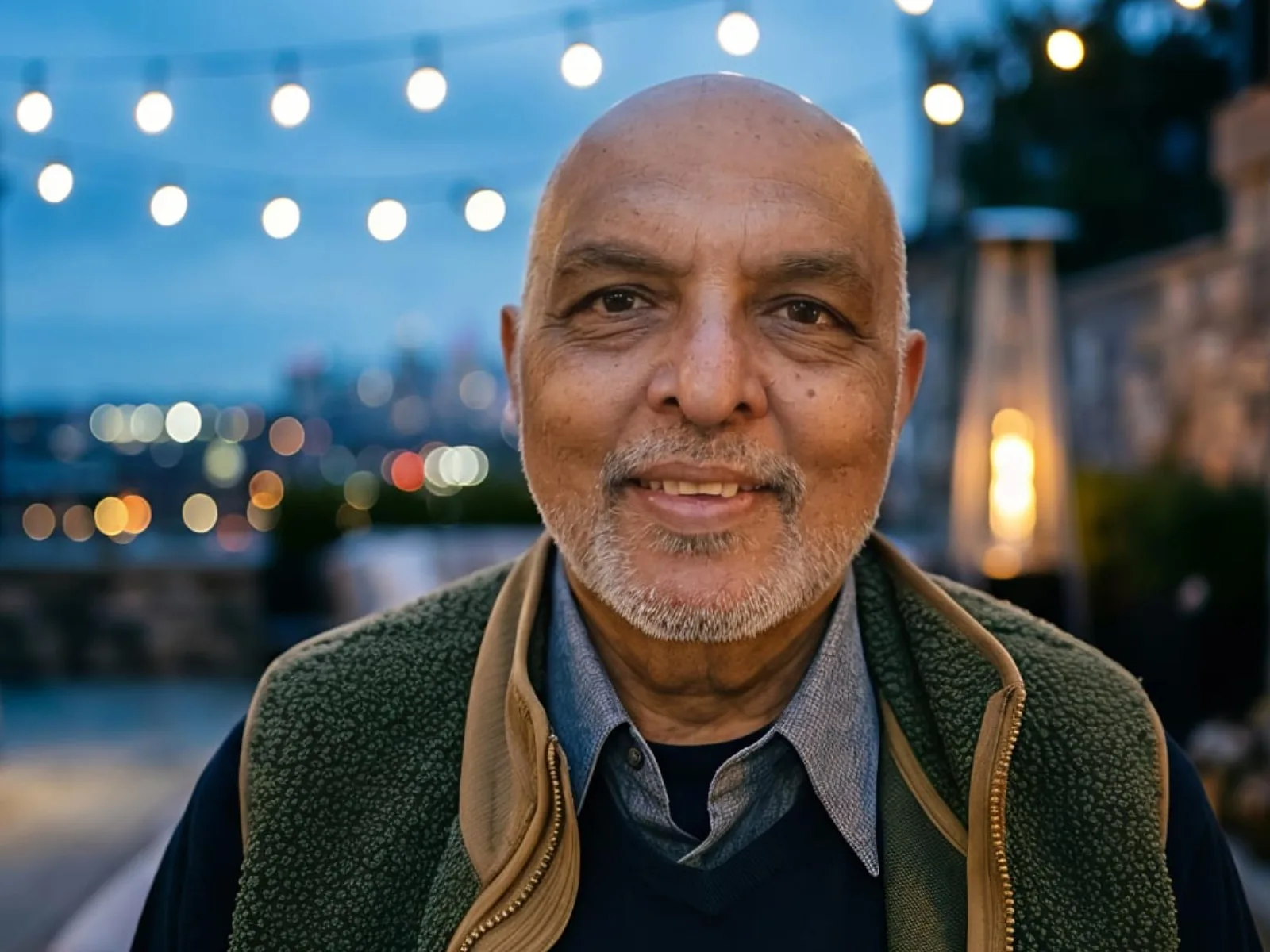
The surgeon had already explained everything.
The procedure. The risks. Recovery time. What to expect.
It was scheduled for Monday. A triple bypass. Serious, but planned.
Then Saturday night arrived with a different message.
The operation was postponed. The surgeon had an emergency case. Someone else would take over.
In most situations, this would feel unsettling. Another variable in an already fragile moment.
But Paresh Vyas had stopped trying to control variables a long time ago.
Because by the time he reached that hospital bed in May 2023, he had already survived a major heart attack without even knowing it. And during the pre-surgery scans, they had found something else — cancer in his stomach and lungs.
All of it arriving at once.
And just to make it harder, his son's wedding was days away. In New York. The kind of moment families spend years planning. The kind you don't miss.
Most people, in that moment, would ask "Why me?"
Some would shut down.
Some would break.
Paresh didn't.
When the infections hit during recovery — when his body was at its weakest, when septicemia threatened to finish what the surgery hadn't — he said two words instead:
"Bring it on."
That response didn't come from nowhere.
It was built over decades — through identity struggles, quiet acts of service, difficult truths, and a way of living that most people talk about but rarely practice.
Because long before that hospital room, Paresh had already decided the kind of man he would be.
And that decision would carry him through the hardest moment of his life.
A Life Between Worlds
Before Paresh became the person who helps without expecting, he was trying to answer a quieter, more complicated question: Where do I belong?
He was born in Africa. His roots were in India. And later, life took him to England.
On paper, it sounds rich — diverse, global, expansive.
In reality, it was confusing.
His great-grandfather had moved from India to Africa. Generations later, traditions had blended, customs had clashed, and somewhere in that mix, identity became less of an inheritance and more of a decision. The grandfathers married local women, then Indian women. Customs conflicted. And the second generation — Paresh's generation — found themselves caught in between.
Not completely African. Not completely Indian. Just somewhere in the middle.
And that "in between" isn't a place people talk about enough. It's not visible. There's no label for it. But you feel it — in conversations, in expectations, in the subtle moments where you realize you don't quite fit anywhere perfectly.
So after decades of living, reflecting, and understanding who he was, he chose to define himself clearly: "I am a Hindu. And nobody can take that away from me."
It wasn't about religion alone. It was about grounding. Clarity. Ownership.
And yet, even that clarity didn't make everything simple.
Because when he looked at the next generation — his children, his grandchildren — he saw the same questions resurfacing in new forms.
One moment stands out.
His young grandson Orson, no older than five, casually announced during a visit: "I'm not Indian."
Not out of defiance. Not out of rejection. Just confusion.
So his daughter did something simple but powerful. She explained it in a way a child could understand: "Your father is English. I am Indian. So you are both. Not half of something incomplete — but a whole made from two worlds."
That moment, small as it seems, carries something deeper.
Because identity isn't always something you're given cleanly. Sometimes it's something you have to build — piece by piece — and then stand by.
And for Paresh, that process of figuring out who he was quietly shaped the way he chose to show up for others.
The Man Who Goes Two Extra Miles
Paresh has a simple philosophy: if someone needs help, you help them. No conditions. No expectations.
And if most people would go one mile? You go two.
That wasn't just something he said. It was something he practiced — consistently, almost instinctively.
He didn't measure what he gave, didn't keep score, and certainly didn't wait for anything in return. For him, the reward was simple: a smile. That was enough.
But what makes this rare isn't just the generosity — it's the way he approached it. He didn't just "help" people in the surface-level way we often think about. He got involved. He listened. He challenged. He taught. And just as importantly, he stayed open to learning from the very people he was helping.
That last part matters more than it sounds.
Most people, when they help, do it from a place of superiority — even if they don't realize it. There's a subtle distance, a quiet assumption of "I know better."
Paresh didn't carry that.
He would guide someone… and then turn around and say he learned something from them too.
There's a story that captures this perfectly.
The Shopkeeper Who Was About to Lose Everything
Paresh used to spend time with small business owners in his local area as president of the shopkeepers' association in Northwest England. Different backgrounds, different communities — it didn't matter. If someone was struggling, he would show up.
One day, he walked into a shop where the problem was already written on the owner's face. A Tesco had opened just five doors down. If you've ever seen that happen, you know what comes next. Footfall drops. Regular customers drift away. And slowly, the business starts to suffocate.
That's exactly where this man was. Sitting there. Defeated. Watching everything slip.
The shop was quiet. Not the kind of quiet that signals calm — the kind that signals absence. No customers browsing. No one entering. Just the shopkeeper behind the counter and the hum of fluorescent lights overhead that weren't quite bright enough anymore.
Most people, in that situation, offer sympathy.
Paresh didn't.
He offered something far more uncomfortable: the truth.
He walked the store slowly, observing. The ceiling was dull. The shelves were dusty. The overall space felt tired.
Then he asked a simple question: "When was the last time you cleaned your lights?"
The shopkeeper looked at him, confused. "I only change them when they stop working."
That answer told Paresh everything he needed to know.
So he said what most people would avoid saying: "Your shop is dirty."
It didn't land well. Truth rarely does.
But he didn't stop there, because honesty on its own isn't enough — you need direction. So he gave him a plan. Not expensive. Not complicated. Just disciplined.
Replace the lights. Clean the ceilings. Fix the shelves. Look at your shop the way a customer would.
That was it. No grand strategy. No marketing gimmicks. Just attention to detail and pride in the space.
Six months later, the phone rang.
"Paresh bhai… guess what? My customers are back."
Business had returned. Stability had returned. Confidence had returned.
And naturally, the question followed: "How much do I owe you?"
Paresh's answer was immediate. "Your blessings are enough."
No invoice. No hidden expectation. No quiet transaction waiting to be revealed.
He did this again. And again. And again. Which raises a question most people won't ask out loud: What does it actually cost to live like this?
Because giving more, consistently, isn't always easy.
Paresh laughs about it now, but there's a truth behind it — he and his wife would argue. Regularly. Almost predictably. Not about something dramatic. About him going "two extra miles" for people who weren't family. About the time he gave away. About the energy he spent.
From a practical point of view, it raises a fair question: When do you stop?
Most people have limits. A line they don't cross. A point where they say, "That's enough."
Paresh didn't operate like that. If someone needed help, he showed up — even if it was inconvenient, even if it meant stretching himself.
And that kind of consistency comes at a cost. Time. Energy. And sometimes, understanding from the people closest to you.
But he didn't ignore those tensions or pretend they didn't exist. He simply chose — again and again — what mattered more to him. Not recognition. Not reward. But impact.
And over time, something else quietly built up around him. People remembered. Not in a loud, celebratory way. But in the kind of way that only shows itself when it truly matters.
When Everything Arrived at Once
The diagnosis came in pieces, each one harder than the last.
First, the shock: a major heart attack he hadn't even felt.
Then, the reality: a triple bypass surgery. Urgent. Serious.
And before he could even process that, another discovery. Cancer. Not in one place — in his stomach and lungs.
All of it unfolding within the same stretch of time.
And yet, even here, life added another layer. His son's wedding was just days away. Not down the road. In New York. For most families, this is a once-in-a-lifetime moment. Years of planning. Emotion. Celebration.
And suddenly, everything stood on the edge of being canceled.
The family hesitated. Of course they did.
But Paresh didn't.
He called them together and made it clear: "Carry on. Your mum will be there. I'll be there in spirit. Don't stop your life because of this."
That decision alone says something most words can't capture. In that moment, he wasn't thinking about fear or loss or even himself. He was thinking about protecting joy — even if he couldn't be there to experience it.
And while his family boarded a flight across the world, Paresh stayed back. In a hospital room. Facing surgery. Facing uncertainty. Facing everything at once.
The Moment That Feels Like Something More
The night before the operation, a surgeon came to see him — an English doctor. He explained the procedure, what to expect, how recovery would go. Everything was clear. Clinical. Structured.
Then came the call on Saturday night. The operation was postponed. Another urgent case had come up. A different doctor would take over.
In most situations, this would feel unsettling.
But something else had happened just before this.
Paresh had been helping at his local Swaminarayan temple for years — security, community support, whatever was needed. He had developed a close relationship with one of the swamis there, someone he calls TP Swami. It wasn't the typical hierarchical relationship most people have with religious figures. It was mutual. Paresh would offer constructive criticism when he saw something that could be done better. The swami would listen. They mentored each other.
When the swami heard Paresh was in hospital facing a serious operation, he came to visit. They prayed together. And the swami said something simple: "Don't worry. Everything will be okay."
Words we hear often. But sometimes they land differently.
And then came another call. From India. A senior spiritual figure — someone Paresh had never even met — had heard about his condition through the network of swamis.
There was no long conversation. No elaborate ritual. Just one question: "Who is operating on you?"
Paresh answered. "His name is Vasudev."
There was a pause.
And then words that would stay with him: "I am giving him my eyes. My hands. My knowledge. He will look after you."
Think about that for a moment. In a hospital room in England, a man preparing for surgery receives a call from India about a surgeon named Vasudev — a name that carries weight in Hindu tradition, connected to Krishna in the Mahabharata.
For Paresh, this wasn't something he tried to analyze. He felt it. Deeply.
Even now, when he recalls that moment, tears still come.
The operation went ahead. It wasn't smooth. There were complications. Infections followed. His body struggled.
But through it all, that moment stayed with him — not as proof of anything, but as a reminder that sometimes, when life strips everything back, what remains isn't control. It's connection. Faith. And the invisible threads between people who care.
What Carried Him Through
When the infections hit during recovery — when septicemia threatened to finish what the surgery hadn't — Paresh found himself asking a natural question: What else is life going to throw at me?
For many, that question carries frustration.
For him, it carried something else entirely.
"Bring it on."
Not because the pain wasn't real or the fear wasn't there, but because somewhere along the way he had built a mindset that refused to collapse under pressure. A mindset that didn't deny reality — but chose to face it head-on.
And when word spread that Paresh was in hospital — seriously ill — something unexpected began to happen. People prayed. Not one or two. Many. Across communities. Across relationships he had built over years of simply showing up for others.
He believes in karma. Not in a mystical sense. But in a simple, practical way: if you do good, it comes back to you. Not always immediately. Not always in the way you expect. But it does.
And in his case, when his life was hanging in the balance, it came back in full force.
All those small, unseen acts of kindness — the shopkeepers he helped, the people he mentored, the time he gave without keeping score — they didn't disappear. They returned in the form of prayers, phone calls, support from places he didn't expect.
Not because he asked for it.
But because, over time, he had built something most people overlook: goodwill.
Bring It On
He made it through.
The surgery. The complications. The infections. The cancer. The weight of it all.
Not because he's superhuman. Not because he had some secret formula. But because decades before that hospital room, he had already made a choice about who he would be.
Someone who helps without expecting.
Someone who goes two extra miles when most people stop at one.
Someone who tells the truth even when it's uncomfortable.
Someone who shows up.
And when life finally tested all of that — when it threw everything at him at once — he didn't ask "Why me?"
He didn't shut down.
He didn't break.
He looked at the triple bypass, the cancer, the infections, the septicemia, the postponed surgery, the missed wedding, the changed surgeon, and everything else piling on…
And he said two words.
The same two words he's lived by his entire life.
Bring it on.
By Ugesh Sarcar