Wisdom Bank - Gurukiran: The Power of an Unplanned Life
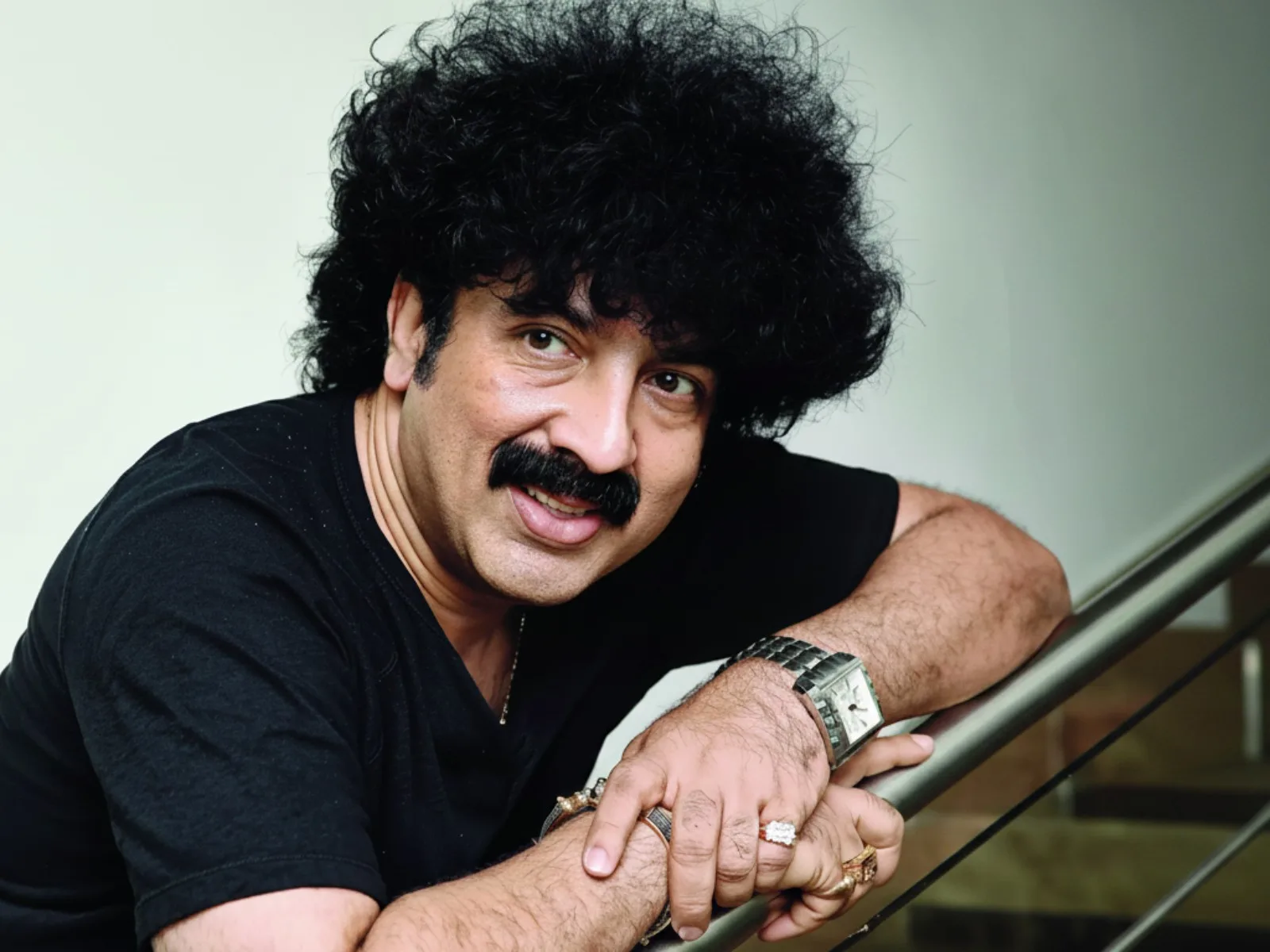
The Man Who Never Had a Dream
Most artists begin their stories with a dream. A childhood moment when they knew. A stage performance that changed everything. A promise they whispered to themselves in the dark.
Gurukiran's story begins differently.
In ninth standard, when his teacher asked the class what they wanted to become, every hand went up with certainty. Doctor. Engineer. Doctor. Engineer. The same two answers, repeated like a ritual. One boy said pilot. When Gurukiran's turn came, he gave a different answer: "I haven't decided." The teacher didn't appreciate the honesty. He was beaten for it.
Years later, that same boy would become one of Kannada cinema's most celebrated music directors — composing for over a hundred films, with nearly forty percent of them crossing the hundred-day milestone in theatres. His songs would play at weddings, in cars, at festivals. His name would become synonymous with a particular kind of joyful, infectious energy. But none of it would happen the way anyone expected.
Because Gurukiran never believed in designing futures he couldn't see. No formal training. No family legacy in music. No carefully mapped trajectory into cinema. Music wasn't even encouraged at home. "I never plan tomorrow," he says. "I just go with the flow."
It's an unusual philosophy in a world that constantly asks people to define their goals, map their futures, and chase outcomes with relentless focus. For him, life has been less about forcing direction and more about recognizing what feels alive when it appears. And sometimes the most meaningful paths begin not with ambition — but with curiosity. For him, that curiosity began with something that had nothing to do with music at all.
The Roommate's Challenge
Music did not enter Gurukiran's life through formal training or family tradition. It arrived sideways. During his Pre-University days at the Sri Sathya Sai Institute in Bengaluru, what fascinated him first was something completely different: art.
The beginning was almost absurdly simple. A roommate challenged him: "You can't draw Swami's picture." Gurukiran had never seriously tried sketching before, but the challenge intrigued him. So he sat down with a pencil and began drawing. The result surprised everyone. The sketch worked. Friends gathered around, praising the detail, the likeness, the skill.
But his own reaction was different. Instead of feeling special, he was puzzled. Why are people so impressed? To him, it seemed obvious that anyone could do the same thing if they simply sat down and tried. The praise didn't inflate his ego. It sparked a question that would quietly guide many of his choices afterward: If someone else can do it, why can't I? Or more importantly: Why don't others just try?
From there, curiosity took over. He experimented with charcoal, shading, painting. Within the campus he became known as "Artist Gurukiran." Creativity had begun to find its way into his life — though not yet through sound. Music was still in the background. Bhajans were sung regularly on campus. He listened, occasionally attempting a few lines himself, but nothing suggested this would become his profession.
What mattered to him was not the discipline itself, but discovering what he could do when he tried. That willingness to experiment without worrying about outcomes would soon push him into a completely different direction. And strangely enough, it would take a moment of public humiliation to reveal where his real ability lay.
The Insult That Ignited Everything
The shift toward music did not begin with encouragement. It began with insult.
After moving to Mangalore for his degree, Gurukiran found himself around musicians and local performing groups. He was still exploring, still observing from the edges. Then during an interaction with a professional musician, something was said that cut deep. The kind of remark meant to dismiss rather than motivate. The kind that makes you feel small in front of others.
For many people, that kind of moment becomes discouragement. Proof that they don't belong.
For him, it became ignition.
He decided to prove himself — not gradually, not cautiously, but relentlessly. Within four months, he found himself performing in the very same team as the musician who had dismissed him. Within six months, he was part of the most popular performing group in Mangalore. Within a year, he had become a professional singer with his own team performing across events and shows. All of this happened while he was still in college.
The transformation was rapid, but not accidental. When he decided to pursue something, he immersed himself completely — learning through repetition, performance, and sheer persistence. What had started as a reaction soon became something deeper. He realized that performing on stage gave him a feeling that nothing else quite matched. Not recognition. Not money. Not respect.
Something far simpler: joy. Pure, uncomplicated joy.
And once he recognized that feeling, it became difficult to ignore. Even when he stepped away from music later to explore other ventures, that pull would keep returning. Because the truth was becoming clearer to him with every passing year: he could build businesses, he could run enterprises, he could make money in other ways. But the happiness he felt while performing music was different. And that difference would slowly shape the path he followed next — even though he would fight it for years.
When Money Doesn't Buy Happiness
At several points early on, Gurukiran tried to step away from music. Not because he disliked it, but because practicality demanded something more stable. He started a soft drink manufacturing unit. He ran a finance company. He experimented with different business ventures that promised predictable income and security. On paper, these decisions made sense. Respectable. Profitable. Responsible.
But something didn't feel right.
Each time he stepped deeper into business, he noticed a quiet contrast forming inside him. The satisfaction from running these ventures was fundamentally different from what he felt after a musical performance. The numbers could grow. The accounts could look healthy. The businesses could succeed. But the emotional return was missing.
Standing on a stage, singing in front of an audience, feeling the energy of people responding to music — that created a kind of happiness no business ledger could measure. It wasn't about applause. It wasn't about fame. It was about alignment. That moment when what you are doing feels completely natural. When effort doesn't feel like effort. When time moves differently because you are exactly where you belong.
Slowly, that realization became impossible to ignore. No matter how far he moved into other professions, something inside kept drawing him back toward music. Not as a career strategy. Not as a calculated choice. But as a gravitational pull he could not rationalize away. Every attempt to leave was followed by another opportunity that brought him closer again. A performance. A collaboration. A recording session.
Step by step, the industry that he had never intended to enter began to open its doors. And soon, that pull would lead him to a city where the real test of his patience — and his persistence — would begin.
The Secret Life
Entering cinema took years of movement between cities, small opportunities, and uncertain decisions. He first stepped into films through the Tulu industry — singing playback and acting in small roles. Even that beginning was kept completely secret at home.
His family was deeply skeptical about entertainment careers, and the fear was understandable. In smaller towns, the lives of many struggling musicians were visible. Some talented artists never found stability. Some drifted into habits that worried families watching from the outside. Fifty percent of musicians, he observed, would get their payment and go straight to drink. So Gurukiran chose silence.
If a film shoot required him to leave town, he would simply tell his parents he was attending a friend's wedding. A week would pass. He would finish the work and return as though nothing unusual had happened. His first Kannada film as an actor? His parents never knew.
Meanwhile, he was learning. How studios functioned. How recordings happened. The rhythm of an industry that rewards patience as much as talent. Eventually, he began assisting music director V. Manohar. He played keyboards. He recorded track vocals. Music became the only space where he was consistently paid. But the path was still unstable. Acting roles were sporadic. Payments uncertain. Recognition limited.
So once again, he stepped away. He returned to Mangalore and restarted his business ventures. For a while, it seemed as though the film industry might simply become a brief chapter rather than the central story. But something curious kept happening. Every time he seriously considered leaving, a new opportunity appeared. A recording request. A performance. A collaboration.
The door never fully closed. And one particular phone call would soon turn that uncertain relationship with cinema into something far more permanent.
The Call That Changed Everything
By the late 1990s, Gurukiran had already spent nearly a decade moving in and out of the film world. He knew the people. He had worked in studios. He had assisted composers and recorded music. But stability still felt distant.
After all those years without a clear breakthrough, he began thinking seriously about stepping away for good. Return to Mangalore. Focus on business. Close the chapter on cinema. And then the phone rang. It was filmmaker Upendra. He had a new film in the works — A. And he wanted Gurukiran to compose the music.
For a moment, Gurukiran hesitated. Composing was different. Until then, he had mostly been performing, assisting, and contributing in smaller roles. Taking charge of the entire musical direction of a film meant stepping into much larger responsibility. Still, something about the opportunity felt right. He decided to give it one last attempt.
For almost a year, he immersed himself in the project — writing, composing, shaping the sound. When A finally released, the response was immediate. The music resonated widely. Audiences noticed. The industry noticed. It gave him a new identity.
But success rarely arrives alone. While the film brought recognition, the time spent away from business had created severe financial strain. The land market had dipped. His finance operations had suffered. The year dedicated entirely to the film had pulled him backwards economically. The breakthrough cost him everything he had built outside cinema.
Still, something fundamental had shifted. People now knew his name. Not just as a performer or assistant, but as a composer in his own right. Soon afterward, he worked on Upendra. Then came Chitra, a project built around an entirely new team. When that film succeeded as well, the pattern became undeniable. The risk was beginning to pay off.
That was when he made the decision he had postponed for years. He moved permanently to Bengaluru. And from there, the career that had grown slowly and unpredictably finally began to take shape. One project at a time. One song at a time. One quiet victory after another.
Success Without Ownership
As Gurukiran's films began working, his reputation grew quickly. A. Upendra. Chitra. One after another, the projects connected. Over time, nearly forty percent of the films he composed for crossed the hundred-day mark in theatres. His overall success rate climbed above seventy percent. By conventional standards, it was the arrival of a hit composer.
But Gurukiran does not describe that phase in the language most artists use. He does not call it achievement. He does not claim authorship of success. Instead, he describes it as something that happened.
In his view, a film is never the work of one individual. It is the outcome of collective energy — actors, directors, technicians, producers, musicians, audiences. When that energy aligns, the film succeeds. When it doesn't, no amount of personal effort can force the outcome. "I can only try," he says. "I can't say I can give a hit. It happens."
That is why he refuses the word icon. "We are just workers. We just work." Cinema, he believes, constantly resets your position. Yesterday's success does not protect you today. Every project demands fresh proof. You cannot rely on reputation. You must show up again. And again. And again.
For Gurukiran, this constant cycle of proving oneself is not a burden. It is simply the nature of the craft. Because in the end, music — like life — cannot be manufactured through formulas. You can only prepare yourself. The rest depends on how the moment unfolds. And that understanding eventually led him to a philosophy that extends far beyond cinema.
The Philosophy of Reaction
If there is one idea Gurukiran returns to often, it is this: life is not defined by what happens to you. It is defined by how you respond.
Challenges are not unusual. They are the structure of life itself. No one moves through the world without setbacks, disappointments, or sudden turns that disrupt carefully built plans. What separates people, he believes, is not circumstance but reaction. Some panic. Some resist. Some collapse under the weight of the moment. Others pause, adjust, and move forward.
For Gurukiran, experience has been the only real teacher of that skill. Advice, he says, rarely changes people. Everyone hears wisdom from elders, teachers, or friends, but very few truly absorb it. "Hiriyaru helutare," he says — the elders keep telling you. But nobody listens. Understanding arrives only after living through something personally.
That is why he often refers to the stories of Rama and Krishna. Not as distant mythology. Not as divine figures beyond human reach. But as examples of composure under pressure. Their greatness, he believes, is not in supernatural power but in the way they handled adversity. The situations they faced were difficult, unpredictable, and often unfair. What made them extraordinary was the calmness with which they responded. They did not control the events. They controlled themselves.
That distinction matters. Because once you understand that events are not always in your control, the focus shifts. Instead of trying to manipulate every outcome, you begin to pay attention to your own reactions. How you think. How you adjust. How you recover. In that sense, life becomes less about engineering the perfect future and more about developing the capacity to handle whatever arrives.
That capacity — the ability to respond rather than react — is what transforms experience into wisdom. And wisdom, unlike plans, cannot be taught. It can only be lived.
When You Stop Asking Permission
Here is what most people miss about Gurukiran's journey: it was not the absence of ambition that made him successful. It was the presence of something else. Responsiveness.
Most people build elaborate plans based on what they think they should want. They map every milestone. They measure success against benchmarks borrowed from society, family, or fear. And somewhere along the way, they stop asking a simpler question: What feels alive right now? Not five years from now. Not after the promotion. Not once stability arrives. Right now.
Gurukiran never had a grand plan. But he had something more valuable — the ability to recognize joy when he felt it, and the courage to keep returning to that feeling even when logic suggested otherwise. The businesses made money. But music made him feel something. That distinction guided every choice.
Not dramatically. Not with some cinematic declaration of purpose. Quietly. Persistently. One decision at a time. When the insult came, he responded by learning. When happiness appeared in performance, he noticed it. When business pulled him away, he returned anyway. When the call from Upendra came, he was ready.
That readiness was not luck. It was attention.
Over a hundred films. Forty percent crossing the hundred-day mark. Songs that play at weddings, in cars, at festivals. Music that makes people feel something they cannot quite name. But here is what matters more than the numbers: he is still happy. Not because everything worked perfectly. Not because he avoided failure or hardship. Not because he had some secret formula. But because he never confused success with fulfillment.
That ninth-standard teacher wanted a clear answer. A predictable future. A path that made sense to adults. But Gurukiran gave him something else: honesty. "I haven't decided." He was beaten for it then. But decades later, that same honesty became his greatest strength.
Because life rarely follows the plans we make for it. And the people who recognize that early — who learn to respond rather than force, to notice rather than control — those are the ones who find their music.
Not by chasing it desperately. But by staying open enough for it to arrive.
And when it does — they are ready.
By Ugesh Sarcar