Wisdom Bank - No Plan, Just Purpose: The Unshakeable Wisdom of Dr. Sundar Sankaran
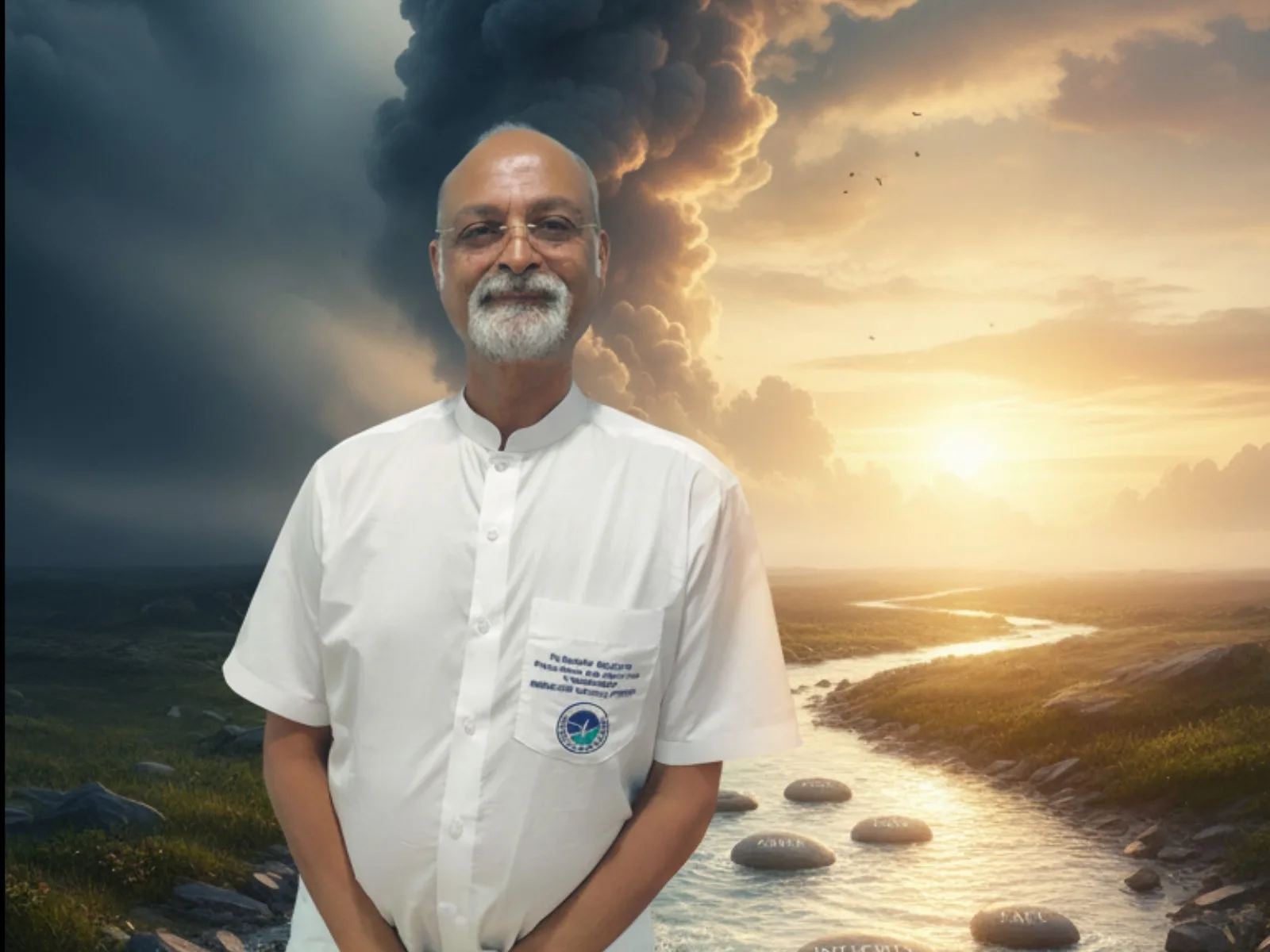
Stop me if you’ve heard this one before.
You try to do the right thing. You treat people with respect. You give your heart to your work. And when things go wrong — when lies are told, when mistakes are made, when others turn away — you’re the one left standing in the middle, holding the pieces.
You don’t raise your voice. You don’t play politics. But deep down, you wonder: Is this really the reward for doing good?
Dr. Sundar Sankaran knows that feeling.
He’s lived through public shame, false accusations, and the kind of personal pain that most people never see. In 1995, his name was dragged into a national scandal he had nothing to do with — a kidney transplant case that made headlines across India. Overnight, his life changed. Not because he did something wrong. But because someone needed someone to blame.
And through it all — through the noise, the judgment, the unbearable silence from people who once stood by him — he didn’t lose his mind. He didn’t lose his heart. He didn’t even lose his job.
Instead, he emerged with something deeper: an unshakable clarity about who he is, what he stands for, and what really matters.
This blog explores the values, experiences, and quiet wisdom of Dr. Sundar, a man who believes in empathy, leads with faith, and lives a life shaped not by strategy, but by surrender.
If you’ve ever felt like the world doesn’t reward goodness, his story might just change your mind.
Empathy Is Not a Flaw – It’s a Strength
Dr. Sundar never wanted to treat patients like problems to be solved. He wanted to treat them like people.
Even as a young doctor, he would often be the one who spent more time listening than diagnosing. He didn’t see this as a detour from the work — he saw it as the work. To him, medicine without empathy is just mechanics.
And while some colleagues saw his emotional depth as a distraction, or even a weakness, he saw it differently:
“If I stop caring about the person behind the illness, what’s the point of the cure?”
This mindset has stayed with him through every role — as a physician, administrator, husband, and father. It’s why he took the time to understand not just symptoms, but stories. Why he offered comfort, not just consultations. And why so many patients still remember him not for what he prescribed, but for how he made them feel.
Yes, empathy can be exhausting. Yes, it opens you up to pain. But for Dr. Sundar, there’s no other way to be human — especially in a profession where people put their lives in your hands.
In a system that often values efficiency over emotion, he chose to feel — and in doing so, he stayed real.
The Storm He Didn’t Deserve
In 1995, Dr. Sundar Sankaran’s world was turned upside down — not because of a mistake he made, but because someone needed a scapegoat.
A prominent kidney transplant scandal had erupted, drawing national media attention and public outrage. Though he had no direct involvement, Dr. Sundar was named. A few lines in a report — vague, indirect, and unsupported — were enough to cast doubt on a decades-long career built on integrity.
He was never called for a hearing. Never asked for a statement. And yet, his name was there — printed, whispered, judged.
The fallout was brutal. Not just professionally, but emotionally. His son was bullied at school. So badly, in fact, that the boy had to leave the country at just 15 years old. The stress took a toll on the family. Relationships shifted. Friends went quiet. Colleagues looked away.
And through all of it, Dr. Sundar said nothing.
Not because he didn’t care. But because he knew: truth doesn’t always need to shout. It just needs to survive.
Eventually, his name was cleared. A newspaper published a small note — a line or two, lost in the back pages — stating that he was not involved. No apology. No headline. Just silence where outrage had once been.
He didn’t sue. He didn’t retaliate. He simply got back to work.
Because in his world, character is louder than controversy. And the real test of a person isn’t how they rise when things go right — it’s how they stay standing when everything falls apart.
Faith Without a Plan
Ask most people how they got where they are, and they’ll give you a carefully crafted timeline: goals set, milestones hit, promotions earned.
Ask Dr. Sundar, and you’ll hear something entirely different.
“I’ve never planned anything in my life,” he says with a calm that feels almost defiant in today’s hyper-structured world.
He didn’t chase a blueprint. He followed instincts. Opportunities came, and he said yes — not because they fit a strategy, but because they felt right.
This isn’t to say he was careless. In fact, he was deeply committed — to medicine, to his family, to values that never changed even when life did. But instead of controlling every outcome, he trusted the process.
He believed that if he lived with sincerity, stayed true to his calling, and walked with integrity, the rest would fall into place — and when it didn’t, he trusted that it still had meaning.
There’s a kind of spiritual steadiness in his story. He doesn’t quote scripture or talk about grand miracles. But you can sense the faith in every line. A faith that says:
- Not everything needs to be figured out.
- Not every path needs a plan.
- Some lives are meant to unfold — not be forced.
In a world obsessed with control, Dr. Sundar chose surrender. And in doing so, he found peace in unpredictability — and purpose in the pathless.
Parenting with Radical Honesty and Unconditional Love
Dr. Sundar Sankaran doesn’t believe in raising children with pressure or plans. He believes in raising them with presence.
He and his wife never forced their children toward specific careers or success markers. There was no obsession with ranks, no talk of elite entrance exams, no household tension about grades or goals. Instead, there was space — for conversation, for expression, for being.
He describes his approach simply:
“I never had plans for my children. I only gave them unconditional love and an environment of honesty.”
That honesty wasn’t just something he modelled — it was something he expected. His children were encouraged to speak freely, to ask uncomfortable questions, and to trust that their home was a safe space.
And when challenges arose — like his son being bullied so badly that he had to leave the country at 15 — Dr. Sundar responded not with anger, but with empathy. He didn’t deny the pain. He didn’t pretend it wasn’t unfair. But he also didn’t let it harden him.
Instead, he doubled down on compassion. Not only toward his child, but toward the world that had hurt him.
Because for Dr. Sundar, parenting isn’t about control — it’s about anchoring your children in values, so that no matter what shakes them, they remain rooted.
And those values start with love. Not conditional love. Not achievement-based love. Just love, clear and quiet and constant — the kind that doesn’t flinch when life does.
Redefining Success on Your Own Terms
Dr. Sundar Sankaran’s definition of success doesn’t show up on a resume.
It’s not about titles. Not about earnings. Not even about reputation — especially after he saw how easily that can be taken away.
Instead, success to him is simple: Peace of mind. Staying grounded. Doing the right thing when no one’s watching.
He doesn’t believe in building a life around public approval. After being wrongly named in a national scandal, losing friends, and watching his family endure pain they didn’t deserve — he stopped caring about how he was perceived. What mattered more was how he lived.
There’s no ego in his story. He speaks about being “a very ordinary man.” But his choices say otherwise. He’s chosen stillness in a noisy world. Kindness in a cruel one. And silence in the face of slander — not because he’s passive, but because he knows truth is louder when you don’t shout it.
Even in his role as a doctor, administrator, and parent, he hasn’t chased legacy. He’s built integrity — moment by moment, patient by patient, decision by decision.
“You can live without a plan,” he says. “But you can’t live without purpose.”
His version of purpose isn’t dramatic. It’s quiet. Rooted. Measured by how deeply you care, how honestly you show up, and how much peace you feel when the day is done.
In a world that glorifies more — more followers, more titles, more control — Dr. Sundar reminds us that less can be richer. Less noise. More clarity. Less proving. More being.
Key Takeaways
“A good human being makes a good doctor.”
Dr. Sundar Sankaran doesn’t just believe this — he lives it.
But his story isn’t just for doctors. It’s for anyone who’s ever tried to live with honesty, compassion, and quiet strength in a world that often doesn’t reward those things.
Here are the key lessons from his life and mindset:
1. Empathy is not a flaw — it’s your superpower. Don’t numb yourself to fit in. Feeling deeply is what makes you human — and what makes people trust you.
2. When the world gets loud, stay grounded. Public opinion shifts fast. But your values, your integrity, and your quiet knowing — those are the anchors that will carry you through any storm.
3. You don’t need a five-year plan to live a meaningful life. You just need presence, openness, and the courage to take the next right step — even when you can’t see the whole path.
4. Parenting is about emotional safety, not control. Give your children a space where honesty is never punished, and love is never earned — just given.
5. True success is measured in peace. Not in promotions. Not in press. If you can look at yourself in the mirror and feel calm — you’re already successful.
6. A good human being makes a good doctor — and a better world. Start there. Whether you’re in a clinic, a boardroom, a classroom, or your own living room — bring your humanity first. Everything else follows.
By Ugesh Sarcar