Wisdom Bank - Kishore Reddy: Why Great Leaders Don't Cling to Outcomes
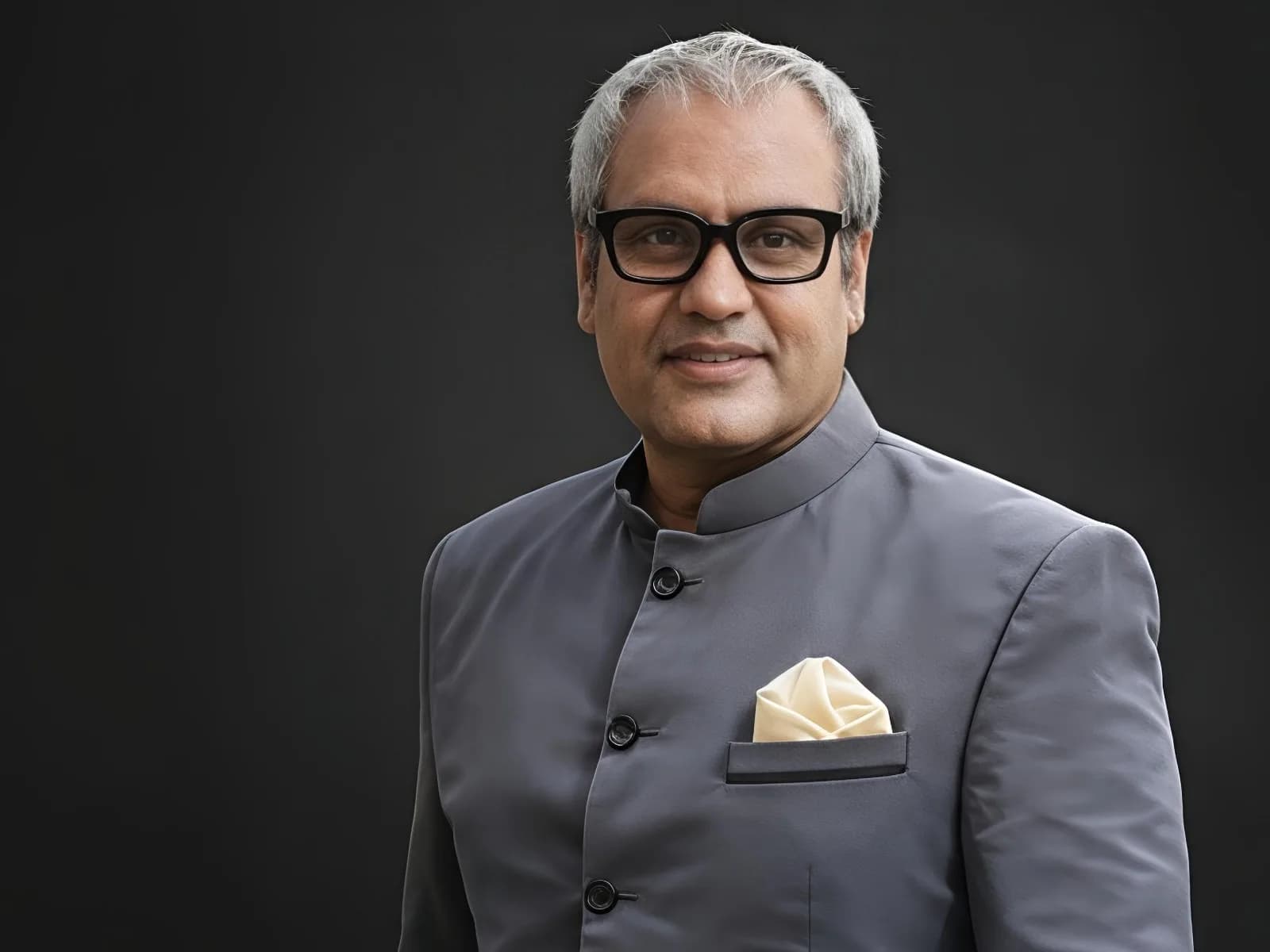
"What do you tell yourself when life gets difficult?"
It is the sort of question successful people are asked all the time. The answers are usually familiar. Work harder. Stay resilient. Learn from failure.
Kishore Reddy answered differently.
"I think it will pass and things are going to be better."
Then he said something that quietly changed the direction of the conversation.
"I don't even remember the downs."
It sounded impossible.
Every meaningful life has setbacks. Every entrepreneur makes mistakes. Every career has moments when things don't go according to plan.
So how does someone reach this stage of life and genuinely struggle to remember the difficult chapters?
The answer begins with a story his mother told him as a child.
A Lesson That Grew With Him
As a boy, Kishore often heard the same message at home.
Whatever happens, happens for good.
For many children, lessons like these remain comforting sayings. They fade into the background as life becomes more complicated.
For Kishore, this one stayed.
Not because he accepted it blindly, but because he kept testing it.
There was one condition.
"You have to give your best," he says. "Then whatever happens, happens for good."
That second sentence is what makes the first one work.
Without effort, it becomes an excuse to drift through life.
With effort, it becomes a way of letting go of what you cannot control.
His responsibility ends where his effort ends.
The outcome is no longer something to fight, resent or endlessly replay.
It is simply the starting point for whatever comes next.
Looking back, that simple habit explains far more about his life than any business strategy ever could.
The Opportunity That Wasn't Part of the Plan
Like many young Indians of his generation, Kishore grew up surrounded by familiar expectations. Medicine. Engineering. Careers that parents understood.
He chose hotel management instead.
It was a decision that demanded commitment, and it paid off. He earned a place at the prestigious Oberoi School of Hotel Management, where only a small number of students were selected each year from across India.
His next move also seemed clear.
Singapore.
Then came an unexpected recommendation from the then Vice President of Operations at The Oberoi Hotels. He strongly encouraged Kishore to take up an opportunity in Sri Lanka.
It was not part of Kishore's plan.
As he reflects on that decision today, he smiles at the thought that while it wasn't part of his plan, it was probably part of someone else's.
He accepted the opportunity.
Thirty years later, he cannot imagine his life unfolding anywhere else.
That single decision became the backdrop for everything that followed.
A career in hospitality opened unexpected doors. He appeared on television, published a cookbook and went on to build eight restaurant outlets.
Then, at the age of thirty, he made another decision that surprised people around him.
He sold the business.
Many entrepreneurs spend years trying to build what he had already created.
Kishore saw it differently.
One chapter had run its course.
Another was waiting.
He invested in property, became a developer and investor, and later took on leadership roles as President of the Indian CEO Forum. He also serves as the Past President and Vice Patron of the Sri Lanka India Society, one of Sri Lanka's oldest organisations, founded in 1948. Through the Society, he works towards strengthening people-to-people connections and bilateral ties between India and Sri Lanka.
Looking at his career today, it is tempting to connect the dots and imagine there was a master plan.
Listening to him, you realise there wasn't.
There was preparation.
There was hard work.
There was a willingness to recognise an opportunity when it appeared, even if it looked nothing like the future he had imagined.
Success Without Owning It
There is another pattern that appears throughout the conversation.
Whenever Kishore speaks about success, he shares the credit.
He thanks his parents.
He acknowledges the people around him.
He speaks about timing, opportunity and circumstances as naturally as he speaks about effort.
At first, it sounds like humility.
On closer inspection, it is something more practical.
If every success belongs entirely to you, then every failure must belong entirely to you as well.
That is a heavy way to live.
Kishore avoids both extremes.
He takes complete ownership of the work.
He is less interested in claiming ownership of the result.
That distinction keeps him grounded when things go well and steady when they do not.
It also explains why he never speaks as though life owes him anything.
Why He Doesn't Remember the Downs
When Kishore says he doesn't remember the difficult times, he is not claiming they never happened.
He is describing a habit.
Most people replay disappointment long after it has passed.
A missed opportunity.
A business that failed.
A conversation they wish had gone differently.
Those moments become part of the story they tell themselves.
Kishore does something different.
He deals with the setback while it is in front of him.
Once it has passed, he leaves it there.
His attention moves to the next opportunity, the next piece of work, the next reason to be grateful.
That is why, when he reflects on his life, the memories that come easily are not the disappointments.
They are the people who helped him.
The opportunities that arrived unexpectedly.
The moments that worked out better than he could have planned.
It is not selective memory.
It is selective attention.
Over time, that habit changes the story you believe about your own life.
A Different Measure of Success
Towards the end of the conversation, the subject shifted away from business.
It settled somewhere much quieter.
Home.
Kishore spoke about his wife and the countless injured and abandoned animals she rescues.
Three-legged dogs.
Blind cats.
Animals that most people would walk past.
If someone calls to say an animal has been injured, she leaves immediately.
There is no discussion about whether it is convenient.
She simply goes.
Listening to him describe it, one thing became obvious.
Neither of them sees this as charity.
"It is something that you like to do," he says.
Earlier in the conversation, I remarked that this reflected the spirit of Vasudhaiva Kutumbakam, the idea that the world is one family.
Kishore smiled and agreed.
It was a small moment, but it revealed something important.
The same outlook that allows him to accept life's unexpected turns also shapes how he sees the world around him.
People matter.
Relationships matter.
Kindness matters.
Success is only one part of a meaningful life.
The Habit That Changed Everything
It is easy to look at Kishore Reddy's career and focus on the milestones.
The restaurants.
The investments.
The leadership positions.
The influence he has built over three decades in Sri Lanka.
Those achievements tell you what he accomplished.
They do not explain how he accomplished it.
The answer lies in a much quieter discipline.
He gives everything he has to the work in front of him.
When the result arrives, he accepts it without becoming trapped by it.
Then he begins again.
That pattern repeated itself when he chose hotel management over convention.
When Sri Lanka replaced Singapore.
When he sold a successful business instead of clinging to it.
When new opportunities appeared where old ones ended.
Seen individually, those decisions look unrelated.
Seen together, they reveal a way of moving through life.
Not by trying to control every outcome.
But by refusing to let any single outcome define the next step.
Perhaps that is why, when asked about failure, Kishore struggled to remember it.
He had not erased those moments.
He had simply stopped carrying them.
And over a lifetime, that may prove to be one of the most valuable habits anyone can build.
By Ugesh Sarcar