Wisdom Bank - What Arbaaz Khan Understands About People That Most of Us Miss
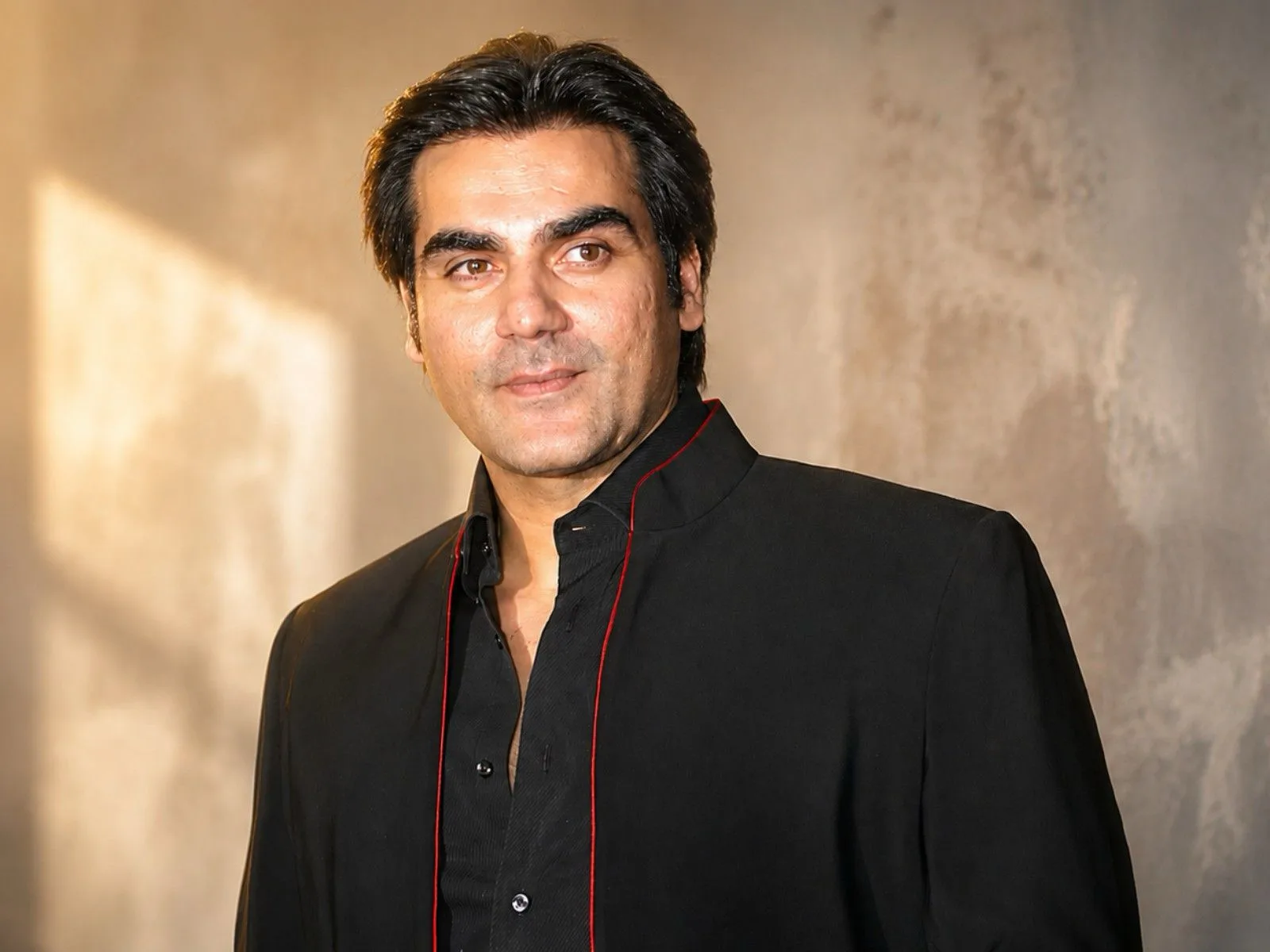
There is a moment in this conversation where Arbaaz Khan says something that stops the room.
He isn't talking about films. He isn't talking about fame. He isn't even talking about success.
He's talking about a plane.
About how thousands of us walk onto aircrafts every day, buckle our seatbelts, close our eyes and fall asleep beside strangers. We never ask who the pilot is. We never ask how many hours they've flown. We never ask what kind of day they're having.
Yet we trust them with our lives.
Then he pauses.
And suddenly the question isn't about the pilot anymore.
It's about us.
Why do we sometimes struggle to trust the people who have stood beside us for years, yet hand over our lives so easily to complete strangers?
Why do we try so hard to control the people we love?
Why do we spend so much of life fighting uncertainty when uncertainty is the very thing that brought us here?
What began as a conversation about values quickly became something else entirely.
Over the course of about an hour, Arbaaz Khan reflected on the lessons that have shaped him over nearly six decades: lessons inherited from his parents, sharpened by experience, and sometimes learned the hard way. There were stories about trust, relationships, parenting, human nature and the quiet difference between wisdom and age.
But perhaps the most surprising thing was this:
None of the insights arrived wrapped in certainty.
Instead, they emerged from questions. From contradictions. From moments where life refused to fit neatly into categories of right and wrong.
And somewhere between a childhood lesson from his father, a long-forgotten relationship from his youth, and a reflection on the sheer improbability of being alive at all, a deeper idea began to emerge.
Maybe the goal of life is not to control it.
Maybe the goal is to learn how to move with it.
The Three Values That Quietly Built Arbaaz Khan
If you strip away the films, the public image and the decades in the spotlight, Arbaaz Khan believes his life rests on three simple values:
Kindness.
Sincerity.
Loyalty.
Ambition, power and success never made his list. Kindness did.
And that is not accidental.
When he speaks about where this value came from, his mind goes straight back to his parents. Growing up, he watched them treat people with the same respect regardless of status. Whether they were speaking to a colleague, a friend, a driver or a member of the household staff, dignity was never negotiable.
It wasn't a lesson taught through lectures. It was a lesson taught through observation.
Over time, that example became part of how he moved through the world. Even today, he makes a conscious effort to speak respectfully to everyone around him. Not because it is good manners, but because he believes power reveals character.
It's easy to be polite to people who can do something for you.
The real test is how you treat people who can't.
That belief has shaped the relationships he has built over the years. Many of his closest friends have remained in his life for decades. Members of his team have stayed with him for years. Loyalty, in his view, is not something you demand from people. It is something you earn through the way you treat them.
And that's where his understanding of human behaviour becomes particularly interesting.
Most people are quick to focus on betrayal when relationships break down. Very few stop to ask what happened before the betrayal.
What frustrations were ignored?
What needs went unseen?
What resentments were allowed to grow quietly in the background?
It is a perspective rooted not in judgement, but in curiosity. The kind of perspective that refuses to look only at outcomes and instead asks what led to them.
That habit of looking beneath the surface would become one of the defining themes of our conversation.
Because when the subject turned to trust, Arbaaz offered an idea he learned from his father that completely changed the way he thinks about being let down.
The Unexpected Truth About Trust
Most people think trust and betrayal sit on opposite sides of a battlefield.
Trust is good.
Betrayal is bad.
One destroys the other.
Arbaaz sees it differently.
In fact, one of the most profound observations he inherited from his father begins with a simple truth:
You can only be betrayed by someone you trust.
At first glance, it sounds obvious.
Then you sit with it.
If you never hand someone your confidence, your vulnerability, your faith or your belief, they cannot betray it. Betrayal is not the absence of trust. It is the consequence of trust.
The two are inseparable.
It's a perspective that shifts the focus away from the person who hurt you and towards a larger truth about human relationships: trust has always involved risk.
There is no version of trust that comes with guarantees.
And yet, despite knowing this, we continue to trust.
Every day.
Without thinking about it.
During our conversation, Arbaaz offered an example so ordinary that it becomes startling.
Think about the last time you boarded a flight.
You arrived at the airport, collected your boarding pass, found your seat, fastened your seatbelt and settled in for the journey.
Did you ask how many hours the pilot had flown?
Did you check their credentials?
Did you ask whether they were having a difficult day?
Probably not.
You trust them with far more than your luggage. You trust them with your life.
Yet the same people who place unquestioning trust in a stranger thousands of feet above the ground often struggle to trust a friend, a colleague, a family member or a partner who has spent years proving themselves.
Human beings, he suggests, are strange that way.
We often place trust where we've invested very little thought, while withholding it where it matters most.
That doesn't mean trust should be blind.
Nor does it mean people won't disappoint you.
They will.
Relationships will sometimes break. Expectations will sometimes go unmet. People will occasionally fail to be the person you hoped they would be.
But living without trust isn't really living at all.
You cannot spend your life looking over your shoulder.
You cannot lock every emotional door.
At some point, every meaningful relationship requires a leap.
And if that leap occasionally results in disappointment, perhaps that is simply the price of connection.
For Arbaaz, the answer is not to trust less.
It is to trust wisely, accept the risk that comes with it, and understand that being hurt is not proof that trusting was a mistake.
Sometimes it is simply proof that you were brave enough to trust in the first place.
That observation would later collide with another discovery he made in his early twenties, one that completely changed how he approached relationships, expectations and the urge to control other people.
The Coffee, The Cigarette, And A Lesson About Control
When Arbaaz Khan was around nineteen, he started dating a girl from college.
There was just one problem.
She smoked.
Today, that might not raise many eyebrows. But this was decades ago, and to the young Arbaaz, it mattered.
So he told her what many people in relationships tell each other.
You should quit.
She explained that she had been smoking for years. She had tried to stop before. It wasn't easy.
But Arbaaz persisted.
Eventually, she came back with good news.
She had quit.
Problem solved.
Or so he thought.
The relationship lasted for nearly two years before the couple eventually went their separate ways. A few months after the breakup, they met for coffee.
During the conversation, she reached into her bag, pulled out a packet of cigarettes and calmly took one out.
Arbaaz was stunned.
"You quit," he reminded her.
She looked at him, lit the cigarette, and took a drag before dropping the revelation.
She had never quit.
For two years, she had simply hidden it.
She knew when he was coming over. She covered her tracks. She made sure he never found out.
The habit hadn't disappeared.
Only the evidence had.
For many people, that story would end as a tale of deception.
For Arbaaz, it became something far more valuable.
A realisation.
The realisation wasn't that people lie.
It was that people resist control.
The more forcefully you try to impose change on someone, the more likely they are to hide their behaviour rather than transform it.
The behaviour goes underground.
The person doesn't.
Looking back, he realised there was a better approach.
Tell people how you feel.
Tell them what concerns you.
Tell them what you hope for.
Then allow them the dignity of making their own choice.
Because genuine change only happens when it belongs to the person making it.
Not when it is demanded of them.
That realisation reshaped the way he approached relationships later in life.
He stopped trying to dictate what people should wear, who they should speak to, or how they should live.
It wasn't a sign that he cared less. It was a sign that he understood something deeper.
You can offer perspective.
You can share your concerns.
You can give advice.
But the decision has to remain theirs.
Otherwise, all you've really done is teach someone how to hide.
And perhaps that is one of the most overlooked truths in human relationships.
Control often disguises itself as care.
But the two are not the same.
The people we love do not need us to run their lives.
They need us to trust them enough to live their own.
It's a realisation that would later connect to another belief Arbaaz inherited from his father, one that many parents struggle with, but which may be one of the greatest gifts a parent can give a child.
Why Good Parents Teach Their Children To Leave Them
Most parents want to protect their children from mistakes.
It's a natural instinct.
You see a pothole ahead and want to steer them around it. You see a bad decision forming and want to stop it before it happens. You want to spare them the pain you once experienced yourself.
But Arbaaz Khan grew up with a father who saw things differently.
His father's goal was never to make decisions for his children.
It was to prepare them to make decisions for themselves.
The distinction matters.
One creates dependence.
The other creates adults.
Years later, the idea still stays with him.
His father would often remind him that there would come a day when he would no longer be around. When that day arrived, nobody else could live his children's lives for them. Nobody else could make every financial, personal or professional decision on their behalf.
The job of a parent, therefore, wasn't to become permanent crutches.
It was to become temporary training wheels.
At some point, they had to come off.
What made the idea even more powerful was that it wasn't built on perfection.
His father never presented himself as someone who had all the answers.
In fact, he encouraged the opposite.
Learn from my strengths, he would tell his children.
But learn from my weaknesses too.
Take what serves you.
Leave what doesn't.
There is something deeply human about that idea.
Many of us spend years either idolising our parents or rebelling against them.
Rarely do we stop to see them for what they are:
People.
People with virtues and flaws. Wisdom and blind spots. Successes and regrets.
Arbaaz carries that same perspective into his relationship with his own son.
He doesn't want his children to see him as a flawless figure standing on a pedestal.
He wants them to see a human being who is still learning.
Because perhaps maturity begins when we stop searching for perfect role models and start collecting useful insights instead.
Some insights are examples to follow.
Others are warnings.
Both have value.
And in a world that often tells people what to think, what to study, who to marry and how to live, there is something quietly powerful about raising someone who can think for themselves.
Even if they sometimes get it wrong.
Especially if they sometimes get it wrong.
Because mistakes are not evidence of failure.
They are often the tuition fees of wisdom.
And that belief, that every choice needs to be understood in the context of a person's circumstances, would lead Arbaaz to one of the most compassionate ideas he shared during our conversation.
Before judging a person, he believes, you first have to understand the story that brought them there.
Looking Beyond Labels
Some people collect opinions.
Others collect perspectives.
Listening to Arbaaz Khan, you get the sense that he has spent much of his life trying to understand what sits beneath the surface of people's actions.
His goal was never to excuse people's actions. It was to understand them.
Again and again during our conversation, he returned to the same idea: context matters.
Human beings are rarely as simple as their decisions.
A single action tells you what happened.
A story tells you why.
And often, the "why" changes everything.
It's easy to divide the world into neat categories. Good people and bad people. Right decisions and wrong decisions. Heroes and villains.
Life, however, rarely cooperates with such tidy definitions.
The longer you live, the more you realise that people carry burdens you cannot see, fears they rarely discuss, and pressures that never make it into the final version of their story.
That's why Arbaaz believes one of the most important habits a person can develop is the ability to pause before passing judgement.
To ask a second question.
Maybe even a third.
What circumstances led to this choice?
What pressures existed that I cannot see?
What would this situation look like from the other side?
It's a mindset that requires humility.
Because it forces you to admit that your version of events may not be the complete picture.
And perhaps that is why empathy has become such a rare skill.
Empathy doesn't mean agreeing with every decision people make.
It means recognising that human beings are often responding to realities you know nothing about.
The person who disappointed you.
The colleague who made a poor decision.
The friend whose actions made no sense.
Their behaviour may still have consequences.
But understanding the context behind it doesn't weaken your judgement.
It strengthens it.
For Arbaaz, this ability to see multiple sides of a situation appears to stem from a simple truth:
People are complicated.
Far more complicated than the labels we assign them.
The moment you stop reducing people to their worst decision, you create space for something remarkable.
Understanding.
And understanding, more often than not, leads to compassion.
Not the soft kind of compassion that ignores reality.
The mature kind.
The kind that acknowledges mistakes while still recognising humanity.
That perspective has shaped the way he looks at relationships, family, conflict and even his own life.
But there was one area where this way of thinking became unexpectedly difficult.
His own mind.
Because while empathy helped him understand other people, there was a period in his life when he realised he was thinking far too much about everything.
The Trap Of Overthinking Life
For someone who spends so much time examining human behaviour, there is an obvious question:
Doesn't all that thinking become exhausting?
Arbaaz believes it can.
In fact, one of the most honest admissions he made during our conversation had nothing to do with trust, relationships or success.
It was about overthinking.
There was a time, he said, when every decision passed through a relentless mental filter. Every possibility was analysed. Every outcome considered. Every choice examined from multiple angles before a step was taken.
On the surface, that sounds responsible.
Even intelligent.
After all, isn't careful thinking supposed to protect us from mistakes?
The problem is that life rarely follows the script you've written for it.
You make a decision expecting one outcome.
Life hands you another.
And suddenly all the planning in the world feels irrelevant.
It's an insight most of us learn eventually.
Not because we're careless.
Because reality has a habit of introducing variables we never saw coming.
A relationship ends unexpectedly.
A career takes an unforeseen turn.
An opportunity appears where none existed before.
Or a setback arrives without warning.
No amount of analysis can eliminate uncertainty.
At best, it can create the illusion that you've controlled it.
That realisation has gradually changed the way Arbaaz approaches life.
Today, he seems less interested in predicting every outcome and more interested in experiencing whatever arrives.
Not recklessly.
Not blindly.
But with the understanding that some things can only be learned by living through them.
You cannot think your way through every chapter before it begins.
At some point, you have to step into the story.
It's a bit like standing on the edge of a diving board.
You can calculate the angle.
Study the water.
Assess the risks.
Imagine every possible outcome.
But eventually there comes a moment when no more thinking helps.
You jump.
And perhaps that's where many of us get stuck.
We spend so much time trying to avoid discomfort that we accidentally avoid life itself.
We postpone decisions until we're certain.
Wait for guarantees that never arrive.
Search for clarity that only exists in hindsight.
Meanwhile, life keeps moving.
Without asking for our permission.
For Arbaaz, this shift in perspective led to a surprisingly liberating conclusion:
Not every experience is meant to be controlled.
Some are simply meant to be lived.
And nowhere is that idea more powerful than in the way he thinks about existence itself.
Because when the conversation turned to luck, destiny and being alive, he offered a perspective that transforms one of humanity's most common complaints into something extraordinary.
The Miracle We Forget Every Morning
Spend enough time around people and you'll hear a familiar refrain.
"I'm unlucky."
Life didn't go their way.
The opportunity never arrived.
The timing was wrong.
Someone else got the break.
Someone else got the life they wanted.
Arbaaz Khan understands the feeling.
But he also believes most of us are measuring luck from the wrong starting point.
During the conversation, he shared a thought that feels almost impossible to ignore once you've heard it.
What if simply being here is already the greatest stroke of luck you'll ever experience?
Not becoming successful.
Not becoming wealthy.
Not becoming famous.
Just being here.
Alive.
Breathing.
Part of this improbable story we call life.
As he reflected on it, the idea seemed to genuinely fascinate him.
Every human life begins as the outcome of countless possibilities that never became realities. Millions of variables, countless circumstances, unimaginable combinations, and somehow, against all those odds, you arrived.
Out of all those possibilities, yours was the story that began.
A different set of circumstances could have produced a completely different person with different talents, different dreams, different fears and a completely different life.
Yet here you are.
When viewed through that lens, life begins to look less like a problem to solve and more like a phenomenon to experience.
The complaints don't disappear.
The struggles remain real.
The disappointments still hurt.
But they are no longer the whole story.
Because underneath every frustration sits a fact so extraordinary that we rarely stop to acknowledge it:
You got a ticket to the show.
You made it here.
And perhaps that's why Arbaaz speaks about life with a growing sense of curiosity rather than certainty.
If existence itself is already a miracle, then maybe the point isn't to spend all your energy wishing for a different story.
Maybe the point is to fully experience the one you've been given.
The triumphs.
The heartbreaks.
The detours.
The unexpected chapters.
The moments that make no sense while you're living them.
Because one day, when you look back, they often become the moments that shaped you most.
And that brings us to the image that perhaps best captures Arbaaz Khan's philosophy of life.
He didn't describe life as a road to follow or a ladder to climb.
He described it as a river.
Riding The Rapids
Toward the end of our conversation, Arbaaz Khan reached for an image that seemed to bring everything together.
Trust.
Control.
Decision-making.
Uncertainty.
Life itself.
Imagine you're riding white-water rapids.
The river is moving fast.
The water is unpredictable.
The current has a direction of its own.
You can hold on.
You can stay alert.
You can adjust your balance.
But you cannot command the river.
You cannot negotiate with the current.
And you certainly cannot stop midway and demand that the water flow somewhere else.
Life, he suggested, isn't very different.
From the moment we are born, we are carried forward by forces far larger than ourselves. We make choices, of course. We influence outcomes. We shape parts of our journey.
But there are also moments that simply arrive.
The people we meet.
The opportunities we stumble into.
The setbacks we never saw coming.
The endings we didn't choose.
The beginnings we didn't expect.
So much of life unfolds beyond our control.
Yet most of us spend years fighting that reality.
We grip tighter.
Plan harder.
Worry more.
Attempt to control every bend in the river.
And then we wonder why we're exhausted.
The irony is that the moments we remember most rarely came from control.
They came from surrender.
The unexpected friendship.
The chance encounter.
The career move that wasn't in the plan.
The insight hidden inside a disappointment.
The chapter we never would have chosen, but would never erase.
Looking back across the conversation, a pattern begins to emerge.
Kindness wasn't really about being nice.
It was about recognising the humanity in others.
Trust wasn't about guarantees.
It was about having the courage to remain open despite uncertainty.
Loyalty wasn't about perfection.
It was about knowing where your heart stands when life becomes complicated.
Parenting wasn't about directing another person's life.
It was about preparing them to navigate their own.
And wisdom wasn't about having all the answers.
It was about becoming comfortable with the fact that you never will.
Perhaps that is what nearly six decades of living have taught him.
Not how to master life.
But how to participate in it.
Fully.
Honestly.
Curiously.
Conclusion
As our conversation came to an end, I found myself thinking about something Arbaaz said much earlier.
Not about trust.
Not about relationships.
Not even about success.
About existence itself.
How easily we forget the odds.
How quickly we move from wonder to worry.
We complain about the traffic, the timing, the setback, the rejection, the plan that didn't work out.
Meanwhile, the bigger miracle sits quietly in the background.
We're here.
Against impossible odds, we're here.
And perhaps that changes the way you look at everything else.
The relationship that didn't last.
The decision that didn't work.
The opportunity that slipped away.
The chapter you wish had been written differently.
Maybe those moments are not interruptions to life.
Maybe they are life.
Messy. Unpredictable. Unfinished.
Exactly as they were always going to be.
Listening to Arbaaz Khan, one thing becomes clear: wisdom is not about gaining control over life.
It is about loosening your grip.
It is about accepting that you will not always know what comes next.
That people will surprise you.
That plans will fail.
That some questions will never receive satisfying answers.
And that none of this diminishes the beauty of being alive.
In fact, it may be the very thing that creates it.
Because if life arrived with guarantees, there would be no courage.
If every outcome were known, there would be no faith.
If every chapter were predictable, there would be no story.
And perhaps that is the invitation hidden beneath everything Arbaaz shared.
Life is not asking you to master it, solve it or control it.
It is asking you to experience it fully while you have the chance.
To trust when trust is required.
To love when love is available.
To learn when life teaches.
And when the river inevitably pulls you somewhere you never planned to go, to have the courage to look around and say:
"Interesting.
I wonder where this river goes next."
By Ugesh Sarcar