Wisdom Bank - Arun Jee Didn’t Follow the Script — and That’s Where His Story Begins
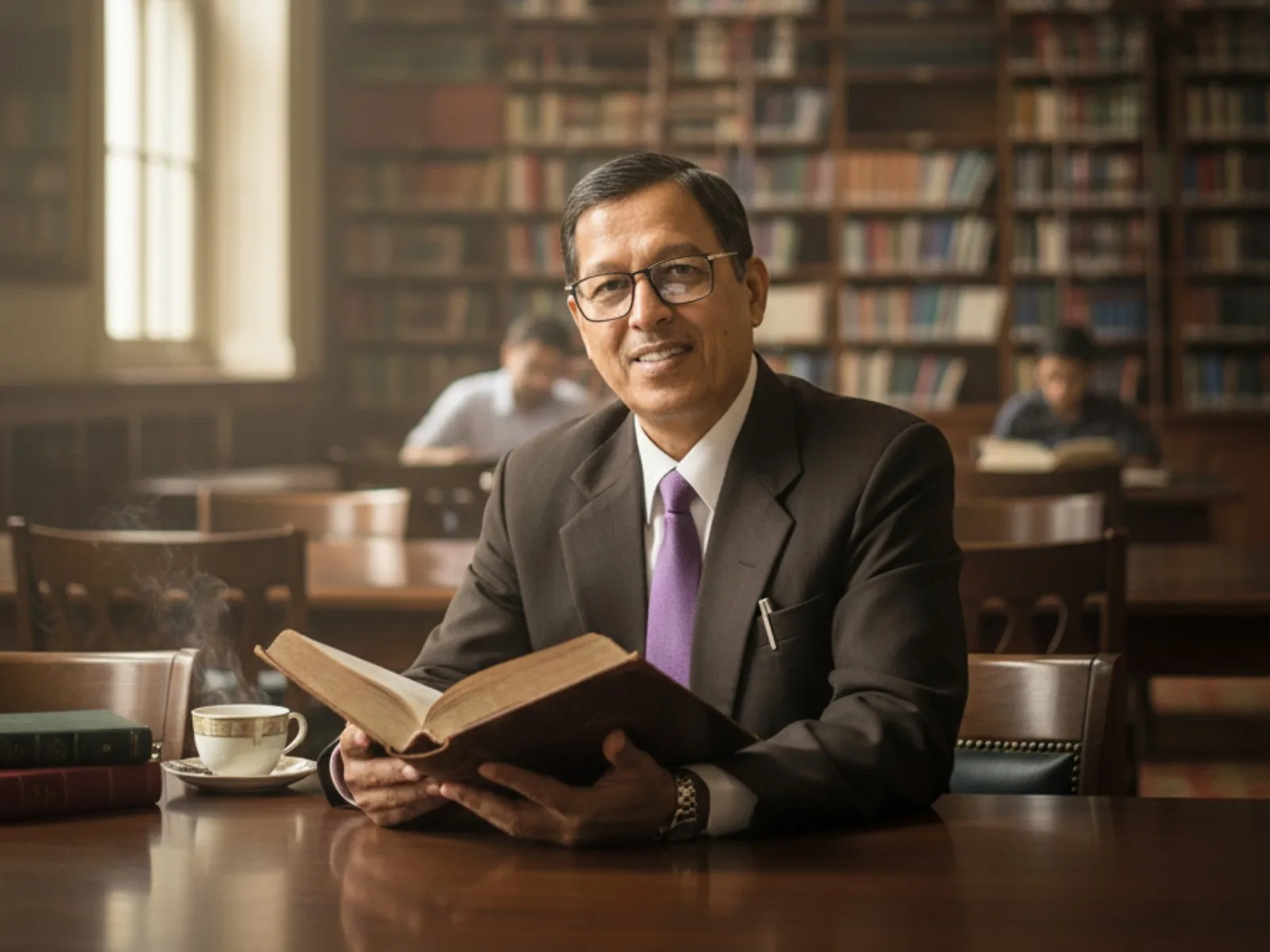
You’ve done everything “right”. Built a career. Paid the bills. Earned the respect of peers. Maybe even led a team or raised a family along the way. But now, as the noise of deadlines quietens and the title on your desk starts to matter less, something else begins to speak louder.
A voice that says, “Is this it?” Or maybe, “What do I really want now — not what I should want?”
It’s uncomfortable, isn’t it? The idea of starting over. Doing something that doesn’t fit the mould. Letting go of security, even when everyone tells you to hold on tighter. But what if letting go is exactly what you need?
Arun Jee knows that feeling well. Raised in a humble farming family in Bihar, he didn’t have a roadmap — only a quiet commitment to honesty, hard work, and lifelong learning. Over decades, he shaped the lives of thousands as a teacher and principal. Then, just when things were finally “settled”, he did the unthinkable: he disrupted it all.
In this story, you’ll learn what drove Arun Jee to trade comfort for curiosity. You’ll see how setbacks shaped his growth, how values guided every choice, and why it’s never too late to begin again — on your own terms.
Humble Roots, Higher Hopes
Arun Jee’s story doesn’t begin with ambition. It begins with values.
Born into a lower-middle-class farming family in Bihar, he grew up in an environment where there wasn’t much — but what existed was sacred: honesty, commitment, and education. These weren’t lofty ideals handed down in books. They were lived, quietly and consistently, by a father who believed that the way out of hardship wasn’t luck — it was learning.
Despite limited resources, Arun’s father worked tirelessly to educate all four of his children. It wasn’t easy. While Arun and his sister were studying at top colleges in Patna, their father was barely making ends meet. And yet, not once did he hold them back. His belief in education was unshakable, even when it meant personal sacrifice.
Arun was the eldest. And though he received all the love and support a child could ask for, he didn’t see himself as the brightest among his siblings. What set him apart, however, was something else entirely — a quiet fire for lifelong learning. A desire not just to study for a degree, but to keep evolving, always.
That belief became the bedrock of everything that followed.
Learning to Stand Alone
For Arun Jee, independence wasn’t just a preference — it was a principle.
From early on, he was clear about one thing: he didn’t want to depend on anyone, even when it would’ve been easier to do so. That clarity showed itself when he turned down safer, more secure opportunities simply because they didn’t align with his inner compass.
After completing his MA in English, Arun had options — but he chose to carve his own path. He took up tuition work to support his family while his sister was still studying. And when finances became too tight for their family to live apart, it was Arun and his sister who suggested relocating everyone to Patna — to reduce expenses and stay together.
Eventually, Arun got a job as a lecturer in Nepal. On paper, it looked like progress. But the reality? He was still finding his feet in English — a language he only began speaking fluently after post-graduation. Coming from a rural background where even Hindi was learned later, Arun didn’t grow up with linguistic privilege. He earned it.
And still, he stood in front of students, delivering lectures in English in a foreign country — learning on the job, learning on the fly, and most importantly, learning by doing. He didn’t wait until he was “ready.” He chose to grow into readiness.
That was the pattern: self-reliance, learning through action, and never mistaking comfort for progress.
Struggles, Setbacks, and Self-Belief
No life worth living is free from struggle — and Arun Jee never claimed his was exceptional. In fact, he’s the first to admit that compared to others, his hardships might seem “insignificant.” But that humility doesn’t erase the weight of what he carried — or how he responded to it.
There were professional setbacks. At one point, he was let go from a job — not because of poor performance, but because he hadn’t yet learned how to navigate workplace politics. In his own words, he hadn’t figured out how to “disagree with a smile.” He was principled, honest, and authentic — but lacked the soft skills required in environments where diplomacy often trumps directness.
There were personal challenges, too. Resigning suddenly. Walking away from jobs out of frustration. Moments that, in hindsight, felt impulsive — but were always rooted in staying true to his values.
He reflects on these moments with honesty, not regret. Every exit, every tough conversation, every failure taught him something. And each time, he came back stronger — not by changing who he was, but by sharpening how he moved through the world.
Because here’s the truth most people don’t say out loud: values aren’t enough on their own. You need skills to carry those values into the real world — and Arun learned that the hard way. Not through a mentor or a manual, but through trial, error, and relentless self-reflection.
That’s where his self-belief came from. Not from being the best. But from being someone who always got back up, a little wiser each time.
Becoming an Educator, Then More
Arun Jee didn’t set out to become a school principal. His dream was to teach in college. He even started his PhD with that goal in mind. But life, as it often does, had other plans.
What began as a stop-gap — a teaching role in a school — slowly transformed into something more meaningful. With time, the classroom stopped being a stepping stone and became a calling. He wasn’t just teaching English anymore; he was shaping young minds, leading teams, building institutions. Education had found him — and this time, he chose to stay.
In Jharkhand, he rose from teacher to Head of Department to principal, a role he would hold for 22 years across multiple cities and states — from Chhattisgarh to Gujarat to Punjab. The schools may have changed, but his commitment didn’t. Wherever he went, he brought the same integrity, passion, and relentless curiosity that defined his earliest steps.
What’s striking is not just how far he travelled, but how deeply rooted he stayed in his values. In a world where leadership often becomes about power or prestige, Arun led with purpose. He didn’t play favourites. He didn’t seek praise. He focused on the work — and on becoming better at it every day.
By the time he retired, he had led branches of the renowned Delhi Public School chain, influenced thousands of students, mentored countless teachers, and built a reputation not through flash, but through quiet, consistent excellence.
And then, just when most would settle in, Arun did something unexpected — again.
Reinvention After Retirement
Most people dream of retirement as a time to finally slow down, to rest after years of hard work. But for Arun Jee, stability felt like a warning sign — not a reward.
He could’ve stayed. His chairman wanted him to. His family urged him not to resign. His health was fine. His reputation solid. But Arun felt something else brewing inside him — the quiet pull toward something different. So, despite the comfort, despite the caution from everyone around him, he disrupted his own stability.
And walked away.
What followed wasn’t a polished second act. It was messy, experimental, and entirely new. He wasn’t chasing a title or a paycheck anymore — he was chasing expression. He picked up podcasting. He started reading and writing again. He began translating poetry. He even wrote and published in Hindi — a language he never considered his strength. For someone who had spent over three decades teaching English, it was a complete shift in voice, medium, and audience.
But it didn’t matter. Because for the first time, Arun wasn’t working for a school, a system, or a salary. He was working for himself.
In just a few years, his articles appeared in respected platforms like The Wire Hindi. He published a translated poetry collection. A grammar book. And recently, he was offered a column to write on Hindi literature — in Hindi.
It wasn’t planned. It wasn’t profitable. But it was deeply fulfilling. And most importantly — it was entirely his.
Lessons in Legacy
Arun Jee doesn’t describe his life as extraordinary. He doesn’t claim to have overcome massive odds or achieved impossible success. But what he’s built — and how he’s built it — offers lessons that go far beyond job titles or accolades.
Live by your values, even when it’s inconvenient. From his early days in a humble farming family, honesty and commitment were non-negotiable. He never chased shortcuts. He never compromised for comfort. Even when his choices cost him stability or popularity, he stayed grounded in what felt right — not what looked good.
Be willing to learn — always. He didn’t speak fluent English until after his post-grad. He didn’t understand the politics of leadership until he had to face the consequences. And he didn’t master the art of reinvention until well after retirement. But he kept showing up with a beginner’s mindset. Over and over again.
Don’t confuse success with stillness. Most people work towards a peaceful, predictable life. Arun walked away from it. Not because he was restless, but because he understood something most people miss — that growth often hides in discomfort. That starting again is not a failure, but a choice.
You don’t need a stage to make an impact. His legacy isn’t built on headlines or fame. It’s built on the students he mentored, the teachers he supported, the family he stood by, and the words he continues to write — long after the applause faded.
If you’re wondering whether it’s too late to begin something new… or whether being true to yourself will cost you too much… Arun Jee’s life quietly offers this: It might not be easy. But it’s worth it.
Closing Reflection: What’s the Next Chapter You’ve Been Avoiding?
You don’t need to start over to start again. You don’t need permission, or a perfect plan. You just need the courage to listen to that quiet voice — the one asking for something more.
That voice spoke to Arun Jee. It told him to leave comfort behind. To learn a new language. To risk his reputation. To write in a tongue he wasn’t trained in. To become a student again, after decades of being a teacher. He didn’t always know what came next. But he trusted that staying true to himself was reason enough to keep going.
So now the question is yours to answer.
What have you been putting off because it doesn’t “make sense”? What would you explore if you weren’t afraid of starting from scratch? What part of yourself have you silenced in the name of being practical?
The truth is, legacy isn’t built at the finish line. It’s built in the moments where you choose honesty over ease. Curiosity over control. Meaning over momentum.
Arun Jee’s story doesn’t tell you what to do. It simply proves that it can be done.
So, what’s the next chapter you’ve been avoiding? And when will you begin?
By Ugesh Sarcar