Wisdom Bank - The Woman Who Taught with Heart, Not Just a Syllabus
You wonder sometimes if it’s all worth it.
The early mornings. The quiet sacrifices. The countless hours spent nurturing others while wondering if anyone even notices. You don’t do it for the applause — but still, you hope it matters. You hope the way you show up — with honesty, patience, and heart — leaves something behind.
Because deep down, you believe in people. Especially young people. You believe that with the right support, any child can thrive. And that being a good human matters more than being a successful one.
But in a world that seems to reward noise, speed, and showmanship, it’s easy to feel out of place when all you want to be is kind, consistent, and quietly impactful.
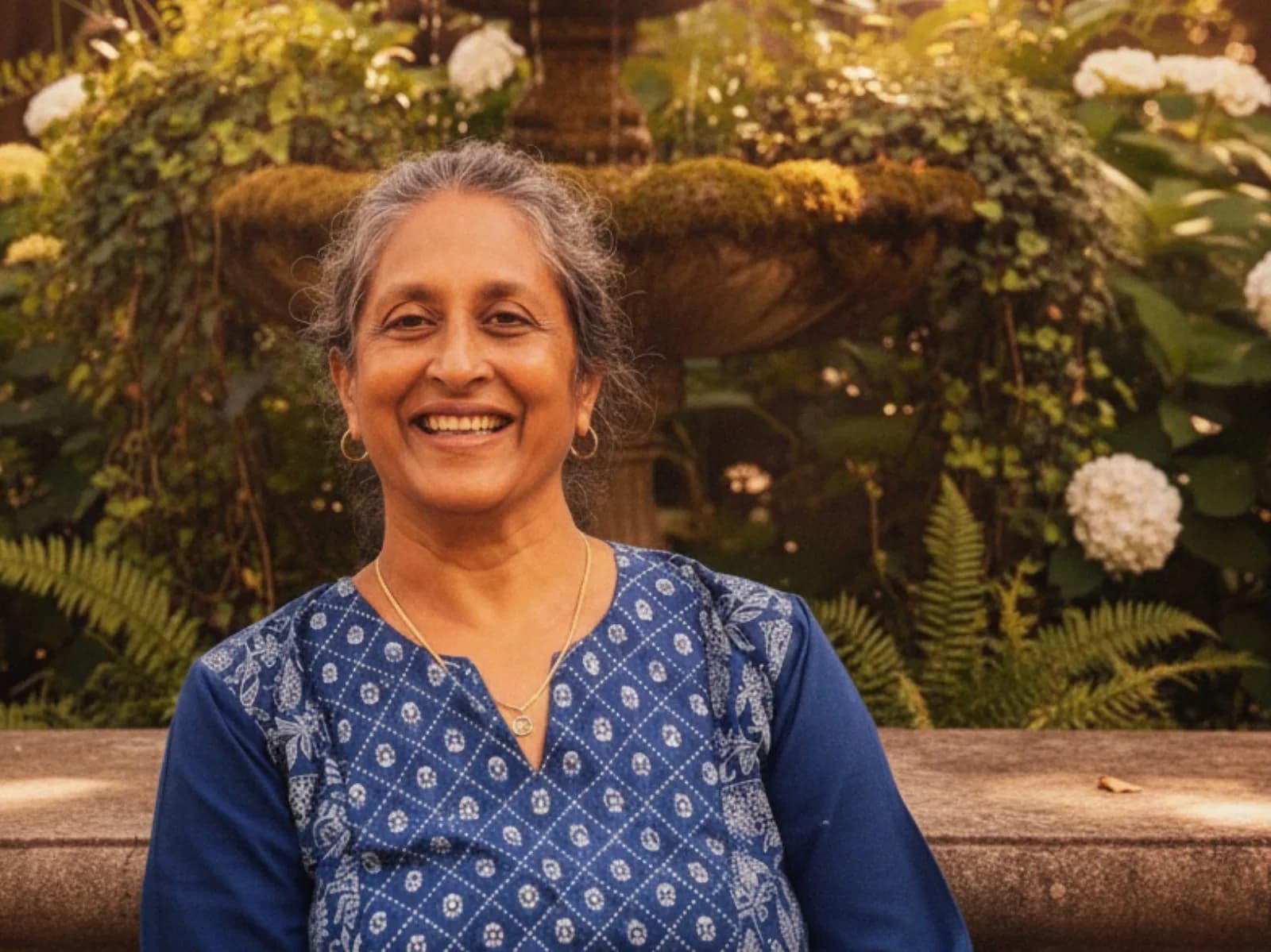
That’s why you’ll want to hear the story of Shobha Sundar — a maths teacher, mentor, and mother who has spent her life proving that trust, simplicity, and genuine care are not just enough — they are everything.
In this blog, you’ll walk through the life lessons of a woman who believed in children when no one else did, who built her life on values passed down through love — not lectures — and who shows us that being deeply human is the most powerful thing you can be.
Shobha’s Core Belief: Be a Good Human First
Shobha Sundar doesn’t have a complicated philosophy about life. In fact, that’s the point — she believes simplicity is powerful.
At the heart of who she is, there’s one guiding principle: be a good human being. Not for the sake of image or recognition, but because being decent, honest, and kind is the foundation for everything that matters.
“Earning a good name,” she says, “takes a lifetime — and it only comes from good thoughts and good actions.”
There’s no flair or frills in the way she lives. Even when she dresses up, she prefers to keep it simple. Most days, it’s just pyjamas and a T-shirt. She isn’t trying to impress. She’s trying to live in a way that feels true — where every choice comes from a good place, done with intention, and most importantly, with heart.
This belief isn’t just about how she treats others — it’s about how she shows up in every part of her life. Whether she’s teaching a maths lesson or listening to a struggling student, she gives it her all. “Whatever I do,” she says, “I do it from the bottom of my heart, with very good intentions.”
And that’s not just a line — it’s a lived truth. You’ll see it in the stories of her teaching. In the way she describes her family. And in the way she holds space for others, quietly but consistently.
Teaching from the Heart
For Shobha, teaching was never just about textbooks or exam results. It was about people. More specifically, teenagers — that critical age between 15 and 18 when they’re figuring out who they are, often while quietly struggling with more than they can say out loud.
She taught mathematics to students in 11th and 12th grade, but her real subject was human connection.
She didn’t walk into class just to deliver a syllabus. She walked in to observe, to understand, to guide. She paid attention to body language, behaviour shifts, emotional cues — the small things most people overlook but that often hold the key to what a child is really going through.
Many of the students she taught came from difficult backgrounds. Some couldn’t afford their fees. Some came from broken families. Some had parents who’d already given up on them. But Shobha didn’t.
She had a unique ability: she saw the whole child, not just the grades.
Yes, she could teach math — and she did it with dedication. But what made her different was that she saw academic success not as a goal, but as a byproduct of something deeper: feeling seen, supported, and believed in.
It’s no surprise then that her students began to confide in her — about academics, about family struggles, about mental health. She didn’t have formal training as a counsellor, but she had something just as powerful: empathy, consistency, and time. She gave all three, freely.
In Shobha’s classroom, students weren’t just students. They were people. And that changed everything.
The Story of Shiva: Believing When No One Else Did
It was over 30 years ago, but Shobha remembers him clearly — Shiva, a bright young student whose future nearly slipped through the cracks.
He had scored over 90% in his 10th-grade exams. Smart. Capable. Full of potential. But something changed in his first year of college. He started skipping classes. His grades dropped. Slowly, the system gave up on him. Teachers stopped trying. His parents, exhausted and unsure, stepped back.
But Shobha didn’t. She saw what others couldn’t — a boy who was still capable, just temporarily lost.
So, she tried something unconventional.
Every morning at 5:30 AM, before school even began, Shiva would come to her house. He’d sit down to study, have breakfast with her children, and then they’d leave for college together. Not because she was getting paid. Not because anyone asked her to. But because she believed in him.
“I won’t teach you,” she told him. “You’ll study. I’ll just make the timetable. Today is physics, tomorrow chemistry, day after maths. That’s it. But I want your grades to come back.”
And they did. Shiva cleared his exams with flying colours.
But it wasn’t just about the marks. It was about what belief can do when it’s backed by action. When one adult refuses to give up on a child, everything can change.
What’s even more moving? Her mother-in-law — a traditional woman from a very different world — would quietly get up before dawn to open the door for this boy, never questioning, never criticising. Just trusting that what Shobha was doing mattered.
This story isn’t a one-off. Shiva was one of many students she helped bring back on track. But his journey captures the heart of who Shobha is: someone who never looks at what a child has done, but what they’re still capable of becoming.
The Role of Family in Her Journey
You don’t become someone like Shobha Sundar in isolation.
Yes, she’s driven by her own values. Yes, she leads with heart. But behind that quiet strength is something often overlooked: a family who let her be who she truly is.
She credits much of her personal growth to two key people — her husband, Sundar, and her mother-in-law.
Sundar, she says, is like his mother. He’s seen more of the world, more people, more situations. From him, she learned perspective. Emotional insight. Patience. Though she describes herself as an introvert, it’s clear that his broader worldview gave her a deeper understanding of relationships and people.
Then there’s her mother-in-law — a woman who didn’t have a high level of formal education, but who lived with deep wisdom and values. She taught Shobha the meaning of family. Not in the dramatic, Bollywood sense — but in small, consistent, powerful ways.
She never forced her daughter-in-law to follow rituals or traditions she didn’t believe in. She never pushed religion or culture on her. Instead, she showed Shobha how to value each person’s emotions, how to keep peace without control, and how to respect differences — even when living under the same roof for 25 years.
That kind of emotional generosity leaves a mark.
“She never questioned my way of raising my children,” Shobha says. “Even though it was very different from hers. That kind of trust — from a mother-in-law — is rare.”
And her husband? He never once asked why she was bringing students home at 5:30 in the morning. He never asked for justification. He knew she cared deeply, and that was enough.
This quiet, unwavering support gave her the freedom to give to others — her students, her children — without constantly needing to explain herself.
And maybe that’s the real lesson here: to live with purpose, you don’t just need clarity — you need space.
What She Learned from Children
If you talk to Shobha about her years of teaching, you’ll notice something right away — she doesn’t speak about children as much as she speaks from a place of deep respect for them.
She doesn’t see children as people who need to be “fixed” or controlled. She sees them as whole human beings — each with their own strengths, struggles, and stories.
Her most powerful belief? No child is bad.
That’s not a feel-good statement. It’s a truth she’s lived, year after year, classroom after classroom. “No child wants to fail,” she says. “No child enjoys doing badly. They get carried away sometimes — by peer pressure, hormones, distraction — but they all want to do well. Every single one.”
She’s seen children lie, steal, act out — and never once has she jumped to label them. In fact, she has a deep dislike for how easily adults throw words like lazy, dull, or naughty at kids. “Erase the word dull from the dictionary,” she says firmly. “It does more damage than you realise.”
Her approach? Always ask why.
Why did the child act out? Why did they stop studying? What’s changed in their world that’s making them withdraw, rebel, or break down?
Because there’s always something beneath the surface. And Shobha learned early on that children open up when they feel safe. When they’re not being judged. When someone is patient enough to listen without labelling.
It’s a lesson that shaped how she taught — but more than that, it shaped how she loved.
She believed in the goodness of children not because it was convenient, but because she saw again and again that trust brings out the best in them — even when they’ve forgotten how to trust themselves.
Raising Her Own Children Differently
Shobha’s beliefs about children didn’t just shape her teaching — they shaped how she raised her own.
She had three sons, and each of them was different. Different personalities. Different strengths. Different struggles. But her approach remained the same: trust them.
One of her sons — a left-hander with poor handwriting and slower academic performance — stood out for more than just his challenges. From a young age, his heart was on the tennis court. While other children were memorising multiplication tables, he was training for national-level tournaments. At 13, he was ranked India’s No. 4 in under-14 tennis.
Academically though? He struggled. Teachers criticised his handwriting. His work took longer. It was messy, hard to read — even for him. And the red pens came out too quickly. "Redo." No encouragement. No context. Just judgement.
Shobha, like any mother, worried. But she was also lucky — because at a critical point, someone stepped in and told her something that stayed with her forever.
That someone was Susan Jacob, the headmistress at her children’s school. She told Shobha, “Trust me. This child will make you proud.”
And he did. That same boy, once doubted and dismissed, went on to become a chartered accountant, clearing his CA exams in the first attempt.
Susan Jacob didn’t just see the child — she saw the whole child. Just like Shobha had always tried to do in her own classroom.
So when she raised her children, she did it her way. Gently. Differently. Without force. And once again, her family showed up with quiet support. Her husband never questioned her choices. Her mother-in-law, despite coming from a very different generation and mindset, never interfered.
No criticism. No control. Just trust.
And maybe that’s the thread that runs through Shobha’s life — being trusted, and passing that trust forward.
The Lasting Impact of Quiet Support
Looking back, Shobha’s story isn’t defined by grand achievements or loud declarations. It’s shaped by something far more powerful — quiet, unwavering support.
The kind that doesn’t draw attention to itself. The kind that opens the door at 5:30 in the morning without complaint. The kind that doesn’t ask, “Why are you doing this?” — but instead says, “I trust that you know why.”
That kind of support is rare. And it’s everything.
Her husband never demanded she justify her decisions. Her mother-in-law, despite holding more orthodox views, never interfered — not when Shobha brought students home, not when she raised her children differently, not even when traditions clashed. Instead, she chose to trust. To believe in Shobha’s heart, even if her methods were unfamiliar.
And Shobha paid that support forward. To every student who walked into her classroom with a burden. To every child who struggled to fit into a system that didn’t see them. To her own kids, whose paths were never forced, only encouraged.
It’s easy to underestimate the power of someone believing in you quietly, consistently, without applause. But it builds something unshakeable — the confidence to be who you are, and the courage to help others do the same.
In a world full of noise, Shobha’s impact is proof of what can happen when you live with quiet strength, trust people before they trust themselves, and lead not with authority, but with presence.
Takeaways for the Reader
You don’t need to be loud to make a difference.
You don’t need a big title, or a flawless plan, or a picture-perfect life.
What you need — and what Shobha Sundar shows us — is something far more lasting:
Be a good human, first.
Trust people, even when they’ve lost trust in themselves.
Speak gently — your words leave marks.
Don’t label children. Listen to them.
Support others in quiet ways. It matters more than you think.
Her story is a reminder that simple values aren’t outdated — they’re underrated. That giving your best, staying grounded, and believing in people isn’t naive — it’s courageous.
So whether you’re a teacher, a parent, a mentor, or just someone trying to do good in a world that moves fast and forgets easily — know this:
What you do matters. How you treat others matters. And the quiet, consistent kindness you offer might be the one thing someone remembers for the rest of their life.
Just like they remember Shobha.
By Ugesh Sarcar