Wisdom Bank - Quiet Choices, Lasting Impact: Vani Brahmachari’s Way
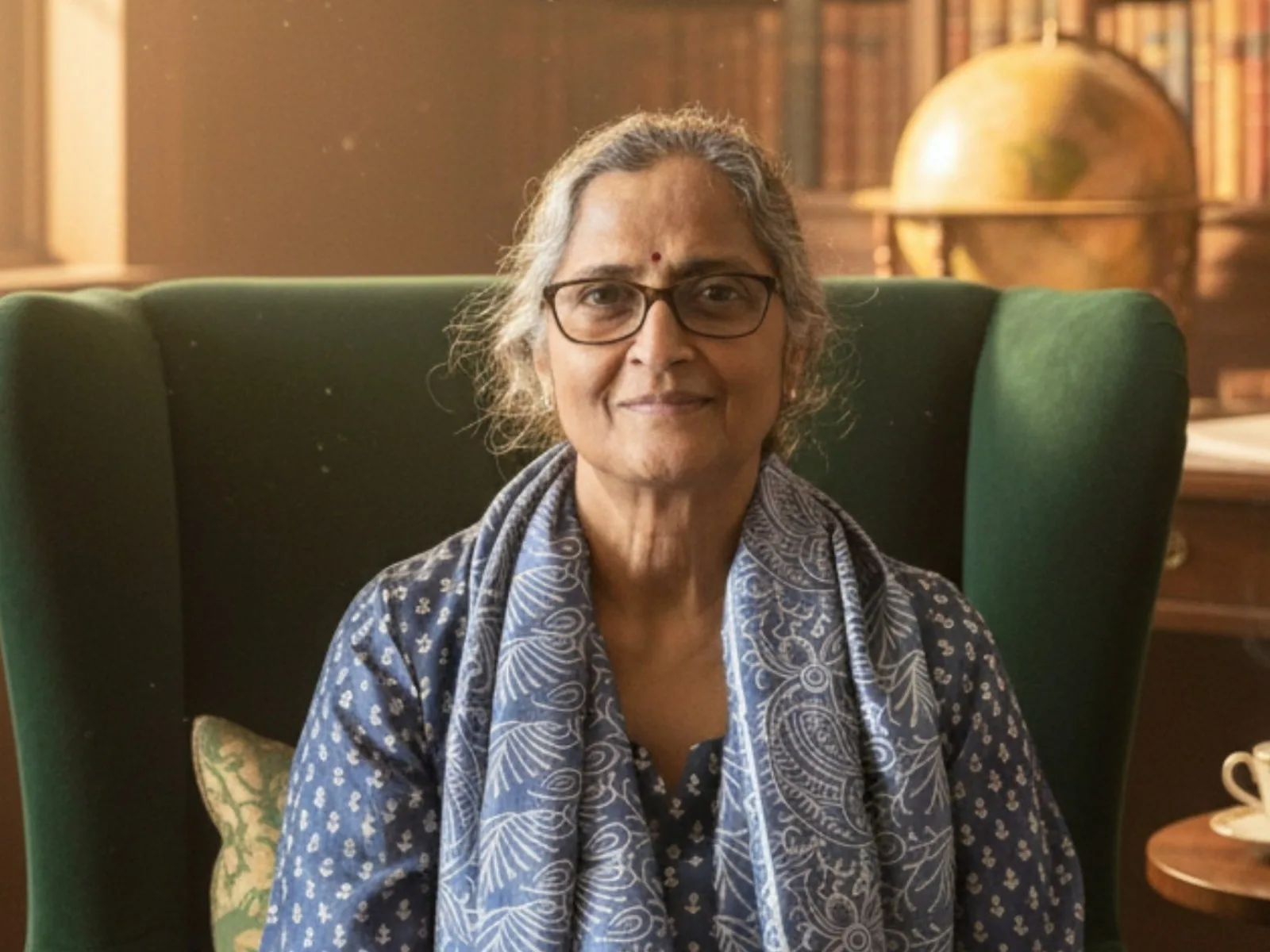
Not every story of success is loud. Some are built quietly, in classrooms, research labs, and conversations where someone chooses to listen rather than speak.
Vani Brahmachari’s story is one of those. At first glance, you might notice the medals, awards, and decades of contribution to science. But if you sit with her for even a few minutes, you’ll realise what truly defines her: honesty, empathy, and care.
These values weren’t just ideals she admired—they shaped the way she lived and worked. They were there when she decided to put family above ambition, when she stood by students who felt lost, and even when she admitted that caring too much sometimes hurt more than it helped.
Her journey shows us something many forget: success doesn’t have to come from chasing the spotlight. It can come from staying true to yourself, nurturing others, and choosing a life that aligns with your values.
Honesty: The Non-Negotiable Foundation
For Vani, honesty wasn’t just a principle to admire from afar. It was something she absorbed at home, around the dining table, listening to her father. He worked in administration at a time when corruption was less blatant but still present in whispers of favours and bribes. Each evening, the family would hear stories of people who had stood their ground and others who had given in. Those conversations left an imprint: integrity wasn’t optional, it was the measure of a person.
That early grounding shaped the way she carried herself in her career. Science, after all, demands truth—truth in data, in process, in results. But for Vani, honesty went beyond research. It meant dealing fairly with colleagues, being transparent with students, and refusing to bend to shortcuts even when it seemed easier.
She never treated honesty as a burden. Instead, it was her anchor. In a world where competition can tempt people to cut corners, her sense of integrity became a quiet strength, one that guided her choices and earned respect without her needing to ask for it.
Empathy: Leading with Understanding
If honesty was Vani’s anchor, empathy was her way of moving through the world. She often says she might have “a little more empathy than necessary”—but it’s this very quality that made people trust her.
The roots of it were, again, in her family. She remembers her father returning from a morning walk and sharing how he’d stopped to speak to a young man sitting alone, clearly troubled. The man had just lost his father and didn’t know what to do next. Instead of walking past, her father sat with him, listened, and connected him with people who could help. For Vani, it was a simple but powerful lesson: sometimes empathy is as small as pausing to see another person’s pain.
She carried that into her own professional life. Many of her students came to her not just for academic guidance but for something deeper. When a bright student was underperforming, she would sit with them, not to scold, but to ask: “What’s going on? You seem capable, so what’s holding you back?” Often, the answer had nothing to do with science—family pressures, personal interests, or grief weighed them down. By listening, she gave them something rare in competitive environments: space to be human.
Over time, she became the go-to person for students and younger colleagues in crisis. In Delhi, especially, where life could feel harsh and lonely, she informally became a counsellor. They would express after speaking to her, “You put us at ease once we come to you and start talking.”
In science, empathy isn’t a skill you see listed on CVs. But for Vani, it was what made her more than a scientist—it made her a mentor, a steady presence in other people’s storms.
Caring Deeply: The Double-Edged Sword
Empathy made Vani approachable, but caring was what shaped her relationships. She cared easily, sometimes too much—and she knew it.
There were moments when her concern was more than people wanted. She would worry, check in, and offer help when someone simply wanted space. Looking back, she admits that sometimes her care crossed into overdoing it. Caring, after all, is not always received the way it’s given.
But there were other moments—deeply human ones—when her care made all the difference. She remembers visiting a colleague who had just lost her father. The room was heavy with grief. The colleague’s mother, exhausted and inconsolable, hadn’t slept all night. Vani sat beside her, speaking softly, simply being present. Eventually, the woman fell asleep on her shoulder. In that moment, her care wasn’t intrusive—it was healing.
The same was true with students. Some carried burdens too heavy for their years: a non-working parent, a sibling’s illness, financial strain. They didn’t just need academic guidance—they needed someone to listen. And Vani, by caring enough to step into their struggles, gave them a measure of strength to carry on.
Caring, for her, was never about grand gestures. It was about noticing when someone was slipping through the cracks and offering what she could, even if it was just time and presence. Yes, it came with risks—of being too involved, of shouldering more than was hers to bear—but it also created bonds of trust that outlasted the classroom or the lab.
Conscious Career Choices
Every career comes with crossroads, and for Vani, the choices she made were never just about ambition—they were about alignment with her values.
After her PhD at the Indian Institute of Science, Bangalore, she had two clear tracks ahead: the academic ladder of lecturer to professor, or the scientist track that kept her closer to the bench. Many in her field chose the first, chasing grants, prestige, and rapid advancement. But Vani looked at what that meant: more administration, less hands-on science, and a relentless pace she didn’t want for herself. She chose the second path—slower, perhaps, but truer to what she valued.
Her choices weren’t only about work. They extended to family life, too. Married to Samir, a fellow scientist deeply passionate about his work, Vani made a conscious decision early on: his career would take priority. She knew she would divide her energy between research and raising children, and she didn’t want to fight a tug-of-war at home. It wasn’t a compromise, but a deliberate choice—and one she looks back on without regret.
For many, these decisions might seem like “sacrifices.” But for Vani, they were simply ways of living honestly—with herself and with her family. She never wanted the rat race, and she never measured her worth by titles alone. By choosing what felt right rather than what looked impressive, she created a balance that gave her peace.
Recognition Without Spotlight
Even without chasing prestige, recognition found its way to Vani. She won a gold medal during her master’s programme, received the Young Scientist Award and earned a coveted fellowship from the Indian National Science Academy. Her research on post-transcriptional modification of transfer RNA and a transgenic mouse model for human genetic disease opened doors, including the chance to work in Japan, where she experienced a new culture of science.
She is deeply grateful for the support of her extended family, which gave her the courage to take up similar enriching assignments subsequently. Later, in 1999, she was asked to lead a fledgling Biomedical Research Centre at Delhi University. She accepted the challenge as Professor and Director, and went on to serve there for 22 years before retiring as Professor.
But despite these achievements, Vani never sought the spotlight. In fact, she often felt uncomfortable under it. Sharing success publicly didn’t come naturally to her—she preferred to let the work speak for itself. In her words, boasting made her uneasy.
This humility wasn’t false modesty. It was a genuine reflection of who she was. She valued the quiet satisfaction of contributing, of doing the work well, and of sharing it with those close to her rather than announcing it to the world.
In a field where visibility often seems as important as results, Vani showed that you don’t need to constantly market yourself to be respected. Her strength lay in doing meaningful work and letting recognition be a by-product, not the goal.
Lessons for Readers
Vani’s journey is a reminder that success doesn’t have to follow a single script. In a world that often glorifies ambition, competition, and visibility, her life offers a different perspective—one rooted in values.
- Honesty keeps you grounded. In science, in work, and in life, integrity builds trust. It may not be the fastest path to recognition, but it’s the one that lasts.
- Empathy makes you human. Whether you’re leading a team, mentoring students, or simply navigating daily life, taking the time to understand others creates bonds far stronger than authority alone ever could.
- Caring is powerful, even if imperfect. Yes, sometimes it can feel like too much. But when offered with sincerity, care has the ability to comfort, heal, and change lives.
- Your choices are valid if they align with your values. Vani’s decision to prioritise family and choose a less conventional career track didn’t diminish her achievements—it gave her peace.
- Humility is a strength. You don’t always need the spotlight to make an impact. Sometimes the quiet contributors shape the world just as deeply as those in front of the cameras.
For anyone torn between ambition and balance, or struggling with the pressure to compete endlessly, Vani’s story offers reassurance: it’s possible to build a fulfilling life by staying true to yourself.
Conclusion
Vani Brahmachari’s life is proof that values can be as powerful as ambition. Honesty kept her anchored, empathy helped her connect, and caring gave her the courage to stand by others when it mattered most.
She didn’t chase titles or spotlight, yet she built a career of substance and a life of meaning. Her story reminds us that success isn’t just about how far you climb—it’s about how closely your steps align with who you are.
If you’ve ever felt pressured to run faster, achieve more, or shine brighter, pause for a moment and consider Vani’s path. Sometimes the most enduring impact comes not from racing ahead, but from living with integrity, kindness, and care.
By Ugesh Sarcar