Wisdom Bank - The Long Road: How Dr. Shashank Rathod Chose Integrity Over Everything
There’s a quiet crisis happening all around us — and no one talks about it.
It’s not burnout. Not failure. Not greed.
It’s the slow erosion of our values.
You don’t notice it at first. A favour here. A white lie there. A moment when you tell yourself, “It’s not a big deal.” And maybe it isn’t — until it becomes normal.
Until one day, you stop recognising yourself in the mirror.
In a world that rewards the loudest voice, the fastest win, the cleverest shortcut — doing the right thing doesn’t feel heroic. It feels lonely. Sometimes, even foolish.
But what if it isn’t?
What if the people who quietly stick to their values — without applause, without shortcuts — are the ones actually building something lasting?
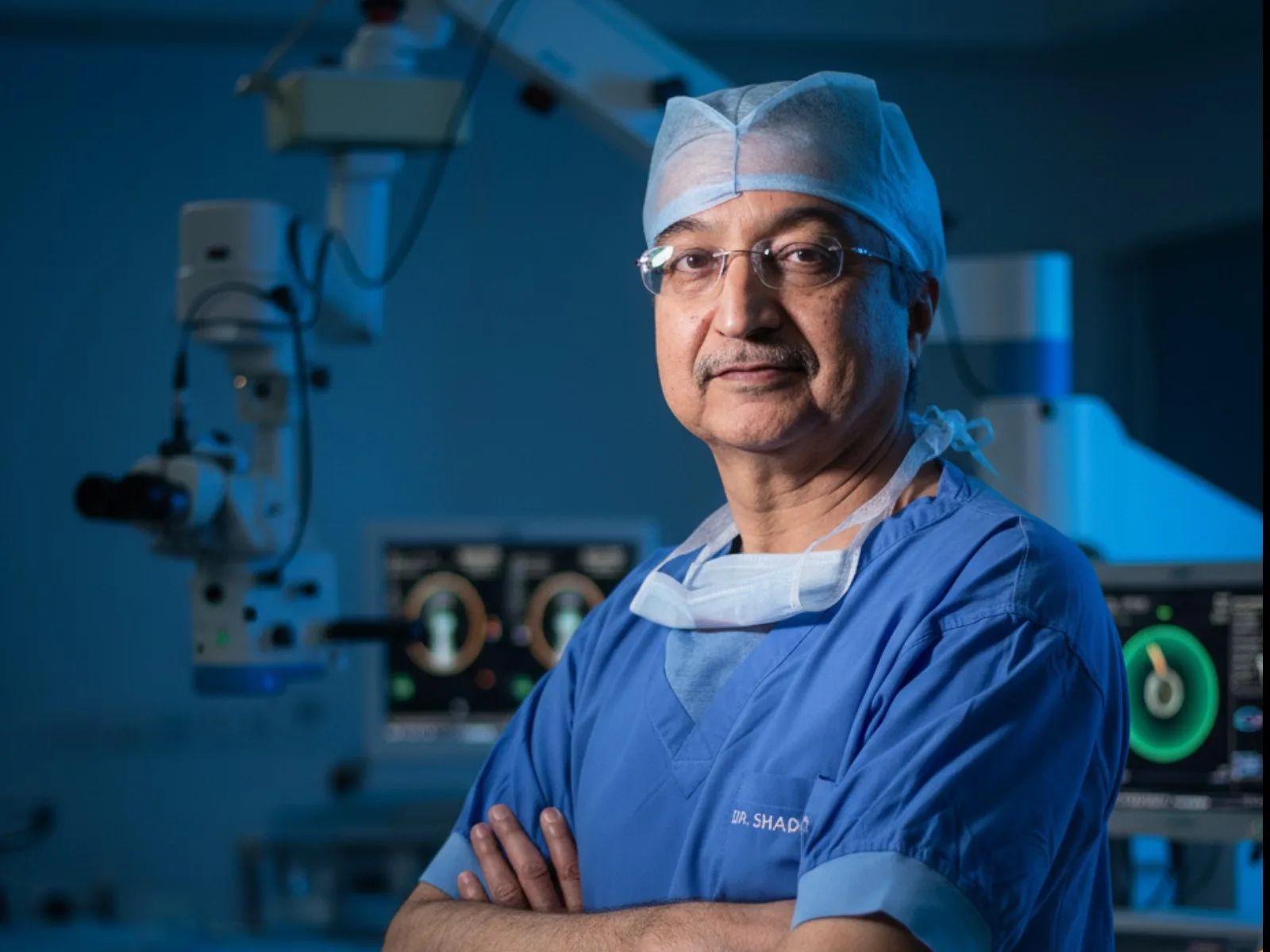
Meet Dr. Shashank Rathod.
Not just a respected eye surgeon. Not just a man who’s facilitated thousands of cataract surgeries across India and Africa. But someone who has consistently — and often painfully — chosen the principled path when no one was watching.
He didn’t give in to pressure. He didn’t bend rules for friends. He didn’t hand his daughter a silver spoon.
He gave her something far more valuable: a chance to struggle. To grow. To fail and rise on her own.
And he gave himself something even rarer — the freedom to sleep at night with a clear conscience.
This isn’t a blog about success. It’s about clarity. About what it costs to stay true — and why it’s worth it. About motorcycles and moral compasses. About standing tall, even when it’s easier to lean.
So if you’ve ever felt tired of being “the good one”... If you’ve ever wondered whether integrity still has a place in the world…
You’re about to meet someone who proves it does — not with words, but with a lifetime of quiet, powerful choices.
The Invisible Cost of Integrity
When people talk about ethics, it’s often romanticised. We admire those who “stand by their values,” but we rarely talk about what that actually costs.
The truth is, doing the right thing doesn’t always feel good. Sometimes, it’s awkward. Lonely. Even painful.
Dr. Shashank Rathod knows this too well.
He’s had friends — close ones — request favours. People who expected a little “flexibility” because of their history. In some cases, it would’ve been easy to say yes. No one else might’ve even known.
But he always said no.
“Quite a few times,” he admits, “people I was close to felt let down. I could’ve helped them. But when you’re heading an institution, the responsibility is bigger than your personal feelings.”
He’s not bragging. In fact, it clearly weighs on him. Because saying no to a friend when you know you can help… hurts. It questions your loyalty. It risks the relationship.
And it doesn’t come with a badge of honour. There’s no applause when you stick to principle and lose a friend.
But that’s what integrity demands. And Dr. Rathod chose it again and again — not because it was easy, but because it was clear.
Even within charitable and religious organisations, he saw politics and pressure. Times when saying yes could’ve secured him greater visibility or smoother relationships. But he didn’t.
“I’m not a yes man,” he says. “And yes, sometimes that means I don’t get what others get. But I’m not here for short-term gains. You might win a match by compromising — but you’ll never win the series.”
He chose the long road. The lonelier one. The one with fewer handshakes but deeper sleep.
Because real credibility isn’t built when the spotlight is on — it’s built in the moments no one else will ever see.
Where It All Came From
Values don’t usually arrive as dramatic revelations. They’re absorbed — quietly — through what we witness when we’re young.
Dr. Shashank Rathod didn’t learn integrity from a leadership seminar. He learnt it watching his parents pack up a medical jeep and drive to remote villages to deliver babies.
His father was a doctor in Disa. His mother? The first lady doctor in all of North Gujarat. They were both MBBS graduates at a time when that alone made them pioneers — especially in rural India.
There was no private clinic. No billing software. No premium services. There were villages. Dirt roads. Jeeps. Patients waiting by the river.
And there was trust.
His mother didn’t just treat patients — she served them. Sometimes, all she came home with was a cup of tea and a thank-you. Sometimes, the “fee” was a smile. And still, she’d go out again the next day.
They didn’t chase wealth. They created impact. And without ever saying it directly, they taught their son that money follows meaning — not the other way around.
Dr. Rathod watched his father start a medical association. Saw his mother build a women’s community centre that now stands as a four-storey building in their hometown. More than legacy, they left behind an example: Do good work. Be straightforward. Let your actions speak.
These weren’t just parental values — they became personal principles.
It’s no wonder then, that decades later, when faced with decisions that could have personally benefitted him, Dr. Rathod chose the harder path. Because he wasn’t just carrying a degree or a title — he was carrying forward a lineage of service without showmanship.
And when you’ve seen that kind of quiet dignity growing up, shortcuts simply don’t appeal.
The Leadership Test
It’s easy to be ethical when no one’s asking you to bend. But leadership doesn’t give you that luxury.
The higher up you go, the more pressure there is to accommodate. Make exceptions. Grant favours. Look the other way.
That’s exactly what Dr. Shashank Rathod refused to do.
When he was entrusted with leading a major cataract surgery initiative by Rotary — spanning cities like Kota, Trivandrum, Mumbai, Bhopal, and Amritsar — he had control over how the funding was distributed. This wasn’t a small responsibility. Hospitals needed the support. Friends reached out. Some assumed the rules could stretch.
But he made one thing absolutely clear: Rotarian eye surgeons — including himself — would not be eligible.
It wasn’t a symbolic gesture. It was a hard rule.
That meant his own hospital couldn’t apply, even though it was performing high-volume charitable surgeries. Even though it would have qualified on paper. Even though no one would have questioned it.
But for Dr. Rathod, the line between what’s permissible and what’s principled was never blurry.
“If I’m leading this,” he said, “then I must step back from benefitting from it. That’s the only way this remains clean.”
Some argued back. After all, there were Rotarian doctors doing great work. Why exclude them? Why not make exceptions for those who’ve earned trust?
But his response was unwavering:
“Because once you make one exception, you make room for ten more.”
He wasn’t just protecting the integrity of a funding programme. He was protecting the spirit behind it — ensuring it truly reached those who had no other support.
That’s the difference between influence and leadership. Influence can get you things. Leadership protects things. Systems. Standards. Values.
And that’s what made people trust him.
Not because he was generous with rules — but because he never broke them, even when it would have helped him.
Building Resilience in the Next Generation
Most parents want to make life easier for their children. Dr. Shashank Rathod took the opposite approach.
When his daughter — also an eye surgeon — was ready to begin her medical career, she didn’t get a warm welcome into the family hospital. There was no shortcut, no phone call, no backdoor entry.
Instead, Dr. Rathod told her, “You’ll go out and earn your place. Just like everyone else.”
She applied to trust hospitals on her own. Sat in waiting rooms with other applicants. Walked in with her CV — no introductions, no name-dropping. When she was hired, the trustees were shocked to discover whose daughter she was.
And when she finally joined his hospital after serving for 5 years in trust hospitals? Not as co-director. Not even as a senior. She started as the fourth junior doctor on the team.
It wasn’t punishment. It was preparation.
“I told her,” he said, “you need to go through the same sleepless nights I did. When complications happen — and they will — you need to know how to handle them on your own. Not with me stepping in.”
Most surgeons, especially those with powerful parents, never get that chance. When something goes wrong, the senior doctor takes over. The child never learns to sit in the discomfort of failure. Never learns how to own a decision.
But Dr. Rathod saw it differently:
“If she operates under my shadow, she’ll always be the daughter of the boss. But if she makes mistakes, solves them, and learns through that pain — she becomes a real surgeon. A real adult.”
And that’s exactly what happened. Years later, his daughter is now one of the most valuable assets in the hospital — not because of her surname, but because of her growth.
This wasn’t just parenting. It was leadership — the kind that puts character before comfort.
Because protecting your child doesn’t always mean shielding them. Sometimes, it means stepping back and letting them fight — so they discover what they’re truly made of.
Live. Don't Exist.
It was the late 1970s. No Google Maps. No smartphones. No emergency helplines. Just a 22-year-old medical student on a Yezdi motorcycle — riding from Ahmedabad to Kanyakumari, with nothing but handwritten directions, a few litres of spare petrol, and a desire to explore the country.
That student was Dr. Shashank Rathod.
The ride spanned 6,200 kilometres across India, through Gujarat, Maharashtra, Karnataka, Kerala, and Tamil Nadu. It took him over a month (34 days) — and every part of it had to be figured out on the go.
He recalls how he used to book an “urgent call” at the local post office every morning — just to speak to his family by evening. But there was no guarantee the line would connect. So his mother had come up with a system: she gave him a stack of postcards pre-addressed to their home.
Wherever he found a red post box, he’d write a line or two: “I’m safe.” “All okay.” Then drop it in.
It was a simple ritual. But it was also his only lifeline home.
“There was no GPS, no mobile phones. You’d ask truck drivers where the next petrol pump was. Sometimes it was 90, 110, 150 km away. And you just hoped you’d make it.”
And yet, despite the uncertainty, the danger, the lack of comfort — he loved every moment.
“That ride taught me so much. Resilience. Resourcefulness. Being alone without being lonely.”
But eventually, life caught up. Medical practice took over. And he gave up riding — not because he wanted to, but because the risk became too high.
“As a surgeon, a broken bone could end your career. So I stopped. I told myself it was the sensible thing to do.”
Years passed. Then decades.
And at 65, long after most people trade adventure for routine, Dr. Rathod turned to his wife and said: “I want to ride again.”
There was hesitation. Concern. Debate. But eventually, she said yes — and he bought a Harley Davidson.
He started small. Early morning rides. Then short overnights. Always with a backup car, just in case. Now, at 70, he’s planning a longer ride — a road trip to Goa via Ratnagiri and Ganpatipule. It hasn’t happened yet, but it’s on the map.
And for him, it’s not just about motorcycles.
“I wanted to reclaim a part of me. The part that didn’t just live — but felt alive.”
Because real life isn’t just about career milestones or financial security. It’s about staying connected to the things that make your soul spark.
Many doctors, he says, spend their whole lives building careers but forget to build lives. Then one day, retirement hits. The phone stops ringing. And they don’t know what to do with themselves.
“They have no hobbies. No friendships. No joy outside the hospital. That’s not success — that’s quiet collapse.”
So he made a decision: work will not be my whole life.
He stayed connected to old friends. Reached out to schoolmates he hadn’t spoken to in 10 years. Some were wealthy. Others ran paan shops. It didn’t matter. What mattered was the connection.
Because real life isn’t found in your résumé. It’s found in the wind against your face, the old friend who picks up the phone, and the laughter you weren’t expecting.
Dr. Rathod never let age or duty rob him of joy. And if there’s one thing he’s proven, it’s this:
You’re never too old to remember who you were before the world told you who to be.
Final Takeaways
There’s a kind of success that fits neatly into a bio — the titles, the accolades, the numbers.
But there’s another kind — harder to quantify, easier to overlook.
It’s the success of being at peace with yourself. Of knowing you lived with clarity. That you didn’t trade your values for convenience. That you didn’t lose yourself in the noise.
Dr. Shashank Rathod has shown us what that looks like.
He’s shown us that integrity isn’t loud, but it lasts. That parenting isn’t about protecting your children, but preparing them. That leadership isn’t about power, but restraint. And that a full life isn’t built in operating rooms or award halls — it’s found on highways, in schoolyard friendships, in the small joys that remind us we’re human before we’re professionals.
So if you’ve ever wondered whether doing the right thing is worth it — even when it’s hard, even when it costs you…
Let this story be your answer.
Yes, it is.
Not because the world will always reward you for it. But because one day, you’ll look back — and realise you wouldn’t have done it any other way.
And that’s a success no one can take away.
By Ugesh Sarcar