Wisdom Bank - Humanity at the Core: The Leadership Story of Arshad Hussain
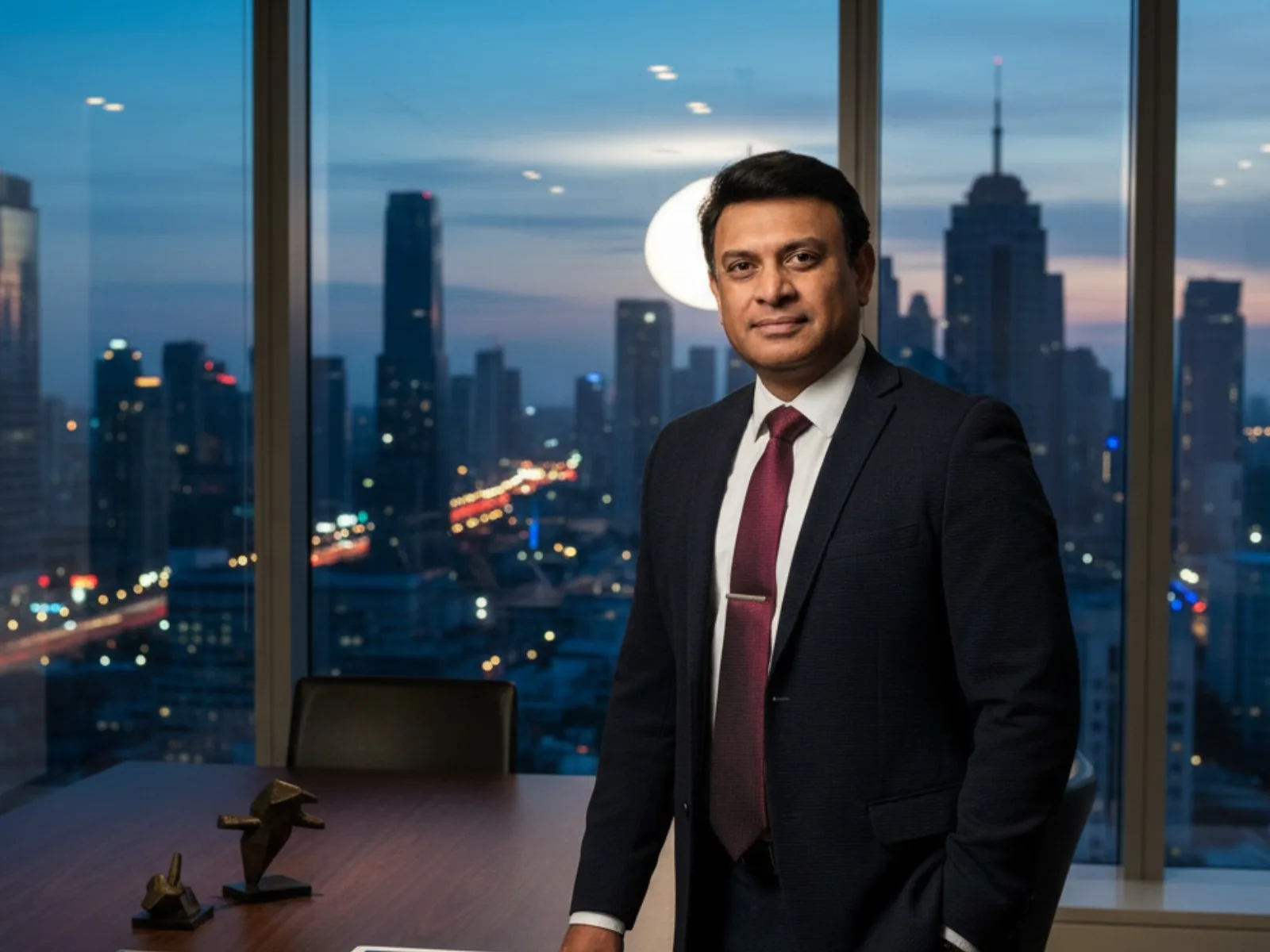
Most CEOs chase growth. Some chase power. Others chase recognition.
Arshad Hussain, ranked among Bangalore’s top ten CEOs, chases none of these. His life and leadership are built on one uncompromising principle: before you are anything else—be a good human being.
That idea might sound soft in the cutthroat world of business, but Arshad’s track record proves otherwise. He grew his company from three employees to more than 180 with zero attrition. He turned down empty rituals and traditions in favour of meaningful action. And when the world shut down during COVID, he didn’t abandon his workers—he housed them, fed them, and together they kept the factory alive.
Arshad doesn’t believe in blindly following rules. He believes in questioning them. He doesn’t believe in controlling people. He believes in trusting them. And he doesn’t believe success is about how much you take—it’s about how much you give.
This is the story of a CEO who built his empire not by chasing profit, but by putting humanity at the centre of everything he does. And it’s a story with lessons every one of us can use.
The Human Foundation
Arshad Hussain didn’t grow up being told to follow the rules just because they were rules. In fact, his father’s philosophy was the opposite. “Don’t do something because I told you, or because your grandfather did,” his father would say. “Ask why. If it makes sense, do it. If it doesn’t, walk away.”
One lesson stuck with him: being a good human comes before everything else—before degrees, before religion, before society’s expectations. At first, it sounded vague, almost simplistic. But as he matured, Arshad realised how powerful it was.
His family was often labelled “different” in their community. They weren’t rebels for rebellion’s sake. They simply refused to practice rituals that no longer carried meaning in modern life. For them, relevance mattered more than routine.
Take the example of Ramadan fasting. His father explained that the original purpose was simple but profound: save food, feel the hunger of the poor, and then share your savings as charity. But over time, the spirit was lost—what was once restraint had turned into excess. For Arshad, this was a defining moment. If the purpose was charity, why not give directly, instead of holding onto the shell of a ritual that no longer served its original intent?
This way of thinking—separating purpose from tradition—shaped everything about him. It made him question, it made him reason, and it made him focus on what really matters. And at the core of it all, one unshakable belief remained: whatever you do in life, first, be a good human.
Compassion in Action
For Arshad, compassion isn’t a lofty idea. It’s practical, immediate, and close to home.
He doesn’t believe in writing cheques to distant organisations without knowing where the money goes. “Too often,” he explains, “the help doesn’t reach the right people. I’d rather start charity at home, where I can see the difference with my own eyes.”
One example stands out. At his factory, the man who cleaned the toilets earned just a modest salary. When Arshad met his daughter—a young girl studying her second year of pre-university—she greeted him confidently in English. Impressed, Arshad turned to her father and told him: “If she needs help to continue her education, I’ll support her.”
For him, this was charity in its truest form: not a distant donation, but an investment in someone standing right in front of him. The kind of help that could change a life.
This philosophy runs through everything he does. Charity, he says, isn’t always about money. It can be a hand on someone’s shoulder when they’re breaking down. It can be mentoring a person who just needs guidance. It can be standing up for someone when they have no voice.
For Arshad, compassion isn’t about being seen as generous. It’s about being useful—right here, right now, to the people who need it most.
Redefining Leadership
Walk into Arshad Hussain’s company and you’ll notice something unusual: there are no leave records. Employees don’t have to “apply” for a day off or justify being away. Whether it’s a family emergency or just a rough day, his only expectation is simple: get the job done.
It’s a radical idea in a manufacturing industry where discipline is often enforced with rules, monitoring, and pressure. But Arshad doesn’t believe in running a company with a stick in his hand. He believes in trust. “When people aren’t micromanaged, they don’t slack off—they rise up,” he says.
And the results prove him right. What began with just three people has grown to a team of more than 180—with zero attrition. Once people join him, they stay. Not because of contracts or obligations, but because they feel part of something bigger than a job.
Arshad doesn’t call them “employees.” He calls them team members. That choice of word matters. Employees owe you. Team members grow with you. It’s why he never hires for narrow specialisation alone—he looks for people who are adaptable, multi-skilled, and open to learning. In his company, a designer might rotate into production planning, cost control, or procurement. The aim is simple: keep people fresh, engaged, and growing, so they never become stagnant.
This philosophy showed its strength when Arshad travelled abroad for six weeks. Many leaders in his position would have spent those weeks calling, checking in, and worrying about whether things were on track. But Arshad didn’t need to. Even in his absence, his team did exactly what was required of them—meeting targets with minimal intervention. They didn’t wait for orders. They took ownership, because the system empowered them to.
For Arshad, that’s what leadership is about. Not creating a group of followers who need constant direction, but creating a team of leaders who think, act, and deliver on their own. As he puts it: “Leadership isn’t about creating control. It’s about creating ownership.”
Leading Through Crisis
A leader’s true test doesn’t come when times are good. It comes in a crisis.
For Arshad Hussain, that moment arrived during the COVID-19 lockdown. Factories across the country went dark. Workers were stranded, many far from home, with no way to earn or even eat. In most places, companies shut their doors and people were left to fend for themselves.
Arshad chose a different path. He opened his factory doors—not for production, but for people. Beds were arranged in the basement. A kitchen was built. Water, food, and shelter were provided for workers who couldn’t leave. In that moment, the company wasn’t just a workplace. It became a home.
And what happened next was extraordinary. Out of gratitude and ownership, those workers kept the factory running through the lockdown. Stocks were built up. Orders were fulfilled. The business stayed alive—because its people felt cared for, and in return, they cared for the company.
This wasn’t the first time Arshad’s commitment to people over profit shaped his decisions. In manufacturing, market demand rises and falls like a wave. Most companies respond by hiring more workers during peak demand and cutting staff when business slows. Arshad refused to play by that rule. Instead, he kept his workforce steady year-round. During slow months, his team built up inventory of standard products. When demand surged again, they had stock ready to ship.
The result? Stability for his workers. Continuity for his customers. And proof that long-term loyalty pays off more than short-term cost-cutting.
For Arshad, it was simple: “Nobody should be sent home just because business is slow. If you take care of people in tough times, they’ll take care of the company in good times.”
Building for the Future
Arshad Hussain isn’t impressed by titles, toppers, or flawless CVs. He’s far more interested in people who can think on their feet and get things done.
“I don’t usually hire the 95-percenters,” he explains. “I prefer the ones in the 75–85 range. They’re often more practical, more adaptable, and less rigid in their thinking. They don’t just memorise answers—they solve problems.”
This preference has shaped the DNA of his company. Instead of chasing degrees, he looks for doers. People willing to roll up their sleeves, learn different roles, and grow into leaders. That flexibility allows him to rotate team members across departments, keeping the organisation resilient and innovative.
His approach extends beyond hiring. Even while representing a German multinational—a global leader in cable management with nearly half the world’s market share—Arshad refused to blindly copy systems built for Europe. The German ERP system didn’t suit India’s pace, diversity, and market dynamics. So he built his own.
He also steered product development away from the catalogue designed for Western markets. Instead, he created solutions tailored for Indian and Asian customers—faster to produce, cost-effective, and suited to local needs.
The results spoke for themselves. His subsidiary became the most successful in the group, achieving returns on investment in just three years—a timeline most companies consider impossible. What others saw as constraints of the Indian market, Arshad turned into opportunities by refusing to accept a one-size-fits-all model.
For him, the lesson is clear: building for the future means questioning old systems, hiring people with adaptability over arrogance, and creating solutions that fit the world you’re actually in—not the one written in someone else’s manual.
Wisdom Passed Down
Behind Arshad Hussain’s philosophy lies the quiet wisdom of his father—a man who believed true education wasn’t about degrees, but about understanding the world.
One of his father’s quirks was how he read the newspaper. He always started from the back, never the front page. At first, young Arshad thought it was just a habit. But his father explained: “The back pages talk about the achievements of mankind—sports victories, business growth, new ideas. By the time you reach the front, it’s filled with failures—crime, disasters, political fights. Why not start the day with progress instead of despair?”
That lesson stuck. It taught Arshad to focus on possibilities rather than problems, on building instead of complaining.
Another of his father’s teachings was about knowledge itself. “Your education isn’t in your degree,” he said. “It’s in how much of the newspaper you understand—from the stock market to sports to world affairs. You don’t need to master everything, but you must grasp the basics. That’s what makes you capable in the real world.”
This broader way of thinking continues to guide Arshad, even in business. In interviews, he doesn’t only test candidates on technical skills. He asks about their general awareness: how they would handle a customer, what they know about market trends, or how they respond under pressure. To him, success is less about proving you’re right in a debate, and more about building trust, listening, and solving problems together.
These small but powerful lessons—start with progress, seek real understanding, and measure people by their practical wisdom—are part of the foundation that shaped him into the leader he is today.
Conclusion
Arshad Hussain’s story is proof that leadership doesn’t have to be complicated. It doesn’t need layers of jargon, endless processes, or rigid traditions. At its heart, it can be disarmingly simple: be a good human first.
That belief shaped his choices from the beginning—questioning rituals that lost their meaning, choosing compassion that made an immediate difference, building a company where people are trusted instead of monitored, and leading through crisis with humanity rather than fear. Along the way, he proved that trust delivers stronger results than pressure, and that loyalty grows when people feel cared for, not controlled.
What makes his journey remarkable is that these aren’t abstract ideals. They’re practical actions: keeping his workforce steady instead of cutting jobs, investing in education for the children of workers, designing systems suited for India rather than importing them, and treating team members as leaders in their own right.
At every step, Arshad shows that success built on humanity is not weakness—it’s strength. It’s what kept his company thriving, what kept his team loyal, and what turned his leadership into a case study.
And for anyone reading his story, the lesson is clear. You don’t need to be a CEO to live by this principle. Whether you’re leading a business, a family, or just yourself—the foundation is the same. Before you chase success, ask yourself the question Arshad has lived by all his life:
Am I being a good human first?
By Ugesh Sarcar