Wisdom Bank - The Quiet Rebellion of Dr. Vinay Mishra
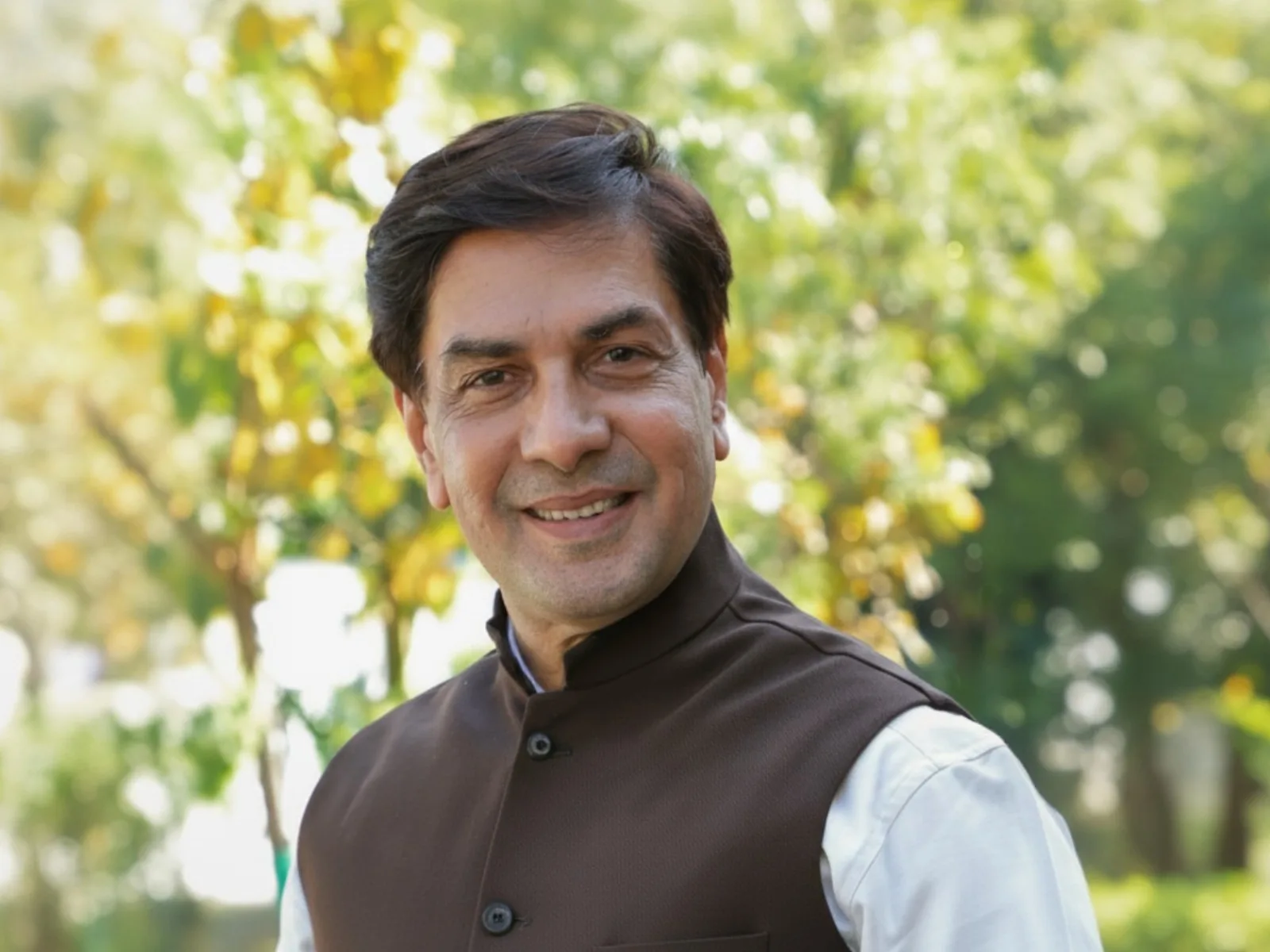
The Jump That Changed Everything
At 16, Dr. Vinay Mishra packed his bags, stepped into the hostel at one of Delhi’s most prestigious colleges — and walked straight into something he didn’t expect: a room full of seniors, hostile questions, and a night that would leave a mark on him forever.
By 3 a.m., he’d had enough. No one had prepared him for this. No support, no warning, and no reason to stay.
So, he did what most wouldn’t dare: He opened the window on the second floor, jumped down, and ran. Alone, confused, scared — but very clear about one thing: “I’m not going back.”
That moment — a quiet act of rebellion from a scared teenager — wasn’t just about escaping ragging. It was the start of something bigger. It was one of the first times Dr. Mishra chose his own version of stability over the path others expected him to follow.
And it wouldn’t be the last.
Today, Dr. Vinay Mishra is a respected psychologist, professor, and former cultural ambassador to the United States. He’s conducted stress research in Antarctica, helped set up counselling units for the police, and shaped how we think about mental health in high-pressure environments.
But his journey didn’t begin with success. It began in a home full of arguments, a classroom where he was written off as a poor student, and a mind filled with self-doubt.
This isn’t a story about rising to the top. It’s about building your own ground when nothing around you feels steady.
If you’ve ever felt like you were behind in life, stuck in the wrong lane, or doubting whether you’ll ever “figure things out” — Vinay’s story will speak to you.
It’s not sugar-coated. It’s not motivational fluff. It’s real. And it’s powerful — because of that.
The Chaos
Dr. Mishra’s earliest memories aren’t of warmth or belonging. They’re of silence. Tension. Arguments that simmered — sometimes exploded — in the background of his childhood home.
His parents had a love marriage, which was unusual in the 1960s. On the surface, they looked like the perfect match: an accomplished mother who studied at Lady Irwin College, and a charming, good-looking father who taught English, played tennis, and even held a private pilot’s license. But inside the home, things were far from perfect.
Soon after he was born — just a little over a year after his older brother — his mother developed serious eye problems. The stress piled up. Financial strain, unresolved insecurities, and emotional distance crept into the marriage. The household, once filled with promise, grew heavy with suspicion and conflict.
For a child watching this unfold, it was confusing. Painful. And it led to a quiet, heartbreaking conclusion: "Maybe I’m not even their son."
Dr. Mishra didn’t say it out loud. But he believed it. How else could he explain why he felt so rejected — at home, in school, everywhere?
He struggled in class. Science didn’t make sense. Teachers didn’t connect. Classmates didn’t understand. And he felt like no one saw him for who he really was — only for what he lacked.
The label stuck: poor student. And like most labels, it left a deeper mark than anyone realised.
At school, he kept his head down. At home, he often turned inward — retreating from the noise. The only place that felt remotely safe was with his maternal grandmother. She’d been widowed young, and carried her own quiet strength. In her, Dr. Mishra saw a small flicker of something steady — someone who got it, even if they didn’t say much.
But mostly, he kept to himself. He didn’t act out. He didn’t fight back. He just internalised everything.
For years, it seemed like he was quietly disappearing under the weight of a life he hadn’t asked for.
And then, something changed.
The Turning Point
Dr. Mishra didn’t have a eureka moment. No flash of genius. No grand breakthrough.
What he had was a quiet shift — a decision to stop struggling through subjects that never made sense to him, and to try something that did.
After years of dragging himself through science, he switched to humanities. And everything changed.
Almost overnight, the boy who had once been labelled “just not academic” started topping his class. He went from the bottom of his school to first in the entire state of Madhya Pradesh in his intermediate exams. Then first in his graduation. Then again, first in his post-graduation.
It wasn’t luck. It wasn’t sudden brilliance. It was this: he found his lane. And just as importantly — he stopped trying to run someone else’s race.
For the first time in his life, things clicked — not because the world got easier, but because he stopped forcing himself into a mould that didn’t fit.
He wasn’t trying to prove anything to anyone anymore. He was learning what it felt like to be in alignment — and how powerful that could be.
But the turning point wasn’t just academic. It was emotional.
He began to question the private beliefs he’d carried for so long. Maybe he wasn’t “destined to fail.” Maybe he wasn’t “the wrong child.” Maybe — just maybe — the problem wasn’t who he was, but where he’d been placed.
He still didn’t have it all figured out. But one thing was becoming clear:
“We often create our own miseries — and if we can create them, we can un-create them too.”
That realisation wasn’t just a relief — it became the foundation for everything that came next.
Psychology. Teaching. Helping others rebuild what life had knocked down in them, too.
But before all that, he took a detour — towards a place no one expected him to go: the armed forces.
The Experiments
Even after finding his academic rhythm, Dr. Mishra wasn’t done testing himself. Deep down, he still carried the weight of being underestimated — by others, and for a long time, by himself.
So he applied for the Combined Defence Services (CDS) exam — India’s highly competitive entry point into the armed forces. Not once, but twice.
On paper, he didn’t fit the mould. He didn’t have a sports background. He was underweight. He’d never imagined himself as “army material.” But he cleared it anyway — both times.
The first time, it was after his graduation. And yet, despite passing the exam, he didn’t join. Why?
Because something else came along at the same time: a teaching job — stable, rooted, and meaningful. And for someone who had grown up craving emotional and professional stability, that mattered more.
The second time, after his graduation, he cleared the CDS exam again.
And this time, the process went deeper.
The armed forces don’t just look at physical fitness — especially during officer selection. They evaluate psychological readiness too, through intensive assessments: Thematic Apperception Tests (TAT), Sentence Completion Tests, group tasks, personal interviews.
Dr. Mishra knew this. In fact, he was so tuned in to the psychological side of the process that he sometimes wondered if he was bluffing his way through — trying to show what they wanted to see, rather than who he really was.
But deep down, he also knew he wasn’t faking it. He had something many others didn’t: mental endurance, sharpened by years of internal struggle.
Still, when it came down to the final decision — once again — the armed forces weren’t the path he chose.
In his words, “I was honest with them. I had highly educated parents, and I told them the truth — that I wanted to complete my post-graduation before committing to service. And I’m glad I was honest.”
He picked academia. He picked stability. And he picked a path that would allow him to keep growing — not just professionally, but personally.
He never looked back. But he never stopped pushing himself either.
Antarctica & the Power of Nature
India was preparing one of its first psychological studies on Antarctic expeditions. For the first time, they wanted to examine how human beings function in extreme isolation.
This wasn’t just another academic conference or a university seminar. This was an extreme environment — ice, confinement, and months of being cut off from the world. The stakes were high.
The selection process was rigorous. He had to present and defend his proposal in front of a government panel from India’s Antarctic and Polar Research Centre. These weren’t just bureaucrats — they were scientists, decision-makers, people who had seen how harsh and demanding the Antarctic environment could be.
His proposal was eventually accepted.
But there was a catch.
They asked him to go for a wintering stint — a 14 to 15-month deployment, where once you're in, you're not coming out until the next team replaces you a year later.
Vinay thought hard. He understood the psychological weight that kind of isolation carried. And he knew himself well enough to say no.
“Being cut off from family for that long... I knew I wouldn’t manage it.”
Instead, he offered to join the summer expedition, lasting around three months. A shorter stint — but still a bold, demanding commitment.
That experience would end up reshaping how India staffed these missions — but first, it reshaped him.
The physical conditions were brutal. Temperatures dropped to minus 36 degrees, even in the so-called “summer” months. The sun never set. And the silence — that deep, hollow silence that stretches across the white landscape — made time feel warped.
Vinay arrived with a specific mission: to study stress in extreme environments.
He brought with him standardised psychological tools, and even designed a few of his own — assessments that could measure emotional shifts, behavioural strain, and interpersonal dynamics among the crew.
What he found, though, wasn’t just data. It was something much more personal.
In a team of all men and one woman, confined in one of the loneliest places on Earth, he began to see human nature in sharp focus.
There were no distractions. No social events. No consumerism. No noise.
Everyone had time, but nothing to spend it on. You could wear gold chains if you wanted — no one cared. You could carry cash in your pocket — there was nowhere to spend it.
Stripped of everything external, what remained were the people — and their ability to relate to each other.
And that’s when Vinay saw it:
“Everyone talks about what they want from relationships — from their spouse, their kids, their colleagues. But very few talk about what they’re willing to invest.”
In Antarctica, even the smallest human interaction — a kind word, a shared laugh, an offer to help — took conscious effort. No one was at their best. Everyone was tired, cold, homesick. The emotional margin for error was razor-thin.
That’s when it clicked: Relationships don’t survive because of love or compatibility alone. They survive because someone chooses to show up, again and again, even when it’s inconvenient.
Then came the 9-minute rule.
Each team member was allowed just nine minutes of phone calls to India — spread across three months. That was it. No extra time. No extensions.
“If the maid picked up instead of my wife or parents, that 20 seconds was gone. And it felt like a deep, painful loss.”
He started rationing his seconds. Planning what to say. Hoping the right person would answer. And realising, every time he hung up, how much we take connection for granted.
That moment — staring at a silent phone after a 40-second call — held more weight than most hour-long conversations in the real world.
It wasn’t just about stress anymore. It was about what we miss when we’re too distracted to notice what we already have.
When Vinay returned to India, his findings went beyond research papers.
He didn’t just study psychological strain — he helped the government realise something crucial:
Psychological resilience needs to be part of the selection process — not an afterthought.
Until then, candidates were chosen based on scientific credentials and physical fitness. But Antarctica doesn’t care how smart or strong you are. It tests your mind, your relationships, your ability to stay grounded in complete isolation.
Thanks to Vinay’s recommendations, psychological screening became a formal part of India's Antarctic expedition process.
That was his legacy — not just as a researcher, but as someone who had lived it, felt it, and returned with insights that could change how others were prepared.
And maybe most importantly, it brought him face to face with something he’d been circling for years:
Stability isn’t about standing still. It’s about knowing what — and who — is worth holding on to.
Healing Backward
By the time Dr. Mishra had earned his doctorate, conducted research in Antarctica, and trained hundreds of students, you’d assume the past had lost its grip.
But healing doesn’t always happen just because your circumstances improve.
The stories we tell ourselves as children — “I’m not good enough”, “I don’t belong” — they don’t vanish. They evolve. They hide behind ambition, achievement, and perfectionism.
And for years, that’s where those beliefs lived in him.
“It wasn’t until I started studying psychology deeply — not as a subject, but as a mirror — that I began to understand what I was carrying.”
He didn’t go to therapy. He didn’t have a breakthrough moment. But bit by bit, he began to connect the dots between his past and the present.
Why did instability shake him so deeply? Why was “proving himself” so central to his identity? Why did emotional rejection sting so sharply, even now?
Psychology helped him realise that many of these were protective patterns, not personal flaws. They were strategies his younger self developed to survive a world that felt unpredictable.
“We create some of our own suffering. But if we create it, we can also change it. Maybe not alone — but definitely with intention.”
He didn’t make his healing public. He didn’t need to. He just kept doing what he had always done — observing, reflecting, adjusting, and showing up.
For his students. For his work. For himself.
Lessons from the Journey
Dr. Vinay Mishra never built his life around ambition. He built it around alignment.
He didn’t chase prestige. He didn’t fight for spotlight. He simply paid attention — to what drained him, what energised him, and what felt quietly right, even when it didn’t look impressive from the outside.
And that’s what makes his journey remarkable.
It’s not that he succeeded despite his early struggles — it’s that he listened to those struggles, and let them shape his direction. Not define him, but inform him.
Where others might have chased status, he chose stability. Where others might have followed expectation, he chose inner clarity. Where others said yes to everything, he learned the power of saying no when it mattered most.
He said no to the Defence Services — twice — not because he couldn’t do it, but because he knew it wasn’t his path. He said no to staying in Delhi’s top college when the environment turned toxic — and chose to walk away. He said no to a 15-month Antarctic winter because he valued connection over endurance.
These weren’t signs of weakness. They were signs of knowing himself deeply — and trusting that self enough to walk his own way.
Dr. Mishra comes from a family of stature — his grandfather was once the Chief Minister of Madhya Pradesh. But he didn’t build his life on legacy. He built it on self-awareness, compassion, and consistency.
If you’re looking for a story of redemption, this isn’t it.
This is a story about self-respect. About choosing your own pace. About learning, unlearning, and beginning again — quietly, courageously, and with your feet planted firmly on the ground.
And maybe that’s the most radical thing of all.
By Ugesh Sarcar