Wisdom Bank - What It Means to Matter: The Radhika Lobo Way
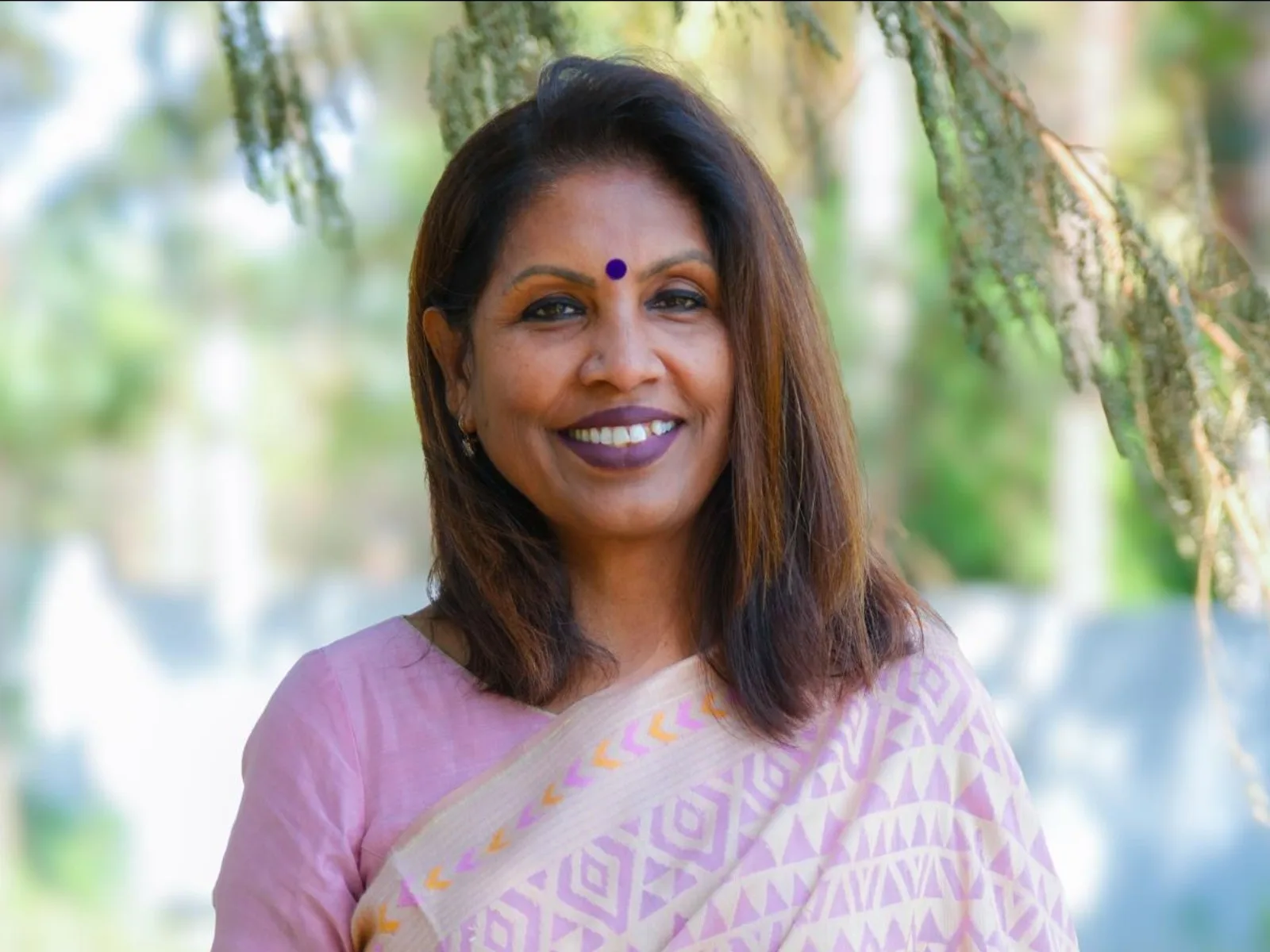
She didn’t chase promotions. She didn’t aim for power. She never planned for greatness.
And yet, when a former student was leaving for the Kargil War front — he called his mother, and then he called her.
Radhika Lobo is not a household name. She doesn’t hold titles that make you pause or boast of corner offices. But over decades of teaching, guiding, listening, and loving — she’s quietly become unforgettable.
Not because she was ambitious, but because she was present. Not because she had answers, but because she made time. Not because she shouted, but because she showed up.
In a world that celebrates loud success, Radhika’s life is a gentle rebellion. A masterclass in choosing challenge over comfort, people over prestige, and values over validation. She's taught courses no one wanted, spoken gently with students others overlooked, and built a reputation not through accolades — but through love.
This isn’t a story about achievement. It’s about alignment. About saying yes when life nudges you, about staying rooted when storms hit, and about trusting that deep, slow impact matters — even when the world isn’t clapping.
Because if you’ve ever wondered what a meaningful life actually looks like, you’ll find some answers in the way Radhika Lobo has lived hers.
Unexpected Roads & Brave Yeses
When Radhika Lobo started her teaching career, she didn’t walk in with a master plan. She was handed courses no one else wanted to touch — subjects she hadn’t studied, topics that intimidated even seasoned lecturers. Instead of resisting, she looked at the syllabus and simply said,
“Alright. Let me learn and teach.”
One of her first assignments was History of Economic Thought — a course often dodged by faculty because it didn’t feel “modern” or “relevant” enough. But Radhika didn’t see it that way. She saw stories. She saw thinkers. She saw the roots of how the world thinks about money, power, and society. And she brought it alive.
Later, she was asked to teach a course comparing Japan and China — two nations shaped by very different ideologies: capitalism and socialism. Again, a course few were drawn to. And again, she said yes.
After nearly three decades at her first institution, she moved to Christ University. There, she was asked to teach Gender Economics, a subject just beginning to gain traction in India. She hesitated — not because she couldn’t do it, but because she wondered,
“Will people think I’m just another angry feminist with a mic?”
But curiosity won.
She started reading. She built the syllabus from scratch. And once again, she fell in love with a subject that had initially made her doubt herself.
This pattern repeats throughout her life. Whether it was soft-skills training for tech counsellors or contributing to teacher orientation programmes on outcome-based education, Radhika never went out looking for challenges. But when they came knocking, she welcomed them.
“I don’t go looking for them,” she says. “But they come, and I trust that they’re meant for me.”
She’s highly organised — no doubt. But it’s this openness, this willingness to say yes even when the path isn’t paved, that marks the true courage of her journey.
The Quiet Power of Flexibility
Radhika Lobo believes in honesty — not the self-righteous kind that demands a spotlight, but the kind that quietly guides every decision. At the same time, she believes in being flexible — and that’s what makes her rare.
During her time heading the Internal Quality Assurance Cell (IQAC), she oversaw high-stakes accreditation processes. When her team scrambled to present evidence of their work, she offered a simple principle:
“If you haven’t done something, don’t fake the documents. But if you have done something and just didn’t document it — create it now. Do it honestly, but don’t be rigid.”
That philosophy came from home. Her father was known for his unshakeable integrity — to the point where people hesitated to promote him. And her mother would remind her:
“Be honest, but not rigid.”
Radhika absorbed both lessons.
Flexibility, for her, is not about pleasing others. It’s about context. It’s about understanding the difference between being principled and being performative. Whether she was explaining academic frameworks over the phone or building a syllabus from scratch, she always kept that inner compass intact.
In a world where being “principled” is often mistaken for being immovable, Radhika shows that true strength isn’t in rigidity — it’s in staying upright even while you bend.
Relationships That Last a Lifetime
Radhika Lobo makes you feel seen.
That might be the single biggest reason people stay connected to her — decades after they last sat in her classroom.
Whether it’s hosting Janmashtami celebrations that bring friends from across cities, or setting up coffee meet-ups in Mumbai with carefully timed slots, Radhika puts people first.
“I find time for people,” she says. “Even if I’m tired, even if I’ve got a lot on my plate — I find time.”
When friends visit, she prepares their favourite food, freshens up their rooms, and creates a sense of welcome that isn’t about luxury — it’s about care.
Her real gift, though, is how she listens.
In a world where most people wait for their turn to speak, she listens — fully, attentively, without judgment. And it’s why people feel safe with her. Seen by her.
This isn’t limited to friends and family. Her students, too, remember her — not just for what she taught, but how she made them feel. When she faced a major heart health issue shortly after joining Christ University, the messages poured in. Many students she barely knew reached out. Some still visit her home.
Her warmth builds connection. Her consistency sustains it. And her care turns it into something sacred.
In a time of shallow interactions, Radhika’s way is a quiet rebellion. A reminder that presence is the purest form of love.
Teaching as a Sacred Relationship
One morning, at 5:30 a.m., her landline rang.
It was Purvesh Gada — a former student, now a Black Cat commando. He was heading to the Kargil War front. He had called his mother. Then, he called Radhika.
“Ma’am, I just wanted to talk to you before I go.”
Decades later, she still gets goosebumps recalling it. Because it wasn’t a dramatic gesture. It was trust.
A bond forged not through awards or grades — but through presence.
Years ago, when Purvesh’s father passed away, he had come to her unsure if he could continue his studies. Money was tight. Hope was thinner.
She didn’t promise him solutions. She just said:
“Go ask your mother. I’m sure she’ll say dropping out isn’t even an option.”
He never forgot that. Even though she did.
This is what her career has been built on — moments that matter. Not speeches, not declarations — but connection.
Whether it was at Birla College in Kalyan — a respected institution she served for nearly three decades — or at Christ University, her students have always remembered her.
They wrote blogs about her. One even fell at her feet in a mall in Singapore, overwhelmed to see her again.
Before she joined Christ, her son had warned her not to expect the same warmth from students — “They’re from more privileged backgrounds,” he said. But once again, love and respect found their way back to her.
“Everyone wants to be treated with love and respect,” she says. “They don’t want to be put down. They want to be heard.”
And she treats each student like they matter. Because to her, they do.
Resilience Without Pretence
Radhika Lobo cries. Often.
“I cry a lot,” she says. “But I cry once. Then I’m okay. I just… move on.”
She doesn’t bottle things up. She doesn’t pretend to be strong. She is strong — because she allows herself to feel.
Her resilience is rooted in two things: deep spirituality, and deep relationships.
She isn’t ritualistic, but she has unwavering faith that life gives her the challenges she’s meant to face. And when life hit hard — especially during one deeply personal, painful period — she leaned on the people who had always been there for her.
Her sister. Her late brother’s wife, who remains like a second sister. And her wide, warm circle of friends.
“When I came away from Bombay, it was for very, very personal reasons. But I came here because I had family. I had people.”
Her kids, too, are an unexpected source of support — and surprise.
“They’re always there when I need them,” she says, laughing, “and the first to poke fun at me for any tiny mistake.”
She says she’s learned more about gender equality from her children than any textbook — just by watching how they treat their partners.
No matter what life throws at her, Radhika grounds herself in what’s real: family, faith, friendship, and quiet forward motion.
No chasing. No scrambling. Just alignment.
Success, Redefined
“Honestly, I was never ever ambitious,” she says.
Even the way she approached motherhood reflected that. Teaching was the one job that allowed her to come home early, take her children to the park, and be fully present.
And yet, without ambition, she built a life of undeniable success.
She turned down a PhD offer from IIT Mumbai — not because she couldn’t do it, but because her personal life needed her in another city. She completed her doctorate later, when the time was right.
She never chased titles. She simply showed up — and gave her best.
Her quiet philosophy:
- Choose people over prestige.
- Accept challenges when they come.
- Let go when it’s time.
Her students didn’t just graduate. They carried her memory into warzones, foreign cities, and the most personal corners of their lives.
She never aimed to be unforgettable. But she became that — by living in alignment with what mattered.
Your Takeaway: The Radhika Way
If you were looking for a roadmap to success, you won’t find it here.
There are no hacks. No ten-step plans. No perfect timelines.
But if you’ve ever wondered what it means to live a life that truly matters — a life where people feel changed simply because they knew you — then this is it.
Here’s what Radhika Lobo’s life quietly teaches:
- Say yes to challenges. Even when you’re unsure. That’s where joy begins.
- Choose honesty — but don’t be rigid. Kindness counts just as much.
- Make time for people. Not when it’s convenient. Always.
- Feel your emotions — then move forward. Let them through. Don’t let them linger.
- Let your work speak. You don’t need noise to make impact.
- Redefine success. It’s not the title or applause. It’s how you show up for others.
Radhika Lobo isn’t selling a philosophy. She’s just living one.
And her story is a quiet reminder that you don’t need to be loud to matter. You just need to care.
One decision. One conversation. One brave yes at a time.
By Ugesh Sarcar