Wisdom Bank - Forget the Blueprint. Follow the Compass: The Reinvention Story of Ashwinder R. Singh
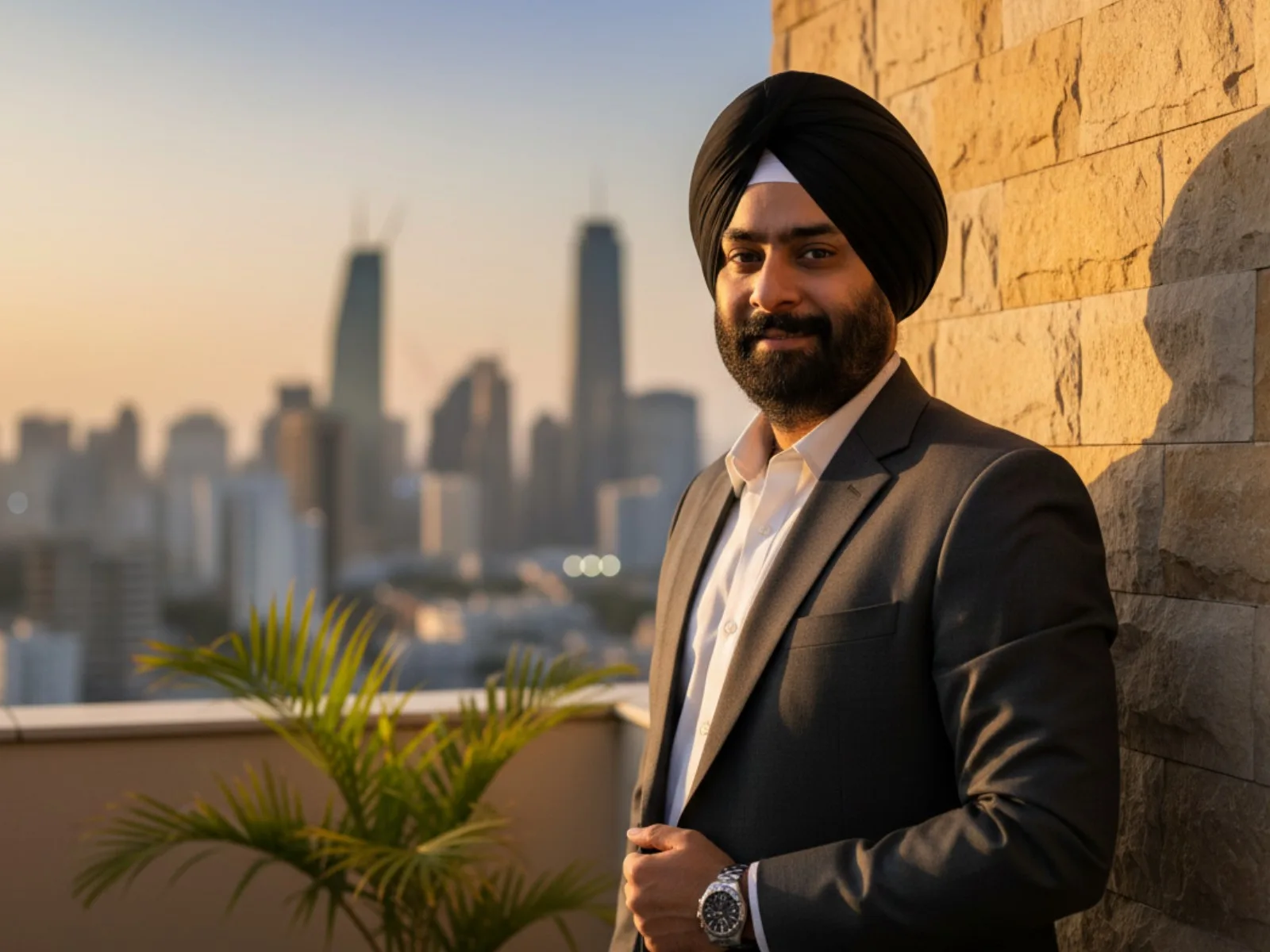
Ashwinder R. Singh didn’t start his career wanting to be a real estate mogul. Or an author. Or a singer with tracks on Spotify.
In fact, none of it was part of the plan—because there was no master plan.
There was only one thing: when the world shifted, he moved. Not always with certainty, but always with something rarer—courage.
He left a high-flying Citibank career in Dubai at its peak. Not because of burnout. Not to chase a dream. But because his mother was unwell, and the decision was already made in his mind. Family first.
He had no backup job. But within 24 hours of returning to India, he had an offer from Deutsche Bank. Not luck—readiness. Not networking—clarity.
He wasn’t a mortgage expert when Bajaj Housing Finance hired him to lead a vertical that required just that. He wasn’t a real estate developer when he became CEO of one. He wasn’t a trained singer when he launched music. But each time, the door opened.
Why?
Because when most people follow a blueprint, Ashwinder follows a compass—three principles that guide every decision: Simplicity. Clarity. Courage.
They sound basic. They’re not. They’re hard to live by, harder to lead with, and nearly impossible to fake.
But if you can build them, they can change everything.
This is not a story about playing it safe. It’s about answering the question most people quietly avoid:
“What if I don’t just want one version of success?”
If you’ve ever felt the urge to start over, switch lanes, or lead with your gut instead of your résumé— this is the roadmap you didn’t know you were looking for.
An Unexpected Compass
You’d expect someone with Ashwinder’s résumé to talk about frameworks, KPIs, or long-term vision.
Instead, when asked what defines him, he answers without flinching: Simplicity. Clarity. Courage.
Not borrowed from a leadership book. Not picked up in an MBA classroom. These principles were formed early, at home. And they became something deeper than values — they became survival tools.
Because Ashwinder didn’t grow up in boardrooms. He grew up in a family where the nation came before the self. His father, a decorated officer, was the only Indian present when Pakistani forces surrendered in 1971. A war hero. A symbol of duty over ego.
And then, at 17, Ashwinder lost him.
Suddenly, everything changed. No fallback. No inheritance. Just a quiet, relentless drive to move forward—with discipline, loyalty, and a refusal to overcomplicate things.
“If we can’t explain it simply, we don’t understand it.”
That’s where courage enters the frame.
“The right decision is almost never the easy one.”
And yet, every time Ashwinder had to leap — from city to city, role to role, industry to industry — the compass stayed the same:
Simplify. Get clear. Be brave.
The Legacy of Loss and Loyalty
At 17, the silence after his father's death was more than grief. It was instruction. It meant stepping up, without being asked.
His father had led by example — not with authority, but with quiet conviction. Discipline wasn’t enforced; it was embedded in the walls of the house.
That same sense of duty followed Ashwinder through his early life, and eventually into a high-flying role with Citibank in Dubai.
Until his mother fell ill. And the decision was immediate.
“I had to leave Citibank.”
No career plan. No fallback. Just one priority: be where he was needed most.
And just like that, the next chapter appeared.
Within 24 hours of arriving in Mumbai, he had a meeting with Deutsche Bank. By 10 AM, he was interviewed. By 1 PM, he had the offer. By 5 PM, he checked into ITC Parel. By the next morning, he was on a flight to Chandigarh to visit the temples and gurudwaras he grew up with.
Faith. Loyalty. Forward motion. Not an agenda. A rhythm.
The Power of Simplicity
In a world of over-talking and over-explaining, Ashwinder is brief. Sharp. Decisive.
“If you have to speak for two minutes, you need to prepare for two hours.”
That’s not advice. That’s how he lives.
At every point in his career — from banking to real estate to leadership — his power has come from one thing: he makes the complex simple.
It’s how he wins trust. It’s how he leads teams. It’s how he makes decisions under pressure.
Because simplicity is not about removing detail. It’s about knowing what matters most — and saying only that.
And in a room full of people trying to sound smart, the one who speaks clearly always has the edge.
Reinvention Is a Muscle, Not Magic
Ashwinder has made career moves that don’t make sense on paper.
He joined Bajaj Housing Finance to lead a mortgage business — without prior experience in mortgages. He became CEO of Bhartiya City’s real estate development vertical — without ever having developed property before.
And yet, every leap worked.
Why?
Because he didn’t walk in with the perfect CV. He walked in prepared, clear, and able to listen deeply.
“I’ve never been afraid of getting displaced,” he says. “Because I know I can adapt.”
Reinvention, in his world, isn’t chaos. It’s a pattern. And once you build the muscle — to leap, to learn, to lead — you stop waiting for permission.
You just move.
What Looks Like Luck, Is Something Else
A last-minute interview. A reference you didn’t ask for. A job you weren’t supposed to get.
Ashwinder has had more than one of those moments. But none of them were coincidences.
Because while others network tactically, Ashwinder built trust accidentally — and consistently.
He didn’t chase relationships. He showed up honestly, over time. And people remembered.
“I’ve always relied on the truth. And maybe that’s what kept the right people around me.”
What looks like divine timing is often the echo of your character, returning at just the right moment.
Passion Is Not a Side Hustle — It’s a Compass
Most CEOs hide their passions. Ashwinder publishes his on Spotify.
One night at a party, he sang a song. Playback singer Kunal Ganjawala heard him and said, record it. He did. He launched it. Then another track. Then another.
Now, he’s got covers released with Saregama’s open mic platform — all while running multi-crore businesses.
People ask: “When do you work?”
They don’t realise: this is the work.
Because passion isn’t a side hustle. It’s proof you’re alive. It’s the why beneath the what. And the more you honour it, the more energy you have for everything else.
What Relationships Really Mean
Ashwinder’s biggest career moments weren’t engineered. They were earned — quietly, in rooms he didn’t even know he was being talked about.
Why?
Because he treated people well when no one was watching. He was consistent. Clear. Reliable.
He didn’t “network.” He just worked. And that work left a trail of people willing to vouch for him when it mattered most.
“Help when you can,” his mother told him. “When you need help, someone will be sent.”
The Courage to Begin Again
Most people, after decades of success, start winding down. Ashwinder is winding up.
“I feel the party is just getting started,” he says.
And you believe him.
Not because he’s loud. Because he’s steady. And still curious.
He’s reinvented himself so many times, the idea of “starting over” no longer scares him. He’s seen what happens when you move with the right compass — not a master plan.
“Simplicity. Clarity. Courage.”
Three words that carried him through loss. Through reinvention. Through risk. And now, into whatever comes next.
So if you’re standing at the edge of a new chapter—uncertain, hesitant, not sure if you’re ready—here’s a better question:
What if you’re not too late?
What if the party is just getting started?
By Ugesh Sarcar