Wisdom Bank - The Vision Within: The Journey of Dr. Mustali M. Vagh
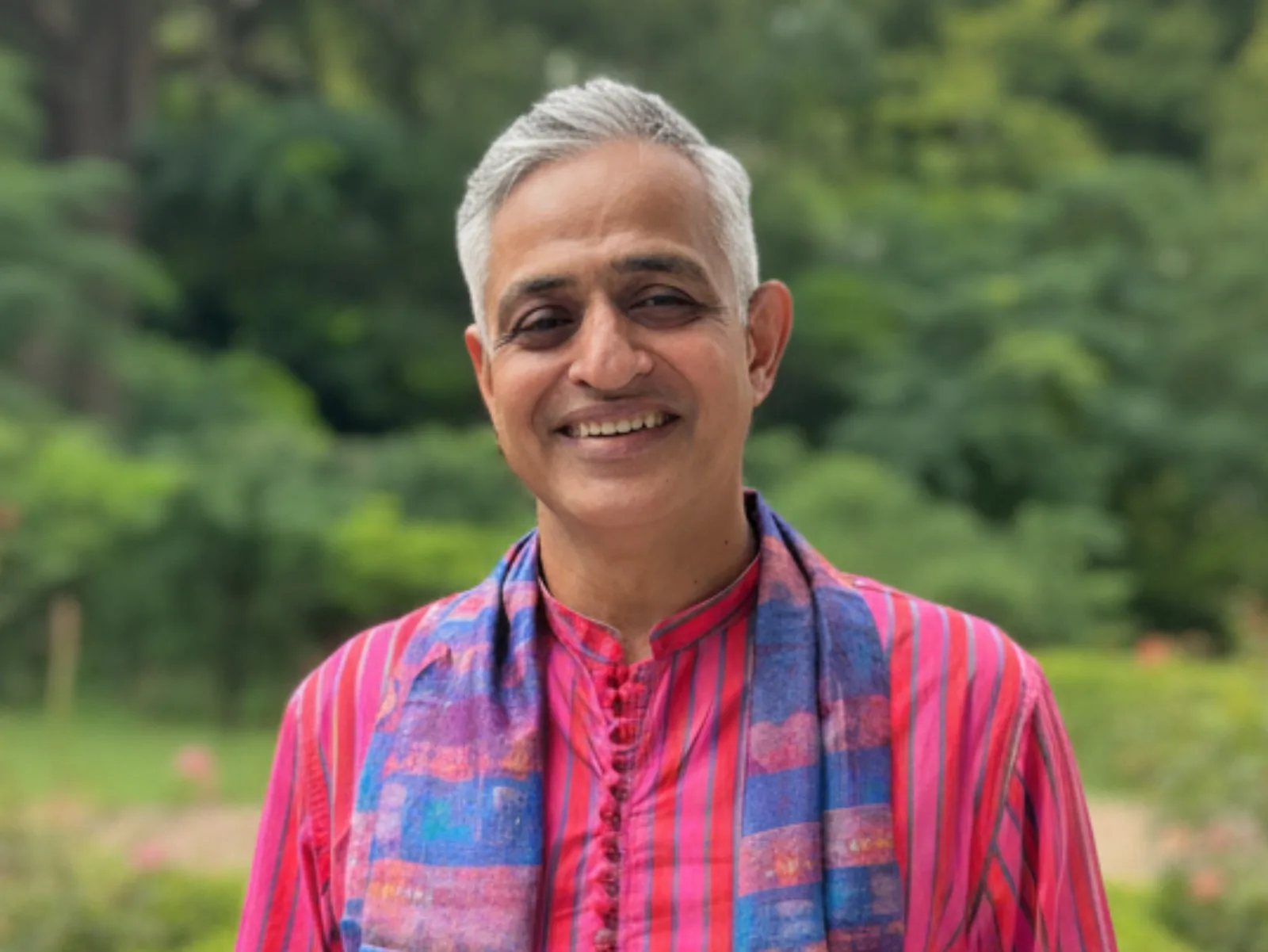
The house was quiet. Too quiet.
His mother called out again, louder this time. No answer.
She looked in the garden. The kitchen. The neighbours’ house. Still no sign. It wasn’t like him to vanish.
Until she walked into the unused room at the far end of the bungalow. The one filled wall-to-wall with unopened cardboard boxes, all covered in Rotary Club stamps. And there he was—cross-legged on the floor, completely lost in a book that looked too thick for his age.
Dr. Mustali M. Vagh wasn’t “Doctor” then. Just a curious boy in a quiet town called Hunsur, surrounded by over 2,000 donated books that had no shelves to sit on yet. While the rest of the world might’ve seen dust and donation logistics, he saw treasure. His personal library. His portal into other lives, other lands, other ways of thinking.
He didn’t know it then, but those afternoons surrounded by forgotten stories would shape the lens through which he would see the world. And eventually, how he would help the world see—literally.
Because years later, long after the boxes were cleared, the town library built, and the house left behind, he would still carry that sense of wonder with him. Whether he was performing corneal transplants, teaching on a hospital plane over Africa, or walking into a room and lighting it up with his energy—he never lost that spark.
This is the story of Dr. Mustali M. Vagh.
It’s not the story of a medical prodigy. It’s the story of a boy who woke up at 5 am because his grandfather told him to—and just never stopped getting up. It’s the story of how discipline, honesty, and curiosity, when shaped early, can echo through a lifetime. And it’s the story of how doing ordinary things with extraordinary sincerity can one day take you around the world—and back home.
The Iron Frame of Discipline
You don’t forget the kind of mornings that shape you.
Coimbatore. A quiet home. A strict grandfather.
No alarm clocks. Just a clockwork routine drilled into the bones: wake up by 5:00am, say a short prayer—not for wishes, but in gratitude. Thank you for letting me wake up today. Five minutes to acknowledge life itself before the day began. Then—start.
There were no distractions to “ease into” the morning. No phones. No excuses. Just silence, sunlight, and the sense that if you were awake before the world, you already had a head start.
Dr. Mustali Vagh was only five when that rhythm became his default setting.
It wasn’t glamorous. It wasn’t easy. But it built something no classroom ever could: an internal discipline so deeply wired that, decades later, it still fires before dawn. Even now, many of his mornings begin before the city stirs. Fitness. Reading. Reflecting. Planning. By the time most people pour their first cup of coffee, he’s already well into his day.
And here’s the kicker—it’s not about being busy. It’s about being ready. Grounded. Grateful. Aligned.
“Those few early hours each morning,” he says, “have helped me achieve so much—quietly, consistently, without fuss.”
But the discipline didn’t end with wake-up calls, there was something more...
Of Truths and Turns
There’s something quietly revolutionary about telling the truth — especially when it’s the truth about yourself.
From a young age, Dr. Mustali Vagh was taught that mistakes aren’t the issue — hiding them is. If something went wrong, own it. If you didn’t know, say so. If you fell short, fix it. Simple. Uncomfortable. Liberating.
“You’d be forgiven,” he recalls his father and grandfather saying, “if you fixed it. Just don’t hide it.”
That mindset — own it, fix it, move on — freed him from the fear of being wrong. It made self-correction a strength, not a shame. While others hesitated to admit weakness, he learned to confront it early and move forward stronger.
But honesty alone wasn’t enough. Alongside it came something just as vital: adaptability. Not just going along with change — inviting it. Letting go of what's outdated, even if it's familiar.
“The world changes every day,” he says. “If you don’t change with it, you get left behind.”
And he means it. In medicine, clinging to old knowledge is dangerous. In life, it's limiting. Whether it’s new surgical methods or new ways of thinking, growth demands discomfort. It demands humility.
“What we learnt in school is so different from what we practise today,” he says. “That’s not a flaw — that’s how it’s supposed to be.”
It’s this willingness to evolve — quietly, consistently — that underpins Dr. Vagh’s journey. Not chasing trends. Not fearing reinvention. Just refining himself, step by step, without drama.
In a world obsessed with being right, his superpower is being willing to get better.
Medicine Found Him Early
The first time Dr. Mustali Vagh stood in an operating theatre, he wasn’t a doctor. He wasn’t even a teenager.
He was just a boy holding a torch.
The place? A makeshift eye camp in rural Hunsur. The kind that popped up a few times a year, organised by Rotary Clubs, supported by visiting surgeons from the city, and filled with long queues of villagers waiting for a chance to see again.
His father, a committed Rotarian, would take him along—not as a spectator, but as a small part of the team. He’d carry boxes. Fetch tools. Hold lights steady. Watch, learn, absorb.
“Just a few hours,” he says, “and someone’s life would be changed forever. You could see it—literally.”
There was no glamour in these camps. No cutting-edge tech. Just efficiency, skill, and humanity. And yet, something quietly powerful was happening: a young boy was seeing, up close, the impact of medicine—not as a profession, but as a calling.
While other kids his age might’ve been watching cartoons, he was watching sight restored in dusty tents and under flickering bulbs. While others dreamed of flying planes or running companies, he began to understand the quiet dignity of helping people see—and with that, live again.
So when the time came to choose a career, it wasn’t a question. Medicine had already chosen him.
And ophthalmology? That was an even easier decision. Eye surgery, he realised, didn’t just help people—it transformed them. And it did so with surprising simplicity. A few hours. A steady hand. A changed life.
“It was something I saw early,” he says, “and it just stayed with me.”
It’s easy to forget that for many, the path to medicine starts with books and ambition. But for Dr. Vagh, it started with eye camps, torchlight, and watching hope flicker back into someone’s vision.
The lesson? Sometimes you don’t find your purpose. You grow up next to it.
The Heart Behind the Hands
The white coat doesn’t make the doctor. Neither does the title. Or the degree. It’s how you show up — patient after patient, day after day — that defines you.
And Dr. Mustali Vagh knows this better than most.
In a world where expertise often comes with ego, his approach is different. Grounded. Present. Almost reverent. Not just towards the science — but toward the people walking through his door.
“You have to be at your best for the first patient of the day,” he says, “and just as good for the last one. There’s no excuse. No off-day. That’s what they expect. That’s what they deserve.”
For Dr. Vagh, medicine isn’t a performance — it’s a promise.
He knows the weight of trust patients place in him. That for someone walking into his clinic, this isn’t just a check-up. This might be the moment. The decision. The answer. The hope. And so, he doesn’t treat it casually. He doesn’t coast. He resets before every patient.
That’s no small feat in a solo practice where he handles everything himself. Consultations. Advanced surgeries. Post-op care. Teaching. Training. Repeat. He’s built a reputation so strong that when someone says “I’m going to Dr. Vagh,” the response is simple: “Then you’re in perfect hands.”
But that reputation wasn’t built overnight. It came from showing up. Fully. Every single time.
And it comes with a belief that cuts deeper than any surgical blade — that being a doctor is not about status. It’s about service.
“You behave the way you want to be remembered,” he says. “And that includes how you present yourself, how you respond to feedback, and how you keep growing.”
It’s not just about competence — it’s about care. The kindness in the explanation. The time taken to reassure. The effort to understand a patient's fear before even touching the diagnosis.
This is what separates a surgeon from a servant-leader in medicine. And it’s what has made Dr. Mustali Vagh more than just a practitioner. He’s a presence — one that gives people not only sight, but certainty.
The Flying Eye Hospital
There are hospitals. There are planes. And then there’s a hospital on a plane—cruising from one country to another, carrying surgeons, hope, and a mission far bigger than medicine.
After his fellowship at L.V. Prasad Eye Institute, Dr. Mustali Vagh was selected to join Orbis—an international non-profit that converted a DC-10 aircraft into a state-of-the-art flying eye hospital. Its goal? To train doctors in under-resourced countries and restore sight in places where options were few and blindness was widespread.
“It wasn’t just about surgery,” he says. “It was about handing over skill. Making sure the work could continue after we flew out.”
Inside that aircraft: operating theatres, lecture halls, live surgery broadcasts. A self-contained world of precision and learning. Every stop was a new country, a new challenge, a new group of local surgeons eager to learn. Over time, Dr. Vagh became not just a part of the crew—but its Medical Director.
He visited 23 countries.
Not as a tourist. As a teacher. A mentor. A colleague in scrubs helping doctors in China, Sudan, Peru, and beyond perform delicate eye surgeries with new techniques and tools. In a world before remote training, this was how medical knowledge travelled—country to country, hand to hand, eye to eye.
The days were long, the work intense. But the impact? Immediate. Lasting.
“We didn’t just treat. We transferred skill. So once we left, they could carry it forward.”
And he didn’t just learn about medicine on those flights. He learned humility—watching talented surgeons work miracles with almost nothing. He learned adaptability—navigating customs, languages, unfamiliar hospitals. And he learned that when you serve without borders, your life becomes much larger than your geography.
The flying eye hospital is no longer what it used to be—technology has changed the game. But those years in the sky left a mark on Dr. Vagh’s journey. Not just for the surgeries performed, but for what they proved:
Excellence means nothing if it can’t be shared.
The Valley Before the Climb
Success stories often skip the dark chapters. The moments when even the most capable people feel unsure, overwhelmed, undone.
Dr. Mustali Vagh doesn’t skip those parts. He looks you in the eye and says it plainly: Tough times hurt. Still do. But you don’t run. You reset. You climb.
It wasn’t always like that. In his younger years, setbacks — exams, personal loss, difficult transitions — hit harder. There were moments when the weight felt unbearable, when even showing up felt like too much.
“It stings,” he admits. “But eventually you realise — pain isn’t permanent. It passes. If you move.”
That mindset didn’t come from motivational posters. It came from getting through things. Again and again. It came from proving to yourself that you can survive discomfort — and sometimes, emerge sharper.
He doesn’t romanticise failure. He respects it. Because failure, he believes, is just friction before forward motion.
“People who’ve had it easy don’t always feel the joy of the comeback. The depth of it. The power in saying, ‘I made it through that — and I’m still here.’”
When life threw more at him than he thought he could handle, he didn’t retreat. He worked harder. Focused tighter. Chewed through challenges he had no business digesting.
That’s how resilience is built — not through avoidance, but through confrontation.
Each valley shaped his ability to show up with presence, empathy, and confidence. Not because he’s invincible. But because he’s proven to himself, time and time again, that he won’t fold.
“You don’t fear difficulty once you’ve lived through it. You start to see it as a doorway.”
And that’s what distinguishes him.
Not just skill. Not just discipline. But the mindset that even in your lowest moments, you are still becoming.
Why He Still Walks in With a Smile
Walk into any room Dr. Mustali Vagh enters, and you’ll feel it before you see it: the energy shifts. Not the loud kind. Not dramatic. Just… lighter.
He doesn’t barrel in with big gestures. He brings something more contagious — genuine warmth. A lightness of spirit that disarms people, even in sterile hospital hallways or high-stakes surgical moments.
“I wish it was all planned,” he says with a laugh. “But maybe I’m just lucky that I carry that energy.”
But it’s not luck. It’s intention.
Because whether it’s friends, strangers, or patients — Dr. Vagh sees each interaction as an opportunity. Not to impress, but to uplift. To leave the room better than he found it. To show up fully, and put distractions aside, even just for a moment.
“If you’re meeting someone — really meeting them — make it count. Be present. Be kind. Make it memorable.”
It’s not performative. It’s consistent. The same attitude he carries into his Rotary work, where his long-standing involvement has created deep bonds and meaningful change. The same spirit that shows up on the tennis court, or over a quiet dinner with friends. No fanfare. Just focus, joy, and care.
It’s easy to dismiss this kind of presence as personality. But behind the smile is practice. Behind the energy is effort.
He knows the world doesn’t always need more brilliance — sometimes, it just needs someone to show up with kindness, clarity, and a genuine smile that says: You matter.
And maybe that’s the quiet lesson we miss in the rush for credentials and accomplishments: How you show up, moment to moment, is its own kind of legacy.
Legacy in a Library
Some stories don’t start with a spotlight. They start in storage rooms. In dusty boxes. In silence.
Before he was a surgeon, before the flights and fellowships, Dr. Mustali Vagh was a boy living in a small town called Hunsur — a place with no public library, no television, and limited access to the wider world. But one summer, something changed.
The Rotary Club in the United States sent over 2,000 books to their Rotary Club in Hunsur. It was a generous donation — but there was nowhere to keep them. No building. No shelves. Just boxes.
So his father, ever the quiet enabler, offered two spare rooms in their home to store the books. And just like that, a treasure trove landed right under their roof.
“Those boxes sat there for nearly three years,” he recalls. “Every evening, I’d unlock the door, open the lids, and dive in.”
Genres didn’t matter. There were no reading plans. No rules. Only wonder.
While some parents worried about screen time, his mother worried she couldn’t find him — only to discover him curled up between open boxes, lost in the pages of a world far beyond Hunsur. Time Magazine. National Geographic. Fiction, history, science, mystery — all poured into a young mind hungry to know more.
“It was better than treasure,” he says, eyes lighting up even now. “Every book was an escape. An adventure. A lesson.”
What that library gave him wasn’t just knowledge — it was perspective. It taught him to think big from a small place. To imagine more than what he could see. And to appreciate how stories, ideas, and information could shape not just individuals, but entire communities.
Years later, when people ask where his curiosity came from, or how he developed the empathy that marks his work — this is where the thread begins.
Not in a lecture hall. Not in a surgical theatre. But in a quiet room, surrounded by unopened boxes, where a boy fell in love with learning.
Legacy doesn’t always look like inheritance. Sometimes, it’s the room your parents made for books.
It Was Never Luck
It’s tempting to call it luck. A small-town boy who travels the world. Who trains with the best. Leads a flying hospital. Comes home and builds something lasting — not just a practice, but a reputation rooted in trust.
But luck isn’t what woke him at 5:00am every day since childhood. It wasn’t luck that held the torch at village eye camps, or kept him steady through surgeries, setbacks, and self-doubt.
It was discipline. It was gratitude. It was choosing — again and again — to show up with care, when it would’ve been easier not to.
“Sometimes you get lucky,” he says with a smile. “But sometimes, you just showed up for something that looked small at the time — and it changed your life.”
Like the day he tagged along with his father to a medical camp. Like the first time he opened a box of forgotten books. Like the hours he spent collecting corneas, not knowing that someday he’d lead India’s largest corneal transplant programme. Like attending an interview with little preparation but full presence — and getting selected for something that would send him across 23 countries. Like learning to adapt, not because it was convenient, but because staying the same wasn’t an option.
These weren’t grand gestures. They were small pivots. Quiet moments. Choices that didn’t seem historic until years later.
And that’s the real legacy of Dr. Mustali M. Vagh.
It’s not just the surgeries or the titles. It’s the way he lives — alert, honest, generous with his presence. The belief that ordinary days can lead to extraordinary lives, if you treat each one with sincerity.
So if you’re looking for the blueprint, don’t start with where he is. Start with where he was — a boy in a borrowed library, holding a torch in a tent, waking up before dawn.
Because that’s where greatness really begins. And it was never luck.
By Ugesh Sarcar