Wisdom Bank - Ravi Kumar: The Architect Who Built Through the Ashes
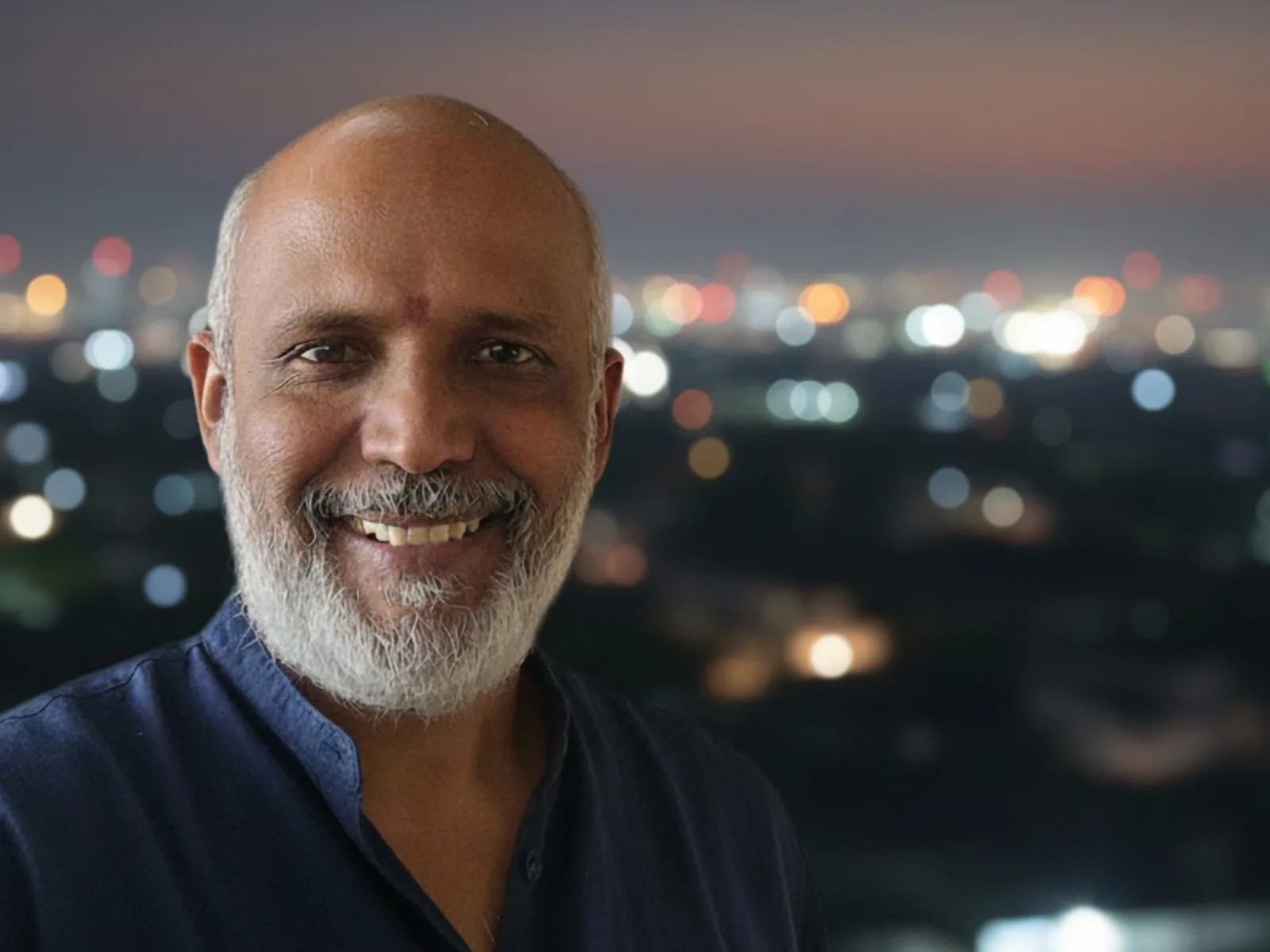
It was 2020. The world was under lockdown.
Construction sites stood still. Cranes frozen mid-swing. Cities hushed. Even the dust seemed to settle.
And yet, Ravi Kumar’s phone wouldn’t stop ringing. Friends. Clients. Old acquaintances. People suddenly flooded with time and memories — checking in, catching up, curious to know.
“Ravi ji, how are you? Where are you these days?”
Calmly, he’d reply: “I’m at the crematorium.”
A pause. Then — “Oh… I’m so sorry.” Click.
A few days later, another call. “Hey Ravi! What’s keeping you busy these days?” “I’m at the crematorium.” Silence. Then another awkward goodbye.
This went on for weeks.
Until one caller finally asked, hesitantly, “Ravi ji… I hope everything’s alright? You’ve been saying you’re at the crematorium every time. Have… have you lost someone again?”
Ravi replied softly. “No, no. I haven’t lost anyone. I’m building them.”
Five crematoriums. During the pandemic. Not because he had to. Because he refused to stop working — even after losing nearly everything.
Just a few years earlier, Ravi Kumar was living the dream. Ten houses. Multiple cars. A name in the industry. One wrong decision — and it all vanished.
But instead of disappearing like many others did, he did the unthinkable. He stayed. He worked. He rebuilt. From scratch.
This is not just a story about success. It’s a story about devastation, debt, public embarrassment — and the quiet, mad courage to rise anyway.
It’s about how a man lost everything, but never lost his will to serve. How he gave up comfort, kept his integrity, and built his way back — brick by brutal brick.
And somehow, through all of it… He never stopped loving people from the heart.
The Child in the Boarding School One Kilometre Away
Ravi Kumar grew up in a village where school wasn’t exactly a priority. He admits it plainly — “I never used to go to school. I never used to study.”
His father, a teacher himself, saw what was happening and made a decision that might seem small from the outside but shaped Ravi’s entire life.
He sent his son to boarding school. Not far away. Just one kilometre from their home.
It would have been easy for Ravi to walk back. The distance wasn’t the point. The message was. If you want to grow, you’ll have to do it away from comfort.
From that moment, Ravi was “out.” He stayed in hostels, lived with strangers, studied in new towns. From the sixth standard all the way through to his engineering degree, he built a life outside the walls of home.
That’s where it all began. Learning how to get along with people. How to take care of himself. How to listen. How to lead. How to love people — not from a place of need, but from understanding.
This is the root of the philosophy Ravi repeats often, not for effect, but because it’s truly how he lives: “I love people from the heart.”
It might sound simple, even soft. But it’s not. It’s what shaped his work ethic. It’s what makes him fight harder for his clients than they expect. It’s what made him, years later, write “I love people” under the hobbies section of professional forms.
Even when facing massive personal loss, Ravi never complained. He didn’t speak of his pain. He poured his energy into fixing what he could — for others.
He once said, “If I help someone and they are happy, I feel so happy. I don’t talk about my pain. It doesn’t matter. But their happiness… that matters.”
So much of what would come later — the rise, the fall, the impossible comeback — was built on this one early truth: When you live for something beyond yourself, you never stop building.
The Rise: From ₹250 to a Thriving Practice
Ravi Kumar came to Bangalore with ₹250 in his pocket. No back-up plan. No big network. Just a diploma in Civil Engineering — and the hope of studying further.
But asking his father for more money didn’t feel right. So instead of enrolling straight away, he started looking for work — and in that search, life took a turn.
He met a friend who worked in an architecture firm. That introduction sparked something.
“I got attached to architecture more than civil engineering,” he says.
It wasn’t instant. He struggled for a year before landing a proper job. But once he did, the fire was lit.
His first salary? ₹250 a month. Second month — ₹650. Within a year — ₹1,200. By the third year — ₹2,500. And after seven years of hard-earned experience, in 1995–96, he was earning ₹20,000 per month — a significant amount at the time.
But Ravi had a goal: Start his own firm before getting married.
In January 1997, he opened his office. His earnings dropped to ₹5,000 per month in that first year of independence. But he didn’t mind. By December that same year, he got married — and the journey truly began.
From 1997 to 2008, Ravi practised purely as an architect, completing more than 350 projects. He wasn’t just designing buildings — he was delivering trust.
At his peak, the success was undeniable. He had ten houses. Multiple luxury cars. Big-budget projects. Deep-pocketed investors. And most importantly — credibility in the market.
But through it all, Ravi didn’t let the success dilute his core belief: that every person, every project, every smile mattered. That your name, once earned, must be honoured.
He wasn’t the loudest architect in the city. But quietly, steadily, his influence spread. And for a long time, it felt like the story had found its rhythm.
Until the ground suddenly shifted.
The Fall: Losing It All (Not his Integrity)
There’s no warning bell for collapse. No siren that goes off when everything is about to fall apart.
For Ravi Kumar, it began with one decision.
He had inventory — unsold properties. Sales were good, but he held off, waiting for the right moment to sell. Then came demonetisation.
Overnight, everything changed. Liquidity dried up. Buyers vanished. Projects stalled. By the time the dust settled, the losses had piled too high.
“Even after selling everything,” Ravi recalls, “I couldn’t clear it.”
Suddenly, the man who once had ten houses… was in a rented one. The man who drove multiple cars… was riding in an autorickshaw.
The industry was watching. Whispers spread. Some developers shut shop and vanished. Some declared insolvency. Some couldn’t take the shame — and took far worse steps.
Ravi did something else.
He sat down, looked at everything he owed, and made a decision most wouldn’t dare: “I will clear every rupee. I will finish every project. Even if I have to sell everything.”
And he did.
He sold his properties. He paid off every debt. Not partially. Not negotiated. Fully.
No defaults. No shortcuts.
“Even when people wronged me, I never blamed anyone,” he says. “I always felt I was the reason for my failure. And that gave me the power to change.”
“I wanted to be free,” he adds. “I wanted to think clearly again. And you can’t create when you’re carrying the weight of dishonour.”
In 2020 — just as the pandemic hit — Ravi Kumar started again. From zero.
He had no safety net. But he had something else — a clean slate. And the unbreakable belief that if you don’t give up, no loss is final.
The Climb: How Setbacks Became Springboards
When you lose everything, you learn what you’re really made of.
Most people in Ravi Kumar’s position would have taken time to recover — to lick their wounds, to wait for better days.
Ravi didn’t wait. He started taking up projects — any project.
Not luxury builds. Not high-value developments. Government jobs.
Even contracts as small as ₹2 lakhs. “Yes, I used to handle projects worth ₹30 crores,” he says. “But at that time… not even a ₹2 lakh job was beneath me. I just wanted to work.”
And so he did.
He took up jobs that were different from the usual. Started helping investors with layout approvals. Began acquiring land. Ventured into verticals he had never touched before. He built everything, including crematoriums — five of them — across Karnataka.
People were baffled. How could an architect who once headed big private developments now be working on public infrastructure? On mere two-lakh contracts?
But Ravi saw what others didn’t: The only way out was through. One job led to another. One connection opened five more.
“I didn’t care what people thought,” he says. “Let them laugh. Let them wonder. My goal was to come back.”
And come back he did — not by chasing glamour, but by chasing momentum. Because when you’re rebuilding from scratch, what matters most isn’t how fast you rise — but that you never stop moving.
This wasn’t a second chance. It was a re-invention.
Built not on wealth. But on grit.
The Heart: Why Trees, Nature, and Truth Matter to Him
By this point in Ravi Kumar’s story, you might assume that what sets him apart is his resilience. But that’s only half the truth.
What truly defines him is something far rarer in business — a fierce, uncompromising love for nature… and for honesty.
Ravi doesn't just talk about sustainability — he fights for it.
Back in 2007, he was developing a large piece of land in Mysore. The site had over 650 coconut and banyan trees.
Most developers would clear the land. Fast approvals, easier layout, more profit.
But Ravi refused.
Not one tree would be cut. Even if it meant fighting for six months to get the government to approve a plan that preserved every single tree.
He won.
Even today, those trees still stand — woven into the heart of the project.
In another project, he bought a crane just to transplant 20 coconut trees instead of chopping them down. People told him he was "mad". He smiled and agreed.
They said the same thing when he installed electric vehicle charging points in apartments in 2007 — long before EVs were mainstream, long before regulations required it.
And they said it again when he insisted that his project brochures should state:
“What you see is what you’ll get. No concept images.”
His legal advisor warned him: What if someone sues? Ravi’s answer was simple:
“If I’m showing the truth, what’s the problem? Will they sue if I deliver what I promise?”
These weren’t marketing stunts. There was no PR strategy behind them.
He did it because it felt right. Because doing the right thing — even when it makes no business sense — is what gives him joy.
He once said:
“If someone calls me a bad person, it doesn’t affect me. If someone calls me a good person, it doesn’t affect me. But if I save a tree, if I do something for nature… I get a "kick" out of that.”
In a world obsessed with scale and speed, Ravi Kumar is wired differently. He’s not in love with building more. He’s in love with building better.
The Mindset: Let Them Laugh. I’ll Keep Building.
If you ask Ravi Kumar how he kept going — through loss, humiliation, and the grind of starting again — he won’t give you a speech.
He’ll just shrug.
“I didn’t leave hope. That’s all.”
But look closer, and you’ll find a mindset forged in something far tougher than optimism.
It’s clarity. And a kind of fearless humility.
Where others feared the fall, Ravi had already lived it. Where others worried about their reputation, Ravi worried about unfinished promises. Where others clung to the image of success — luxury cars, posh offices, the illusion of control — Ravi let it all go.
And when people whispered, laughed, or called him mad, his response was the same:
“Let them laugh. My aim is to come back.”
It wasn’t ego. It was purpose.
He had seen others in the same line fold under pressure — choosing appearances over action. Some were too proud to start again from the bottom. Too used to prestige to pick up ₹2 lakh projects. Too attached to status to take work that wasn’t flashy.
Not Ravi.
“When I started, I had nothing. Today I have nothing. So what? Let people laugh. I will walk. I will work. I will come back.”
And he did.
This is a man who doesn’t pretend to be fearless — He just doesn’t wait for fear to leave before doing what needs to be done.
He believes deeply that struggle is a sign of something good ahead. That hardship is not punishment — it’s preparation.
And beneath that quiet resolve is an even deeper foundation:
“I believe in Lord Tirupathi Govinda,” Ravi says. “Since I was 19, I’ve surrendered to him. If you believe, and you work hard, he can’t say no. Just don’t worry about what the world is saying about you.”
And in a world that worships speed and shortcuts, Ravi Kumar’s mindset stands tall: Build slow. Build right. Build with your head down — and your heart wide open.
Building a City with Zero Debt
Most comebacks are partial. A shadow of what once was. Not Ravi Kumar’s.
Today, he’s building again — not just homes or villas, but something far bigger.
A 150-acre integrated township. A self-contained world, designed from scratch. And every inch of it — funded with zero debt.
Let that sink in.
No loans. No unpaid suppliers. No unfinished projects. No name dragged through courtrooms or creditor lists.
Just clear land. Clean books. And a builder who’s been through fire and come out stronger.
It’s not just one project, either.
In Mysore, another development is underway. In Bangalore, a boutique apartment block is coming up — with just 12 exclusive flats. These are not survival builds. These are vision builds.
And he’s doing it on his terms. No overpromising. No shortcuts. No debt-fuelled speed.
His reputation in the market? Solid. His investor confidence? Restored. His team? Growing again.
But ask him what he’s most proud of, and it’s not the land or the buildings. It’s that he kept his word — to himself and others.
“The opportunity to earn will come and go. But trust? Credibility? That should never break.”
Looking back, Ravi doesn’t speak of revenge or glory. He speaks of gratitude.
“If I hadn’t gone through those difficulties, I wouldn’t have discovered so many parts of my field I was ignoring. I would have never known how strong I really was. I would have never learned to enjoy the difficult moments.”
And maybe that’s the legacy he’s really building — not a city, but a philosophy:
That success without soul isn’t worth much. That setbacks are just signposts. That loving people from the heart isn’t a weakness — it’s your greatest strength.
Closing Note: From building crematoriums to building cities, Ravi Kumar never stopped creating spaces for life to continue.
You’ll find Ravi Kumar’s name on blueprints, site plans, and township proposals. But none of those will show you what he’s really building.
Because what he’s building can’t be captured in square feet.
He’s building belief — that you can lose everything and still not lose yourself. He’s building proof — that there is still room in this world for honest men who don’t cut corners. He’s building a life that says: “Even if the world forgets you, keep your word anyway.”
And if you ask him how he did it, how he kept going through the bankruptcy, the silence, the stares, the rented house, the crematoriums, the bruising crawl back to stability…
He won’t talk about vision. Or strategy. Or courage.
He’ll just smile and say:
“I love people from the heart.”
And somehow, in a world spinning fast, that was enough.
By Ugesh Sarcar