Wisdom Bank - A Doctor’s Real Legacy: How Dr. Sharad Sheth Turned Service Into Fulfilment
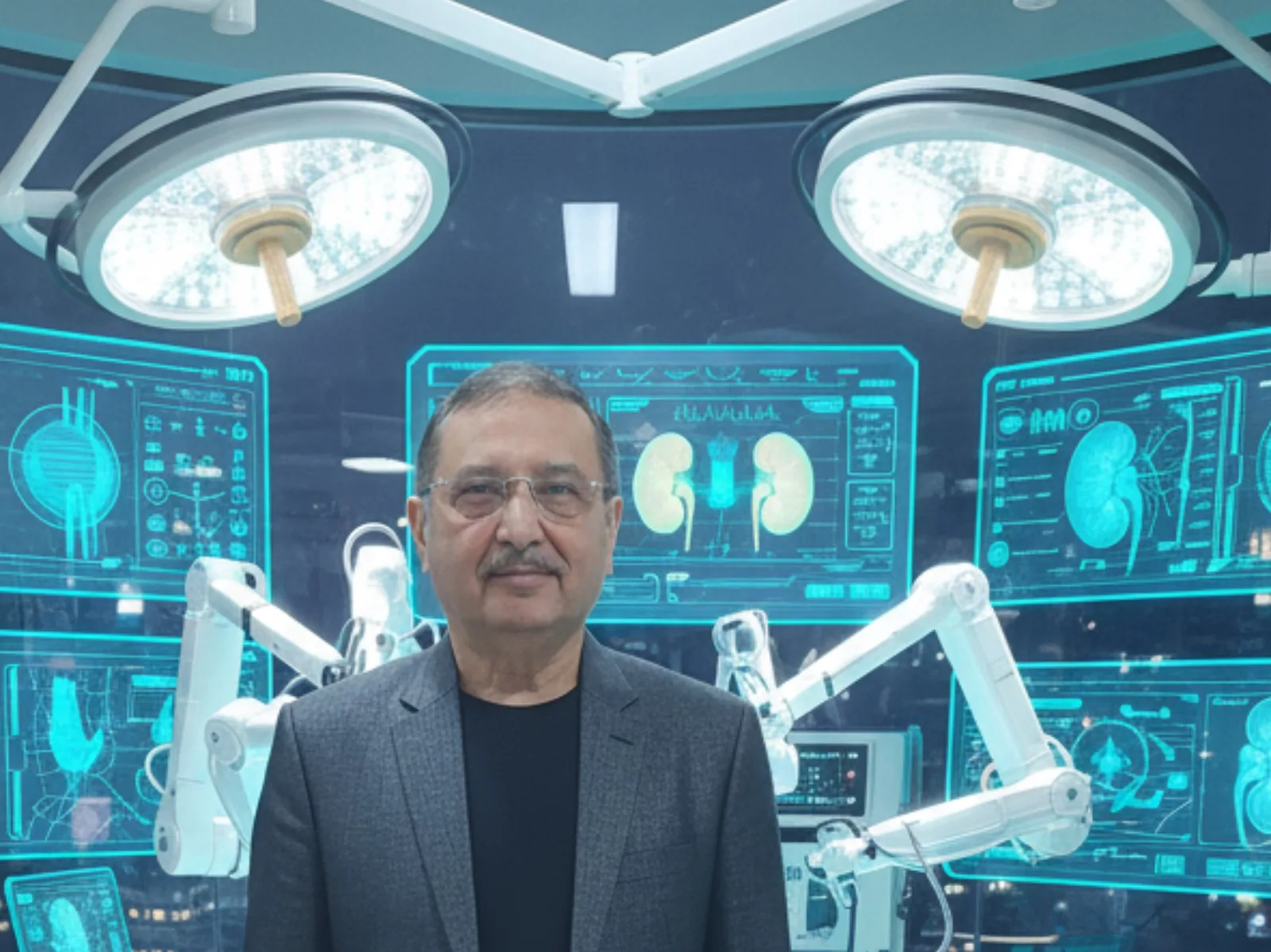
Dr. Sharad Sheth had everything he thought he wanted.
A thriving medical practice. Years of experience. Financial success that would make most doctors envious.
But sometime in his mid-40s, he caught himself in a moment that should’ve felt triumphant — and instead felt hollow.
“I had one crore. Then I had ten. And I realised… I’m still eating the same two chapatis.”
That sentence might sound like a throwaway line. But for Dr. Sheth, it landed like a brick.
He wasn’t burned out. He wasn’t failing. In fact, by all conventional measures, he was winning. But the more he accumulated, the less it seemed to matter.
And that’s when he began to rewire his life.
Not with a sabbatical. Not by escaping to the mountains. But from within the very halls of his work — as a kidney specialist saving lives in the final hour.
This is the story of how a man who built his identity on ambition learned that fulfilment doesn’t come from what you gain — it comes from what you give back.
And how, in choosing impact over income, he didn’t just rediscover meaning — he became one of India’s most respected nephrologists in the process.
The First Climb: A Need to Be Known
Dr. Sharad Sheth didn’t start his medical career thinking about philosophy.
He was focused, driven, and very clear about what he wanted: to become a respected, successful doctor — one people sought out by name. Not just for his expertise, but for his reputation.
“I wanted to be someone of substance. I wanted people to appreciate me.”
He wasn’t shy about that. There was no guilt in the desire. In fact, it fuelled him through the long years of study, training, and patient care. And like most young professionals, he measured progress the only way he knew how: more patients, more money, more recognition.
For 20 years, that mindset worked.
He built his practice. He earned well. He delivered results. And with every thank you, every new referral, every financial milestone, it seemed like he was heading exactly where he was supposed to go.
But success has a strange way of exposing your beliefs.
Because once you reach the top of the hill you’ve been climbing… you finally have a moment to look around.
And for Dr. Sheth, what he saw wasn’t fulfilment — it was a gap. A hollow space that all the money and reputation couldn’t fill.
“After a while, I realised… what does one more crore really do? You’ll still eat the same food, drive the same car, go to the same clinic. That’s when I knew: this can’t be everything.”
It wasn’t a dramatic breakdown. There was no external collapse. But there was an internal shift — the kind that can’t be ignored.
He didn’t want to just earn anymore. He wanted to matter. Not in the way that satisfies your ego — but in the way that touches lives in their most fragile moments.
And that shift was just beginning.
The Quiet Shift
There was no spotlight moment. No newspaper headline. No audience clapping as Dr. Sheth had his big life epiphany.
Instead, it happened the way most real change does — quietly, in the background, one case at a time.
Because while the world saw him as a successful doctor, Dr. Sheth was starting to feel something else: a pull. A shift from the chase for success to the meaning behind it.
It crystallised through his patients — especially the ones everyone else had given up on.
They came to him sick, drained, afraid. People on dialysis who felt like they were dying a little more every day. Their families carried a grief no one had time to name. These were not “cases.” These were lives, suspended in uncertainty.
And Dr. Sheth, day after day, walked into that space — not just with skill, but with presence. With hope.
Then came the moment that changed his centre of gravity.
A patient in critical condition. No obvious chance of survival. No one expecting a turnaround. Dr. Sheth stepped in, made the call, did the work.
And the patient lived.
“When you put in a new kidney, and someone who’s been barely surviving becomes normal again… the life in their eyes, the joy in their families — it’s not just medical. It’s spiritual. That’s when I realised: this is what I was made for.”
It wasn’t one miracle. It was many. Accumulating slowly, silently, until the balance tipped.
And with each life saved, something else became clear: the more he gave, the more whole he felt.
Not famous. Not rich. Whole.
That was the turning point. Not when he stopped being ambitious — but when his ambition became about others.
And ironically, that’s when the world started noticing him even more.
Work That Restores the Dying
You don’t think about your kidneys until they stop working.
Most people don’t even know what nephrology is — until they’re on dialysis, exhausted, and fighting for breath. Until every day feels like borrowed time.
That’s when they meet Dr. Sharad Sheth.
“When the kidneys fail, it’s not just the body that suffers. The person begins to feel like they’re dying slowly — every single day.”
Nephrology is not glamorous. It’s not headline-grabbing like heart surgery or flashy like cosmetic medicine. It’s quiet, relentless, and often heartbreaking. But that’s exactly why Dr. Sheth chose to stay.
Because this is where lives are on the edge. And this is where they can be pulled back.
Take a patient who’s been on dialysis for years — fatigued, demoralised, unable to do the simplest things without planning around a machine. For many of them, a kidney transplant feels like a fantasy. Something for other people.
But then they land on Dr. Sheth’s table. And through steady, meticulous care, through hours of surgery and weeks of recovery, they begin to return to themselves.
Not just functioning. Flourishing.
“After a transplant, when someone goes from being half-alive to laughing, walking, hugging their family — that’s when you realise you haven’t just fixed a body. You’ve returned a life.”
He’s done this hundreds of times. But he never stops marvelling at the transformation.
And for him, the real reward isn’t the surgery going well — it’s when the patient walks into his office six months later, unrecognisable in the best way. Healthy. Free. Alive again.
In those moments, you don’t need a certificate. You don’t need applause.
You just need to witness it — and remember why you started.
The Awards Followed, But He’d Already Let Go
Dr. Sharad Sheth never set out to win awards. At least, not anymore.
The younger version of him might have dreamt about titles, plaques, and standing ovations. But by the time the accolades started rolling in — the Dronacharya Award, the Lifetime Achievement Award, national honours — he’d already made peace with not needing them.
“I enjoy it, of course. But what I enjoy more is giving life back to someone who was almost gone.”
It’s not false modesty. It’s clarity.
Because when you’ve sat across from a family who thought they’d lost someone — and then helped bring that person back — no trophy quite measures up.
And yet, ironically, once he stopped seeking validation, it began showing up everywhere.
Colleagues began referring to him as one of India’s leading nephrologists. Universities invited him to speak. His name travelled across borders. And still, Dr. Sheth remained firmly grounded in the practice itself — in the doing, not the displaying.
“Everyone knows me now. Across India. But what I focus on is giving… and that has made me even more well-known. It’s like the fame followed the work — not the other way around.”
This is the paradox of recognition: chase it, and it stays just out of reach. Give yourself fully to the work, and it arrives quietly — without ego, without expectation.
For Dr. Sheth, recognition became not the reward, but the by-product of living with purpose.
And that shift — perhaps more than any award — is what cemented his legacy.
What Legacy Actually Looks Like
When you ask Dr. Sheth what he’s most proud of, he doesn’t talk about his awards, or the number of lives he’s saved, or even the national reputation he’s earned.
He talks about his sons.
“Both of them are doctors — one an eye surgeon, the other a cancer specialist. They’ve built their own names. I don’t need to introduce them anymore.”
And just like that, you understand what legacy means to him.
It’s not having statues in your honour. It’s raising people — in your home and outside of it — who carry forward the spirit of what you’ve built, without being told to.
Both his sons have carved out their own paths in medicine, but the value system they inherited is unmistakable: Work hard. Stay grounded. Give more than you take.
It’s the same philosophy that defines how Dr. Sheth mentors young doctors.
Over the years, he’s been invited to lecture across India and internationally — not because he’s chasing visibility, but because people want to understand how he built what he did. Not just his career, but his mindset.
“After 45 years, I’ve been everywhere. Given talks. Taught students. But I always come back to the same thing — help people. That’s the real success.”
And in a field that can easily become transactional, Dr. Sheth has stayed rooted in one thing: service.
The Real Game of Life
Dr. Sharad Sheth is 72.
He’s at the peak of his career. He’s respected, admired, fulfilled. His patients still come. His name still travels. His sons are thriving. His legacy is secure.
And yet, when you ask him what he wants now, he doesn’t hesitate:
“I want to keep everyone happy. That gives me the most happiness.”
Not a bigger house. Not more applause. Just peace — shared freely.
You could call it wisdom. But he calls it practicality.
He’s learned the secret most people discover too late — that joy isn’t something you chase. It’s something you choose, protect, and spread.
“I don’t want to create any situation that makes me unhappy. That’s the rule now.”
It sounds deceptively simple. But it’s earned.
He’s lived through success and silence, saving lives and losing patients, long hours and sleepless nights. And what he’s come away with isn’t a list of accomplishments — it’s a lived philosophy.
Give more. Forgive often. Stay positive. Stay useful. Don’t carry weight you don’t need to. And above all — choose peace, again and again.
“The more I’ve given, the more I’ve received. My health, my peace, my reputation — they’ve all improved.”
There’s a quiet clarity to his presence. No urgency. No overthinking. Just a steady rhythm of doing what matters, with a full heart, and no attachment to outcomes.
That’s the real game of life, he says.
Not winning.
But understanding the rules early enough to actually enjoy playing.
Before you go
At some point, you’re going to hit your version of “ten crores”. Maybe it’s the job title. The promotion. The validation you thought would finally land.
And when you get there — if you listen closely — you’ll know whether it means something… or if you’ve just learned the difference between more and enough.
So ask yourself:
What are you still chasing that no longer feels worth it — but you’re too afraid to stop?
Where in your life are you trading peace for performance, and calling it ambition?
If your kids (or peers, or future self) copied your current choices — would you be proud of what they learn?
Author's Note
Dr. Sharad Sheth’s story proves this: you don’t need to burn out or hit bottom to change your definition of success — but you do need to listen. He didn’t quit medicine. He didn’t disappear. He simply stopped letting the pursuit of more dictate the quality of his days. Instead, he rewired his ambition around service — and as a result, the recognition he once chased came looking for him.
That’s credibility: not the awards, but the quiet pivot. The invisible moment when a man with everything realises what he truly wants — and actually lives like it.
By Ugesh Sarcar