Wisdom Blog - The Man Who Built More Than India’s Tallest Tower: Vikraman Pillai’s Story
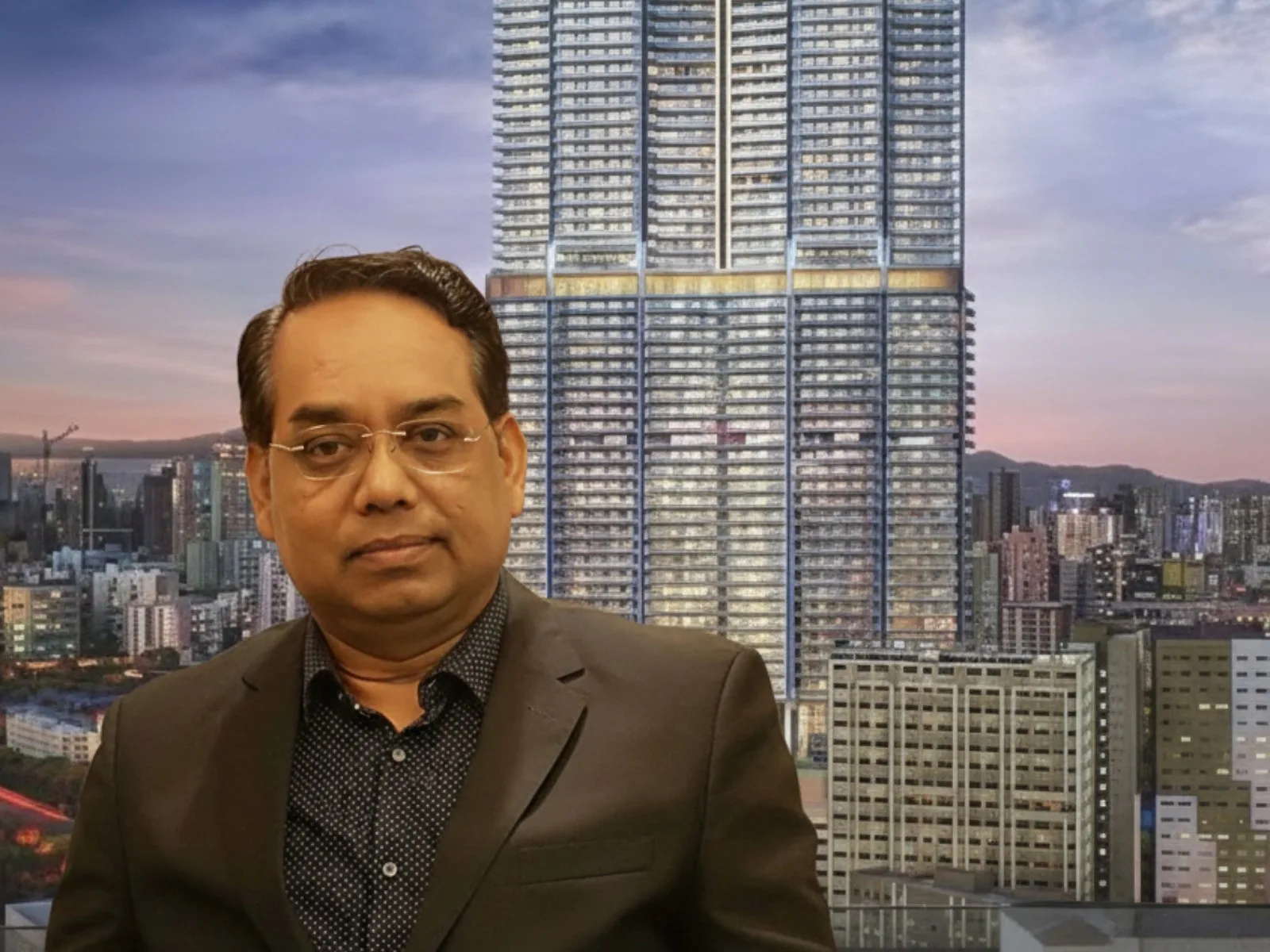
There’s a moment when most of us walk past a signboard, a sculpture, or even the way sunlight hits a wall—and think nothing of it.
Vikraman Pillai doesn’t.
To him, every small detail is a clue. A choice. A story. Who designed this? Why was it placed this way? Did they think about the people who’d use it—or not at all?
This isn’t about noticing broken things. It’s about noticing thoughtfulness. Intent. He’s wired to wonder what made someone do this. Whether it’s a centuries-old temple or a roadside lighting pole, he sees the human behind the structure—and he carries that awareness into every decision he makes.
It’s no surprise then that he didn’t just help build India’s tallest residential tower—he reshaped the rules while doing it. The 91-storey Minerva tower in Mumbai doesn’t just rise 301 metres into the sky. It rises on his refusal to cut corners, his obsession with systems that outlive him, and his belief that when someone trusts you with a responsibility, you don’t just do the job—you honour it.
This isn’t a story about concrete and steel. It’s a story about a man who quietly held the line while the world around him moved faster, cheaper, louder.
And still finished the race.
The Stamp of Responsibility
Vikraman doesn’t raise his voice when he talks about ownership. He doesn’t need to. You can feel the weight of it in the way he speaks. It’s not rhetoric—it’s lived experience.
For him, taking on a project isn’t just a task. It’s a signature. A stamp. Once it’s his, it must be completed, no matter the complexity, the politics, or the price. That mindset has followed him from small assignments all the way to the top floor of Minerva.
And it started, quite simply, with people trusting him.
“Someone says, this is your job now. They don't always give you every detail. But I know—if they've handed it to me, they believe I will do it right.”
It’s not blind confidence. It’s respect for trust. And when you respect trust, you don’t take shortcuts. You don’t pass the blame. You step in, think from all sides, and make sure no one gets hurt—neither the person who relied on you, nor the person you're negotiating with. In his words, it has to be “win-win.”
Even when things go wrong—and in massive projects, they often do—he never detaches from the outcome. He works through it. He stays in the storm.
Because in his mind, “If I walk away, it may never get finished.”
And finishing what he starts is non-negotiable.
The Burden and Beauty of Ownership
Vikraman never chased glory. He never needed the spotlight, the applause, or the press. What he couldn’t walk away from—what he never wanted to walk away from—was ownership.
When the Minerva tower was handed to him, all 91 floors of it, he didn’t sign up for a job. He made a silent vow. He saw the task as a stamp—his personal signature, pressed deep into the heart of the project. From that moment on, it wasn’t about completion. It was about completion done right.
And almost immediately, the road turned jagged.
The approvals didn’t come through. For two years, nothing moved. Plans arrived from consultants that looked perfect on paper—but were impossible to execute in the real world. Contractors faltered. Expectations tightened. Even his own management made decisions he knew—from experience, from instinct—would delay progress or cause avoidable loss.
He didn’t explode. He didn’t resist. He didn’t wage war.
He began.
He moved forward just enough—in the safest, least expensive, most reversible way possible—to let the consequences start surfacing. He did it not to prove anyone wrong, but to protect what mattered: time, money, and trust. When the cracks began to show, he didn’t say “I told you so.” He simply said:
“This direction won’t work. It’s time we change course.”
This was his way. Always.
Not stubborn. Steady. Not reactive. Strategic. Not emotional. Empathetic. Because what he carried wasn’t just a blueprint—it was the weight of every promise made to buyers, workers, funders, and directors. He was the quiet fulcrum where it all balanced. And he refused to let any of it tip.
People asked him why he stayed. Why he didn’t just leave and pick another job, like so many do when things spiral.
He had a simple answer: “If I walk away, this won’t get completed. And I’ve stamped my name on this. It’s mine.”
But the truth behind that sentence runs deeper.
It’s not just that he stayed. It’s what he did while staying.
He managed every detail—from engineering shifts and safety systems to financial negotiations and site-level conflicts—without passing the buck or pushing the burden down the chain. If something had to change, he got everyone back in the room. If something couldn’t be built, he pushed back with evidence. If someone needed correcting, he did it face to face.
Even when it cost him peace. Even when it cost him popularity.
There’s no medal for that kind of leadership.
But there is legacy.
And today, that legacy stands 301 metres tall—not just because he built it, but because he never abandoned it.
He stayed when it got hard. He spoke when it got uncomfortable. And he delivered—fully, not partially. Completely, not conveniently.
Because to Vikraman, ownership isn't a word you write in ink.
It's something you bleed into the ground you’re trusted with.
No One Wins Alone
Ask Vikraman what success looks like, and he won’t show you a skyline.
He’ll point you to the site canteen, where workers sit shoulder to shoulder, joking between shifts. To a contractor who came back years later to say, “It was painful then — but what you said shaped my career.” To the quiet systems he built so no one ever had to ask, “Where’s that file?” or “Who dropped the ball?”
He believes in something that sounds almost outdated now: that leadership isn’t about being in charge — it’s about being accountable to every person involved, whether they hold a title or not.
To Vikraman, every role holds weight. The labourer lifting bricks. The clerk handling documents. The chairman signing off on decisions. If any one of them slips — even slightly — the whole system can feel it.
“The view from the top is only possible when the foundation holds strong,” he said. “And that foundation is built by everyone — not just the few with authority.”
That belief shaped everything he built — not just towers, but teams. Systems. Culture.
He created registers where every document could be traced. Made it standard for even the chairman’s office to sign out paperwork. Not to control, but to protect. Protect from blame, from forgetfulness, from damage that shows up too late. People scoffed at first. ISO systems, documentation protocols — too rigid, too slow.
But years later, when a critical legal file went missing and everyone started pointing fingers, it was Vikraman’s system that quietly revealed the truth. The file wasn’t with him — and the records proved it. What could’ve become a personal attack was reduced to a learning moment. No drama. Just clarity.
That’s how he sees the people around him — not as staff, or subordinates, but as extensions of a larger body. If one part falters, the whole body feels it. That’s why he built protections. So others didn’t have to suffer. So they could focus on doing their job well, without fear of being blamed unfairly.
And yet, there’s something deeply human underneath all that structure.
He gives freely. Support, time, protection. Not because it’s asked of him. But because he feels responsible — deeply — for those around him. For their safety. For their progress. For their peace.
And still, buried beneath all that strength, is a small and private truth:
He silently hopes for the same in return.
Not from everyone. Not from society. Just from the few who matter — family, close friends, trusted colleagues. The people he holds space for, without ever asking back. He doesn’t demand it. He doesn’t chase it.
But the hope is there — that someone will think of his peace, the way he’s spent years thinking of theirs.
That someone will notice when he is tired. When he needs protecting.
That someone will remember: he is human too.
And that’s what makes his kind of leadership rare.
Not the systems. Not the scale.
But the fact that he carries people, even when he needs carrying too.
Warrior of Zero
For most people, “zero incidents” is a checkbox in a project plan. For Vikraman, it was non-negotiable.
Not one injury. Not one avoidable accident. Not on his site. Not under his watch.
And this wasn’t a lofty wish—it was a system. Designed. Enforced. Lived.
Every single worker, from the crane operator to the helper on the 90th floor, underwent mandatory safety induction. Not just once. Every day. Before work began, they were briefed, trained, and issued permits tied to specific tasks. No shortcuts. No verbal instructions. If a person hadn’t signed into the register, they weren’t allowed to lift a tool.
Even the crane operators—handling tonnes of material in tight urban spaces—had their own manual, orientation, and scheduled drills. "Safety ladders, protective gear, proper fencing, documented movement—everything was tracked," he said. “You can’t afford a single loose end when you're building vertically, surrounded by city traffic and lives.”
And it worked.
In a country where construction sites often carry an unspoken risk, Vikraman ran a high-rise project with zero incidents. No fatalities. No major injuries. Not over weeks or months—but years. A tower that touched the clouds, and not a single life lost to negligence.
But he didn’t stop there.
When local authorities raised concerns about crane safety in dense residential zones, he didn’t push back—he led. He approached the court. Presented his systems. Advocated for codified guidelines. What followed was unprecedented: a seven-member committee, headed by the Chief Engineer of the Development Planning department, was formed to draft new crane safety regulations. And the baseline? His project. His process.
His methods were reviewed, adapted, and eventually adopted—not just by local authorities, but recommended at the state level. What started as his internal standard became a wider benchmark.
And in the middle of all this, when asked why he cared so much, his answer wasn’t loud.
“One life. That’s all it takes. If one person dies because we didn’t plan properly, we don’t deserve to build.”
It wasn’t a speech. It was a line drawn in stone.
Years later, safety teams from across the country — even international contractors — were regularly sent to study his site. Every fortnight, groups would arrive, observe, document, and try to replicate what he had built. Not just the structure. The culture.
Because Vikraman didn’t just build high. He built safe. And he built accountability into the bones of the building.
The Fire Within
It wasn’t just the engineering that challenged him. Sometimes, it was the attitude in the room.
One foreign construction manager — highly paid, barely present — spent more time having long lunches and coffee breaks than on-site. Vikraman saw it for what it was: symbolic leadership with no skin in the game.
So, he called it out. Directly. Professionally. Unapologetically.
He removed the person from the project. And when the contractor ran to management, Vikraman didn’t flinch. He had documented the gaps, tracked the absences, and stood by the evidence. When the consultant returned — this time with compromise in hand, asking to stay on with half pay and no perks — Vikraman agreed, but only after setting the terms.
This wasn’t ego. It was principle.
“Don’t sit at home and pretend to lead. Come to site. Sit with the workers. Earn your role.”
In that moment, he wasn’t defending himself. He was defending everyone who’d ever been overlooked because of where they came from, not what they brought to the table.
There’s a fine line between confidence and arrogance. He never crossed it. But he made it clear: Respect is not optional. Not here. Not on this land.
And slowly, something shifted.
The same foreign engineers who once dismissed his decisions began showing up early. Listening. Learning. Taking notes. One even said later, “We came to teach. But we ended up following your systems.”
For Vikraman, it wasn’t about winning.
It was about making sure no one ever again assumed that integrity, intelligence, or leadership wore a particular accent.
Pain, Legacy, and the Power of Thinking
Vikraman doesn’t say the word sacrifice much.
He doesn’t need to.
You can hear it in the spaces between his sentences—the long pauses, the gentle laugh that hides a tired truth, the way he describes care as something that flows from him but rarely to him.
He gives without asking. Protects without seeking credit. But behind that quiet strength is something most people miss:
He thinks about everything. Constantly. Endlessly.
Every decision, every plan, every word spoken in a meeting — it doesn’t end when he walks out of the room. It loops in his head until he’s sure he’s considered it from all angles: what the impact is, what the cost might be, who it helps, and who it might unintentionally harm.
He observes. Not just the systems. The people. Their moods. Their reactions. Their silences. Whether it’s a labourer on site or a loved one at home, he’s watching carefully — always trying to do the right thing by them, even when they never ask.
And sometimes, he wishes someone would notice.
“I try to make sure everyone’s happy,” he said. “I take care of their needs. And maybe… maybe I want the same care. Silently.”
He’s not asking for praise. Not looking for applause. What he wants is harder to define: to be seen the way he sees others. To be understood without having to explain. To be held to the same standard of thoughtfulness he holds himself to.
It’s a lonely kind of hope.
Because people like him rarely get back what they give. They’re too strong. Too capable. Too “sorted.”
But that doesn’t stop him. Because what drives him isn’t recognition. It’s alignment.
He once said, “The moment you stamp your name on something, you become accountable to everyone it affects. Even if they never know your name.”
That applies to work. To family. To life.
And in moments of quiet, when the structure is standing, the conflicts are over, and the people have gone home, he thinks. Not about what’s next. Not even about what’s finished.
But about whether he honoured the stamp. Whether he truly did right by every person who trusted him.
That’s his definition of legacy.
Not a building. Not a plaque. But a conscience that sleeps well at night.
The Sky Isn’t the Limit
Long after the cranes came down and the scaffolding was cleared, the building still stood — tall, proud, complete.
But that’s not what Vikraman sees when he looks at it.
He doesn’t see 91 storeys. He sees a thousand invisible decisions.
Every document signed with care. Every shortcut not taken. Every conflict diffused, not with power, but with presence.
He sees the policies now shaping state-level safety standards — policies that started with a single conversation he initiated because he couldn’t bear the thought of someone getting hurt on his watch.
He sees the systems still in place — ones he designed not for show, but for survival. Documentation that prevents blame. Processes that make trust scalable. Structures that protect people, not just deadlines.
He sees the workers who come back and say, “You were tough. But you were fair. And I grew because of you.”
He sees the nights he didn’t sleep. The conversations that never left him. The weight that nobody else could carry — so he carried it.
And quietly, he hopes… not to be remembered with fanfare, but to be understood.
Because the real tower he built wasn’t made of concrete and steel.
It was made of discipline. Integrity. And thoughtfulness so relentless, it touched everything it came near.
“You take responsibility for what happens around you,” he said once. “Even if it’s not your fault. That’s how you build your life.”
He doesn’t call himself a leader. But people follow him. He doesn’t talk about legacy. But he’s left one anyway.
And as the world rushes by, chasing speed, shortcuts, and signatures on the surface, he stands quietly in the background — a man who built up, but lived deep.
Because for Vikraman Pillai, the sky was never the limit.
The real work was always in the foundations.
Before you go
He could’ve walked away from the project when the delays piled up, the plans fell apart, and his own management made decisions he knew would fail. But instead, he stayed. Quietly. Strategically. Uncomfortably. Because he said he would.
Take a moment. Ask yourself:
When was the last time you followed through — not because it was convenient, but because you said you would?
How often do you override your deeper knowing to keep the peace, follow the plan, or avoid friction?
If someone tracked your choices over the past year — not your intentions, but your actual actions — who would they say you're becoming?
Author’s note
Vikraman Pillai’s story shows what real credibility looks like: he chose to continue leading a project whose circumstances had every excuse baked in to fail, because he saw his signature as a contract with everyone it would impact — even those who didn’t know his name. That choice cost him sleep, time, and ease. But it rewired the system around him — from how people worked, to how they were protected. It’s a quiet kind of courage. One rooted not in performance, but in alignment.
By Ugesh Sarcar