Wisdom Bank - The Quiet Giant: How Dr. Nagesh Gowda Is Rewriting India’s Healthcare Story
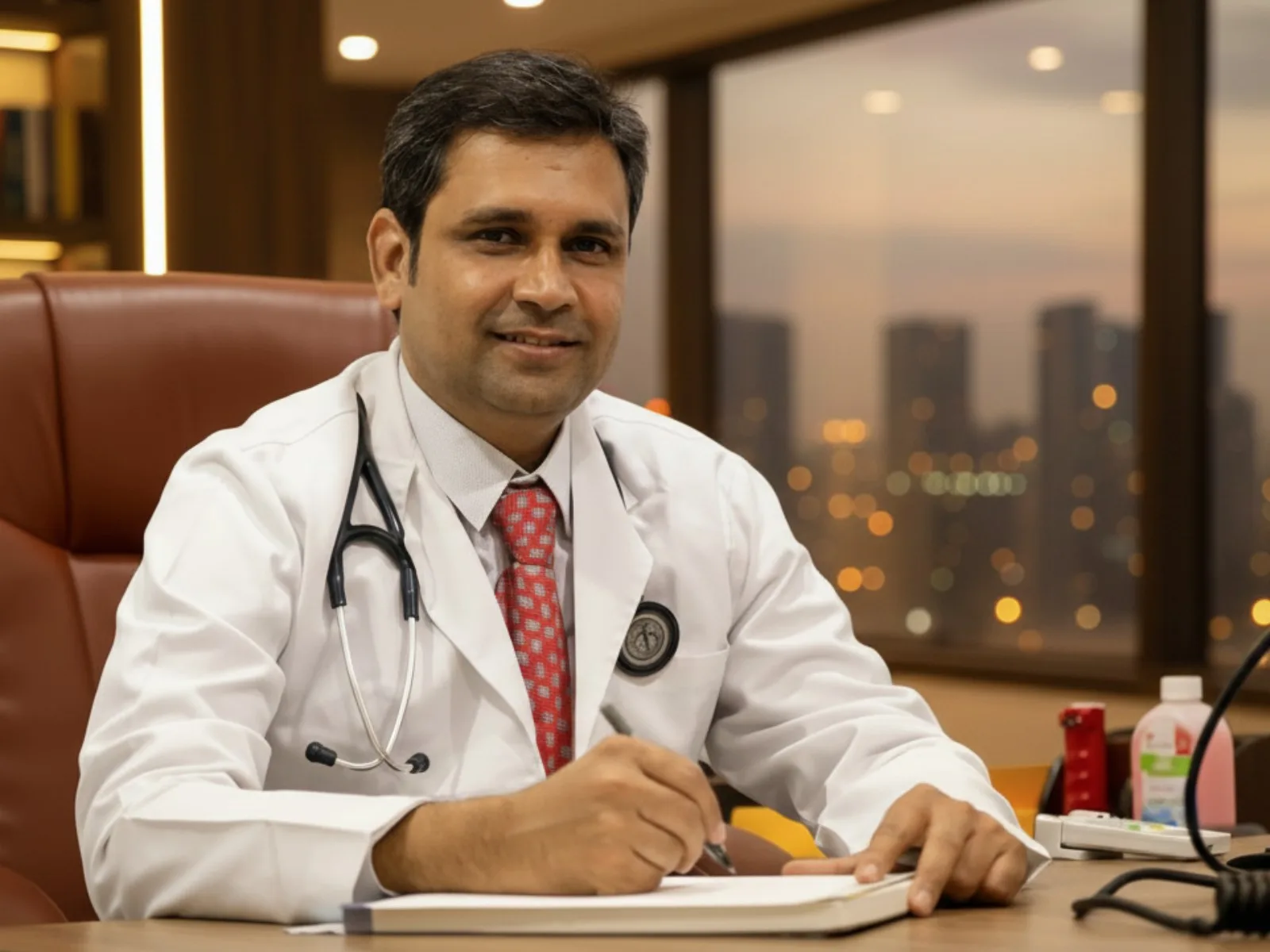
In a forgotten village school tucked between the quiet hills of Karnataka, barefoot children once sat cross-legged on red earth — learning not just maths and science, but meditation, morality, and meaning. Among them was a boy named Nagesh — the son of a modest family, the first in his family to finish college — let alone dream of medicine.
But Sri Sathya Sai Loka Seva Vidya Kendra, Alike wasn’t an ordinary school.
It was the vision of Mr. Madiyala Narayan Bhat — a man born into wealth, who gave it all up. He never married. Never chased titles. Instead, he built residential schools for underprivileged children — offering not just classrooms, but character. The fees? Almost nothing. The education? Everything. Philosophy, service, self-respect — lessons stitched quietly into their growing bones.
That school didn’t just produce graduates. It produced engineers, doctors, civil servants — and in one case, a man who would one day build one of the most impactful healthcare institutions in India.
Most children from that school went on to live lives their parents couldn’t have imagined. But one of them — this boy — would grow into a man who changed the face of public healthcare in India. Not from a podium. Not in a newspaper headline. But by doing the unthinkable: building a world-class gastroenterology and organ transplant institute inside the Indian government system, with no compromises, no shortcuts — and no applause.
No one saw it coming. Not even him.
He didn’t have a plan. He had no godfather. No media spotlight. No grand vision.
What he did have was freedom.
His parents always wanted him to become a doctor — but once he did, they didn’t ask many questions. They didn’t understand where he was going or what exactly he was doing — and they never tried to control it. They just let him be.
So he wandered.
From rural hospitals to elite operating theatres. From Delhi to Mumbai. From failed postings to rare fellowships. Always learning. Always moving. Not chasing prestige — chasing people. Mentors. Cases. Questions. A better way to do things.
And alongside him, a quiet scaffolding: a family that never stood in the way, and teachers who opened impossible doors.
And eventually… impact.
But not the kind of impact you read about in reports. The kind where the team takes their first flight to train in Delhi — wide-eyed, nervous, wearing their best borrowed saris. The kind where you fight the system, lose donor funding overnight, nearly get arrested — and keep going anyway. The kind where a man earns ten times less than he could in private practice, but still comes home every night feeling full.
This is the story of Dr. Nagesh Gowda — surgeon, builder, disruptor. A man who quietly built India’s first government hospital dedicated to gastroenterology and liver transplants, where 85% of patients are treated free, every room gleams, and a cancer patient might wake up on day three of a major surgery… sipping hot coffee, smiling.
But it didn’t start that way.
And it didn’t happen by chance.
No Map, Just Movement
Most doctors follow a track: medical school, postgrad, specialisation, job. They sprint from one milestone to the next like it’s all been laid out for them.
Dr. Nagesh Gowda walked a different way — mostly because there wasn’t a track.
He didn’t come from a family of doctors. Or even a family that understood what medicine meant. When he moved between cities or changed jobs, no one asked where or why. There were no career counsellors, no long conversations. Just quiet permission to explore.
And so he did.
He studied in a rural medical college. Took a post in a primary health centre. Reopened a politically shut-down hospital. Left that behind too. Landed in Delhi, then Mysore, then Mumbai — chasing not paycheques or prestige, but people. Teachers. Surgeons. Work that moved him.
He didn’t have a five-year plan. What he had was hunger — to learn, to improve, to do. While others were polishing their resumes, he was collecting failures. While others settled into safety, he stayed curious.
At one point, he was training under Dr. P. Jagannath — one of the country’s most respected surgeons. The kind of mentor people wait years to get close to. And just when things were taking off, Gowda walked away.
Why? Because his father asked him to come back to Karnataka and get married. So he did.
Back in Bangalore, Gowda met Prof. Ashokkumar Kopparam, a visionary at Bangalore Medical College. At the time, there was no government department for surgical gastroenterology in the entire state. In fact, only a handful existed across the country.
Prof. Kopparam had been trying to start one since 1992.
He saw in Gowda not just a skilled surgeon — but someone unafraid to build where nothing existed. Someone who hadn’t been worn down by systems yet.
Gowda joined him in this endeavor.
It wasn’t part of any master plan. It was just another fork in a road made entirely of forks.
But this time, Gowda said yes.
A Turn Toward Impact
It started with a simple question: “What if we stopped waiting for teachers and started creating them?”
When Dr. Gowda joined forces with Prof. Ashokkumar Kopparam, they weren’t stepping into a department — they were building it brick by brick. Surgical gastroenterology had barely made a dent in India’s Health Sector. At the time, there were only four or five centres in the entire country. Karnataka had none.
But Gowda didn’t flinch.
In 2005, they launched India’s first surgical gastroenterology fellowship programme under the Rajiv Gandhi University of Health Sciences — not just to teach, but to create teachers. The thinking was simple: you can’t scale a specialty without specialists. You can’t build institutions without builders.
Every two years, he set a new goal — and each time, the horizon moved.
2007: They introduced a DNB in GI surgery, the first of its kind in the state.
2009: They launched the MCh programme — again, one of only a handful across India, public or private.
It wasn’t just about ticking academic boxes. It was about long-term, structural change — building a pipeline for the kind of care most Indians had never had access to. For the kind of care government hospitals weren’t supposed to be capable of.
Then came the next big question — a dangerous one: “Can we do liver transplants in a government hospital?”
At the time, it felt absurd. Liver transplants were elite procedures. Reserved for those who could afford 30–40 lakh rupees and weeks in high-end private ICUs. No one expected the government sector to even attempt it.
Gowda didn’t just attempt it. He trained for it.
In 2011, he went to Hong Kong to train under Dr. S.T. Fan, one of the pioneers of living donor liver transplants. He returned with a vision — and nothing else.
No team. No infrastructure. No money.
Just a belief that it had to be done.
The Battle for the First Transplant
Vision is easy. Execution? That’s where most people stop.
Dr. Gowda didn’t.
He came back from Hong Kong in 2012 with the knowledge and training to start liver transplants in a government hospital. But knowledge doesn’t build operating theatres. And belief doesn’t pay for ICUs.
So he made phone calls. Not to funders. To friends.
He asked for money — not for himself, but for his team. To send them to Delhi. To fly them on planes they’d never imagined boarding. To let them stay in five-star hotels while training at Apollo Hospitals.
They weren’t just being trained. They were being seen.
They returned from Delhi transformed — not just technically, but mentally. They made WhatsApp groups. They shared photos. They were energised, proud, ready.
And then the real test came: the first transplant.
It was 2016. The organ was airlifted from Mangalore. A green corridor was created — one of the first in South India. This was history in the making.
But the patient didn’t survive.
The media pounced. Fingers were pointed. Gowda’s name was dragged through the mud. People questioned everything — his judgment, his preparation, his audacity to even attempt this in a public hospital.
For most, that would’ve been the end.
He disappeared from view. No press rebuttals. No grand statements. Just quiet.
And then?
He did 15 more transplants.
No fanfare. Just one by one. Saving lives. Building trust. Proving the first wasn’t a failure — it was a beginning.
Birth of the Institute
By now, the idea had outgrown the department. They weren’t just performing surgeries — they were changing the shape of public healthcare.
But inside the old system, impact had its limits.
There were jealousies. Turf wars. Infrastructure bottlenecks. Every win sparked another set of political and administrative battles. What they had built — fellowship programmes, MCh training, transplants — was pushing against the walls of what a government department could handle.
So Dr. Gowda did what he always did when things stopped working.
He built something new.
With relentless lobbying, cabinet notes, and sheer force of will, he got the proposal for an independent institute inserted into the Chief Minister’s budget speech — a line read out on the floor of the Assembly. On paper, it was just a sentence. In reality, it was a lifeline.
Land was sanctioned. A ten-acre plot next to NIMHANS.
But then the funding fell through. Infosys Foundation, which had promised support, had to withdraw due to emergency aid elsewhere. The whole thing teetered on collapse.
Again.
So he turned to the only people who had never failed him: his friends.
They didn’t just show up. They donated. Generously.
₹32 crores came in from friends, family, and well-wishers. The government added another ₹16 crores. And together, they built it — a clean, fully equipped, 120-bed institute dedicated to gastroenterology and organ transplant. A place where cancer, liver disease, and GI issues could be treated under one roof.
A place where 85% of patients are treated completely free — including surgeries that would otherwise cost ₹10 lakh or more in private hospitals.
This wasn’t a token CSR project. It was a world-class institution built inside the public system, funded by trust, grit, and generosity.
The Institute of Gastroenterology Sciences and Organ Transplant opened its doors in October 2021.
It hasn’t looked back since.
What You Don’t See
It doesn’t smell like a hospital. That’s the first thing people notice.
There’s soft music playing. The wards are clean. The lifts glide open like they belong in a corporate building. No shouting. No chaos. Just stillness — like the place itself is healing.
But these aren’t private patients.
Auto drivers. Farmers. Daily wage labourers. Women who’ve never stepped into a hospital before. Their care costs nothing. Not because it’s subsidised — but because someone decided that dignity shouldn’t come with a price tag.
Here, a nurse doesn’t push a patient across the hospital for an ECG. The machine comes to the bed. Echo, dialysis, diagnostics — all at the bedside. Patients rest. The care moves around them.
This is not how government hospitals are supposed to look. And that’s the point.
When a famous actor needed surgery, Dr. Gowda refused to operate in a private facility. The actor agreed. Came to the institute. Walked the halls. Sat in the OPD. And later said, “There’s divinity here.”
That’s what you don’t see in reports. The actor who saw serenity in silence. The transplant patient — an auto driver — sipping coffee on day three, already back on his feet. The families who didn’t lose their homes to fund ICU stays.
Because the cost of one day in a private ICU is ₹1.5 lakhs. Here, it’s ₹5,000. Same care. Same equipment. Different philosophy.
And when a nurse or technician goes above and beyond — they’re not forgotten. Donors sponsor their families dinners in five-star hotels during transplant weekends. Why? Because, as Gowda says, “If the husband sees the wife working day and night, he should feel proud — not abandoned.”
The institute doesn’t just treat patients. It honours people.
The Quiet Giant
In just 30 months, the institute has done 30 liver transplants — all successful. More than 25,000 procedures. Over 2.5 lakh footfalls. Most of them treated completely free.
It is the only hospital in the world doing transplant surgeries on free schemes, including for patients who don’t qualify under the usual criteria. Every surgery costs a fraction of what private hospitals charge — but delivers the same gold-standard outcome.
There is no waiting room chaos. No files lost. No middlemen, no bribes, no names whispered at counters. No “come tomorrow”. No “go there first”. Every cancer patient gets chemotherapy right here, within the same walls. Every procedure under one roof.
And yet, almost no one outside the medical fraternity knows this place exists.
Until recently, Dr. Gowda kept it that way — deliberately.
No press. No PR. No awards circuit.
“We weren’t building visibility,” he says. “We were building credibility.”
Four weeks ago, the Chief Minister of Karnataka made a surprise visit. He walked the wards. He spoke to 45 patients. He ate the hospital food. He saw a man — a transplant recipient, an auto driver — standing, smiling, drinking coffee on Day 3 of a surgery that would’ve bankrupted his family anywhere else.
He had no words.
And Dr. Nagesh Gowda? He still doesn’t call himself a founder, or a visionary, or a hero.
He says he doesn’t know what keeps him going.
But ask the team who is with him. Ask the friends who gave crores without a second thought. Ask the patients who went home. Ask the families that didn’t fall apart. And his family, parents, wife and children who are his biggest supporters so far in this endeavour.
They’ll tell you.
He may not be chasing legacy. But legacy is quietly chasing him.
Before you go
Dr. Gowda didn’t wait for permission to build what didn’t exist. He just kept choosing the harder road — even when it meant failure first, questions later, and silence throughout.
Take a breath. Now ask yourself:
What’s it quietly costing you to hold back from the thing you already know is yours to build?
Where have you convinced yourself that you need approval, clarity, or a “proper plan” before you move — even though you didn’t need any of it to want this in the first place?
And if you stripped away the excuses, the noise, and the fear — what’s the one step you’d take today that would make tomorrow impossible to ignore?
Author's note
Dr. Nagesh Gowda’s story shows what real credibility looks like: choosing to build a specialty, a team, and eventually an institution long before the system was ready, absorbing the cost of failed attempts, media backlash, and vanishing support — and still moving. It meant saying yes to responsibility no one asked him to take, walking away from safer paths, and trusting people more than structures. In doing so, he reminded us that credibility isn’t a title or a milestone. It’s the quiet, repeated decision to do the harder thing simply because it is the right thing — especially when no one is clapping.
By Ugesh Sarcar