Wisdom Bank - The Life You’re Not Afraid to Defend: The Story of Sudhakar Pujari
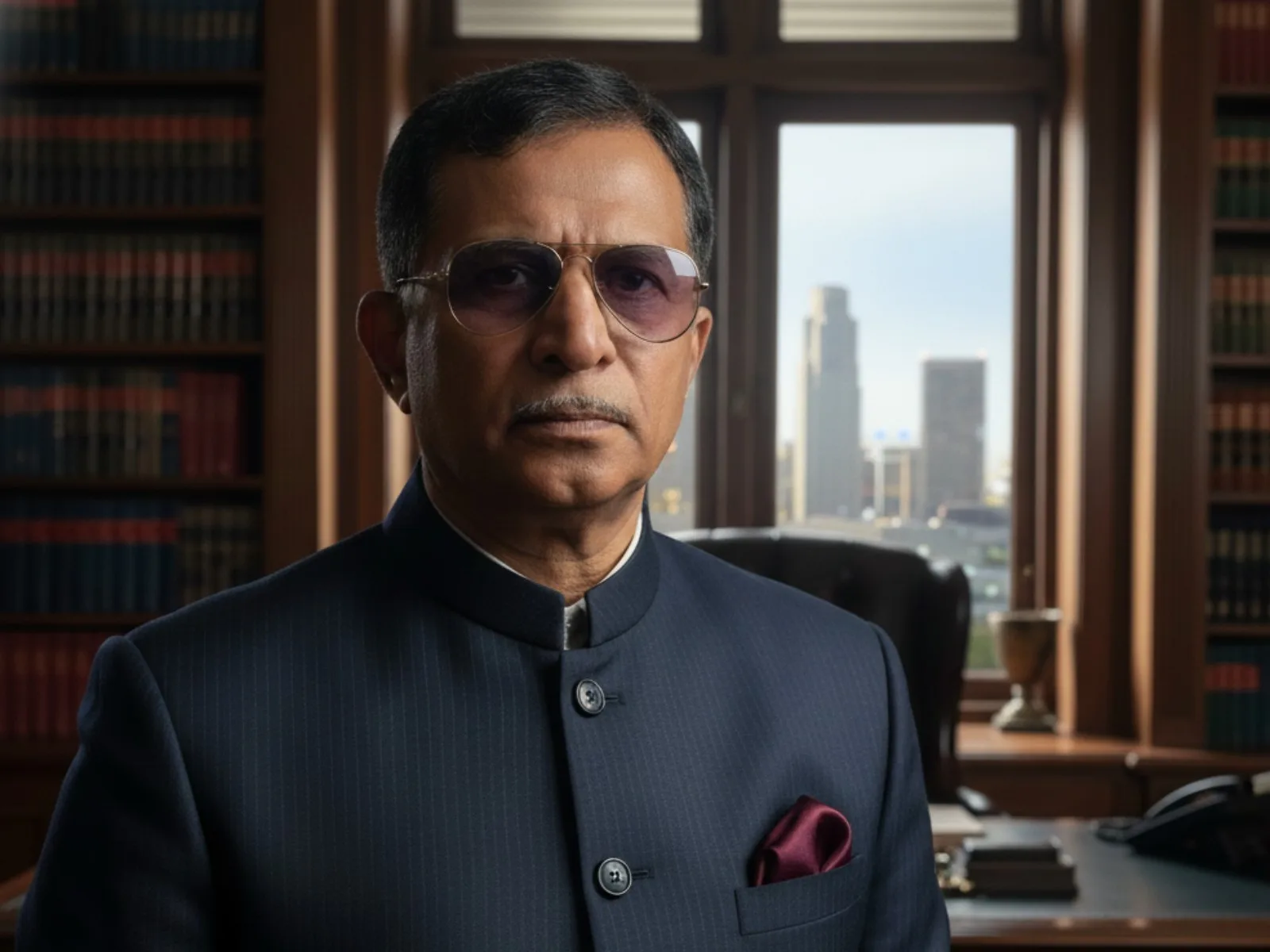
On some nights, you don’t sleep. Not because you’re restless. But because you’ve been shot at—and had to shoot back.
Six months before retirement, most people are winding down. Sudhakar Pujari was staring down the barrel of a loaded gun. A notorious gang had just broken into an elderly couple’s home. By 3:30 a.m., Pujari had tracked them to their hideout. They fired first. He fired back—taking every one of them down, alive.
That instinct—the refusal to back down when it matters most—has followed him through every season of his life.
But if you're picturing a chest-thumping action hero, you’re missing the truth.
This is the story of a man raised by a freedom fighter, educated in a language his parents couldn’t read, and who—before ever donning a uniform—worked over 30 different jobs. A man who quietly chose the long road over shortcuts. A man who, in his darkest moments, questioned whether carrying on was even worth it.
And still, he carried on.
From chasing drug syndicates across states to standing firm in courtrooms as a lawyer, Sudhakar Pujari’s life isn’t just about survival. It’s about how to live a life you’re not afraid to defend.
In this piece, you’ll step into the shoes of someone who’s faced the worst of the world without losing the best of himself. And maybe, just maybe, you’ll walk away with a reminder: You don’t have to be loud to be powerful. You just have to keep going.
The Son of a Freedom Fighter
There’s a certain kind of silence that lives in the homes of those who’ve sacrificed for a nation. It’s not a silence of loss, but of purpose—threaded through generations like invisible wire.
Sudhakar Pujari was born into one of those homes.
His father had been a freedom fighter—the kind who didn’t just chant slogans but paid with his comfort, his health, and finally, his life. They didn’t talk about it much, but the sacrifices hung in the air like incense—quiet, constant, shaping the walls around them.
They were not a family of means. There was no roadmap, no mentor, no guiding hand. His parents had barely finished middle school. There were no connections to fall back on. But they made one bold decision: they enrolled young Sudhakar in an English-medium school.
It wasn’t the obvious choice. It wasn’t even the affordable one. But it changed everything.
Sudhakar didn’t glide through school. He scraped. He hustled. After his 10th standard, he took up whatever work he could find—tuition jobs, clerical stints, small school assignments. Before he graduated, he’d already worked in over thirty different jobs—not for experience, but for survival.
Then, one day, something unremarkable happened that changed everything.
A colleague at the Bank of India—where Sudhakar had landed a job—walked in with a stack of application forms for the Maharashtra Public Service Commission exam. “Just fill it out,” the colleague said. “We’re all applying.”
Ten people did. Only one cleared it.
That’s how Sudhakar Pujari entered the police force. Not through legacy. Not through ambition. Through sheer readiness when opportunity knocked.
But make no mistake—this wasn’t the dream. His dream had worn a different kind of uniform: the Air Force. He had wanted to fly. But in the absence of guidance, he’d taken up commerce. No one had told him that physics and maths were prerequisites. By the time he realised it, that dream had flown.
So, he stepped into another uniform—one that kept him grounded, but not small.
The Reluctant Policeman, The Relentless Seeker
He hadn’t imagined himself chasing criminals. The plan was to serve the country from the skies. But fate has a way of rewriting scripts—especially for those who don’t give up when the doors don’t open the way they expect.
When Sudhakar Pujari entered the police force in 1983, he wasn’t dazzled by the badge. He was observant. The kind of recruit who studied the system before trying to change it.
He didn’t join for the uniform. He stayed for the purpose.
Over the next three decades, he served in some of Mumbai’s most critical and high-risk departments—Crime Branch, Intelligence, and Anti-Corruption. These weren’t roles people queued up for. They were tough, messy, politically fraught. But he kept showing up.
There was a pattern to his work: When others stopped, he dug deeper. Whether it was petty crime, pressure from above, or silent rot—he never closed a file halfway.
That kind of persistence came at a cost.
He saw sides of the system that can break people. There were times when the pressure closed in, dark and heavy—moments when giving up seemed easier. But he didn’t. Something always pulled him back—a word of faith, the support of strangers, or simply his conviction that truth still had a place.
The courts stood by him when few others did. And that, he says, kept him going more than anyone will ever know.
Pulling Threads That Others Leave Untied
It could have ended with the first 100 kilos.
But Sudhakar Pujari doesn’t stop at “enough.” He pulls the thread until it either snaps or leads to the root.
It began one night on a simple patrol—just him, a lady officer, and a driver. They intercepted a man acting suspiciously. The moment he realised who they were, the bribes began: offers, temptations, distractions. Pujari refused. “Recovery first,” he said. “Then we talk.”
That recovery turned out to be 100 kilos of narcotics from Kurla.
Under interrogation, the man revealed more. The trail led them to Goa. Following due procedure, the team moved in. Another 200 kilos recovered—right from a facility where the drugs were being manufactured.
But the story wasn’t done.
The Goa seizure pointed to another link—Karwar.
There, inside a farmhouse, they uncovered the heart of the operation: over 3,000 kilos of narcotics. It was one of the largest seizures of its time. Not something orchestrated by a cartel boss in a suit—but by a man who had once been a black-market movie ticket seller.
The drug trade had offered him a faster ladder. But like most ladders built on vice, it collapsed. Years later, that man was murdered in his own village.
Pujari doesn’t share the story for drama. He shares it because it proves something he believes deeply: Every small lead matters. Most people would’ve closed the case at 100 kilos. But he followed it to the very end.
And that instinct—to finish what he starts—never left him.
Even six months before retirement, when most officers start letting go, Pujari stepped in.
A gang had struck again—this time in Borivali. Their victims: an elderly couple, brutally beaten and robbed in the dead of night. Pujari got the message around 11:30 p.m. He was still in uniform.
By around 3:30 a.m., after a deep search, he found them.
They fired first. He fired back.
All four suspects were injured and arrested. The job was done.
No fanfare. No fatigue. Just duty.
When asked later why he risked that kind of encounter so close to the end of his service, he didn’t hesitate.
“If I find them, I will do what is necessary under law,” he said. “It should be in the blood. You can’t train someone to care like that.”
When Even the Brave Break
For a man who’s faced down armed gangs, chased drug syndicates across states, and arrested criminals in the dead of night, you’d think fear had no place.
But even the brave break.
Sudhakar Pujari doesn’t shy away from that truth.
There were days, he says, when the pressure became so suffocating, he didn’t know how to carry on. Times when the darkness wasn’t out there, but inside. "There were times I felt like ending it all,” he admits, the words hanging heavy, unembellished.
This wasn’t weakness. It was exhaustion—the kind that creeps in when you fight too many battles alone.
His honesty in naming it is what makes the moment land.
What pulled him back?
People. Unexpected, unwavering support—from those who had nothing to gain. Colleagues. Strangers. And, more than anyone else, the courts.
“The courts stood up for me,” he says quietly. “Up to the last end.”
Not because he was famous. Not because he had influence. But because he was right.
That kind of affirmation changes a person. It anchors you when everything else feels unsteady. It reminds you that the fight is worth it—even when no one else is clapping.
And above all, it reaffirmed something he’d always believed:
If you live without selfishness—if you don't want anything from anyone—you move through life with a kind of freedom no one can touch.
You don’t need favours. You don’t need shortcuts. You just need to stay standing, long enough for the truth to catch up.
Retirement? Just Another Word
For many, retirement is an ending. For Sudhakar Pujari, it was a brief pause—fifteen days, to be exact.
That’s how long it took him to start again.
After more than three decades in the police force, he didn’t want to slow down. He wanted to stay useful, to stay relevant, to keep serving the law—this time from the other side of the bench. Within two weeks of retiring, he took his stand and began practising as an advocate in Mumbai.
It wasn’t a reinvention. It was a continuation.
By then, he had already earned a Master’s degree in Law and a PhD in Business Administration—degrees completed not for show, but for preparation. He’d studied during his service years, snatching time between shifts, hearings, and investigations. “You may think further studies won’t help now,” he tells younger officers and students. “But you never know when they will.”
That belief—that learning is a lifelong duty, not a phase—became his quiet gospel.
And so, after the uniform came the robe. The same sense of discipline, the same straight spine, the same hunger for justice—just a different desk.
He practises in criminal law as well as constitutional matters involving rights and government accountability, even appearing before the Supreme Court in one matter. His days filled up quickly—not just with clients, but with people seeking counsel, guidance, and sometimes just perspective. Many were younger officers or constables trying to navigate their own crossroads. Pujari would listen, and then nudge them toward education. “One constable I know is now pursuing law,” he says, a smile softening his face. “That’s the kind of work that stays with you.”
If the system sometimes felt slow or tangled, he didn’t complain. He’d seen worse. He’d lived worse.
Delays didn’t frustrate him—they only reminded him of why persistence mattered.
Retirement, he believes, is just a word. What truly ends is the will to continue—and that, he’s never lost.
“You should not stop in life,” he says. “Retirement is a mental attitude. Do whatever you want to do, but don’t stop.”
Lessons from the Long Haul
If there’s one thing Sudhakar Pujari’s life proves, it’s this — you don’t need a grand plan to live a meaningful life. You just need to keep doing the next right thing.
From a freedom fighter’s home to thirty-odd small jobs, from patrol nights in Mumbai’s backstreets to arguments in courtrooms, his journey has never been about position. It’s been about principle.
And that principle is simple: integrity is not situational.
In a world that often celebrates shortcuts, Pujari’s story feels like an echo from another time. But it isn’t nostalgia—it’s relevance. Because every system, every profession, every life still needs people who won’t bend when it’s easier to fold.
He’s seen both sides of service—the uniform and the robe—and what unites them is not power, but purpose. Whether it’s protecting citizens or defending clients, the question he always asks himself is the same: “What’s the right thing to do here?”
It’s a compass that’s rarely loud but always precise.
He often tells younger people, “There will always be those living below your standard who are still doing good. If they can, why can’t you?” It’s a reminder that decency is not about circumstance. It’s a choice—one you make daily.
When you look at his life now—his mother, still receiving her freedom fighter’s pension; his daughters, well placed; his law practice thriving—you realise something. He never chased success. He chased meaning. And meaning followed.
His story doesn’t end with a medal or a grand farewell. It ends where it began—with quiet conviction.
Keep learning. Keep doing. Don’t stop.
That’s not a motto carved on a plaque. It’s the way Sudhakar Pujari has lived every chapter of his life.
Before you go
Sudhakar Pujari didn’t wait for the system to approve his courage. He just did the right thing—even when it came loaded with risk, silence, and zero applause.
Take a breath. Now ask yourself:
What’s it quietly costing you to keep saying “not now” to the hard thing you already know needs doing?
What story have you been telling yourself to make delay feel wise instead of fearful?
And if you got brutally honest today—what action would you finally stop dodging?
Author's note
Sudhakar Pujari’s story shows what real credibility looks like: stepping into an armed confrontation just months before retirement, not for reward or recognition, but because backing down would’ve betrayed the standard he’d held himself to his entire life. That choice didn’t just demand physical risk — it required emotional clarity, years of preparation, and a refusal to detach from what still mattered. In doing so, he reminded us: living by your values isn’t about one big moment. It’s about refusing to lower the bar just because no one’s watching.
By Ugesh Sarcar