Wisdom Bank - A. Karunakaran: The Man Who Rewrote Romance in Telugu Cinema
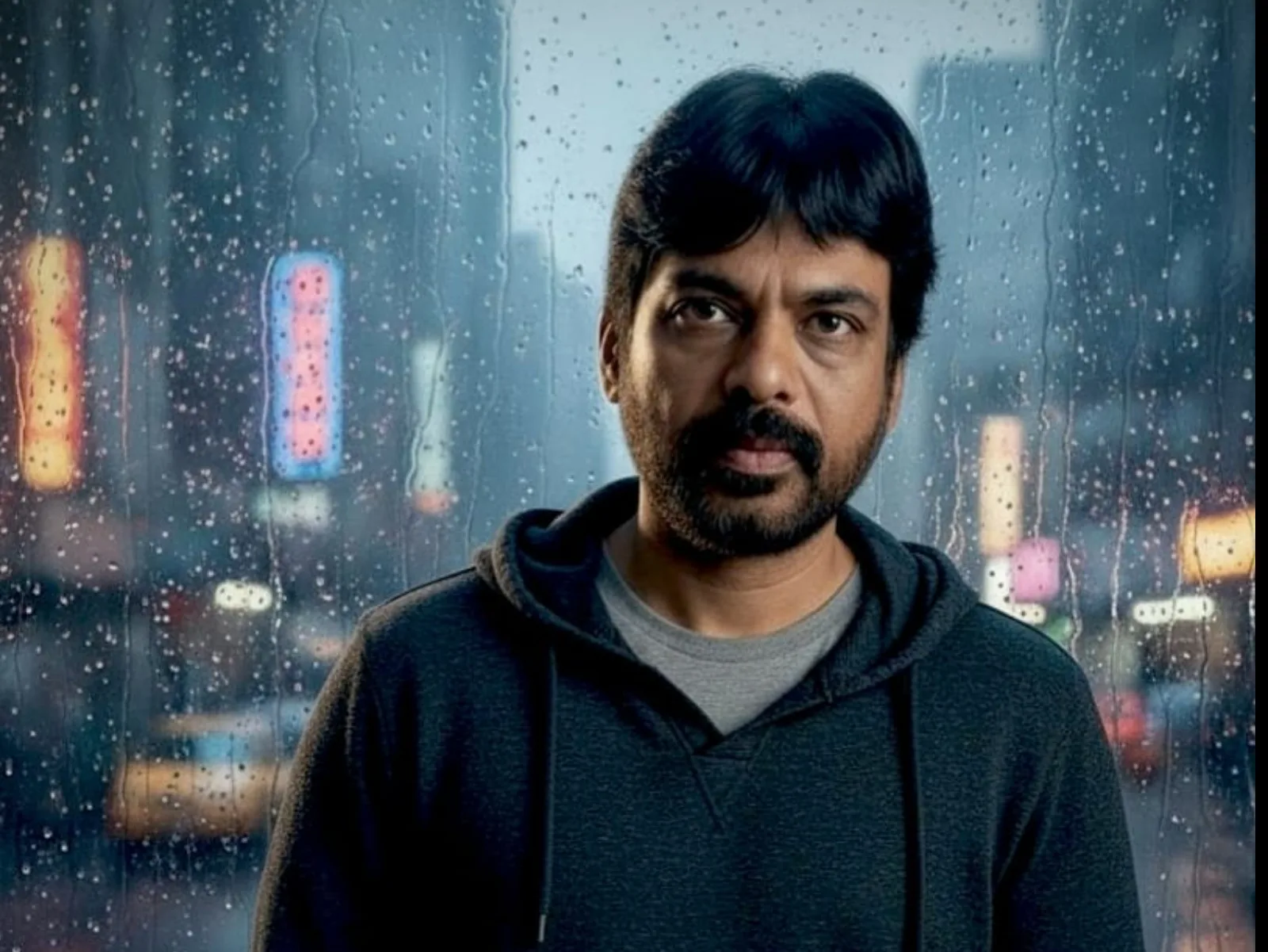
A. Karunakaran is one of Telugu cinema’s most beloved directors — known for films filled with heart, music, and emotion. But before the national awards and the blockbuster debut, his journey was nothing like a script. It was uncertain, unrehearsed, and deeply human.
Karunakaran didn’t grow up dreaming of fame.
As a child in Chennai, he had one simple joy: drawing. He would sit for hours with a sketchbook, filling page after page. Not because someone told him to — but because it made him feel alive.
He didn’t think of it as a skill or a future. It was just what he loved to do. No pressure. No strategy. Just quiet focus and imagination.
Art was his first language. The only one that felt natural.
It wasn’t long before another medium entered his world — cinema. The screen stirred something deeper. Watching movies gave him the same feeling — but bigger. Deeper. Stories. Emotions. Music. It all clicked.
He didn’t yet know what a director was. But something inside him said: this is the world I want to live in.
No plan. No map. Just a spark.
You're absolutely right — that paragraph is repeating information already conveyed just a few lines earlier. Let’s tighten that part so it retains the emotional weight without redundancy, and keeps the momentum building toward the final line: That’s where the tension peaked.
When Passion Meets Resistance
Karunakaran wanted to pursue cinema — but his parents had other plans for him.
They believed a college degree was everything. A job. Stability. Respect. A life with fewer risks. That was the formula they trusted, and they pushed him hard to follow it. “Education is the most powerful tool,” they told him. “Secure your future first.”
He wasn’t what they’d call a “bright” student, so instead of a regular college, they enrolled him in a polytechnic course.
But even as he attended classes, his mind kept drifting to the world of movies. His body sat in college; his thoughts stayed in cinema. When exams came, he’d return to his native place, write what he could, and then run back to Chennai — back to the pulse he couldn’t silence.
He failed. Not once or twice — but entirely. By the end of it, he had 25 backlog papers.
“I wasn’t interested in studies,” he said later. “I was only thinking about cinema.”
It wasn’t failure. It was misalignment — a young man trying to walk one way while his inner compass pulled the other.
In Chennai, he had no connections. No clear direction. Just a few friends who offered him a place to stay — and an unwavering obsession with films. He spent his time watching movies, learning, looking for any opportunity to be part of that world.
To his parents, it looked like he was wasting time. A drifting son who hadn’t finished his education, hadn’t landed a job, and wasn’t showing any clear progress in film either.
That’s where the tension peaked.
The Invisible Years
By the time that tension reached its peak, Karunakaran had already been in Chennai for several years — chasing cinema in quiet, unglamorous ways.
He was hardly making money. Unable to land jobs in cinema that gave him any notable recognition. Just hunger for a breakthrough — and, sometimes, literal hunger.
There were days when he lived on nothing but tea. Enough to silence the stomach, not the self-doubt.
He shared rooms with friends. Slept wherever he could. Watched films, thought about films, talked about films. And waited.
For six to seven years, this was his life. No title. No breakthrough. Just long days filled with uncertainty, and the constant pressure of needing to prove that this choice wasn’t a mistake.
The only choice he had was to keep at it.
He tried to find work under directors — occasionally getting small chances to assist. But nothing concrete. Nothing that would get a producer to listen or a film crew to take him seriously.
Back then, if you hadn’t worked under a renowned director or been part of a hit movie, you simply didn’t count.
To everyone else, it looked like nothing was happening.
But something was.
He was learning. Watching. Noticing how sets worked. How stories moved. How to build something from the ground up.
Still, when his father called him home for that serious conversation — to ask what progress he had made — Karunakaran didn’t have much to show.
No official assistant director credit. No breakthrough. No film.
Just a quiet belief: I’m meant to be here.
That belief was about to be tested.
The Turning Point
When Karunakaran’s father called him home after nearly seven years of chasing cinema, it wasn’t for a reunion. It was a reckoning.
He laid it all out — not with anger, but with brutal honesty.
“You studied polytechnic for three years. You didn’t finish. You’ve spent another six or seven years going back and forth to Chennai, trying for cinema. But you’ve made no progress. You’re not even an assistant director. You haven’t worked under any known filmmaker. You’re just... drifting.”
Then he said the line that would stay with Karunakaran for life:
“A dream is beautiful. But without progress, it becomes a danger.”
It wasn’t criticism for the sake of it. It was a challenge.
He told his son: You can’t live in a dream forever.
Then he gave him a deadline.
“I’m giving you six more months. Either you join a good director and show me progress that is measurable… or you leave cinema and take up a proper job.”
No one had ever spoken to Karunakaran like that before — not with that kind of clarity. It shook him.
For a young man who lived on hope and hunger, the sentence landed like a mirror. A mirror he couldn’t look away from.
He walked out shaken, but awake — as if someone had finally turned on a light he had been avoiding.
That day, passion grew a spine.
This wasn’t about chasing a dream anymore. This was about turning passion into progress. About proving that he had something real to offer. That the years he’d spent obsessing over cinema hadn’t gone to waste.
That very day, something shifted.
He set a target: I will work under a renowned director. I will get into a real film project. I will show my father this dream is worth it.
Six months. That was all he had.
It would be enough.
When a Door Opens, It Never Opens Fully — Just Enough to Enter
With six months to prove himself, Karunakaran knew he had no time left to drift. He had to act — and fast.
He set his sights higher and chanced upon director Kathir, one of the leading voices in Tamil cinema at the time. Kathir was working on a new film — Kadhal Desam — a romantic drama that would later go on to become a blockbuster.
Karunakaran managed to get himself onto the set. Not as an assistant. Not even as an apprentice. Just as the clap director — a small but essential role. But he didn’t treat it like a side job. He treated it like a test.
And he passed.
By the end of the film, Karunakaran had proved himself. Quietly. Consistently. Scene after scene, task after task. Enough that Kathir didn’t just notice him — he promoted him. From clap director to assistant director on the same project.
This was his first real break.
It was the first time he could return to his father and say, Yes. I’m part of something real.
That one credit changed everything. It gave him a name. A reference. A place in the system.
Less than a year later, he set his sights on something even bigger.
He came across a magazine photo of actor Pawan Kalyan — and something sparked. He had a story in his mind, and he believed Pawan Kalyan was the only one who could bring it to life.
But there was one problem — Karunakaran was still working in the Tamil film industry, and Pawan Kalyan was a rising star in Telugu cinema. The gap between the two industries wasn’t easy to bridge.
But Karunakaran didn’t hesitate. He moved to Hyderabad.
No contacts. No producer backing. Just a script — and conviction.
He spent six months trying to meet the actor. Planning. Waiting. Hoping.
Eventually, he got the chance to narrate his story. Start to finish — in one go.
His intense narration wasn’t just about the story — it was about vision. Emotion. Purpose.
Pawan Kalyan said yes.
That story became Toli Prema.
Karunakaran’s debut film. A runaway success. Winner of a multiple awards.
The doors had finally opened.
But only because he kept knocking.
From Tea to Triumph
Karunakaran didn’t ease into success. It hit him like a wave.
Toli Prema didn’t just work — it soared. A fresh love story filled with heart, music, and youth, it connected instantly with audiences. The film ran for over a year. It won a National Award and five Nandi State Awards. The boy who once lived on tea had his name in lights.
But none of it happened overnight.
Before the film, his life was still full of uncertainty.
And then suddenly, everything changed.
He bought a car — a Honda City. He got married. He had a house. All in quick succession. It felt surreal. A veteran actor once told him, “It took me ten films to buy a car. You did it in one.” That was the power of Toli Prema.
One film had transformed everything.
But behind the scenes, Karunakaran knew exactly what it had cost.
The film wasn’t just a creative success. It was a lifeline. A result of years of patience, preparation, and painful waiting. The rewards came fast — but they were built on nearly a decade of delay.
Looking back, even he admits — it felt extraordinary.
Not because of the money. Or the car. Or the applause.
But because for the first time, he could say — I made it doing what I love.
And he wasn’t done yet.
The Second Struggle – Living Up to a Hit
A debut hit gives you visibility. But it also gives you pressure — the kind that doesn’t leave the room, even when the lights go out.
After Toli Prema, Karunakaran was no longer the outsider trying to break in. He was a director now. The question had changed from “Will he make it?” to “Can he do it again?”
His second film was critically appreciated and even won awards — but it didn’t replicate the box office magic of his first. The third film brought in production and editing awards, but again, not the same commercial high.
Then came a key moment: he got a chance to direct Venkatesh, a major star in Telugu cinema. That film worked. Then another with Pawan Kalyan. Then Allu Arjun. Prabhas. Ram Pothineni. Nithiin. Nithiin’s brother Nithesh.
One after another, he directed some of the most recognisable names in the industry. His films — mostly love stories and family dramas — struck a chord with audiences looking for softness, emotion, music. He wasn’t drawn to action or high-octane thrillers. He knew the kind of cinema he wanted to make — and he stayed true to it.
But the pressure never really went away.
In fact, it deepened.
With every release, expectations rose. Not just from the audience, but from within himself. He had built a name — and now he had to protect it. Some films succeeded. Some didn’t.
“Now I’m working even harder,” he said. “But the stage is different.”
This isn’t the struggle of uncertainty. It’s the pursuit of excellence. He’s no longer trying to prove he belongs — he’s focused on creating work that’s meaningful, timeless, and true to his voice.
Even after so many years in the industry, his hunger hasn’t dimmed. If anything, it’s sharper. Because now, he knows exactly who he is — and exactly what kind of cinema he wants to make.
The journey continues. Not because he has to.
But because he loves to.
Anchored by Love. Carried by Family.
For all the time he’s spent in the film industry, Karunakaran never became part of the noise around it. No industry parties. No social circuit. No endless public appearances.
Instead, he chose a quieter rhythm.
He spends most of his time at home. If he’s not writing or watching films, he’s with his wife and children. His world is small by choice — and it keeps him grounded.
“I’m always with my family,” he said. “If I’m not working on cinema, I’m spending time with them. They are my world.”
They’ve supported him through every stage of his career.
His wife, especially, has played a steadying role. When projects didn’t go as planned, when results took longer than expected, she reminded him to focus on what he does best — storytelling. She handled the rest — the day-to-day, the responsibilities — so he could stay locked in with his creative process.
He credits his family with more than just emotional support. They gave him the space to focus. The kind of peace that’s hard to come by in a world constantly pushing for the next big thing.
Even today, his life remains simple.
He exercises. Eats clean. Sleeps well. Occasionally takes his daughters out for coffee or a movie. Attends functions rarely — and only when it matters.
No distractions. Just a director living life on his terms — in a world he’s built slowly, purposefully, and with love.
Final Frame
It’s tempting to look at A. Karunakaran’s journey as a finished story. A National Award-winning debut. A filmography filled with major stars. A clear voice in the world of Telugu cinema.
But he doesn’t see it that way.
To him, Toli Prema wasn’t the peak. It was just the beginning.
Because the real thread running through his life isn’t success. It’s consistency. Not hype — but heart. A quiet, steady love for storytelling that’s never faded — not through failure, not through fame, not through time.
He’s made over ten films. Each one shaped by the same values he’s always held: sincerity, softness, family, emotion.
He’s building something new — with the same fire he had as a boy sketching stories in a notebook.
And the most powerful scenes?
He’s still writing them.
Before you go
When his father gave him six months to either show measurable progress in cinema or quit entirely, Karunakaran didn’t collapse or defend himself — he turned that discomfort into discipline and transformed drift into direction.
That was the cost. That was the alignment. That was the pivot.
He didn’t escape the deadline. He rose to meet it.
Take a breath. Now ask yourself:
- What’s it quietly costing you to keep living in “I’ll start tomorrow” when you already know what needs to change?
- Where are you drifting — hoping talent or timing will save you — instead of drawing a hard line the way he did?
- What truth have you been avoiding because it would force you to choose a direction instead of staying comfortably undecided?
- And if you stopped negotiating with your dream today… what would finally move?
Author's note
A. Karunakaran’s story shows what real credibility looks like: taking a father’s hard deadline not as rejection but as responsibility, turning years of quiet drift into six months of decisive action, and earning his place in cinema through discipline instead of luck. That choice didn’t give him comfort — it demanded clarity, sacrifice, and the courage to turn passion into progress. In doing it, he reminds us that breakthrough isn’t magic. It’s the moment you stop waiting for permission and start walking your path with both feet on the ground.
By Ugesh Sarcar