Wisdom Bank - Medicine, Art, and the Human Spirit: The Unconventional Path of Dr. Mahendra Singh Chouhan
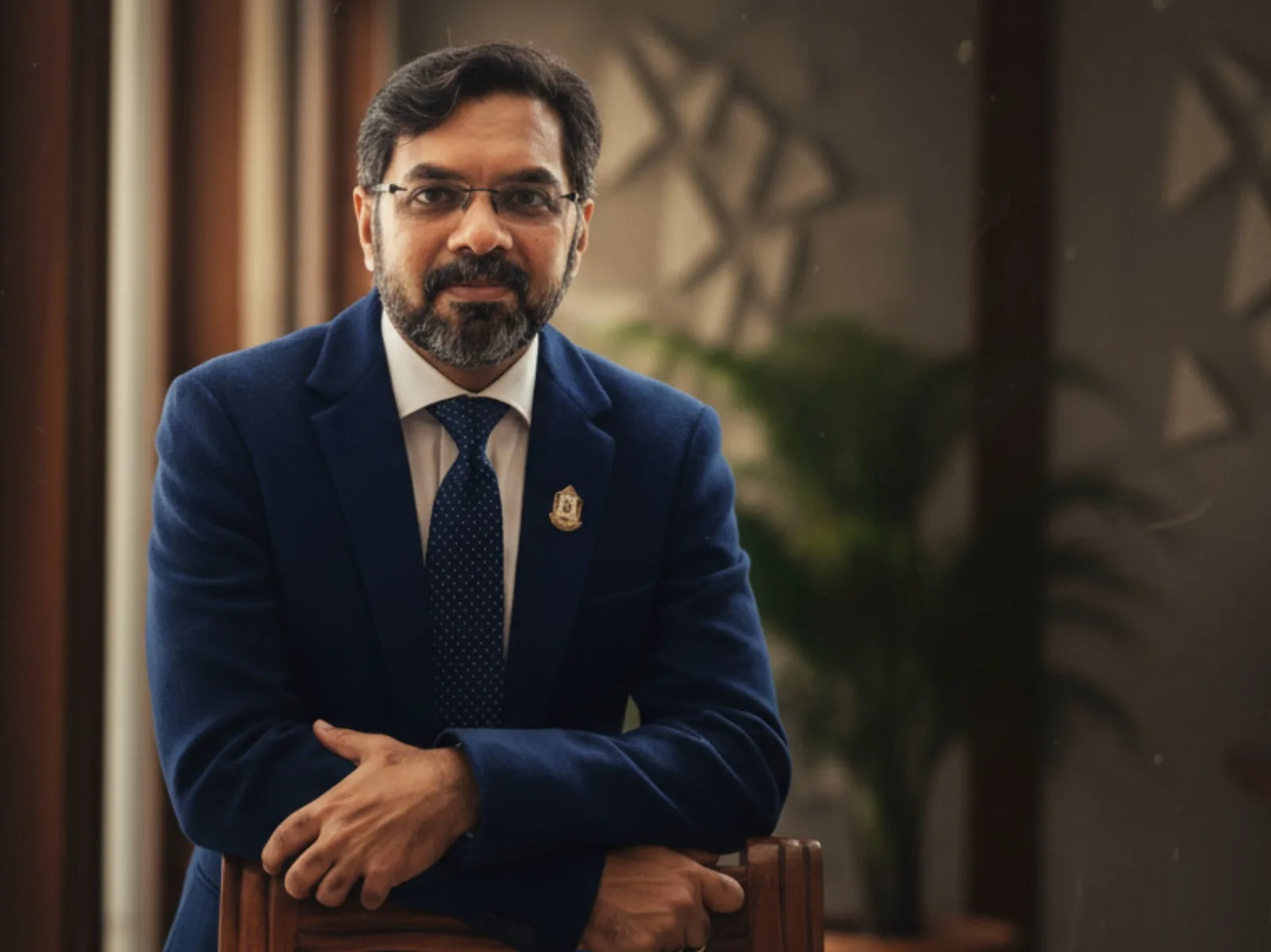
In the middle of a packed clinic in Nairobi, a woman sits across from a neurosurgeon with tears in her eyes. She’s not here for a scan result. She’s not even sure what’s wrong — the pain has no name. He doesn’t reach for a prescription pad. He doesn’t order a test. He asks her about her job. Her marriage. Her dreams. And when she leaves, she carries no pills — just a business plan, a path forward, and for the first time in years, some peace.
This isn’t a rare scene in Dr. Mahendra Singh Chouhan’s life. It’s a Tuesday.
From the outside, you might call him a neurosurgeon — but that barely scratches the surface. He’s a painter, a poet, a medical rebel. An ex-student who once chased a girl into college and found his true calling in a hospital hallway. A man who has spent his life walking away from comfort in pursuit of meaning — from small towns in India to the beating heart of Kenya’s medical need.
He’s performed surgeries no one else dared. Turned down positions others would kill for. Built a hospital where art, science, and soul co-exist. And today, he’s doing something medicine rarely does: telling patients the truth — even when it's inconvenient. Especially then.
This is not a story about a doctor. It’s about a man who refused to become just one.
From Mixing Medicines to Missing Purpose
The first time Mahendra Singh Chouhan stood behind a clinic counter, he wasn’t a doctor. He wasn’t even a teenager. At just eight years old, he was working as a compounder in his father’s modest dispensary — grinding pills, mixing syrups, stuffing medicine leaflets into bottles, and scribbling out prescriptions.
He didn’t fully understand what he was doing. But he was curious. While other children played outside, he was peeling open pharma pamphlets and trying to decode chemical compounds. Not because anyone asked him to. Because something inside him needed to know more.
But school? That was a different story.
He was a “very, very average student,” by his own admission. While some kids solved equations, he drew. While others memorised biology charts, he painted. He had a natural gift for fine arts — and no clear plan for what came next. So when it came time to choose his path in grade 11, he followed his father’s advice: take biology, and try for medicine.
He wasn’t sure. Not about the subject. Not about the future.
But he said yes.
He drifted. He scraped through exams. He felt stuck between what he was told to do and what truly moved him. And then — something unexpected happened.
Until one hospital visit — meant for someone else — changed the course of his entire life.
The Moment That Lit the Fire
It wasn’t a lecture or a textbook that changed everything. It was a hallway.
Dr. Chouhan was visiting Vellore with his cousin, who was scheduled for cardiac surgery. Wandering through the towering corridors of the super-specialty hospital, he came across two signs: Department of Neurosurgery Department of Cardiothoracic Surgery
He stopped.
He stared.
And something — after years of drifting — clicked into place.
It wasn’t logic. It wasn’t strategy. It was a full-body realisation that this... this was it.
He approached a doctor walking past and asked, almost breathlessly, What happens here? The reply was simple: “We operate on the brain and the heart.”
That was all he needed to hear.
In that moment, the dots started to connect backwards — to a memory from years earlier, watching a university broadcast that featured a neurosurgeon drawing precise lines on a patient’s head, preparing for surgery. At the time, it had seemed like a distant world. Now, it felt like fate circling back to collect him.
He returned home a different person.
Gone was the boy who coasted through classes. Gone was the teenager unsure of what he wanted.
He started studying — obsessively, relentlessly. 22 hours a day, for two years straight. Not because someone told him to.
Because he’d finally found something worth becoming.
Chasing the Edge of Possibility
Most people aim to master what already exists. Dr. Chouhan was drawn to what didn’t — the edges of medicine, the uncharted, the almost-impossible.
Once he got into medical school, the hunger that had pushed him through those 22-hour study days never left. But now, it wasn’t just about passing exams. It was about pushing boundaries.
While his peers pursued established specialities, he was seeking the fringe — surgeries no one else wanted to touch, techniques not yet popular in India, treatments that were years ahead of their time.
When he joined AIIMS, one of India’s most prestigious medical institutions, epilepsy surgery was still rare — almost nonexistent. But it fascinated him. So did functional neurosurgery. So did bypassing blood vessels in the brain the way surgeons do in the heart — a complex procedure few had ever attempted in India. He didn’t just attempt it. He did it — performing the first brain bypass of its kind across all of Western India.
This wasn’t ambition for the sake of ego. It was curiosity backed by grit.
And yet, the deeper he went into innovation, the more resistance he began to face. The places he worked didn’t always have the infrastructure. Sometimes, they didn’t even have the mindset.
He was doing surgeries no one had done in his entire state — and still, he found himself surrounded by silence. No one to collaborate with. No one to challenge him forward. He wasn’t just ahead of the curve. He was alone on it.
And when that happens, you have two choices:
Settle. Or leave.
Doors That Open, Doors That Close
For a while, Dr. Chouhan stayed. He brought first-of-their-kind surgeries to regions that had never seen them. He earned his reputation — not through marketing, but through mastery.
But even excellence hits ceilings.
He started noticing a pattern — complex surgeries were being referred out to bigger cities like Mumbai or Ahmedabad, regardless of local expertise. He was operating at the frontier of medical possibility, but the system kept pulling him back to the basics.
Worse still, he found himself unable to even talk about his work with other doctors. Innovation doesn’t thrive in isolation. It needs challenge, feedback, growth. And none of that was coming.
So, he left.
Mumbai. Ahmedabad. He carried his surgical portfolio like a secret weapon — just 15 of his most challenging cases, neatly compiled into a PDF. He didn’t send applications. He walked into hospitals himself.
At a renowned hospital — one of Mumbai’s most elite — he sat down with Professor Atul Goel, one of India’s most respected neurosurgeons. “Here are my cases,” he said. “This is what I do.”
No long introductions. No embellishments. Just results.
Professor Goel didn’t hesitate. “Go to the hospital. I’ll make the call.” And just like that, the door opened.
But outside that room, things weren’t so simple.
The hospital boardroom weighed reputation over innovation. Budgets shifted. Politics interfered. And even when other hospitals offered him positions, the pay wouldn’t support a doctor with a family, two children, and a relentless drive to keep growing.
He was doing everything right — but the system wasn’t built for doctors like him.
And then came a realisation: maybe he didn’t need another hospital. Maybe he needed a whole new continent.
Africa: A New Continent, A New Kind of Care
When Dr. Chouhan first looked at Africa, it wasn’t out of desperation. It was clarity.
He realised that across an entire continent — a population of over 1.4 billion — there wasn’t a single neurosurgeon performing epilepsy surgeries. Not one.
That wasn’t just a gap. That was an invitation.
He moved to Nairobi and started again — not with a department behind him, not with government grants or institutional support. Just skill, belief, and a plan to do things differently.
And then the stories began.
A doctor from the UK’s Royal College couldn’t find treatment for her patient. She sent them to Dr. Chouhan. A fourth-year FRCS student from Canada spent seven months without a diagnosis. Dr. Chouhan saw him, diagnosed him, treated him — in one sitting.
Word spread.
Today, he’s one of the only surgeons in Africa performing advanced neurosurgical treatments for epilepsy, migraine, and even depression. Not only that — he’s rethinking how patients should be treated.
He doesn’t just perform surgeries. He studies the culture. He learns tribal customs, speaks their languages, listens without judgement.
Because when people walk through his door, they don’t just bring CT scans — they bring their lives. And healing, he believes, starts from there.
He didn’t come to Africa to make a name.
He came to make a difference.
Healing the Person, Not Just the Scan
One woman walked into his clinic with a list of symptoms that didn’t make sense. Her back ached, her body hurt, her head was heavy — but nothing lined up with any known diagnosis.
Where others might have prescribed another round of tests, Dr. Chouhan asked a different question.
“How’s your job?”
She hesitated. “Stressful.”
“Are you happy at home?”
Pause. “Yes.”
“What tribe are you from?”
“Meru,” she replied — a group known for vegetable trading.
Within minutes, he wasn’t talking about nerves or discs. He was talking numbers — how much profit she could make selling vegetables. Within two years, he said, she could build her own business.
And she believed him.
She left with no pills. Just purpose.
These moments aren’t rare for Dr. Chouhan. In Kenya, many women carry the weight of broken families, silent grief, unresolved trauma. He’s learned that behind chronic pain is often chronic emotion.
Sometimes a patient needs surgery. Sometimes they need to be seen.
He listens when others rush. He asks when others assume. And he’s learned that medicine isn’t always what heals people — sometimes, it’s the conversation that does.
It’s not the kind of thing that shows up in a hospital record.
But it’s the kind of thing people never forget.
Building a Hospital That Doesn’t Feel Like One
Hospitals, as we know them, intimidate. The pale walls. The sterile smell. The silence thick with anxiety.
Dr. Chouhan wanted none of it.
When he set out to build his own hospital in Nairobi, he didn’t start with machines or money. He started with a question: What would it take for a hospital to feel like a place of healing — not fear?
He infused the space with art, light, and intention. A large Sri Yantra rests in his clinic, anchoring the energy. Every room is designed not just for function, but for feeling — blending philosophy, architecture, and subtle spiritual geometry.
This isn’t just aesthetic. It’s strategic.
His friend, a graduate from Germany's School of Planning and Architecture, introduced him to concepts where design affects healing outcomes — where the structure itself reduces complications, re-admissions, and even mortality.
And patients feel it.
They come in expecting clinical coldness. Instead, they find warmth. Some even return just to sit — to be in a space that makes them feel human again.
Dr. Chouhan doesn’t believe healing begins on the operating table.
He believes it starts at the door.
Redesigning the Rules of Medicine
For all the surgeries he’s pioneered and the technologies he’s embraced, Dr. Chouhan’s most radical act might be this:
Telling patients the truth.
Especially when it’s inconvenient.
When someone comes to him with a degenerative spine condition, he doesn’t offer miracle cures or dramatic guarantees. He tells them plainly: Your spine will continue to age. No surgery can stop that.
What he offers instead is a relationship — not a transaction.
He’s built an annual care model for spinal patients. One transparent fee. Unlimited support. No markup on hardware. No hidden charges. No unnecessary procedures. Just honest, ongoing care designed around you — not the hospital's bottom line.
Because he’s seen what happens when greed takes over: Hospitals pushing spinal screws that aren’t needed. Patients sold surgeries that leave them worse than before. People going bankrupt to chase false hope.
He’s not interested in that kind of medicine. Never was.
Now, with his own hospital, he doesn’t answer to boards or business models. He answers to his patients — and his conscience.
And it's not just in the way he charges. It’s how he speaks. How he sees. How he builds systems that honour people, not profit.
For Dr. Mahendra Singh Chouhan, the scalpel is just one of many tools. The real surgery happens at the level of how care is given — and why.
He’s not just changing how patients heal.
He’s rewriting what it means to be a healer.
Closing – The Doctor Who Chose to Feel
There’s a reason patients fly to him from London, from Canada, from corners of the world where medical care is plentiful — but connection is rare.
It’s not just because of what Dr. Mahendra Singh Chouhan can cut, fix, or diagnose. It’s because of what he can see.
He sees what pain is trying to say. He sees the girl grieving her mother, five years later, still not healed. He sees the vegetable vendor in her exhaustion and reminds her she was built for more. He sees architecture as medicine, and conversation as therapy. He sees what most hospitals can’t — or won’t.
And maybe that’s the point.
Maybe we don’t need more doctors who memorise better or operate faster. Maybe we need more who can sit with someone’s sorrow and still hold a vision for their future.
That’s who he is.
A neurosurgeon, yes. But also an artist, a teacher, a rebel, a guide. A man who walked away from comfort to carve a new path in a field that desperately needed one.
And he’s still building.
One room. One surgery. One honest conversation at a time.
Before you go
He didn’t wait for a system to reward his conviction. He walked away. From comfort, career stability, and power. Because he couldn’t keep pretending that broken care was good enough.
Take a breath. Ask yourself:
- What’s it quietly costing you to stay somewhere that no longer matches your values, just because it’s familiar?
- Where are you still hoping things will change if you just wait long enough?
- What story are you telling yourself to make staying silent feel responsible instead of safe?
- And if no one ever clapped for your choice, would you still make the right one?
Author's note
Dr. Mahendra Singh Chouhan’s story shows what real credibility looks like. He left behind institutional prestige and professional safety because he refused to treat patients as transactions. That choice didn’t earn him applause. It cost him security, status, and belonging in systems he once worked to elevate. But in choosing to build his own path — one rooted in art, honesty, and deeply human care — he reminded us that leadership isn’t about climbing higher. Sometimes, it’s about walking away from everything you’ve earned to protect everything you believe.
By Ugesh Sarcar