Why Dr. Narendra Singh Khurana Believes Peace Can Be Profitable — And Scalable
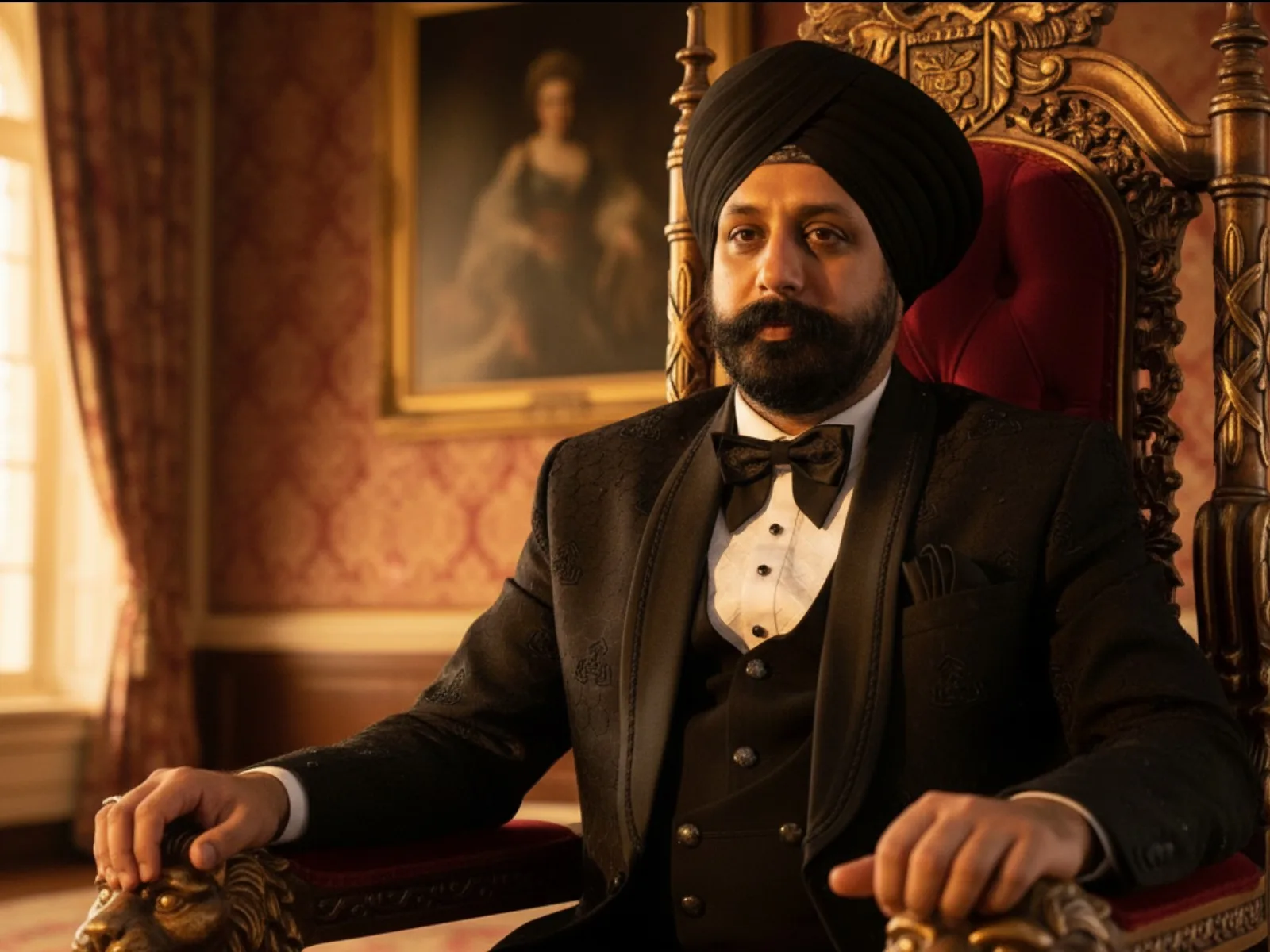
It hadn’t rained in Dubai for weeks. The skies were dry, the desert still. But on that one day—under the golden dome of a Gurdwara, surrounded by diplomats, royals, and spiritual leaders—something unexpected happened.
It poured.
The kind of rain that stops conversations and stirs something deeper. The kind of rain that makes you look up and wonder: What just shifted?
For Dr. Narendra Singh Khurana, this wasn’t a miracle. It was a pattern. One that’s followed him from spiritual gatherings in Punjab to stadiums in Pattaya, to political stages and celebrity events. Wherever he travels, a ripple seems to follow—of unexpected weather, of quiet synchronicity, of deep, almost mystical presence.
But to dismiss him as just another spiritual seeker would be missing the point entirely.
Dr. Khurana is building something far more grounded—and far more disruptive.
A City of Peace. Not in theory, but in executable blueprint. A model where divine and devil coexist—not in conflict, but in balance. A city not afraid of duality. A city that mirrors the real world and dares to transform it.
And through a global initiative with a name as bold as its ambition—Googolplex Smiles Party Billionaires Club (GSPBC)—he’s doing what few peace ambassadors have dared: Treating peace as a product, designing it to scale, and building it with the same rigour as a successful business.
This is not your typical story of spirituality. It’s a story of systems. Of paradoxes. Of numbers. Of tears. Of reinvention after near-death. Of kindness as currency.
This is the story of a man who believes peace can be profitable—and has the plan to prove it.
From Punjab to the Planet
Before there was a plan to change the world, there was a boy immersed in sacred rhythm.
Born into a Sikh family where spirituality wasn’t preached—it was lived—Dr. Narendra Singh Khurana’s earliest memories are not of ambitions or accolades, but of verses. His mother maintained a constant flow of energy from the Guru Granth Sahib Ji, the holy scripture of the Sikhs. That atmosphere became his first school—not of academics, but of alignment.
It wasn’t long before he was recognised as someone meant for more than ritual. As a young man, he was given the rare honour of being part of the Panj Piare—a position of high spiritual significance in Sikh tradition. It was here he helped baptise others into the faith, initiating them into the path of Amrit, a sacred commitment to live a life of discipline, service, and grace.
But Dr. Khurana wasn’t content to remain within the boundaries of any one role or region.
Inspired by the legendary Harbhajan Singh Yogi—a spiritual leader who simultaneously led billion-dollar businesses like Yogi Tea and Akal Security—Dr. Khurana saw that it was possible to build empires without losing your essence.
He travelled. Listened. Observed. Learned.
Over time, his path took on a strange consistency. Everywhere he went, it rained. Sometimes only for a few minutes. Sometimes all day. Cities known for droughts—like Dubai—were suddenly soaking as he arrived for celebrations and interfaith gatherings.
For others, it was uncanny. For him, it was confirmation.
The world was responding.
His spiritual foundation had turned into something else entirely: a vision that crossed religions, cultures, and economies. A vision that asked the world’s most uncomfortable question:
“Can we create peace—without pretending evil doesn’t exist?”
Peace with a Price Tag
The world loves the idea of peace.
But when it comes to real-world application—budgets, cities, infrastructure, inclusion—peace often stays locked in poetry, prayer halls, or international summits with little lasting effect.
Dr. Khurana saw this pattern not just as a problem, but as a failure of design.
In his words, “Everyone who promoted peace was empty-handed.” Think of the saints, the prophets, the peacemakers—they often lived modestly, struggled for support, and were celebrated only after they were gone. Statues were built for them. Temples adorned with gold. But while they lived? They had barely enough for a second helping of dal.
This, Dr. Khurana believes, is why peace has failed to scale.
So, he asked a bolder question: What if peace was treated not just as a virtue—but as a product? Something with structure. Value. Demand. Metrics. Just like any thriving business.
This is not about selling serenity. It’s about making the systems of peace work for people in the way capitalism, technology, and entertainment already do.
His premise is simple but disruptive: Peace must become profitable if we ever want it to survive.
It’s why he created the Googolplex Smiles Party Billionaires Club—a platform where billionaires, celebrities, and leaders unite not around politics, but around joy, kindness, and scalable good.
In this framework:
- Smiles become currency.
- Kindness becomes routine.
- Inclusion isn’t just tolerated—it’s required.
- And peace isn’t reserved for monks—it’s woven into boardrooms, festivals, courts, and cities.
Dr. Khurana isn’t romanticising peace. He’s engineering it.
And that shift—from virtue to viability—is at the core of his revolution.
The City of Peace (With Room for Devils)
It’s the kind of sentence that makes people recoil—then lean in.
“You cannot build a peaceful city without including the devil.”
When Dr. Khurana says this, he doesn’t mean it as metaphor. He means it literally.
For decades, peace has been framed as purity. Remove all sin, remove all vice, and you’ll have utopia. But in city after city, that model has failed. Not because people don’t want peace—but because they’re told they have to exclude parts of themselves or their society to achieve it.
Dr. Khurana’s vision flips that narrative.
He proposes a City of Peace—a real, functioning place built on an unapologetic truth: light and dark co-exist. Always have. Always will. Instead of denying it, this city model embraces both in a way that channels tension into balance.
Here’s the core idea: Every holy book mentions the “devil lifestyle”—whether it’s alcohol, sex work, indulgence, or rebellion. Yet those same lifestyles are taxed, monetised, and silently sustain global GDPs. The contradiction isn’t spiritual. It’s systemic.
He asks: “Can you name one major city that runs without taxes from what we call ‘devil’ industries?” And then: “If that’s the reality, why pretend peace must exclude them?”
Like a franchise model—Marriott, for example—Dr. Khurana imagines scalable cities of peace, with blueprints tailored to include entertainment, nightlife, diversity of belief, and complex human behaviour. Not to glorify vice, but to stop demonising people based on it.
In his model:
- There are zones of worship and zones of nightlife.
- Ethical and spiritual education is offered—but not imposed.
- Economic contribution matters as much as moral alignment.
- People aren't judged by what they wear or whom they love, but by how they live together.
This isn’t utopia. It’s realpolitik, wrapped in spiritual pragmatism.
It’s a place where peace doesn’t demand denial.
It demands understanding.
The Smile Economy – GSPBC
It sounds almost playful: Googolplex Smiles Party Billionaires Club.
But behind the quirky name is a framework with mathematical precision and emotional weight.
Dr. Khurana chose each word intentionally, crafting a universal language that could cut through religion, culture, and politics—reaching people where they are, without translation or tension.
Let’s break it down:
Googolplex
A number so vast it defies imagination—10 to the power of a googol (which itself is 10¹⁰⁰). It's the largest named number in mathematics. For Dr. Khurana, it symbolises infinity—infinite potential, infinite impact, infinite smiles.
Smiles
Smiles are universal. Free. Contagious. Scientifically proven to shift brain chemistry, lower stress, and build trust. The GSPBC model encourages people to smile at least 10 times a day—a small but radical act of rewiring the nervous system toward positivity.
It’s not idealism. It’s psychology in motion.
Party
A word shared across almost all languages. A party is where people gather—not just to celebrate, but to connect, share, and be seen. But party also means:
- Political party
- Legal party (in court cases)
- Corporate party
- Cultural event
It’s a flexible term for gathering, and that’s what GSPBC does—gather people from every walk of life, from billionaires to artists to monks to misfits.
Billionaires
Not just about money—but about impact. Dr. Khurana believes that if even one person creates a system like Elon Musk or Steve Jobs, billions can benefit. So he isn’t just courting wealth—he’s redefining what it means to be rich: emotionally, socially, spiritually, and systemically.
Club
Not a religion. Not a government. A club. Why? Because people feel safe in clubs. They don’t fight over doctrine. They don’t divide over dogma. Clubs are for belonging—and in GSPBC, everyone belongs. No matter what god you pray to. No matter how you live. If you believe in kindness, connection, and contribution, you’re welcome.
In a world obsessed with divisions, GSPBC offers a different kind of movement—one that doesn’t demand sameness, just shared humanity.
And in doing so, Dr. Khurana is reimagining economics itself: A currency of smiles. A GDP of goodwill. A business model for belonging.
Wisdom from Pain
The body was numb from the neck down. A devastating accident had left Dr. Khurana confined to a hospital bed, unmoving, uncertain whether he would ever walk again.
Three months passed. No guarantee. No recovery plan. Just stillness—and time to think.
For a man who had built his life on movement—across nations, across ideologies, across spiritual and economic lines—this stillness could have broken him.
Instead, it reformed him.
Doctors called it a miracle when his body began responding again. Slowly, sensation returned. Motion crept back in. And as his body healed, his mind sharpened. The vision he had carried for years began to crystallise.
He had survived for a reason.
And not just survived—but been handed what he calls a second life. A rebirth not in ritual, but in purpose.
What he emerged with was not just a renewed sense of mission—but a deeper empathy for pain, conflict, and contradiction. He had felt helplessness. He had seen how fragile systems are, how easily the world can stop.
He also saw what truly keeps people going—connection, community, and a sense of contribution.
And so the vision of a City of Peace became more than an idea—it became urgent.
A place that could absorb brokenness. A space where the sick, the lost, the angry, the devout, the indulgent, and the visionary could all exist. Not in chaos, but in design. A city that reflects the fullness of humanity—and offers a system that can hold it.
That accident didn’t just slow him down. It made everything clearer.
Because when you’ve faced death, you stop playing to please. You start building what matters—even if no one’s built it before.
DNA of the Divine and the Devil
Here’s a provocative thought: What if the people we revere as gods left no genetic trace — but the ones we fear left legacies still shaping the world today?
Dr. Khurana doesn’t say this to stir controversy. He says it because the data supports it.
Take Genghis Khan — a conqueror often associated with brutality and chaos. Yet, today, over 16 million men carry his DNA. His bloodline shaped empires. His legacy is biological.
Now compare that to spiritual figures — Lord Ram, Prophet Muhammad, Jesus Christ, Guru Nanak — beings revered across the world. And yet… none of their DNA exists in the public record. Their lineage isn’t biological. It’s ideological.
That realisation sparked a deeper question in Dr. Khurana’s mind:
“If spiritual purity doesn’t pass through generations, and practical dominance does — what are we really teaching our children?”
This isn’t about replacing faith. It’s about rethinking continuity.
Because when you look at lineage, history doesn’t lie. Saints live humbly, often die painfully, and are remembered symbolically. But those who embrace power, even dark power, often create lasting systems.
So, Dr. Khurana asks:
- Can we reprogram our idea of legacy?
- Can we build a system that carries the energy of kindness and spiritual wisdom, but also the structural strength of dynasties?
- Can peace be designed not just to inspire—but to last?
He believes the answer lies in understanding DNA as more than biology. It’s about cultural DNA, emotional inheritance, behavioural design. It’s about what we replicate, not just what we worship.
“If we’ve been replicating war, pain, and division for thousands of years,” he says, “it’s time we created a model that lets us replicate wisdom, peace, and joy — not as sermons, but as systems.”
This is where GSPBC becomes more than a movement. It becomes a mechanism for legacy — where kindness, joy, and connection can be encoded, repeated, and scaled, just like the DNA of a civilisation.
What You’re Left With
There’s a reason most people don’t attempt what Dr. Khurana is trying to do.
It’s not just hard. It’s impossible by traditional standards.
He’s not selling a product. He’s not preaching a religion. He’s not founding a country. He’s building something that blends all three — a model for a city, a movement, and a mindset.
And he’s doing it with a clarity born not just of education or exposure, but of suffering, survival, and sacred insight.
At its heart, his vision is startlingly simple:
Peace won’t work unless it works for everyone.
Not just the pure. Not just the pious. Not just the privileged.
Everyone.
That means cities where billionaires and beggars aren’t separated by morality. That means systems that don’t collapse under the weight of contradiction. That means redefining the economy — not just by profit margins, but by how many people smile each day, how many connect, how many feel seen.
If it sounds naive, remember: most revolutions do at first.
But where others stop at hope, Dr. Khurana offers a framework. Where others see conflict, he sees design flaws. Where others ask, “How can we purify society?”, he asks, “How can we build something honest enough to hold all of it — light and shadow — and still function?”
His Googolplex Smiles Party Billionaires Club may be an unusual name. But the idea behind it is rare: Build a world that actually fits the people in it.
And maybe — just maybe — teach the next generation that peace isn’t about perfection.
It’s about participation.
Before you go
He didn’t wait for the world to agree with his idea of peace. He began building it — even when it sounded unreasonable, uncomfortable, and ahead of its time.
Pause for a moment. And ask yourself:
Where are you still waiting for permission to begin something you already know matters?
What truth are you quietly avoiding because it threatens the comfort of what’s familiar?
What story are you repeating to make hesitation feel logical — when deep down, you already know it’s fear holding the steering wheel?
And if you stopped postponing the hard decision for “later”, what part of your life would finally move forward?
Author’s Note
Dr. Narendra Singh Khurana’s story shows what credibility looks like: choosing to build a model for peace that includes every part of human reality, even when it challenged tradition, comfort, and expectation. It meant travelling across cultures, sitting with contradiction, surviving pain, and refusing to simplify what is complex just to make it easily acceptable. That choice didn’t come from convenience — it came from conviction. And in holding that line, he reminds us that real change doesn’t begin when the world agrees. It begins when someone decides the idea is worth building — even if no one else understands it yet.
By Ugesh Sarcar