Wisdom Blog - The Man Who Chose Truth: The Life and Legacy of Advocate R.C. Jani
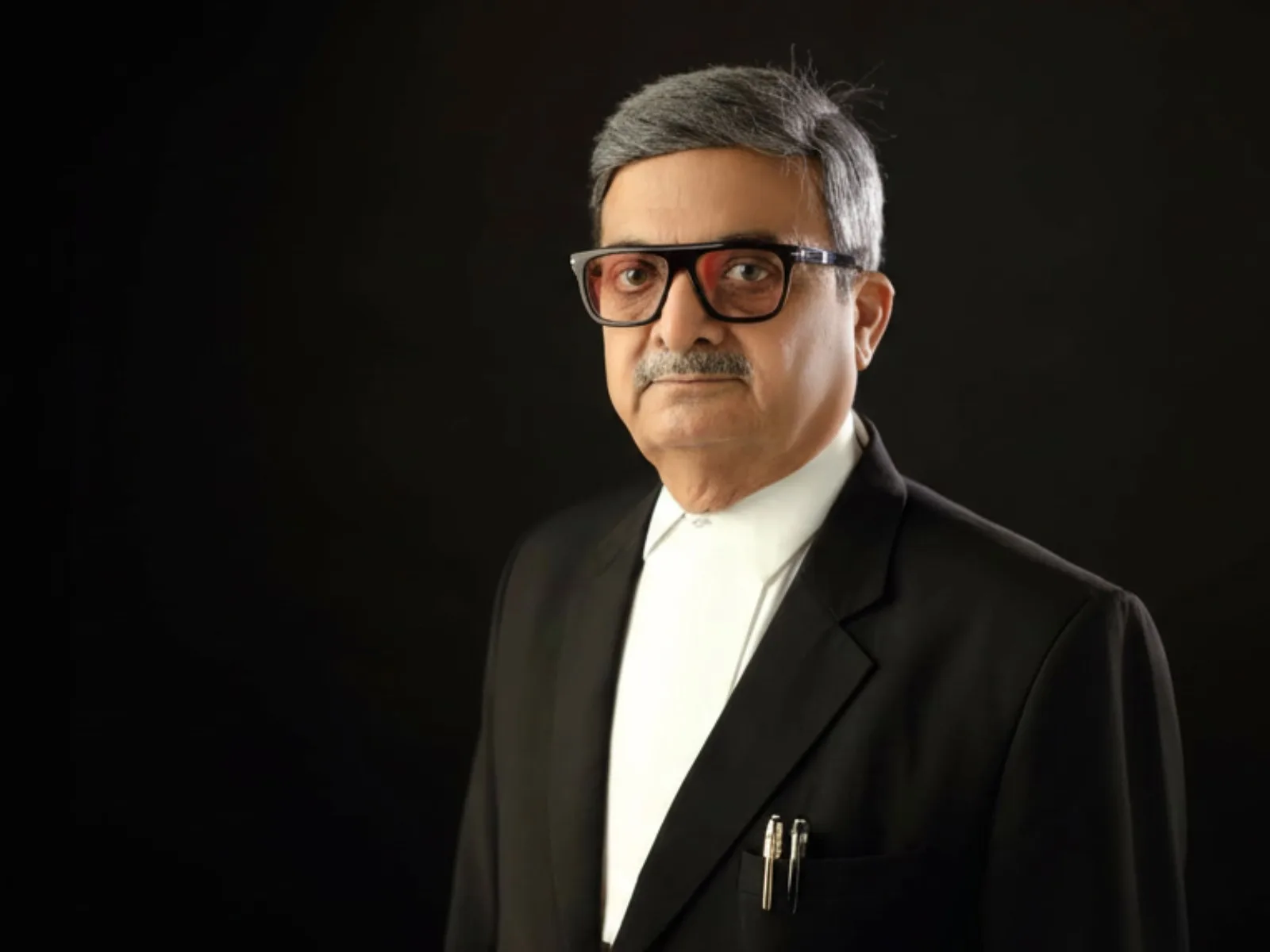
The engine growls beneath him as the sun peeks over the edge of the horizon. It’s 5:00 AM. Most of Ahmedabad is asleep. But on a Harley Davidson Fatboy, slicing through the chilled morning air, rides a 65-year-old man who still walks into courtrooms with purpose — and lives with a clarity most only dream of.
Not many would guess that this rider — leather-jacketed, wind-whipped, and deeply alive — has spent the last 43 years building one of the most respected legal practices in Gujarat. Or that he was invited, not once, but twice, to become a High Court judge.
But Advocate R.C. Jani isn’t like most people.
His life isn’t built on career moves, power grabs, or clever optics. It’s built on something far rarer. A principle. One that he refuses to negotiate with, no matter how tempting the reward.
Only when his heart and mind agree does he move forward. If they don’t, the answer is simple — no.
This isn’t just the story of a lawyer. It’s the story of a legacy. Of choosing truth when it’s inconvenient. Of saying no to shortcuts, no matter the cost. Of shaping a generation so profoundly that twenty-five juniors under his guidance rose to success. Some became judges. Others built empires of their own. All of them carry his imprint.
This is the story of a man who treats the courtroom not as a stage for power, but as a space for truth. A man who found his calling in someone else’s shadow — and went on to light the path for hundreds.
If you’ve ever wondered whether it’s possible to lead a life with unshakeable integrity and still succeed, read on.
Because Advocate R.C. Jani hasn’t just done it.
He’s made it look effortless.
The DNA of a Man Led by Truth
Most people speak of honesty like it’s a good habit — something to try, or strive for, or teach children in school.
For R.C. Jani, it’s something far deeper. It’s the operating system of his life.
There’s a quiet conviction in the way he speaks about it. “If my heart and mind aren’t aligned,” he says, “I can’t move forward. I won’t do it. I’ll drop it.”
No fanfare. No debate. Just a decision.
It’s a rule he follows with surgical clarity — whether in court, at home, or within. And it’s never been about appearances or virtue-signalling. For him, honesty isn’t just about telling the truth. It’s about being unable to act unless it feels right in both logic and spirit.
When asked how this principle came to him, he doesn’t point to books or quotes. He doesn’t even call it something he learned.
He calls it something closer to what he inherited — not by wealth, but by example.
His father, a man of great discipline and soft power, never spoke ill of others. Never used words to wound. Never compromised, even when no one was looking. Watching this quiet strength, day after day, left a deeper mark on young Jani than any sermon or slogan ever could.
“Whatever you are inside,” he says, “you should be outside. Your face should reflect your truth. But more than that, your actions should.”
It’s easy to nod along with these words. It’s harder to live them when the stakes are high, when opportunities come with grey zones, or when silence is safer than truth.
But that’s exactly what makes his story extraordinary.
Because over four decades, in victories, in promotions, and even in invitations to the bench, R.C. Jani never let go of this inner compass.
He didn’t just build a career. He built a life around this principle.
And it all began — unexpectedly — before he was even a law student.
A Courtroom Before a Classroom
Before he ever stepped foot into a law college, R.C. Jani had already drafted his first legal petition.
He wasn’t enrolled in any law programme. In fact, he was still studying commerce. No textbooks, no mentors, no permission. Just instinct.
It happened on an ordinary day, in an ordinary home, while his father, a practising lawyer, was out of town.
A client showed up, unannounced. He hadn’t come alone. He arrived with connections, references, and expectations. The kind of client whose case had been passed along through respected channels, with the weight of trust behind it.
There was no one else around.
So young Jani did something most wouldn’t dare.
He accepted the documents. Sat down with them. Read them cover to cover. Then, relying only on what he had absorbed from years of quietly watching his father work, he drafted a petition.
Not out of ego. Out of duty.
“I knew I wasn’t qualified,” he says. “But the client had come all this way. I couldn’t send him away empty-handed.”
Later, when his father returned and reviewed the draft, he pointed out its flaws. Naturally, there were a few. But what he did next said everything.
He didn’t mock him. He didn’t dismiss it.
Because what mattered wasn’t the draft. It was the courage to step up when no one else would. The willingness to take responsibility without the safety net of expertise. The instinct to protect someone else’s faith in the profession.
That moment didn’t just give Jani confidence.
It gave him a glimpse of who he could become.
“Even law graduates often take years to learn good drafting,” he reflects. “But I wasn’t even a student then. I had no degree. Only a sense of dharma — of doing what felt right in the moment.”
What began that day wasn’t just a legal journey.
It was the quiet beginning of something much larger — a way of life where responsibility came before recognition.
Where character came before credentials.
Forged in Legacy, Inspired by Greatness
Some men are born into legacy. Others are formed by it.
R.C. Jani lived in the quiet shadow of both.
His father was a lawyer, yes — but more importantly, he was a man of quiet principles. The kind who practised discipline not for the sake of image, but as a daily way of being. Even now at 93, diabetic and frail, he still insists on eating right, living right, and walking the straight line he has walked all his life.
That kind of example doesn’t shout. It shapes.
But that wasn’t the only influence. Living next door to Jani was a towering figure in Ahmedabad’s legal community: Late Advocate Shri. I. M. Nanavati.
Elegant. Charismatic. Powerful. In 1975, Nanavati drove an Impala — a symbol of rare status back then. But it wasn’t the car that moved the young Jani.
It was his presence. His confidence. His ability to use words to shape outcomes, not just opinions.
At the time, Jani had a different dream. He wanted to be a mechanical engineer. But he fell short by just two percent, and that changed everything.
That rejection, what many would call a failure, became a redirection.
Law wasn’t Plan A. It wasn’t even a consolation. It was a calling that hadn’t revealed itself yet.
“Engineering is about fixing machines,” he says. “But law is about influencing thinking. The courtroom is where perspectives are shaped, and the judge’s mind is where clarity must land.”
What started as Plan B became his life’s workshop. His father showed him the ethics. He had observed power from Nanavati. And life, with all its unexpected turns, showed him the path.
It’s a rare gift to be quietly shaped by two powerful influences. One, a father whose values ran deeper than words. The other, a neighbour whose presence spoke volumes. Jani didn’t choose between them. He carried both within him, and built something uniquely his own.
A Turning Point in Court
One’s debut before a High Court judge is designed to test your mettle and shake your nerves.
And for most young lawyers, it does. The weight of the room. The stares. The silent rules. The expectation to know everything — even when you're still figuring out where to stand.
For Advocate R.C. Jani, that moment came in front of Justice S.B. Majmudar.
He had barely begun his argument when the judge interrupted him.
“Mr. Jani,” he asked, “Do you know the Supreme Court judgement on this subject?”
“No, sir,” Jani replied honestly.
What happened next wasn’t ridicule. It wasn’t dismissal.
It was mentorship.
The judge handed him the citation. Gave him the day to go to the library. Told him to return the next morning, prepared.
That night, Jani did what he’s always done: dug deep, showed up, and delivered.
The next day, Jani returned to court and stood before the same judge.
“Have you gone through the judgment?” the judge asked.
Jani nodded and pointed to paragraph 17, explaining how it clarified the issue at hand.
The judge listened, paused, and then gave his order:
“Notice in terms of paragraph 20. Serve the other side and return.”
It wasn’t a victory. It wasn’t a lecture. It was something far more powerful — an invitation to rise.
That moment could have embarrassed him. Instead, it empowered him.
It planted a simple but profound belief: growth doesn’t come from pretending to know — it comes from being willing to learn.
“That incident,” he says, “taught me that if someone in power can give a young lawyer space to grow, I must do the same. Why hold back wisdom?”
From that day forward, Jani made it a point never to belittle ignorance. He knew what it felt like to be offered guidance when you expected criticism.
And he never forgot how that felt.
Speed at the Rate of Thought
In a career spanning more than four decades, legal mastery isn’t just about knowledge. It’s about reflexes — lightning-fast, instinctively sharp, and forged in the fire of thousands of hearings. Courtrooms don’t wait. Opposing counsel strikes fast, judges interrupt with questions, and relevant precedents must surface in seconds. That’s where Jani’s rare mental agility comes in — not rehearsed, but lived. Arguments rise to his lips with the precision of experience, turning complexity into clarity. While others pause, he delivers. Not louder. Just faster. Sharper. Cleaner.
Leadership Through Gentle Mastery
In most offices, juniors are taught to obey.
In R.C. Jani’s, they are taught to grow.
Over the course of his career, more than 25 young lawyers trained under him. Among them, four went on to become judges. Three became government leaders. The rest are flourishing in private practice — owning Mercedes, heading firms, living lives they once only dreamed of.
But it wasn’t magic.
It was mentorship — done differently.
Jani didn’t spoon-feed. He didn’t dictate. He delegated. Gave them real cases. Let them fail. Watched them learn. And most importantly, never humiliated them for falling short.
“If they failed to get a good order,” he says, “I wouldn’t criticise. I would simply ask them to read more. Dig deeper. Sit with me and re-argue the matter, as if we were in court.”
In doing so, he built not just confidence, but character. He showed his juniors that the courtroom wasn’t something to fear. It was something to understand. And that understanding would come only if they were willing to labour for it.
It’s easy to lead by control. It’s harder to lead by trust — to earn respect not through fear, but through quiet guidance.
That’s what Jani mastered.
He led with patience. Corrected with care. Created space for discovery.
In his office, juniors receive thorough training and hands-on experience across nearly every branch of law — learning not just the practice, but the purpose behind it.
That’s no small claim. In a profession often consumed by ego and hierarchy, to lead with humility is to lead against the current.
But then again, that’s what Jani has always done.
He has never forced his way to the top.
He lifted others without fanfare and let their success become the only proof he ever needed.
Two Invitations to the Bench
In the world of law, few honours match the call to serve as a High Court judge.
Most lawyers spend their careers hoping for such an invitation. Advocate R.C. Jani received it twice.
Once, at just 38. And again, at 45.
His heart and mind chose his path.
“I had a good practice,” he explains. “I was happy. I didn’t want to become something I wasn’t ready for — or didn’t deeply want.”
It wasn’t hesitation. And it wasn’t ambition disguised as humility.
Jani had clarity.
He had built a thriving practice. He was doing work that mattered. And he knew that accepting the offer would mean walking away from the role he valued most — being in service to people, directly.
He didn’t walk away from the honour. He walked toward what still felt right.
The Biker-Philosopher of Law
He’s 65.
He rides a Harley and a Triumph.
He’s clocked over 40,000 kilometres.
Every Sunday, he rides 100 to 200 kilometres with a pack of professionals — not to escape, but to connect.
“Riding is meditation,” he says. “It reflects how I approach law — with intensity, but also clarity.”
He’s been riding since he was 10 — first a cycle, now machines with engines that roar. But the passion? Unchanged.
Just like the man.
The Real Measure of a Man
Awards fill his shelves. Clients trust him. Juniors credit him with shaping their careers. The judiciary, twice, invited him to join the bench.
But ask Advocate R.C. Jani what success means, and he won’t point to any of that.
He’ll point to home.
“A good family is the first blessing of life,” he says. “If you have peace at home, you can face anything outside.”
His wife is a lawyer. So are his sons. Both daughters-in-law, too. The entire household speaks the language of law — not with hierarchy, but with harmony. His father, now 93, remains his guiding force: a man of such discipline, even illness yields to his will.
There are no personas here. No split between the public and the private.
Who Jani is in court is who he is at the dinner table. What he says to a judge is no different from what he’d say to a friend — honest, measured, and grounded.
“Your act speaks louder than your words,” he says. “Whatever you are inside, you should be outside.”
Simple words. Rarely lived.
To carry this consistency across four decades in a profession where, insecurities and inconsistency always governs — that’s not just admirable. That’s uncommon.
In society, he evokes both admiration and resistance. Some praise his honesty. Others keep their distance. But no one misunderstands him. There’s a quiet authority that comes from saying what needs to be said — without sharpness, without self-interest.
Though rarely mentioned in conversation, his work has not gone unnoticed. Over the years, Advocate R.C. Jani has been honoured with several prestigious recognitions — including the Glory of Gujarat and the Social Service Excellence Award, both presented by the Governor of Gujarat. He has received the Gujarat Gaurav Ratna Award from the Indian Council of Social Welfare, and even holds a place in the World Book of Records, awarded at the House of Commons in the United Kingdom.
To him, wealth is not possession. It’s stewardship. Status is not privilege. It’s duty. And truth is not a virtue. It’s the baseline.
This is what defines him. Not the accolades. Not the titles. But the unshakable alignment between what he believes, what he says, and how he lives.
A Life That Leaves No Doubt
In a world full of noise, Advocate R.C. Jani moves with the quiet certainty of someone who never lost sight of who he is.
Not because his path was easy, but because he stayed true to it — through pressure, praise, and power.
For over four decades, he has stood in courtrooms, shaped futures, declined honours others chase, and still begins each day with the same conviction he started with.
No performance. No pretence.
Just a life built on clarity, service, and strength of character.
He didn’t just leave a mark.
He became the measure.
By Ugesh Sarcar