Wisdom Bank - The Courage to Refuse: Kiran Bir Sethi
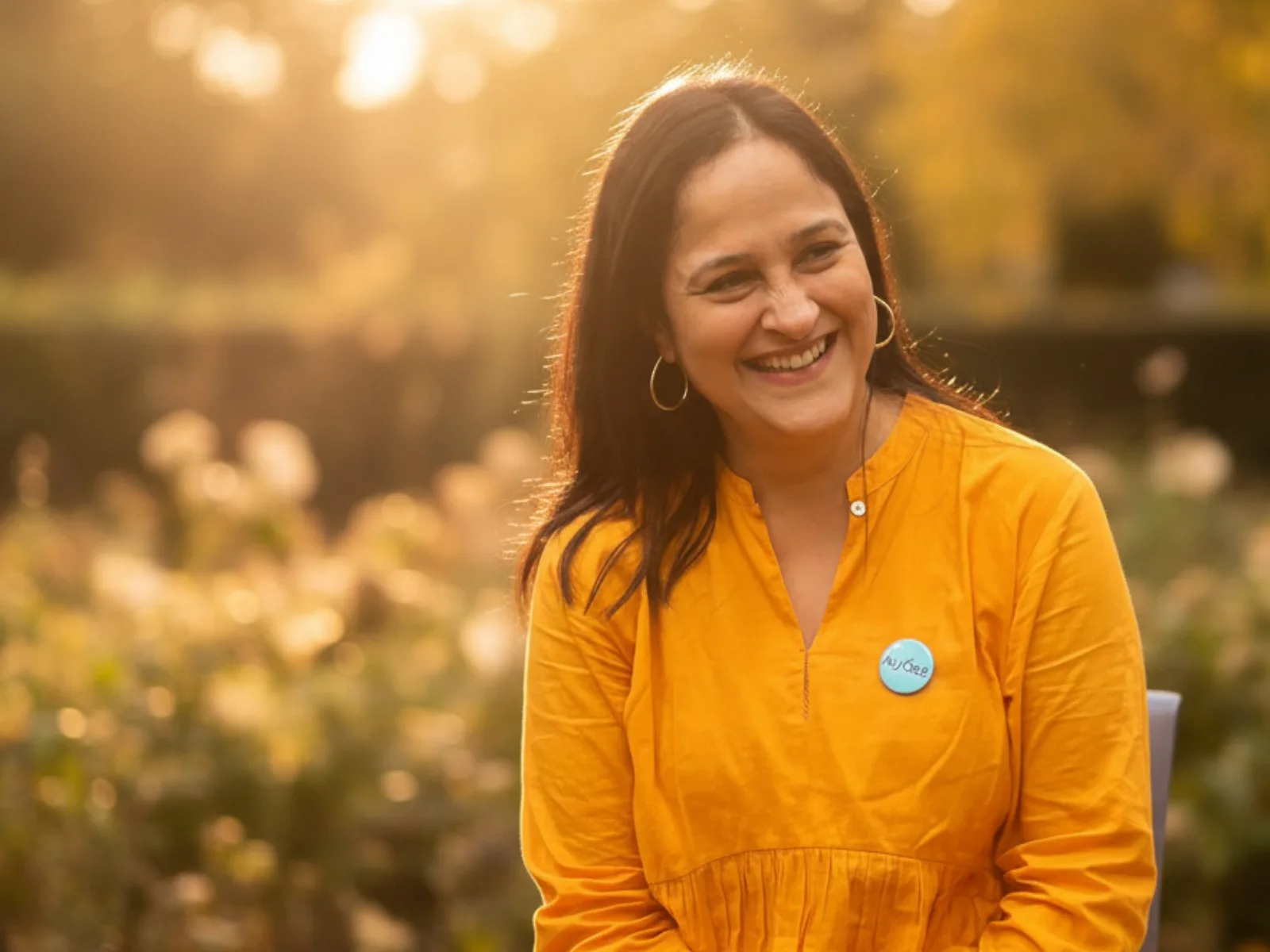
The boy didn’t complain.
He didn’t cry. He didn’t say he hated school.
He just grew quieter.
That’s what caught her attention.
Kiran Bir Sethi noticed it in small ways at first — fewer questions, softer edges, a new eagerness to comply. The kind of change adults often praise. The kind children rarely question. The kind that passes for “settling in”.
Her son had joined one of the city’s most respected schools. The sort of place people name-drop without thinking twice. The sort of place you’re grateful to get into. So she did what most parents do — she trusted it.
Until curiosity began to drain out of the room.
One day, she went in to ask about him. Not to complain. Just to understand.
The teacher looked up and asked a question that stayed with her far longer than the answer ever could.
“What is his roll number?”
That was it.
No outburst. No argument. No long speech about education.
Just a quiet realisation that something essential was being misplaced — not just for her child, but for many others like him.
What she did next would eventually lead to a school that rewrote assumptions about learning, courage, and childhood itself. But at that moment, none of that existed yet.
There was only a discomfort she refused to explain away.
And a woman who had learned, long ago, not to ignore that feeling.
A Childhood Where Embarrassment Didn’t Exist
Kiran Bir Sethi often says she didn’t grow up learning what not to do.
She was the youngest of three, which helped. Expectations arrive softer when you come last. Rules blur. Freedom slips in unnoticed. At home, there were no conversations about what girls should be careful about, or how they should behave. In fact, gender barely registered as a category at all.
Embarrassment, too, was absent.
So she tried things — not dramatically, not rebelliously, just naturally. She asked questions the way children do when they’re not rehearsing outcomes. She challenged ideas at the dinner table. She tested boundaries without knowing they were supposed to hold.
Sometimes, those experiments were memorable.
Like the year she kept a pet snake — while studying in an all-girls school.
It sounds almost implausible now. But at the time, it barely raised an eyebrow. Looking back, she laughs at it herself. But that detail matters. Because it points to something deeper: a childhood that didn’t train her to seek approval before acting.
Her home helped.
Dinner was not a rushed affair. The family sat together. Stories were shared. Laughter was common. Conversation mattered. Her father — India’s first machine tool designer, part of the inaugural batch at IIT Kharagpur — was not the distant, austere figure people often imagine. He danced. He sang. He brought joy into the room. Through him, she absorbed an unspoken lesson: seriousness and seriousness of purpose are not the same thing.
Her mother brought another kind of grounding — large-hearted, loving, generous. The sort of presence that makes warmth feel normal, not exceptional.
Kiran would later describe much of this as luck. Grace. A series of conditions created for her, not by her. But what those conditions quietly installed was something durable: a sense that the world was something you could engage with — not tiptoe around.
She didn’t grow up learning how to fit in.
She grew up learning how to step forward.
That instinct — to move before permission arrives — would lie dormant for years. But when it surfaced again, it would come with clarity, conviction, and very little patience for fear.
Learning to Question, Not Conform
When Kiran Bir Sethi went to the National Institute of Design, she didn’t think of it as a turning point.
At the time, it felt like an extension of what she already knew — a place where curiosity wasn’t just tolerated, it was expected. Where asking why mattered more than getting the answer right. Where learning didn’t arrive in neat boxes.
Design, as she encountered it there, wasn’t about aesthetics. It was about empathy.
You didn’t begin with solutions. You began by observing. Listening. Suspending judgment. You learned to sit with ambiguity — to resist the urge to script outcomes too early. Problems weren’t obstacles to overcome quickly; they were invitations to understand deeply.
That stayed with her.
She learned to approach people, ideas, and systems without assumptions. To remain curious even when things didn’t make immediate sense. To ask better questions instead of rushing toward clever answers. Over time, that curiosity hardened into a habit — one that would later become her default way of engaging with the world.
But NID gave her something else too.
A kind of fearlessness that comes from not being overly concerned with approval.
She often describes it as being “shameless” — not in the careless sense, but in the liberating one. Unburdened by social norms. Untroubled by the need for validation. Able to stand alone when conviction demanded it.
That disposition would later prove essential. Especially in education, where challenging the status quo often invites criticism, resistance, and quiet dismissal. Where being agreeable is safer than being brave.
Humour helped too.
A lightness. A refusal to treat ideas — or herself — with unnecessary gravity. Joy, she learned, wasn’t a distraction from serious work. It was fuel for it.
Between home and design school, something was taking shape. Not a plan. Not an ambition. But a way of seeing — rooted in empathy, sustained by curiosity, and protected by a kind of inner permission to keep going even when the room grew uncomfortable.
She didn’t know then where it would lead.
She only knew how she wanted to move.
And that would be enough — until life gave her a reason to turn passion into purpose.
When Passion Found Purpose
Motherhood didn’t change Kiran Bir Sethi overnight. It clarified her.
By then, she was already a practising designer, doing work that was ahead of its time — designing restaurants and spaces when “experience design” wasn’t yet a phrase people used. The work was exciting. Creative. Fulfilling in its own way. Education was nowhere on the horizon.
Then her son went to school.
Like many young parents, she didn’t overthink the decision. She chose a reputed institution — the kind people trust by default. You assume the system knows what it’s doing. You assume children will be fine.
Within months, she began to notice what she couldn’t unsee.
Her son was becoming "smaller" somehow. More obedient. Less curious. Not unhappy — just diminished. The kind of transformation that fits perfectly into report cards and routines, but unsettles you if you’re paying attention.
She went in to understand what was happening. Asked the teacher about her child. The response came back, clean and efficient.
“What is his roll number?”
That was the fracture point.
Not because the teacher was unkind. But because the system didn’t need to know who the child was — only where he fit.
Kiran didn’t argue. She didn’t escalate. She did something far more decisive.
She took her son out.
Then she went home and told her husband, almost matter-of-factly, “I’m starting a school.”
It wasn’t bravado. It wasn’t naïveté. It was instinct — sharpened by design thinking and grounded in upbringing. She wasn’t trying to fix education. She was trying to understand how children actually learn.
Blaming the system never occurred to her. Complaining felt pointless. Rationalising felt dishonest. If something troubled her, the only response she recognised was action.
In 2001, she opened the doors to what would become the Riverside School.
Nothing about it suggested success.
The location was unglamorous. An army area where no schools were coming up. She wasn’t from the state. She had no background in education. On paper, it looked like a project destined to fail.
And on the very first day parents were invited in, the city was hit by a massive earthquake.
January 26.
For some, that would have felt like a warning.
For Kiran, it felt like a question.
Do you step back — or do you step in?
She stepped in.
Not with certainty. Not with a blueprint. But with a simple commitment: to show up every day, and honour one promise — that children could learn with confidence and character, not fear and compliance.
The rest would have to reveal itself in time.
And it did — slowly, visibly, and in ways no report card could ever capture.
Holding the Line
In the early days, conviction didn’t look like confidence. It looked like standing alone.
Parents came with questions — reasonable ones, familiar ones. Where was the homework? Where were the exams? Why weren’t children being ranked, compared, pushed?
Kiran listened. She always did. But she was clear about one thing: what she would not do.
If you wanted a system built on pressure, there were plenty of choices. If you wanted obedience dressed up as discipline, you’d find it everywhere. What she wasn’t willing to negotiate was the soul of what she was building.
That clarity mattered.
Sometimes, she didn’t even know exactly what she wanted yet — but she knew what felt wrong. And she wasn’t shy about saying so. Over time, her language softened. She became gentler in how she held that line. She listened more deeply. She weighed arguments. But the centre didn’t move.
This wasn’t defiance. It was stewardship.
At first, Riverside wasn’t flooded with enrolments. Many parents stayed out of convenience — because the school was nearby, because it felt temporary, because they assumed they’d move their children “later”.
They didn’t.
Six months in, something began to show up — not on paper, but in children. Confidence. Voice. A willingness to try. Parents noticed before they could articulate it. For years, some of them didn’t even ask for report cards. They didn’t quite know how to explain what they were seeing, but they trusted it.
That trust became the relationship.
“I don’t need you to agree with me,” Kiran often says. “I need you to trust me.”
Not everyone stayed. Some left when it didn’t align with what they wanted — and that was fine. Choice mattered. What endured was the commitment of those who remained.
Twenty-five years later, nearly half the team has been with her for more than fifteen years.
That doesn’t happen by accident.
It happens when people believe they’re working toward something larger than themselves — something hopeful, something audacious. Not just preparing children for exams, but for citizenship. For participation. For life.
The words guiding that vision weren’t managerial or academic. They came from somewhere older. Larger.
We, the people of India.
That line mattered. Because the goal was never just to educate children — it was to send young adults into the world who felt capable, responsible, and connected to something beyond themselves.
And when things got hard — as they inevitably did — she returned to two anchors.
The first was stamina.
In her office, there’s a cut-out of Mahatma Gandhi. What she draws from him isn’t rhetoric or reverence, but endurance. Love paired with stamina. The ability to show up — again and again — without burning out or hardening.
Leadership, she believes, isn’t about brilliance. It’s about staying.
The second anchor was gratitude.
Again and again, she comes back to the same thought: this life was not chosen by me. Conditions were created. Doors opened. Responsibility followed. All she could do was show up fully — and not be disrespectful to the moment.
That perspective kept her steady.
Today, her reasons have evolved. The world has changed. Childhood feels more fragile. Attention more fragmented. Pressure more relentless. Teaching subjects, she believes, is no longer enough.
What children need now is something deeper.
To feel loved. To feel capable. To feel enough.
When you tell a child, “I love you,” she says, they don’t roll their eyes. They smile. Because so much of the world is busy telling them they don’t measure up — not tall enough, not smart enough, not fast enough, not fair enough.
Against that noise, kindness becomes curriculum.
And perhaps that’s the quiet triumph of Kiran Bir Sethi’s journey. Not that she built a school. But that she held space — for courage, for curiosity, for love — long enough for others to trust it.
She didn’t chase reform. She didn’t chase recognition.
She simply showed up, day after day, and refused to let fear decide how children would grow.
And in doing so, she changed far more than a system.
The Work That Keeps Choosing Her
Twenty-five years is a long time to hold a line.
Long enough for ideas to go out of fashion. Long enough for energy to fray. Long enough for the world to change its rules entirely.
Kiran Bir Sethi has watched that happen in real time.
Children today are not growing up in the same emotional climate. Their lives are louder. More judged. More performative. Social media has crept into childhood, compressing self-worth into numbers and comparisons. The pressure arrives early. Stays late.
In this world, she no longer believes the core task of education is mastery of subjects. Content is everywhere. Science, maths, languages — they can be accessed with a screen and a connection.
What’s scarce is something else.
Kindness. Gratitude. Grit. The quiet confidence that says: I am enough, and I can try.
That, she believes, is now the real curriculum.
She sees it every day — in the way children respond when they’re told they are loved. Not evaluated. Not ranked. Loved. They don’t brush it off. They don’t act cool. They smile. Because most of the world is busy telling them who they are not.
And so she keeps showing up.
Not because it’s easy. She’s the first to say it isn’t. But because stamina matters more than talent. Because just causes require endurance. Because some visions are worth returning to — even on the days you’re tired.
In her school, there’s a quiet reminder of that idea. A cut-out of Mahatma Gandhi. Not for symbolism, but for strength. Love paired with stamina. The discipline to stay.
Family grounds her. Gratitude steadies her. Again and again, she returns to the same thought: this life was not chosen by me. Conditions were created. A responsibility followed. The only honest response was to honour it fully.
Kiran Bir Sethi didn’t set out to reform education. She didn’t chase scale, or visibility, or applause.
She noticed something small. She trusted an instinct. She refused to look away.
And then she stayed — long enough for trust to form, long enough for change to take root, long enough for children to grow into themselves without fear.
That is the quiet power of her work.
Not disruption. Not declaration.
But presence.
And in a world that moves fast, demands loud answers, and rewards quick wins — that might be the most radical thing of all.
Before you go.
She didn’t argue with the system. She walked away from it — and accepted the weight of what that choice would demand.
Take a breath. Ask yourself:
- What’s it quietly costing you to keep adapting to a situation that’s shrinking something essential in you?
- Where do you already know what isn’t right — but keep calling endurance “adjustment”?
- And if you stopped explaining your discomfort away, what decision would you have to face next?
Author's note
Kiran Bir Sethi’s story shows what real credibility looks like: pulling her child out of a respected institution when it no longer aligned with what she believed childhood should protect, then choosing the harder path of building something new without permission, precedent, or certainty. That decision cost comfort, approval, and ease. It demanded stamina over time, not conviction in a moment. By staying with that choice for decades — long after novelty faded and resistance set in — she reminds us that integrity is rarely loud. It is quiet, repetitive, and sustained. And it asks one simple question again and again: will you keep showing up, even when walking away would be easier?
By Ugesh Sarcar