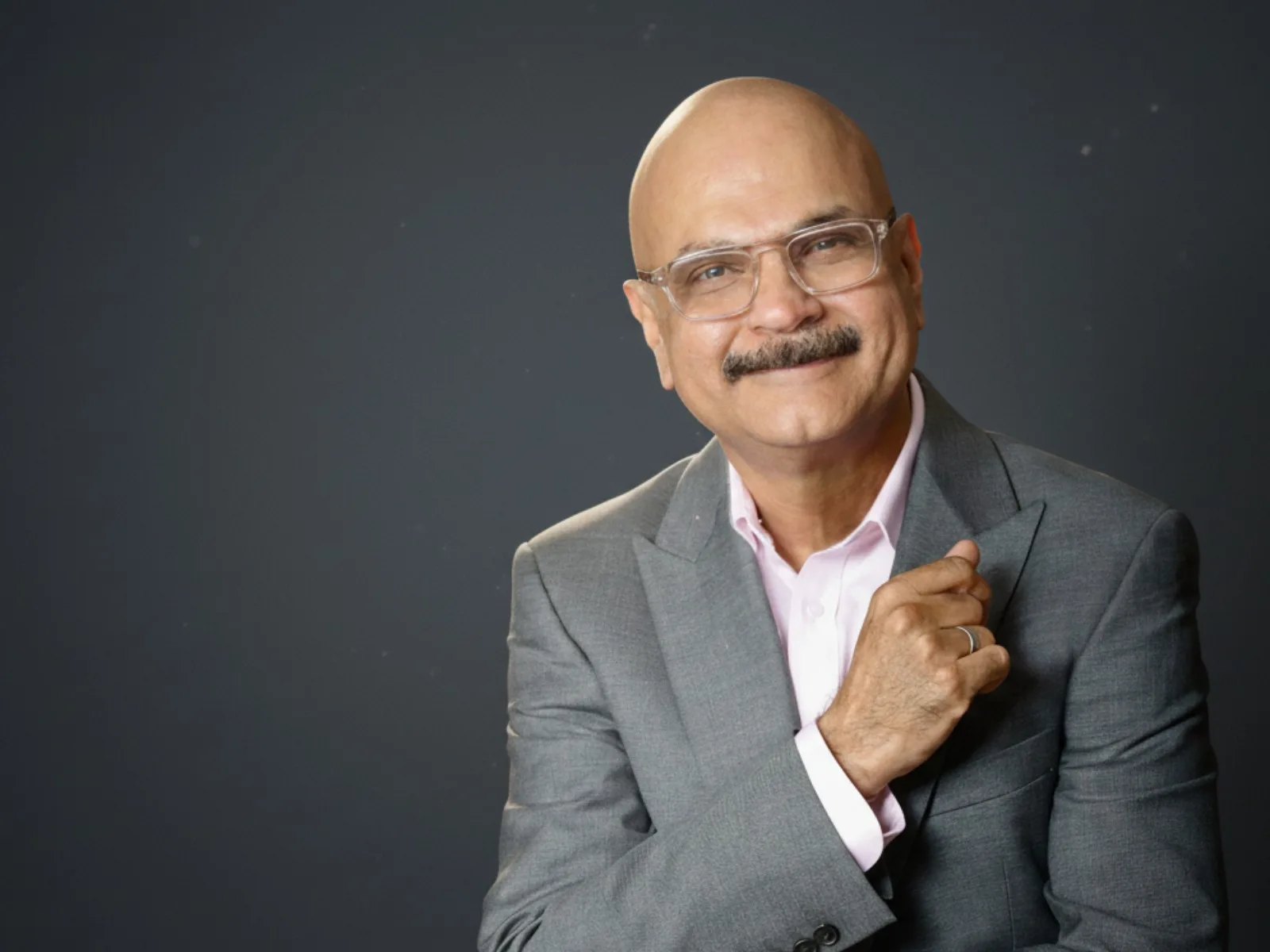
Wisdom Bank - Why Manoj Gursahani Believes Relationships Are the Real Currency
There’s a quiet exhaustion many people carry today — even the ones doing “well”.
You wake up, scroll, rush, achieve, reply, attend, repeat. On paper, life looks full. Productive. Connected. But somewhere between the notifications and the noise, something human has thinned out.
Loneliness has learned how to hide in plain sight.
It shows up in young people glued to screens. In leaders who can’t speak honestly to anyone around them. In households where everyone is home — and no one is really together.
Most conversations about this problem offer hacks. Faster fixes. Better optimisation. This story doesn’t.
This is about a man who spent decades building businesses, advising CEOs across countries, and working at the highest strategic levels — only to realise that the most urgent crisis of our time has nothing to do with markets or technology.
It’s the erosion of connection.
Manoj Gursahani didn’t arrive at this insight through theory. He arrived there through life — through ambition, loss, reflection, and a deliberate choice to live differently.
What makes his journey worth your time isn’t success. It’s perspective.
Because when someone who has seen power up close tells you that relationships are the real currency, it lands differently. When someone who coaches people at the very top speaks openly about loneliness, it disrupts assumptions. And when someone measures a life not by applause, but by presence — it forces an uncomfortable question:
If everything you’re chasing worked… would it actually be enough?
This is not a story about becoming more. It’s about becoming more human.
And it starts in an unexpected place — with a principle he didn’t choose at first… but eventually chose to live by.
The Principle That Refused to Go Away
Some ideas wait patiently.
They don’t demand belief. They don’t announce themselves as life-changing. They simply sit in the background, watching who you become — until one day, you’re ready to hear them.
For Manoj, that idea arrived early, wrapped in his father’s way of living rather than anything he ever preached.
The message was simple, almost inconvenient in its clarity: Serve where you can. Learn from everyone. If you can’t help, don’t harm.
As a young man, it didn’t fully land. Not because it was wrong — but because it competed with louder instincts. Ambition. Momentum. The urge to move faster, prove more, reach higher. Like most people building a life, he was focused on outcomes. On getting somewhere.
The principle stayed — but at a distance.
It resurfaced in small ways over the years. In how his father gave without announcing it. In how respect didn’t change based on status. In how relationships were treated as sacred, not strategic. None of it felt urgent then. It felt… optional.
Until life quietly removed that option.
In 2016, after his father passed away at the age of 89, something shifted. Not dramatically. Not all at once. But enough to slow him down.
Manoj began spending time every week in a village connected to the family’s charitable trust. There were no big gestures. No sense of “doing good.” Just presence. Continuity. An attempt to carry forward something that suddenly felt fragile — and deeply important.
That’s when the idea stopped being inherited wisdom and became lived truth.
Giving stopped being about generosity and started becoming about grounding. Helping people — not just with money, but with time, attention, and energy — created a quiet kind of fulfilment that success never quite delivered.
It surprised him.
The more he showed up, the lighter something inside became. Contentment wasn’t found by adding more — but by aligning more closely with what already mattered.
And somewhere in that process, a realisation took root:
Life doesn’t reward perfection. It responds to intention.
That principle — once background noise — had finally moved to the centre.
Ambition, Comparison, and the Cost of Looking Up
Ambition is a useful engine. It gets you moving. It builds momentum. It teaches discipline.
But unchecked, it quietly changes the way you look at life.
For a long time, Manoj did what most driven people do — he looked up. At those who were further ahead. Bigger names. Larger empires. Sharper headlines. And without realising it, comparison began setting the emotional temperature of his days.
There’s a strange side effect to this way of living. No matter how far you’ve come, you never feel like you’ve arrived. There’s always someone richer, faster, louder. Someone who makes your progress feel smaller than it is.
That’s when dissatisfaction sneaks in — not because life is bad, but because perspective is skewed.
Over time, Manoj began reframing a simple question in his own mind. Not Who is ahead of me? But Where did I actually start?
That shift sounds subtle. It isn’t.
Looking up breeds restlessness. Looking back — honestly — builds gratitude.
He began anchoring himself in a daily reminder: life will always carry challenges. Family issues. Financial pressures. Relationship strain. This isn’t failure — it’s the entry fee of being alive.
Instead of resisting that truth, he accepted it.
Each morning started with gratitude. Not as a ritual to tick off, but as a reset. A conscious decision to acknowledge what was working before obsessing over what wasn’t. Each difficulty became a question instead of a complaint: What can this teach me?
This didn’t make problems disappear. It changed how he moved through them.
Responding replaced reacting. Perspective softened urgency. And slowly, the emotional highs and lows evened out into something steadier — not excitement, but equanimity.
There was relief in that.
Because when you stop measuring your life against extremes, you stop feeling like you’re constantly falling short. You begin to recognise progress where it actually exists — in growth, learning, and resilience.
Ambition didn’t leave his life. It matured.
It stopped shouting and started listening.
And as that inner noise softened, something else began to sharpen.
For the first time, he wasn’t just managing his own expectations — he was truly noticing the emotional weather around him. When your inner world slows down, you start seeing what others are carrying. Not abstractly. Personally. Quietly.
What he began to observe next wasn’t theoretical. It was everywhere.
The Quiet Pandemic No One Talks About
It crept in slowly. Quiet enough to be ignored. Common enough to feel normal.
Loneliness.
Not the obvious kind. Not isolation or abandonment. But the modern kind — where people are constantly connected and rarely understood.
Manoj began noticing it everywhere. In young people glued to their phones, fluent in apps but awkward in conversation. In older parents sitting in full homes that felt strangely empty. And most strikingly, in people who were outwardly successful — leaders, founders, decision-makers — surrounded by others, yet emotionally alone.
What disturbed him wasn’t just the presence of loneliness. It was how invisible it had become.
We grew up differently, he observed. Playgrounds. Long conversations. Shared silences. Friction that taught us how to relate. Today, interaction is efficient, edited, and often transactional. You’re always reachable — but rarely reached.
During the COVID years, this insight sharpened. The world slowed down just enough to reveal what had already been breaking. Loneliness wasn’t limited to age, status, or geography. It was everywhere. And no one had trained us to deal with it.
That’s when Manoj put words to something he had been practicing instinctively all his life — connection without agenda.
Not networking. Not leverage. But connection.
Talking to a watchman with the same attention as a CEO. Listening without scanning for advantage. Showing up without needing a return. These weren’t tactics. They were habits. And they had quietly built a life rich in trust, goodwill, and alignment.
Out of this realisation came his book, The Human Connect — written not as theory, but as lived experience. Its core idea was disarmingly simple: most of the world operates in grab mode. Take more. Secure more. Extract more.
Nothing inherently wrong with that. Most people — including Manoj in his earlier years — live there.
But there’s a different way to move through the world.
A giver’s mindset.
Not giving money. Giving time. Energy. Attention. Being present for someone going through a rough patch. Offering perspective. Making an introduction without expectation. The kind of giving that shifts your internal state before it ever changes your circumstances.
He jokes about it now — calling himself “selfish”. Because the more he gives, the more fulfilled he feels. The energy changes. The lens widens. And something unexpected happens.
Life begins to meet you halfway.
This wasn’t philosophy. It was pattern recognition.
And it led him to a line he often repeats — half-joking, half-serious — about what success really looks like at the end.
“When I die, I want 25,000 people at my funeral.”
Not awards. Not titles. But how many people show up when you’re no longer around to ask.
That thought stays unfinished on purpose.
Because what comes next isn’t about ideas — it’s about where all of this quietly leads.
The Loneliest Rooms
The irony of success is that it rarely comes with companionship.
As Manoj’s work expanded — across businesses, countries, and boardrooms — something became clear to him that few people talk about openly: the higher you go, the fewer places you have to be honest.
At the top, everyone expects certainty. Strength. Answers. Very few ask how you’re really doing.
Over time, founders, CEOs, and senior leaders began reaching out to him — not always for strategy, but for something quieter. A space where they could speak without being measured. Where they didn’t have to perform clarity they didn’t feel.
Loneliness looks different in these rooms.
It’s not about lack of people. It’s about lack of mirrors. When you outgrow old peer groups, when even close friends can’t fully relate to your reality, isolation creeps in — not dramatically, but persistently.
Manoj recognised this because he had lived it.
Listening became his real work. Not fixing. Not impressing. Just being present. Sometimes, that was enough. Because often, clarity doesn’t come from advice — it comes from being heard without judgement.
This is where his philosophy of connection reveals its depth.
He doesn’t approach relationships transactionally. There’s no tally. No agenda. Whether he’s speaking to a junior executive or a head of state, the posture is the same: respect first. Attention second. Status last.
That consistency builds trust in places where trust is rare.
And slowly, a pattern emerged.
People didn’t just come to him for business insight. They came because being around him felt grounding. Human. Safe.
Which brings us back to that unusual wish — the one that makes people smile before it unsettles them.
“I want 25,000 people at my funeral.”
Not because of fame. But because numbers, in this case, would tell a story.
They would say he showed up. They would say he mattered. They would say connection outlived achievement.
A Different Measure of Success
Manoj doesn’t believe life is meant to be rushed through unconscious routines.
He believes it’s meant to be lived deliberately — with curiosity, restraint, and care. To be awake to what you’re doing, why you’re doing it, and who you’re becoming along the way.
Health over hustle. Awareness over autopilot. Learning over proving.
In a world running endlessly forward, he has chosen to pause — not to retreat, but to realign.
And perhaps that’s the real value of his story.
Not that you adopt his principles wholesale. Not that you live exactly as he does.
But that you stop — even briefly — and ask yourself a harder question than “What am I building?”
Instead:
Who is walking beside me while I build it? And if everything stopped tomorrow — would my life have felt connected, or just busy?
That question lingers.
As it should.
Author's note
Manoj Gursahani’s story shows what real credibility looks like: choosing presence over pace after his father’s death, committing time every week to service without spectacle, and reshaping his work around listening rather than performing. These choices didn’t elevate him socially or simplify his life — they required restraint, patience, and the willingness to move against the current. What they reshaped wasn’t just how he worked, but how he measured a life: not by momentum or approval, but by who felt seen, heard, and remembered along the way.
By Ugesh Sarcar