Wisdom Bank - Dr. Dwarkanath Srinivas and the Grammar of a Different Life
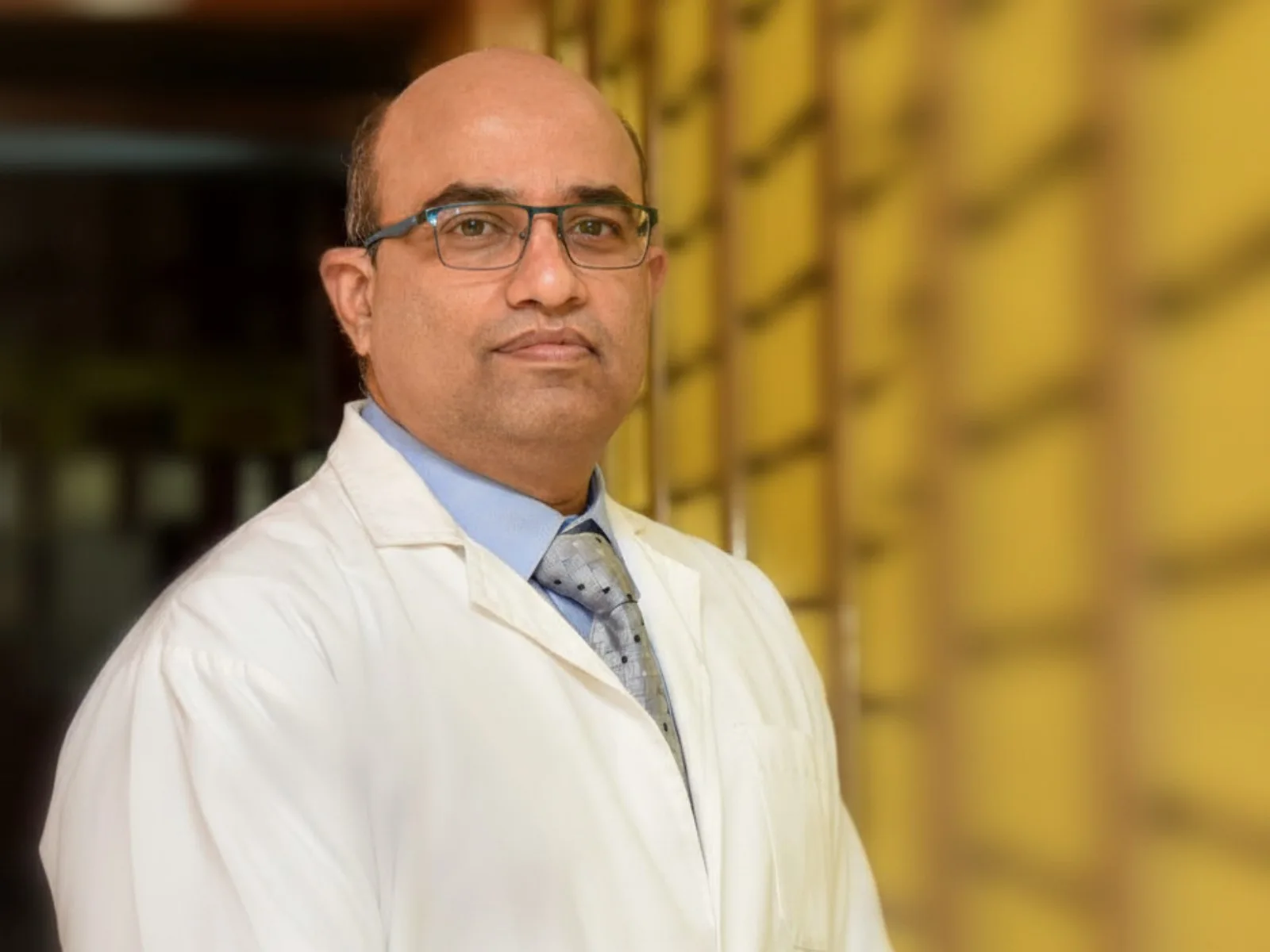
Most people spend their lives trying to get somewhere.
More money. Better titles. Faster outcomes. Cleaner exits. Even the language we use gives us away — scale, leverage, optimise, move on.
But every once in a while, you come across someone whose life doesn’t fit that grammar at all.
Not because they rejected ambition. But because they never let it decide how they showed up.
For more than three decades, in one of the most demanding fields imaginable, Dr. Dwarkanath Srinivas has made a series of decisions that don’t look impressive when taken individually.
Over that time, Dr. Dwarkanath Srinivas has operated on more than 5,000 complex neurosurgical cases and helped build one of India’s most advanced functional neurosurgery programs — mostly without talking about any of it.
They don’t trend. They don’t announce themselves. They sit there — unresolved.
Which is precisely why they matter.
Because when you look closely, something uncomfortable begins to surface — that maybe the most meaningful lives aren’t built by moving faster or higher…
…but by staying.
Values Without a Moment
When Dr. Dwarkanath Srinivas is asked what shaped him — what actually guides his decisions — there’s a pause.
Not the kind that builds drama. The kind that suggests there isn’t a neat answer waiting.
There was no defining incident. No moment he can point to and say, this is where it began.
Instead, he talks about how he grew up.
The 80s and 90s. Being told — plainly, repeatedly — to tell the truth. To be straightforward. To keep things simple. To be yourself.
Nothing exceptional about it, he says. No lesson he consciously chose to “live by”.
And yet, those ideas stayed.
Not as principles he quotes — but as defaults he returns to. Over decades. Across decisions that mattered.
What’s striking is not what he says — but what’s missing.
There’s no performance of values. No retrospective wisdom layered on top. Just the sense that when you’ve lived a certain way long enough, you stop narrating it.
You just act.
Which makes his life difficult to summarise — and impossible to reduce to a moment.
Because if there was no turning point… then this wasn’t a choice made once.
It was a choice made quietly — again and again — long before anyone was paying attention.
The Discipline of Finishing
Medicine doesn’t leave much room for philosophy.
It teaches you through repetition. Through exhaustion. Through consequences that don’t wait for certainty.
For Dr. Dwarkanath Srinivas, one habit formed early and never left: if you start something, you finish it.
Not as a motivational idea — but as training.
Years in surgery, and then neurosurgery, make that lesson unavoidable. You don’t walk away because it’s hard. You don’t pause because you’re tired. You don’t defer because it’s inconvenient.
Someone else is already on the table.
That way of working slowly spills into everything else. Quietly. Almost unnoticed.
He doesn’t talk about discipline as a virtue. He talks about it as muscle memory. About how you show up, see your patients, and see them again the next day. And the day after that.
Neuroscience doesn’t reward distance. You can’t disappear for two or three days and return as if nothing changed. Conditions evolve. Complications surface quietly. Stability is fragile.
So he comes in.
Not because he has to. But because that’s what the work demands — and what his teachers once modelled for him.
They came every day. So he did too.
Only later does it become clear how rare that kind of continuity has become.
Especially in a field where he has helped establish one of the country’s largest deep brain stimulation and functional neurosurgery programs — work that doesn’t allow gaps, absences, or disengagement.
And how much of a life can be shaped by something as unremarkable — and as demanding — as refusing to leave things unfinished.
The Choice to Stay Aligned
Not every decision announces itself as a crossroads.
Some arrive quietly — as options you don’t take.
In a field like medicine, opportunities expand with time. Experience compounds. Doors open. And with them come different versions of a life — more comfortable, more lucrative, more contained.
Dr. Dwarkanath Srinivas was aware of those paths.
Anyone with his training would be.
But awareness doesn’t always translate into movement.
What kept him where he was had less to do with obligation — and more to do with alignment. NIMHANS gave him room to practise the way he had been trained to practise. To operate, to research, to teach, and to care without constantly negotiating those priorities.
That freedom mattered.
It allowed him to remain himself — straightforward, present, consistent — without reshaping his work to fit an external measure of success.
Over the years, responsibility grew. Roles expanded. Expectations widened.
But the core didn’t change.
He didn’t chase visibility. He didn’t optimise for advantage. He stayed rooted in the daily work — the kind that rarely draws attention, but quietly sustains an institution.
Even recognition, when it came — including national honours for his contributions to medical science — arrived years after the work itself had already been done.
From the outside, it might look like stability.
From the inside, it feels more like fidelity — to a way of working he trusted, and a place that allowed him to practise it without compromise.
And perhaps that’s the harder discipline.
Not choosing once. But choosing — quietly — every day.
A Name That Wouldn’t Let Go
Some patients leave your memory the moment they walk out.
Others stay — without asking permission.
Years ago, while he was still a trainee in Delhi, Dr. Dwarkanath Srinivas was working on his dissertation. Long hours. Paper files. Pre-internet medicine, where nothing could be searched and everything had to be remembered.
One day, a couple arrived at the outpatient department.
They were poor. From a remote village. There had been a flood. They had lost everything. They were tired in the way people are tired when exhaustion has nowhere left to go.
As they spoke, something unsettled him.
The patient’s name.
He couldn’t place it. He was certain he hadn’t treated them before. And yet, the name refused to fade. It lingered — quietly, insistently — as if asking to be recognised.
Within half an hour, he traced it.
The patient had been part of his dissertation.
Not someone he had personally followed. Not a case he remembered in detail. Just a name among many — studied, documented, filed away years earlier.
In those days, finding an old patient record could take weeks. Sometimes months.
That day, it took minutes.
He doesn’t frame this as fate. He doesn’t embellish it. He just remembers the feeling — that somehow, this patient had ended up exactly where they needed to be.
In front of the one person who could find their story when everything else had been washed away.
Years of quiet work — done without expectation — had circled back.
Not as recognition. Not as reward. Just as readiness.
And sometimes, that’s how meaning announces itself.
Not loudly. But precisely.
The Rule That Removes Noise
When people ask him for advice, he doesn’t offer frameworks.
He offers a rule.
Not one he arrived at through philosophy — but one that survived years of pressure, hierarchy, and consequence.
Don’t do anything to a patient that you wouldn’t do to yourself. Or to someone in your family.
That’s it.
No exceptions. No clever footnotes.
It sounds obvious until you realise how much it simplifies. How many grey areas disappear when the reference point isn’t policy, profit, or precedent — but proximity.
Would you recommend this if it were your parent on the bed? Would you agree to this if it were your child?
If the answer hesitates, the decision changes.
He teaches this to his students quietly. Repeats it when things get complicated. Returns to it when medicine — and life — start offering shortcuts.
Because once you decide who you are making decisions for, the rest becomes easier.
Clearer — even when it’s not easier emotionally.
There’s no heroism in it. No grandstanding.
Just a refusal to separate professional judgement from personal conscience.
And perhaps that’s why his advice doesn’t sound profound at first.
It isn’t meant to.
It’s meant to be lived — again and again — when no one is watching.
What Stays When Everything Else Falls Away
Strip the years down far enough, and medicine becomes very simple.
Someone is afraid. Someone is waiting. Someone needs you to show up — again.
After decades in neurosurgery, after titles and roles and responsibility, what remains for Dr. Dwarkanath Srinivas isn’t complexity. It’s clarity.
He comes in because the patient is there. He stays because the work isn’t finished. He decides the way he would if it were his own family on the bed.
That’s the entire system.
No optimisation. No detachment. No clever distance between the professional and the personal.
Just presence — repeated until it becomes a life.
In a world that celebrates scale, speed, and spectacle, his choices feel almost defiant. Not loud enough to provoke. Not dramatic enough to trend. Just stubbornly human.
And slowly, something overwhelming emerges.
Not from one act. Not from one story. From accumulation.
Thirty years of showing up when it would’ve been easier not to. Thirty years of finishing what was started. Thirty years of choosing care over convenience — quietly, without applause.
Most lives ask, What did I achieve? This one asks something harder:
Who could trust me when it mattered most?
Because when the noise fades — when titles dissolve and outcomes blur — what remains isn’t reputation.
It’s the sum of moments where someone placed their life in your hands… and you treated it as if it were your own.
That kind of weight doesn’t announce itself.
But once you feel it, it’s impossible to forget.
Author's note
Dr. Dwarkanath Srinivas’s story shows what real credibility looks like: choosing to stay with the work long after easier, cleaner exits were available, and letting alignment — not ambition — decide how each day would be lived. That choice cost him speed, visibility, and the comfort of distance; it demanded continuity, emotional presence, and the willingness to carry unfinished weight without guarantees of outcome or recognition. In doing so, his life quietly reminds us of something we often forget — that integrity isn’t proven in dramatic moments, but in the daily refusal to detach from what still needs care, even when no one is counting, clapping, or keeping score.
By Ugesh Sarcar