Wisdom Bank - Madhushree Pawar and the Art That Never Rushed
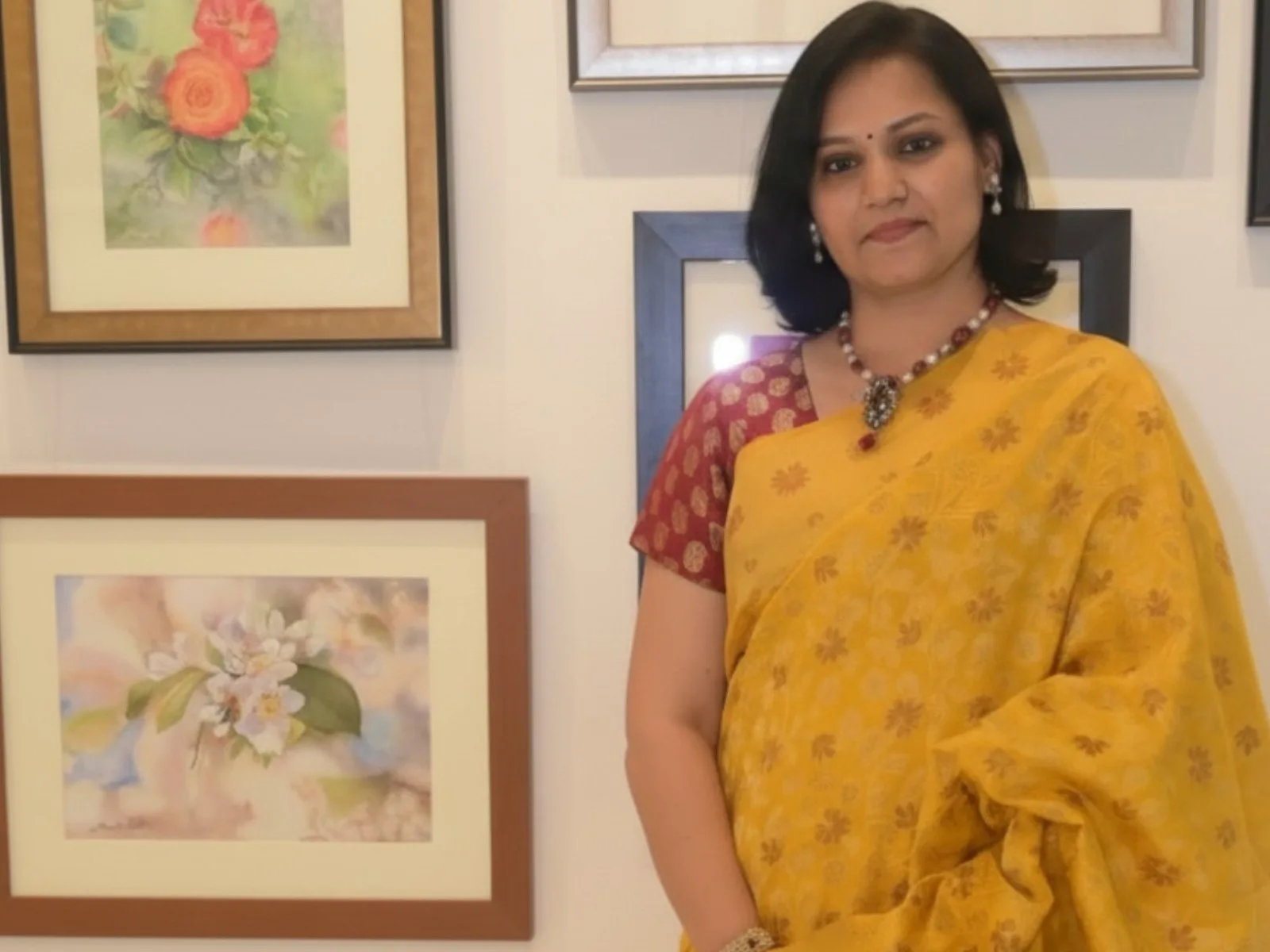
Some lives announce themselves early.
They arrive with certainty, labels, timelines. This is what I am. This is where I’m going.
And then there are lives that don’t hurry to become anything at all.
They move through rooms quietly. They wait. They adapt. They make space for others first — without keeping score.
For a long time, Madhushree Pawar didn’t think of her life as a story in motion. Art was there, yes — always there — but never demanding the centre. It lived in margins. On benches. In notebooks. In pauses between postings, roles, responsibilities.
Nothing dramatic pushed it away. Nothing heroic pulled it forward.
It simply stayed — patient enough to wait for the moment life would stop asking her to choose.
And when that moment finally arrived, it didn’t feel like arrival at all.
It felt like permission.
The House Where No One Was Turned Away
Before art, before choices, before timing — there was a house.
A house where no one was measured first. Not by appearance. Not by status. Not by where they came from or what they did.
Growing up, Madhushree never learned the habit of judgement. Not because it was taught as a principle — but because it simply wasn’t practised around her.
Her father, a college professor and eventually a principal in Rayat Shikshan Sanstha. Her mother, a homemaker. Both deeply social. Quietly expansive in how they treated people.
In their home, everyone was welcome.
It didn’t matter who you were. A neighbour. A visitor. Someone passing through. Tea was offered. Food was shared. Conversation flowed.
There was no sorting. No hierarchy.
That environment does something subtle to a child. It removes the instinct to compare. It softens the need to label. It teaches you, without saying so, that people don’t need to earn their place.
Much later, she would recognise how rare that was.
At the time, it just felt normal.
And that’s how its influence stayed with her — not as a belief she defended, but as a way she moved through the world. Open. Unhurried. Unthreatened by difference.
When you grow up in a space like that, you don’t rush to define yourself against others.
You learn, instead, to leave the door open — for people, for possibility, and eventually, for yourself.
The Artist Who Didn’t Know She Was One
She didn’t grow up calling herself an artist.
In fact, she didn’t even know that artist was something you could become.
As a child, Madhushree only knew one version of that world — an art teacher. So when someone asked what she wanted to be, that’s what she said. Not because she had a plan, but because it was the closest language available to what she felt.
She wasn’t particularly drawn to studies. She was bright, yes — but not disciplined in the way school rewards. Her attention wandered easily. Her interest didn’t sit still.
What did stay with her was drawing.
Eyes, especially.
She drew them everywhere — on notebooks, on benches, on any surface that would hold still long enough. Faces followed. Then nature. Then, without quite deciding to, spirituality.
Even now, when she begins a piece, she doesn’t start with an idea. She starts with movement. The hand moves first. The image reveals itself later.
Almost always, it arrives at the same place.
Buddha. Adiyogi. Ganesha.
Not as symbols she plans — but as endings she recognises.
Realism pulls her back every time. Abstract art fascinates her, but refuses to cooperate. Nature and spirituality, on the other hand, seem to know her hand well.
At that age, none of this felt significant. It wasn’t framed as talent. It wasn’t encouraged or discouraged in any meaningful way.
It was just something she did — like breathing when no one is watching.
And perhaps that’s why it never left.
Because before art became a choice, or a pursuit, or even a pause — it was simply the most natural way she knew how to see.
When Passion Wasn’t Loud Enough to Compete With Life
There are moments when life doesn’t oppose what you love.
It simply asks to go first.
After school, Madhushree was meant to study fine art. That was the direction — loose, intuitive, unfinished, but real. And for a while, even her father was open to it.
Then came hesitation. Warnings from others. Concerns dressed up as advice.
The college wasn’t right, they said. The environment wasn’t good, they said.
And just like that, the path narrowed.
She shifted to English literature instead. Not out of interest — but acceptance. It wasn’t resistance. It wasn’t rebellion. It was compliance without resentment.
She did what was placed in front of her.
Around the same time, something else found her — almost accidentally.
A yoga competition. Inter-collegiate. Nothing serious. She joined simply to participate in something. To be inside movement, discipline, the body.
It stayed.
After graduation, she followed that pull more deliberately. She went to Nashik. Yoga Vidya Gurukul. Course after course. Layer after layer. Every holiday spent there. Days beginning before sunrise and ending close to midnight.
It was immersive. Demanding. Quietly transformative.
Then marriage arrived — and with it, a different life entirely.
Her husband was in the Air Force. Postings came with geography, not choice. Jorhat. Assam. Far from home. Far from familiarity.
The social world she knew disappeared overnight.
Defense life had its own grammar. Its own distances. Its own silences. It took time to adjust — not because it was hostile, but because it was unfamiliar.
Art didn’t disappear during this time.
It softened.
It moved into the background. Became a hobby. Something personal. Something she returned to in small pockets of time — without expectation, without pressure.
And for a while, that was enough.
Because when life is rearranging itself around you, sometimes the most radical thing you can do is let what you love wait — without turning it into a loss.
The Pause That Wasn’t a Loss
Motherhood didn’t arrive as a disruption.
It arrived as clarity.
When her daughter was born, something shifted — not in ambition, but in attention. Painting, when she returned to it, didn’t feel light anymore. It pulled her in completely. Hours disappeared. Focus narrowed.
And she noticed something that unsettled her.
While she painted, her daughter waited.
Not loudly. Not demandingly. Just quietly — the way children do when they don’t yet know how to compete.
That was enough.
There was no guilt spiralling into drama. No speech about sacrifice. Just a simple recognition: this responsibility had been given to her, and she had accepted it.
So she stopped.
Not forever. Not angrily. Not with a sense of loss.
She told herself she would wait until her children grew a little. Until they were steadier. Until they didn’t need her presence in the same way.
That pause lasted six or seven years.
Years where art didn’t vanish — it just stayed dormant. Like something living beneath the surface, conserving energy. She didn’t frame it as giving up. She didn’t keep score of what she was postponing.
Life, at that moment, had a clear order.
Family first. Everything else later.
What’s striking is how unresentful that choice feels in hindsight.
Because when a pause is chosen — consciously, cleanly — it doesn’t hollow you out.
It holds you.
And when the time is right, it gives you back to yourself — without bitterness, without urgency, without the need to make up for lost time.
Returning Without Haste
When art came back into her life, it didn’t arrive with urgency.
It slipped in gently — alongside yoga classes, daily routines, and the slow settling of family life. She joined art classes here and there. Learned without announcing that she was learning. Painted without telling herself what it needed to become.
This time, it wasn’t about expression. It was about companionship.
At one point, she found herself in the class of Milind Mulick — almost by accident. Only later did she realise who he was. Internationally respected. Technically formidable. Disarmingly simple.
What stayed with her wasn’t stature. It was temperament.
Down-to-earth. Unhurried. Serious about the work, light about everything else.
Watercolours entered her practice properly then. Before that, she had moved between miniature work, portraits, sketches — following instinct more than structure. Now there was form. Technique. Patience.
But still, no rush.
At every posting, at every station, art remained hers alone. She painted. She taught yoga. She lived. None of it was arranged into a hierarchy.
People began to notice. They told her she should do this seriously. That she was good. That she could take it further.
She listened — but didn’t move.
Not yet.
Because for her, returning to art wasn’t about reclaiming something lost. It was about letting it sit beside her life, without demanding more than it was ready to give.
And that restraint — that refusal to hurry meaning — may be the reason art stayed.
Not as ambition. But as something faithful enough to wait.
When the World Finally Went Quiet Enough
For years, people had told her she could do this professionally.
She listened the way she always did — kindly, without urgency. In Ahmedabad, in Delhi, the encouragement came and went. She kept painting. Kept learning. Kept living.
Then the world stopped.
COVID arrived without asking anyone what they were ready for. Cities closed. Schedules collapsed. Days stretched into each other.
And in that stillness, something unexpected happened.
Time appeared.
Not the rushed kind. The unclaimed kind.
She stayed home. Morning walks. Evening walks. And in between — four, sometimes five hours a day — she painted. Every day.
By chance, she already had what she needed. Months earlier, during a visit to Delhi, she had bought art material in bulk — unsure when she would find the time again. Now, it was all there. Paper. Brushes. Colours. Waiting.
So she worked.
Landscapes. Flowers. Nature in all the ways she had been craving without naming it. When you can’t go outside, the urge to bring the outside in becomes intense.
There was no plan to produce. No strategy to “use the time well”. She simply showed up to the page, day after day, and let the hours collect.
Workshops followed. A refresher. A sharpening. Not because she was behind — but because learning had always been part of her rhythm.
What’s striking about this phase isn’t productivity.
It’s absence of panic.
She didn’t treat the quiet as a deadline. She treated it as a gift.
And slowly, without any declaration, art shifted its position in her life.
Not louder. Not heavier.
Just… central.
Letting It Become a Profession
She didn’t wake up one morning and decide to become a professional artist.
The decision arrived more quietly than that.
By the time she was in Delhi, the question had already been asked — repeatedly. People saw the work. They responded to it. They suggested, gently at first, then more insistently, that she take it seriously.
Delhi, however, felt heavy. The pace was sharp. The social texture unfamiliar. She chose not to force herself into that rhythm.
Ahmedabad felt different.
There was space there. A sense of steadiness. Women around her were doing things — running businesses, building practices, living independently without explanation. The environment didn’t ask her to perform confidence before she felt it.
So when she returned, something settled.
This time, when she leaned into the work, it wasn’t tentative. She allowed herself to say yes — not to ambition, but to continuity. If she was already painting every day, learning constantly, growing quietly… perhaps this was already a profession in all but name.
Support mattered here. Immensely.
Her parents. Her in-laws. And especially her husband — consistently behind her, nudging when she hesitated, reminding her of what she already knew but rarely claimed. She didn’t move forward because she was pushed into the world. She moved forward because someone stood behind her, steady enough to let her lean.
Eventually, that support took physical form.
A studio. A gallery. Her own space.
Nothing extravagant. Nothing symbolic. Just a place where the work could exist openly — without being squeezed into corners of the day.
For Madhushree Pawar, becoming “professional” wasn’t a transformation. It was a naming.
A way of acknowledging what had already been true for some time.
That art was no longer something she fit around life.
It was something life had quietly made room for.
What Never Had to Be Rushed
If you look at her life from a distance, it doesn’t read like a pursuit.
There is no chase. No rebellion. No moment where everything was risked for art.
And yet — art is everywhere.
In the pauses she honoured. In the choices she didn’t force. In the years she allowed to pass without demanding they prove anything.
Madhushree Pawar never tried to become someone else in order to live her truth. She didn’t harden herself to survive timing. She didn’t turn longing into urgency.
She waited — without bitterness. She learned — without comparison. She returned — without resentment.
That restraint is easy to overlook in a world that praises acceleration. But it carries its own weight.
Because what emerges from her story isn’t inspiration in the loud sense. It’s something quieter — and more unsettling.
The idea that maybe not everything meaningful needs to be fought for. That some callings don’t demand sacrifice — only patience. That becoming yourself doesn’t always require disruption.
Sometimes, it requires trust.
Trust that what is true will stay. Trust that pauses don’t erase identity. Trust that when the moment is right, you won’t miss it.
She didn’t chase expression.
She made room for it.
And when it finally filled that space — slowly, completely — the reward wasn’t recognition.
It was something harder to name.
The deep, unshakable satisfaction of completing a piece of work — and knowing, without needing anyone else to confirm it,
This was always mine to do.
Author's note
Madhushree Pawar’s story shows what real credibility looks like: refusing to force a life into shape before it was ready, and choosing patience over proof at every turning point. She let art wait while she honoured family, geography, responsibility, and timing — not as sacrifices, but as conscious agreements with the life she was living. That choice cost her visibility, momentum, and the reassurance of early labels, but it gave her something rarer: the ability to return without resentment, urgency, or fear. In doing so, her life quietly reminds us that not all callings demand a dramatic leap — some ask only that you trust what is true enough to stay, even when no one is watching, and strong enough to meet you again when the noise finally falls away.
By Ugesh Sarcar