Wisdom Bank - Ketan Sheth and the Architecture of an Honest Life
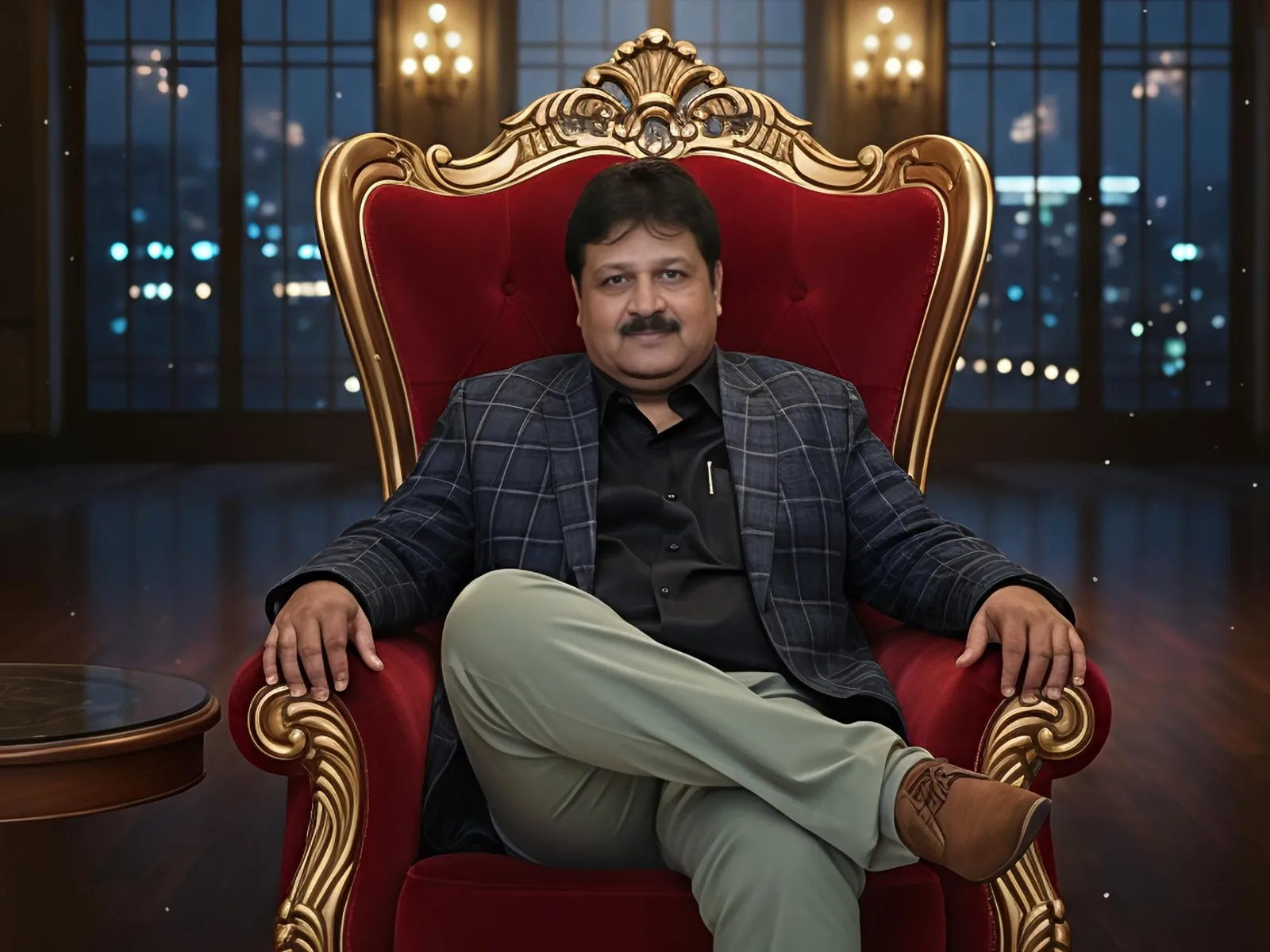
He doesn't pause to think. He doesn't qualify it. He doesn't dress it up.
When asked what defines him, Ketan Sheth answers with a single word:
Honesty.
Not vision. Not ambition. Not success.
Just honesty.
In a world that rewards speed, shortcuts, and loud promises, that answer feels almost out of place. And that's exactly why it makes you lean in.
Because this isn't theory. It's lived.
Over four decades, as Chairman and Managing Director of Pooja Infracon Pvt Ltd, Ketan Sheth has helped build more than 20,000 homes. But as you listen to him, you realise he measures success differently. He talks less about buildings, and more about relationships. Less about growth, and more about staying straight while growing.
And yet, there's something else happening beneath the surface of this conversation. A philosophy so simple it sounds almost naive. Until you see what it's built. Until you understand what it costs. Until you realise it's the reason he sleeps peacefully while others lie awake counting worries.
This isn't a story about real estate.
It's about what happens when a single principle—repeated, tested, lived—becomes the architecture of an entire life.
And it starts with one word that refuses to let go.
Honesty.
Where Honesty Was Built Into the Bones
There's something revealing about the way he says it.
Not defensively. Not proudly. Almost matter-of-fact.
As if honesty isn't a choice he keeps making—but a line he decided long ago never to cross.
When you ask where that came from, he doesn't talk about books or business mentors. He goes straight to home. To his mother. To his father. To the environment that shaped him before the world ever tested him.
His mother was deeply religious. But not in the abstract sense. Her father—Ketan's grandfather—was a doctor. A rare achievement: the only student during British India to earn a PhD in Sanskrit. She became a vice principal. Education mattered. Discipline mattered. But character mattered more.
The lesson wasn't abstract. It was lived daily—quietly, consistently, without exceptions.
His father reinforced the same idea through action. Through work. Through relationships. Through quiet consistency. The lesson was simple: Be honest in your work, in your relationships, in everything. The results will follow.
And they did.
But what's striking isn't just that he learned this early. It's how practical his thinking is.
He doesn't frame honesty as moral superiority. He frames it as durability.
"If you are dishonest," he says, "the result is temporary. If you are honest, it's long-term. Permanent."
He's proven it. Friendships from school and college still intact. Business associates who became family. Clients who spread the word without being asked. Over 20,000 houses sold—not through massive advertising campaigns, but through mouth publicity.
Trust compounds. Quietly. Invisibly. But permanently.
You begin to understand something important here: This wasn't a philosophy he adopted later in life. It was infrastructure laid early.
And once that foundation is set, everything built on top of it starts to look different.
But knowing what's right and staying true to it when life pushes back—those are very different things.
That required a different kind of training.
Get Inside the Ring
Confidence, in his world, was never something you waited for.
It was something you were trained into.
Long before boardrooms and business decisions, it started with the body. Swimming. Boxing. Horse riding. Sports that don't allow hesitation. Sports that teach you one thing very clearly: If you freeze, you sink.
His father believed something most people forget—fear doesn't disappear by avoiding it. It disappears by meeting it early.
The lesson was direct, almost brutal in its clarity: If someone in class is taller than you, bigger than you, bullying you—don't sit outside and cry. Go there. Fight. If you don't know how to fight, learn. Develop yourself. Make yourself capable.
And then there was boxing.
His father told him something that would become a life philosophy: "Go for boxing. You should be inside the ring, not outside in the audience applauding. Either you get hit or you hit. If you get hit, you will learn to endure and eventually you will learn to hit. But participating is important. Being in the game is important. If you can't hit, then develop the capacity to get hit."
Inside the ring.
Not watching. Not waiting. Not preparing endlessly.
Inside.
That image stayed with him. It explains why he doesn't hesitate. Why he doesn't overthink. Why, years later, when four people were drowning, he didn't stand on the edge calculating risk—he jumped.
There's another line he shares, quieter but equally powerful: "If you sit in front of difficulty, it will not look at you. But if you are scared and sit outside, it will come and attack you."
That mindset became instinct.
It explains why pressure doesn't rattle him. Why uncertainty doesn't paralyse him. Why he speaks with calm assurance rather than force.
Confidence, you realise, isn't loud in him. It's settled.
It's the kind that comes from knowing you've been tested—physically, mentally, emotionally—and survived. From being put into situations where quitting wasn't an option, and discovering that you're more capable than you thought.
And then one day, that training stopped being theory.
It became reflex.
When Instinct Takes Over
Some moments don't give you time to think.
There's no calculation. No weighing of risk. No room for fear to negotiate.
You either move—or you don't.
It was Holi. The festival of colours, celebration, chaos. Someone thought it would be funny to throw people into the swimming pool. Four men. Straight into the deep end.
No one asked if they could swim.
They couldn't.
Panic spread faster than sense. Bodies thrashing. Water filling lungs. People on the edge shouting, watching, freezing.
Ketan didn't freeze.
Years of swimming. Physical training. An understanding of water, weight, breath—all of it surfaced at once. Not as memory, but as instinct.
He jumped.
One person first. Grabbed the collar. Pulled them toward safety.
Then another.
Then another.
It wasn't easy. Bodies are heavier when they're afraid. Water resists when you're fighting against time. At one point, all three remaining people were clinging to him at once—turning rescue into risk.
His father's genetics. His father's blessings. The strength trained into him years before this moment. All of it held.
Slowly, deliberately, he moved them—one by one—toward safety.
All four survived.
When he tells the story, he doesn't frame it as courage. He frames it as responsibility.
"My life should be utilized for people," he says. "Whatever power, position, connections Bhagwan has given—I use it for people. For friends. For relatives. For society. Without any selfishness."
That line reveals everything.
Because it explains not just that moment, but the architecture of his entire life. Why people trust him. Why they come to him when things fall apart. Why his life seems oriented outward, not inward.
This wasn't a one-off act of bravery. It was a reflex built over years—of discipline, physical readiness, and a mindset trained early: Don't step aside when you're capable of stepping in.
And that same reflex—that same willingness to step inside the ring—would show up again just a few years later.
This time in business.
Inside the Ring at 29
At 18, his father invested in the share market on his behalf.
Not as a gift. As training.
By 29, Ketan Sheth did something no one in Gujarat had done before.
He took a real estate company public.
The youngest person in the state to do so.
This wasn't luck. It was the boxing ring philosophy in action.
Don't sit in the audience. Get inside. Get hit if you must. But be in the game.
Most people his age were still building portfolios, collecting experience, waiting for the "right time." Ketan didn't wait. He stepped in. He got hit. He learned. He endured.
And in doing so, he proved something his father had taught him years earlier: Participation isn't about being ready. It's about being willing.
That willingness—to act early, to risk failure, to learn in public—became the foundation for everything that followed.
Including the business philosophy that would eventually define him.
The Philosophy That Changes Everything
There's a moment in the conversation where everything clicks into place.
He's talking about competition. About how people operate in business. About the anxiety that drives so many decisions.
And then he says it:
"People think they should cut others' lives to grow their own. But I learned from childhood—don't cut others' lives. Grow your own life."
Pause.
Let that sit.
"If you work hard, your life will grow. If you want it bigger, work 16 hours instead of 8. The output will be more. You don't need to cut anyone else's."
This isn't just business advice. This is life architecture.
Most people operate from scarcity. They see growth as a zero-sum game. If someone else wins, I lose. If their life is bigger, mine must be smaller. So they cut. They undermine. They compete destructively.
Ketan flipped the entire equation.
Grow your own life.
Work hard. Stay honest. Build something real. Let time compound the rest.
And here's what happens when you live this way:
Your mind becomes quiet.
You don't lie awake calculating who's ahead, who's behind, who needs to be stopped. You don't waste energy protecting territory or managing reputation. You don't build defenses because you're not under attack.
"Because of this," he says, "it's easier. Seriously. Eventually everyone grows. Because of this one simple act and clarity."
Once you see this principle, you start seeing it everywhere in his life.
In the 20,000 homes built on trust, not advertising.
In the friendships that lasted 40 years.
In the clients who became family.
In the team that became cover.
This is what growing your own life looks like.
Not just in business. In everything.
And when you live this way, something remarkable happens.
The world doesn't shrink.
It expands.
When Life Pushes Back, What Holds You Steady
Living with integrity doesn't mean life gets easier.
It means you get stronger.
When asked how he holds steady during difficult phases, Ketan doesn't reach for motivation or mindset tricks. He talks about something quieter.
Support.
He believes challenges are inevitable. Not a sign that something has gone wrong—but a natural part of life. The khali-pili challenges, as he calls them. Empty troubles. Tests without real substance.
But what makes them manageable isn't strength alone. It's who stands with you when they arrive.
His faith grounds him. Not as blind optimism, but as orientation. A belief that if your intent is clean, if you're doing good work, if you're praying and staying God-fearing—God is always there.
Then there's the team. Chosen carefully. Trained properly. Built on trust. When pressure comes, it doesn't land on one person. It spreads. It softens. It becomes solvable.
"Whenever challenges come," he says, "everyone becomes support. They become the cover for us."
Then he adds something that shifts the entire frame:
"When challenges come, you focus on how to turn them into opportunities. Then the challenges are worth pursuing because now you are questing for the hidden opportunities in them. That makes it interesting."
This is the mindset of someone who has built a life that can absorb difficulty rather than avoid it.
Because if your foundation is honest, challenges don't expose you.
They prove you.
And proof, over time, becomes reputation. Reputation becomes trust. Trust becomes the cover you need when the next challenge arrives.
This is why he doesn't dramatise struggle. It's part of the system. Part of the game he chose to stay inside.
Which brings us to what that game actually looks like when you're living it fully.
A Life That Stayed Wide Open
For someone who has spent decades building businesses, his world is surprisingly wide.
Music comes up often. Not casually—passionately.
He sponsors classical musicians. He spent nights in Bombay recording studios with renowned musicians and singers. Not as a guest. As someone who belonged there.
Music, for him, isn't escape. It's expansion.
So is reading.
As a child, there was no television. No phone. Summer vacations meant libraries. Hours of books. Magazines read cover to cover. Early mornings at the swimming pool. Nights reading until sleep arrived.
"That made our roots very strong," he says. "Mentally and genetically."
Those habits stayed.
Travel, too, isn't about luxury. It's about perspective. Seeing how others live. How cultures think. How little and how much you really need.
Then there's sport. Cricket at university level. Left-arm bowling and batting. Boxing—left hand with more power for jabs and hooks.
What you start to see is this: His life never collapsed into a single identity.
Builder, yes. But also reader. Listener. Traveller. Athlete. Friend. Sponsor. Supporter.
That matters more than it sounds.
Because when a person's entire sense of self is tied to one role, any disruption becomes a crisis. But when your life is distributed—across interests, people, practices—pressure has less power over you.
This is why he listens well. Why he stays curious. Why he doesn't sound exhausted by success.
There's a fullness here. A sense that work is important—but not everything.
And that balance becomes critical when life does what it eventually does to everyone.
It takes something you can't replace.
When the Ring Goes Quiet
During the pandemic, illness entered his home almost all at once.
His brother. His sister. Both hospitalised.
And then his father—strong, disciplined, present—fell ill too.
He was in his eighties. The kind of man you quietly assume will always be there. The kind of strength that feels permanent. The man who taught him to get inside the ring. To face difficulty head-on. To never sit outside afraid.
The man whose voice still echoes in every decision Ketan makes.
And then suddenly, nothing feels guaranteed.
His father did not survive.
The man who had taught him to endure hits in the boxing ring. The man who had invested in him at 18 to teach him markets. The man whose genetics and blessings had held him steady while saving four lives in water. The man who had shown him, through quiet daily action, what honesty looked like when no one was watching.
Gone.
It was one of the most painful days of Ketan's life.
He doesn't dramatise this phase. He doesn't describe it as heroic or tragic. He speaks about it with the tone people use when they've looked closely at life's edge—and come back quieter.
What stayed with him wasn't panic. It wasn't bitterness.
It was gratitude.
Gratitude for his father's genetics. For the blessings passed down. For the training that shaped him. For the years they had. For the lessons that would outlive the man who taught them.
"There is a rollercoaster in life," he says. "Struggle is always there. Whatever you get, you have to work hard for it. Nothing comes free. Even Krishna and Modi worked hard."
That line lands differently now.
Because it isn't about struggle as a badge of honour. It's about effort as respect—for what you're given, and for what you might lose.
Hard work, he believes, isn't negotiable. Not because it guarantees outcomes—but because it keeps you honest with yourself. Whether you're building a company, holding a family together, or simply waking up and choosing to show up again.
There's no bitterness here. No resentment.
Just clarity.
And maybe that's the quiet gift of moments like these. They don't make you louder. They make you truer.
Which brings us to the end. To the place where everything he's said converges into one simple, undeniable truth.
The Peace That Honesty Builds
Here's what nobody tells you about honesty:
It doesn't just keep you out of trouble.
It doesn't just build trust.
It doesn't just create long-term success.
It does something far more valuable.
It gives you peace.
The kind that comes from knowing—deeply, completely—that you've lived straight.
Ketan Sheth lies down at night and sleep arrives within minutes. Not because he's tired. But because there's nothing left unresolved.
No schemes to protect. No lies to track. No shortcuts to justify. No lives cut that will come back to haunt him.
Just work. Just honesty. Just relationships built to last.
This is the shape a life takes over time.
When challenges come, everyone becomes your cover—because you've been cover for them.
When opportunities arise, people think of you first—because trust has compounded quietly over decades.
When loss arrives, gratitude remains—because you've used what you were given for others, not just yourself.
And when the day ends, you lie down without regret.
Because honesty, it turns out, isn't just a principle.
It's a strategy.
The longest, quietest, most powerful strategy there is.
Ketan Sheth didn't build 20,000 homes by cutting corners or cutting others' lives.
He built them by growing his own life—with hard work, clean intent, and the discipline to stay inside the ring even when it would have been easier to step out.
And in doing so, he built something far more valuable than buildings.
He built a life where there's nothing left to defend.
Where rest comes easy.
Where the final measure of success isn't applause—but peace.
That is the ultimate win.
Author's note
Ketan Sheth’s story shows what real credibility looks like: choosing to stay inside the ring when it would have been easier to step out, and refusing shortcuts even when they were available and rewarded. That choice required him to absorb pressure directly — to build slowly, to take hits early, to let trust compound instead of chasing speed or applause. It cost him nothing visible, but it demanded something constant: the discipline to grow his own life without cutting into anyone else’s, and the willingness to let honesty carry the weight of every decision. In doing so, he reminds us that integrity isn’t an abstract virtue — it’s a lived structure, one that quietly determines who stands with you in difficulty, what remains when loss arrives, and whether you can finally rest without needing to defend the life you built.
By Ugesh Sarcar