Wisdom Bank - Ulhas Dharmadhikari: A Life Built on Work, Worship, and Humanity
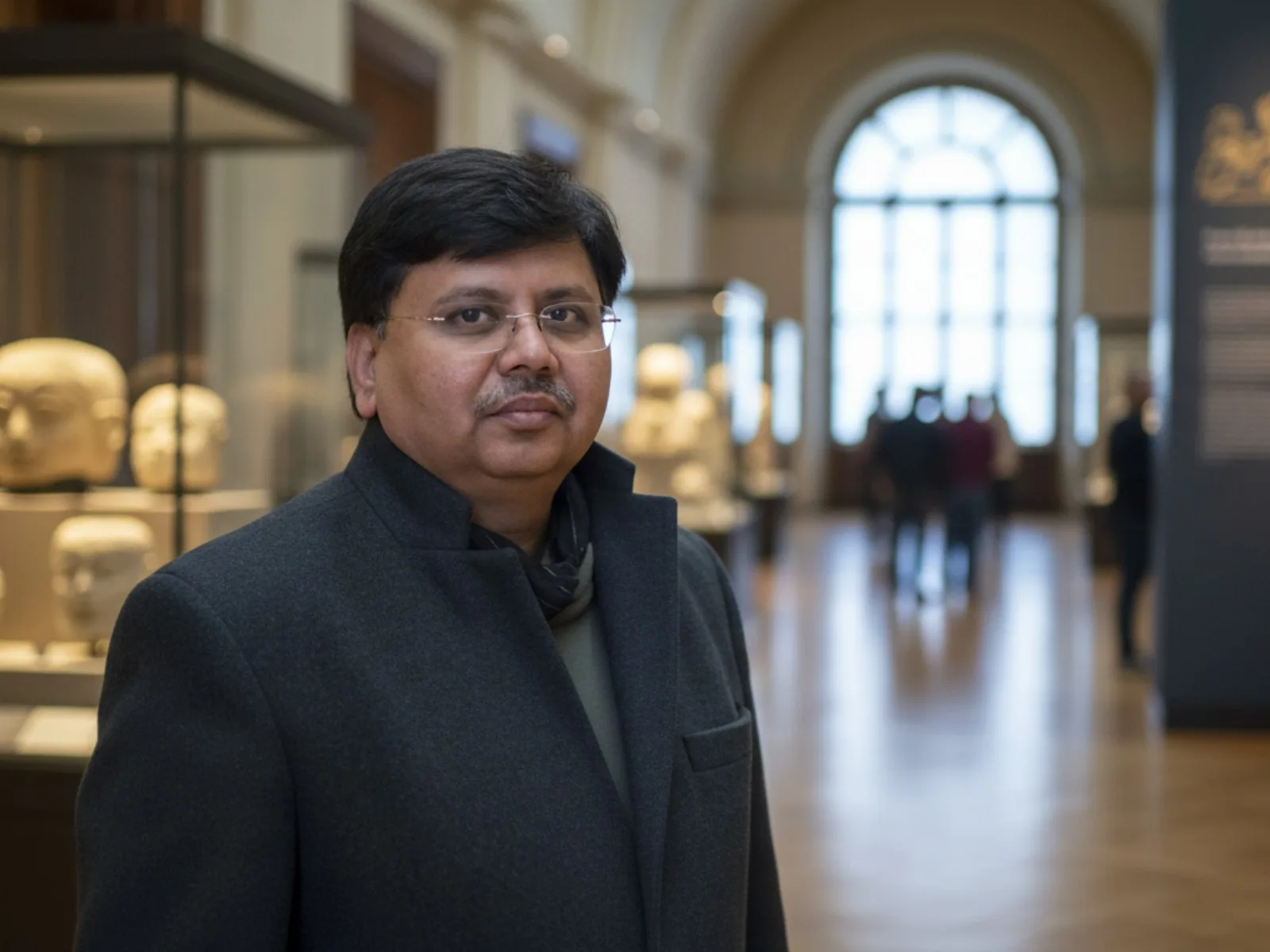
He doesn't hesitate. He doesn't search for the right words.
When asked what defines him, Ulhas Dharmadhikari answers with two sentences that feel almost disarmingly simple:
Work is worship. Humanity is religion.
That's it. Two lines that shaped 40 years of building things meant to outlast him.
Over four decades, Ulhas has worked on infrastructure that serves millions—earthquake-affected towns rebuilt from rubble, national-scale projects, systems designed to function long after his name is forgotten. He's held positions with real weight: Head Engineering onshore Civil Construction for the Adani Group, CTO & President Engineering for GIFT City, General Manager overseeing reconstruction after one of India's worst natural disasters.
But when you listen to him, you realize titles don't define how he thinks.
What defines him is simpler, older, harder to fake.
He spent his career trying not to hurt people. Even in thought.
And that care—quiet, consistent, uncomfortably patient—explains more about why people trusted him with responsibility than any résumé ever could.
This isn't a story about engineering. It's about what happens when you treat work as service and people as ends, instead of means.
And it begins with a realization that arrived slowly, almost without announcement, when he was still young.
When Passion Became Clarity
Engineering was never a profession for him. It was always a passion.
Even now, he says it plainly: "If I die and take rebirth, I will become engineer only."
The reason is simple: what the work does.
It started in college. Then in the early years on site, standing among structures taking shape, watching concrete harden into permanence.
What struck him was responsibility.
When you build honestly, he realized, you aren't building for yourself. You're building for people you'll never meet. For a future generation that won't know your name but will live inside the consequences of your decisions.
That's where the sentence came from. Work is worship.
He used to write it in his diary 25 to 30 years ago.
Work became worship when he understood that careless work is irreversible. That shortcuts echo forward. That what you build with integrity serves people long after you're gone.
This was engineering logic applied to ethics.
And once it became clear, everything else had to align with it.
The Cost of Being Right
Clarity doesn't make life easier. It makes it harder.
When you know the right path and refuse to bend, resistance comes.
"Proving yourself when you are right," he says, "is very difficult in life. Everyone has their own angle of view. And when you know this is the perfect path, you have to be adamant. That's when resistance comes."
He faced it. A lot of it.
There were moments when shortcuts were available. When speed could be bought by cutting corners. When being "right" meant standing alone.
So what did he do?
He was just clear: I want to do this. That's all.
And he waited.
Sometimes it took years before the people around him realized that what he had insisted on was care, sustained over time.
Results, he says, are slow. But they're visible. And after that, people start accepting.
He tells his engineers even now: "Initially, for at least one or two years, they will never understand exactly what I will give them. But after some time, they will start realizing—yes, what this fellow was telling was correct."
That patience—the willingness to be right slowly rather than wrong quickly—became the foundation for everything that followed.
Including the second principle that shaped how he led people through the work.
Humanity as Operating System
He explains it even more simply than the first.
"My thought process should not hurt anybody. That's all."
It sounds almost too gentle for the environments he worked in. Construction sites. Deadlines. High-stakes infrastructure. Teams under pressure.
But here's what it actually meant in practice.
There were moments when voices were raised. When he got annoyed. When people cried, resigned, went home upset.
He doesn't deny any of that.
But here's the difference: he would go to their homes. Bring them back. Sit them down and say, "Nothing doing. You have to do your job with me."
Years later—five, ten years later—those same people would tell others: "I resigned. He took me back. And my life became good after that."
In his teams, accountability flowed in a direction most leaders avoid.
"Success is yours. Mistakes are mine."
He said this always. As design, as system architecture for safety.
Because fear makes people hide. And hidden mistakes cause real damage.
"I was competitive," he says openly. "But I never crossed my lines. Never."
He told his engineers: "Go to the site. Do your job with an open mind. If anything goes wrong, that's mine. Success is yours."
This created safety. Safety to speak. Safety to admit error. Safety to work without fear.
And when you build that kind of environment, people don't just work for you. They work with you. And they remember it decades later.
But principles held in calm are one thing. Principles tested in crisis are something else entirely.
When the Ground Breaks
January 26, 2001.
The Gujarat earthquake fractured entire towns.
Anjar. Bhuj. Bachau. Fourteen towns, heavily affected. Structures collapsed. Lives disrupted. What followed was triage at scale.
At the time, Ulhas was Engineering Head for the Adani Group at Mundra Port. When the government formed Gujarat Urban Development Company Ltd., to handle reconstruction, they came for him.
He left the private sector and joined the government of Gujarat.
What followed was years of master planning and construction across multiple devastated towns. Entire layouts. Infrastructure from scratch.
"Very senior IAS officers were our managing directors," he says. "I reported to them as General Manager of Engineering. They did administrative work—bringing money from the government. The entire technical job was our responsibility."
When you're rebuilding for people who have already lost too much, there is no patience for ego, no tolerance for shortcuts, no appetite for decisions that look good on paper but feel wrong on the ground.
He doesn't talk about this period dramatically. Just the matter-of-fact reality of responsibility.
Plans. Execution. Coordination. Doing the job cleanly.
He doesn't talk about pressure breaking him. He doesn't talk about sleepless nights or recognition.
He talks about doing it right.
Because when you're building for people who have lost homes, there's no room for anything else.
And his principles didn't limit him as responsibility grew—they protected him.
Building a City from Concept
After earthquake reconstruction, Ulhas moved to GIFT City.
Gujarat International Finance Tec-City—a greenfield smart city designed to compete globally. A city built from nothing.
He was brought in as the first technical employee. Chief Technical Officer (CTO) and President. The entire planning and construction of the city's infrastructure fell under his responsibility.
This was long-term vision made concrete. Systems designed to function for decades.
Every choice had long-term consequence. Every system had to be built to last. The people building it—the teams, the engineers, the workers—mattered as much as the outcome.
In environments where speed often rewards noise, his steadiness became an advantage.
People trusted him with work that couldn't afford failure. Because he consistently avoided recklessness.
GIFT City gave him deep satisfaction. Because it was built carefully.
And when retirement from active GIFT City life came, it didn't feel like an ending. It felt like a transition.
When Titles Fall Away
When he formally retired from GIFT City about six or seven years ago, the question became sharper: what do you do with everything you've learned?
He joined a friend's son's construction company. Stayed fully engaged for five and a half years.
Then he spent two and a half years at home.
He's practical about this phase. His eyesight isn't what it used to be. Concentration is harder. Reading, which he loved, has become difficult. He watches television more now. Listens to music. Enjoys comfort.
"I am not a very highly intelligent person," he says plainly. "I'm an ordinary person who likes a lot of movies, a lot of good serials, a lot of good music."
That self-assessment shows humility without performance.
And yet, he's still engaged.
He worked as an independent director for Gammon India—a company whose first project was the Gateway of India in 1919. When the MD asked him what he wanted in terms of fees, he said: "One rupee. That's all."
He loved Gammon. He started his career there. The money didn't matter.
He recently resigned from Gammon and now works as an independent director for Oswal Energies Limited to stay useful.
The Thought That Stayed
There's something that bothered him during his time at Adani.
When people retire, decades of experience walk out the door. All that quiet knowledge—earned through years of problem-solving, decision-making, surviving mistakes—just disappears.
Because there's no structure to receive it.
So he suggested something to Gautam Adani: create a small concern where retired people could work. Enough to pass on what they know. To inform the next generation.
He thinks they opened something along those lines. But the thought stayed with him.
Experience isn't something you accumulate for yourself. It's something you pass on.
That belief explains why he didn't retire into silence. Why he stayed available. Why he still shows up when called.
Because disengagement felt wrong.
Friday Evening to Monday Morning
There was a period when his wife was in the UK for six or seven months.
He stayed in India with his father.
And every Friday evening, he would go into his room. Watch television. Watch movies. Listen to music. Be alone with his thoughts.
And he wouldn't come out until Monday morning.
His father would call to him. "Come out. Come out. How are you doing?"
He was fine. Comfortable, actually. Just... present with himself.
This detail matters because it shows what most people spend their lives avoiding: the ability to be alone without discomfort.
The silence didn't need filling. Productivity didn't need proving. Just existence. Quiet. Restful.
That ability—to sit with yourself for an entire weekend and feel no unease—is the sign of a life that has nothing unresolved pressing against it.
What Remains
When you speak to him long enough, something becomes clear.
There is no unfinished urgency in him.
He did his work fully. He tried not to hurt people while doing it. And when he was wrong, he carried the weight himself.
That combination quiets the mind over time.
He doesn't describe peace as happiness. He describes it as absence.
The absence of regret. The absence of unresolved conflict. The absence of people you need to avoid because you wronged them.
Nothing essential is left hanging.
That's why he can live an ordinary life now without discomfort. Television, music, routine, comfort—none of it feels like escape. It feels earned.
And that may be the most important thing this conversation offers.
Just a quiet reassurance.
That a life built carefully, patiently, without cutting corners or people, eventually gives you something no title ever can.
A mind that rests.
Work was done. People were respected. And that, in the end, was enough.
Author's note
Ulhas Dharmadhikari’s story shows what real credibility looks like: choosing to hold technical and ethical lines when shortcuts promised speed, accepting resistance and isolation rather than bending standards that would affect people he would never meet, and leading teams by absorbing blame while giving away credit so mistakes could surface without fear. Those choices required patience, delayed validation, and the willingness to be right slowly instead of convenient immediately. In doing so, he did not just complete projects or rebuild towns. He built environments where responsibility was shared, integrity was operational, and experience was passed forward. It is a reminder that credibility is not formed in titles or outcomes, but in the quiet decisions that determine how work touches human lives long after the builder steps away.
By Ugesh Sarcar