Wisdom Bank - Veerendra Mishra: The Man Who Stayed
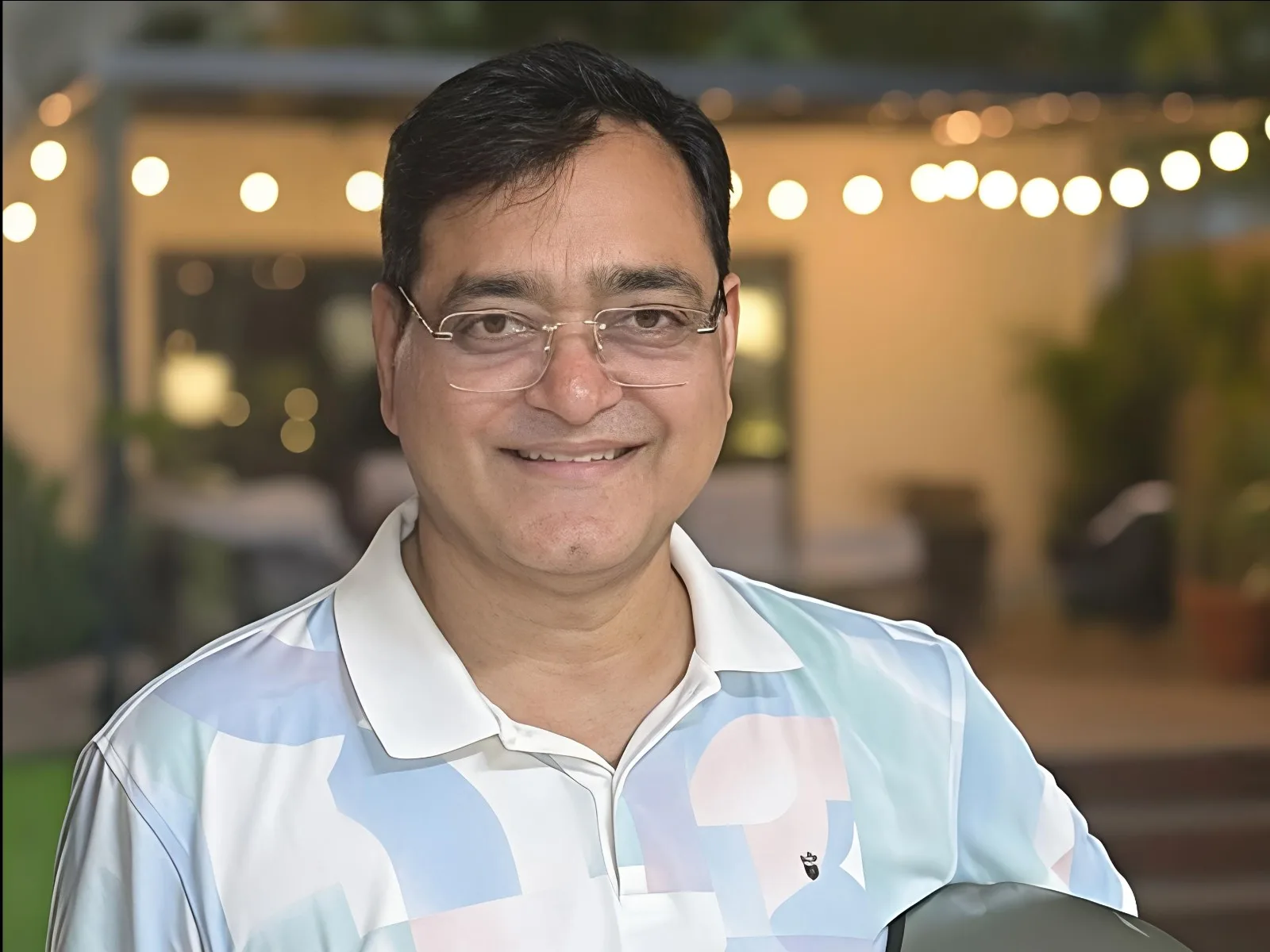
Veerendra Mishra has spent over three decades in the Indian Police Service — long enough for the system to have reshaped him entirely.
It didn't.
Somewhere along the way, he made a choice that most people in uniform quietly abandon: trust first, and deal with the consequences later. In a profession that rewards suspicion, this was never a personality trait. It was a risk. One he kept taking.
That risk would take him into places that force you to confront what power usually chooses to look away from — villages where children are born into sex work, slum lanes where crime isn't chosen but inherited, rooms where the line between victim and offender dissolves if you look closely enough.
This is not a story about heroism. It is about how a person stays human while standing inside systems that slowly teach you not to be.
What He Inherited Without Being Told
Some lessons are never taught. They arrive through repetition — through what adults do when they think no one is watching, through what they choose not to make a spectacle of.
Veerendra never remembers being sat down and instructed on values. But there was his father.
People took advantage of him. Borrowed money. Walked away. In another household, this would have become a source of bitterness — something discussed in hushed anger, something stored carefully for later. In his, it ended differently.
"Chhod do," his father would say. "Ho gaya. Le gaya, uski kismat hai." Leave it. It's done. He took it — that's his destiny.
Not generosity. Acceptance.
It stayed with the boy longer than he realised.
His mother, in contrast, was immediate. Sharp. She did not appreciate any kind of conflict in public. When young Veerendra lost his temper — as he often did — she would react against him, knowing that her intrusion would force him to retract.
Her interventions embarrassed him then. They educated him for life.
Between a father who absorbed loss without resentment and a mother who refused to legitimise rage, something settled inside him early: anger travels downward. If you don't stop it, it spills into homes that have nothing to do with the original hurt.
This is where his refusal to hold grudges was born. He learned early, through observation, that most people act from their circumstances, not their character. That harm is often a symptom, not a plan.
In a profession built on control, this way of seeing would later feel almost subversive.
At the time, it was just home.
The Train to Banaras
He was eighteen when the phone call came.
In those days, it wasn't a quick vibration in your pocket. It was a trunk call. Urgent. Disruptive. The kind that made your stomach drop before anyone spoke.
Tabiyat kharab hai. Come immediately.
He and his brother had left for their hostel that very morning, from Dhariwal, Punjab — home of the famous woollen mills from British times. By the time they rushed back, their father was already gone. White sheet. Their mother at his feet. Unmoving.
She sat there all night. Holding his feet.
When the ice made his head cold, she took it into her lap instead.
Some images do not fade. They install themselves.
A day later, he was on a train to Varanasi, carrying his father's ashes in a brass vessel. Upper berth. First time in his life in an AC compartment. That detail stayed with him too — grief and novelty sharing the same compartment.
He sat there, the vessel beside him, and cried without pause.
The scenes replayed. The call. The sheet. His mother not moving. The silence of a house that would never sound the same again.
And then, instinctively, he began to write.
Not for publication or clarity or even memory. He wrote because something inside him needed to move — he wrote what happened, then how it felt, then what it felt like to feel it.
That was his first piece of writing.
Years later, as a probationer in 1995, there was a custodial death at a police station in Raipur. His SP sent him to manage it. "Go handle the station. Otherwise they'll burn it down."
Veerendra stayed all night. Under a lamp post. Sitting on the ground.
And again, he wrote.
Not a report. Something closer to a reckoning. About what was really happening inside that station — what the constables were carrying, how the crowd outside was building its own version of events. How politicians who didn't even know the dead man's name were showing up to, as Veerendra puts it, "bake bread in the fire of someone else's misery" — turning grief into theatre, tragedy into opportunity.
His SP read it. "You should start writing," he said.
So he did.
But writing was never about publishing. It was about staying sane while staying human. A way to process before reacting. A way to understand before judging.
It was a young man discovering that if you don't empty grief somewhere, it will harden into something else. That if you do not take out the baggage collected creatively, it spills over onto someone — in the form of misplaced anger, or in spent time gossiping and indulging in character assassination of people. Writing is catharsis.
And he had already seen what hardened men become.
He would go on to write eight books — seven published, four by Sage, one by Routledge, spanning human trafficking, transgender issues, and community-based sexual exploitation. Work that would take him to Harvard, to universities across the US, UK, and Canada, and lead him to establish India's first Anti-Human Trafficking Lab. But all of that came later. What began on that train was simpler: a private discipline of turning experience into language before it turned into armour.
How He Leads
In his office, there is a standing order.
When a constable walks in, they sit. On a chair. Not standing. Not waiting for permission.
"This chair is mine because the government assigned it to me," he tells them. "The rest are yours. You came for work? Sit. An Additional SP comes? Let them sit. All are equal."
He refuses to use the word subordinate.
"It’s feudal. Hierarchy should be about the delegation of work, not the centralization of power."
He believes humility is the most inexpensive way to exercise authority. And it spreads.
One evening, after snapping at his driver during a tense day, he apologised. Not ceremonially. Directly.
"Sorry about the shouting. But this could be good for you in the long run. I am always here for you."
Why apologise to a driver?
"I worry that if he takes that sadness home, he'll spill it onto his children and family. He can't take it out on me. So if not on me, then where? At home? It's better to calm him before he leaves."
That depth of thought — about where anger travels when it has nowhere to go — explains why people trust him.
Because care, when it is real, shows up in places most people don't even think to look.
Over 31 years, he has had disagreements with seniors. Even transfers after clashes. Yet he carries no personal grudges. His instinct is to contextualise behaviour — perhaps it was situational, perhaps something else was at play.
He assumes complexity before malice.
In police headquarters, he is known less for aggression and more for intellect — a thinking officer. A writing officer. In a profession trained in control, refusing to let power leak into someone's private life is a quiet rebellion.
The Pattern Hunter
Change, in his life, did not arrive as a grand decision. It began as a question.
Early in his career, while reviewing history sheeters — repeat offenders the system keeps track of — he noticed a pattern. Nearly all of them came from the same kind of neighbourhoods. Urban slums. The same lanes. The same cramped geographies.
Most people would file that away as data.
He couldn't.
If ninety per cent of repeat offenders come from the same environment, the problem isn't just crime. It's incubation.
So instead of tightening surveillance, he tried something unfashionable. He went to the children.
He began spending weekends in slum communities. Sitting on the ground. Calling children together. Starting a small library. Telling stories. Listening more than lecturing. He took his young son along — three, four years old — not to teach the boy charity, but to let proximity do its own quiet work.
There was a practical reason. If children saw the police only as punishment, fear would be inherited. If they saw the police as reachable, something might shift.
But there was also something deeper at work. He believed that if you want to break a cycle, you don't confront the hardened edge. You interrupt the beginning.
That small beginning grew. What started as informal gatherings slowly became structured engagement — education, capacity-building, exposure. Around the year 2000, he founded an organisation called Samvedna.
For years, almost no one in his department knew he was behind it.
He preferred it that way. Visibility changes intent. Once people know you are "doing good," the ego enters the room.
He wanted the work to remain clean.
By 2007, Samvedna had quietly expanded across slum communities. Children were in schools. Families were receiving livelihood support. The model was working.
And then came the moment that changed everything.
The U-Turn
In 2007, Veerendra was invited as chief guest to a programme in a village. Books being distributed. Dresses for a hostel. Routine.
That is when he met the Bedia community.
Community-based sexual exploitation. Entire villages where sex work is not a choice — it is inheritance. Where homes are brothels. Where customers come to the women, not the other way around.
He went with a professor from TISS. They sat on a cot inside a mud hut. Three generations before them: grandmother, mother, daughter. The daughter was fourteen years old.
They were talking openly. About sex work. No hesitation. No shame. Three generations discussing it like any other family occupation — casual, practised, unburdened.
Then the girl stood up on the cot. Reached toward the thatch roof. And pulled something down.
A condom.
"We use them," she said.
Veerendra Mishra — a man who had spent decades in the Indian Police Service, who had already built an organisation working with thousands of children in slums — sat frozen.
"And here was a child, showing a subject considered to be taboo in those days — something which would never be spoken in families — in front of her family like it was the most normal thing in the world."
That moment became what he calls the U-turn of his life — because it forced a question he couldn't ignore: What kind of world makes a child this fluent in survival?
He became emotional. Told her immediately: "I'll adopt you. Come live in my house. Like a big sister to my son. We'll educate you."
She refused.
Calmly. Logically.
"Why should I go? Right now, I have 10-12 customers. They give me ₹100-150 each. Daily income. If I study with you, even after years, you'll get me a ₹15,000 salary. By the time I'm 20-21, I'll have earned so much more here. Why leave?"
Another shock.
Then he asked around the village. How many children?
30-40 Bedia children. Same number of Gujjar children next door. All the Gujjar children went to school. Only four or five Bedia children did — registered under Gujjar names.
Because the moment someone said "Bedia," teachers made them sit in corners. On the ground. People wouldn't drink water from their hands.
"If a second-grade child starts hiding their identity just to go to school," Veerendra thought, "what kind of person will they become?"
Veerendra stayed.
The Rescue That Became Thirteen
Three years passed.
The fourteen-year-old became seventeen. Her younger sister — once ten, now thirteen — would grab Veerendra every time he visited.
"Sir, I want to study. Sir, please."
By now, the older sister had stopped giving money to her mother. At thirty-two, customers no longer came — they wanted younger girls. So the mother, desperate, turned to the thirteen-year-old.
"You're old enough. Go. Start working."
The girl ran to Veerendra.
By this time, he had been working in the village for four years. Building trust. Slowly. Carefully.
The grandmother once told his wife something that stayed: "In four years, he's the first man who came here and didn't put his hand on a girl saying 'I want her.' Usually within six months, men come, point at someone, say work for me. That's why we see him as god."
Veerendra decided: he would fight for this child.
The villagers fought back. Hard.
"If one leaves, others will follow."
Some spread rumours: "He's taking her to Bhopal to make her do sex work there."
The grandmother stood firm.
"You're all making her do it here anyway. If he does it in Bhopal, at least he's been helping us for four years. Let him."
Then the villagers did something unexpected.
"Take all the children."
Thirteen. Not one.
Veerendra brought all thirteen to Bhopal. Fought with the Education Secretary. Got them enrolled in government hostels.
That caravan never stopped.
Today, Samvedna works with 5,000 children across 60 villages in six districts of Madhya Pradesh.
And for twenty years, no one knew he was the founder. Not the government. Not his colleagues. Not the police.
"We weren't building visibility," he says. "We were building credibility."
The Spectrum of a Life
One day, he is sitting on the ground in a village. Eating from the plate of a sex worker's child. And they are eating from his.
The next day, he is with the highest level of authorities in government.
When people ask him, "How was it?" he says: "Great to learn. I learned a lot."
That is always his answer.
"Your spectrum is so wide," he says. "From a community so stigmatised that people won't drink water from their glass — to sitting with powerful people. You can see the range."
At a five-star hotel, fork and knife in hand, he looks like the archetypal elite bureaucrat. On the other hand, he is sitting on the floor of his office having his lunch. Or on the ground in a village.
"Half the time I sit on the ground," he says. "Colleagues walk in puzzled, 'What are you doing?' But that's where I'm comfortable."
What Volunteerism Actually Means
The final piece of this story happens at JNU.
Veerendra was heading the National Service Scheme — 40-50 lakh volunteers across India. He was in a seminar with students, sitting alongside the person who was then JNU's Vice-Chancellor.
He asked the students a question: "What do you think volunteerism is?"
They answered confidently. Helping the poor. Teaching villagers. Giving back.
He listened. Then asked: "When you went to the village for seven days, what did you actually do?"
They described it excitedly. "Sir, it was amazing. We didn't even know what an okra plant looked like. We saw how panchayats function. How they eat. How they live. And we taught them how to farm."
Veerendra stopped them gently.
"Wait. You taught them how to farm?"
"Yes, sir."
"Do you know how to farm?"
Silence.
"You don't know how to farm. And you went to a village — to teach farmers — how to farm. Where's the volunteerism in that? You didn't help them. They helped you. They taught you. You learned."
He let that sit.
Then he said something that reframed everything:
"Volunteerism is not about giving and taking. It is about learning and sharing. Taking wisdom from the community. The moment a volunteer thinks he is giving, then he considers himself to be at a higher pedestal, so the sense of arrogance steps in. Volunteerism helps enhance the volunteers' EQ exponentially, which is the need of the time."
No one had ever said it that way before.
But once you hear it, you can't unhear it.
That is the lens through which his entire life makes sense. The Bedia community taught him what resilience looks like when the world offers you no options. The children taught him what trust looks like when it is earned slowly, over years, without shortcuts. The constables, the drivers, the villagers — they all taught him something.
"I always say I've never helped anyone," he tells audiences now. "Help happened to me. If I've grown, if forgiveness exists in me, if I can think the way I do — it's because of these people. I learned by seeing them. By staying with them."
Staying Unhardened
Thirty-one years in policing can do many things to a person.
It can sharpen suspicion, calcify empathy, and teach you to expect the worst from everyone you meet.
What it rarely teaches is softness without weakness.
Veerendra Mishra's life is not a story of perfection. It is not the story of a man untouched by conflict or frustration. It is the story of someone who chose, repeatedly, not to let power harden him.
He trusts first and apologises when necessary. He learns in every room he enters, and refuses to reduce people to their worst act.
And perhaps most importantly — he refuses to believe that change flows only from the top. It begins where you choose to stand. Or sit. Or listen.
The girl who pulled the condom from the thatch roof? Out of sex work. Her younger sister made it to the UPSC interview. Didn't clear. But she is appearing again.
The thirteen children he brought to Bhopal? They became hundreds. Then thousands.
Somewhere in Madhya Pradesh right now, there is a girl sitting in a classroom. Her mother was a sex worker. Her grandmother was too.
But she is not.
She is studying. Under her real name. Head held high.
And when someone asks her why her life turned out different, she won't say it was luck.
She will say: "Because someone stayed."
Author's Note
Veerendra Mishra's story shows what real credibility looks like: sitting on the ground in a village for four years before a single child trusted him enough to leave. Apologising to a driver because he understood where unspent anger travels. Founding an organisation that worked with thousands — and telling no one for twenty years, because visibility wasn't the point. That choice cost him recognition, accolades, and the easier career path that comes with being seen as the compassionate officer. In doing so, he reminds us that credibility isn't built through announcements — it is built through the unglamorous work of staying long after others have left, of learning when you are expected to teach, and of refusing to let power turn you into someone you would not recognise. The question his life leaves us with is uncomfortable: Are we willing to stay invisible long enough for trust to become real?
By Ugesh Sarcar