Wisdom Bank - Dayananda Reddy on Courage, Commitment and Correcting the System
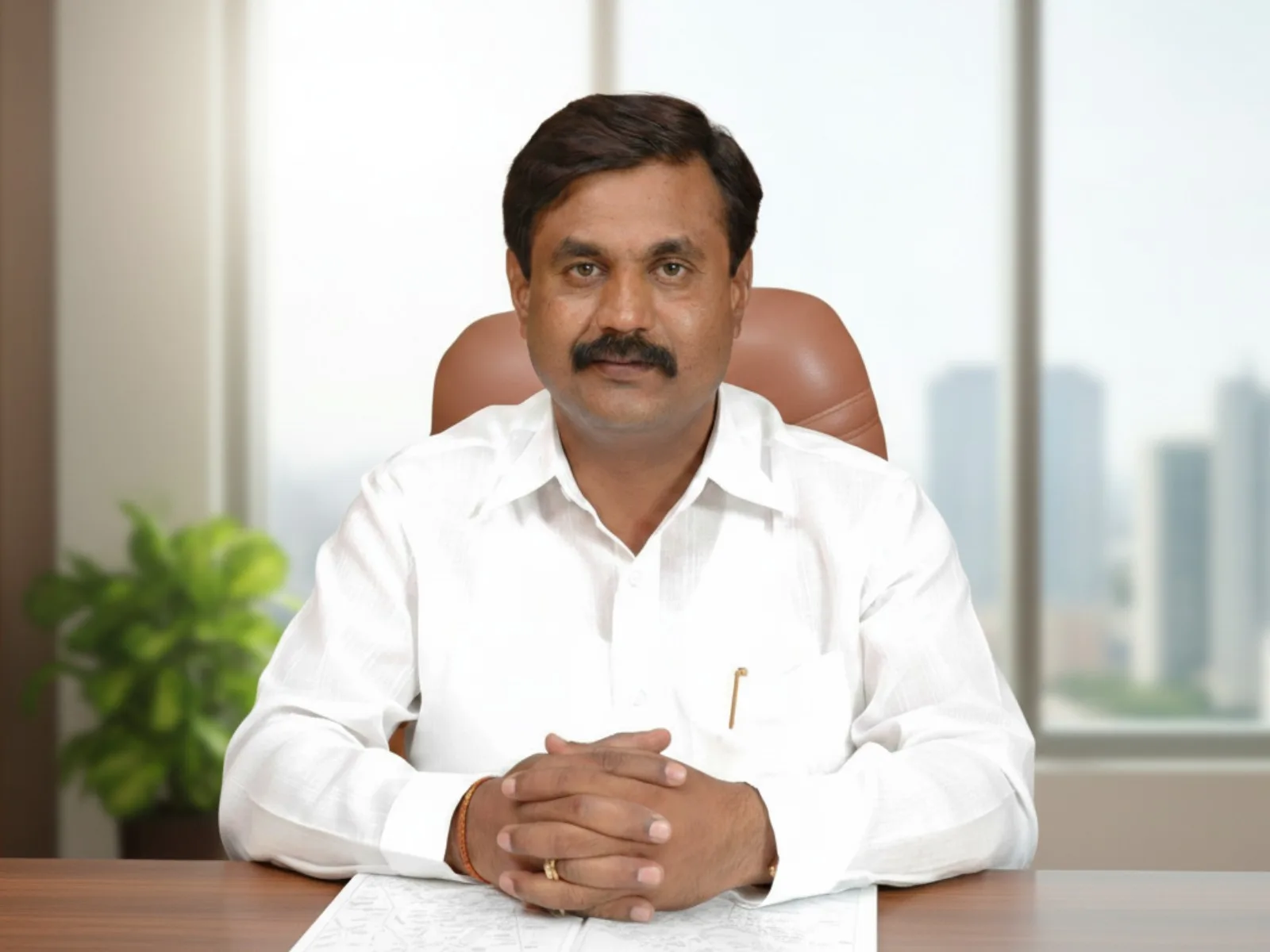
Silence Is More Dangerous Than Corruption.
"Good people's silence is more threat to this country than the violence of bad people."
Dayananda Reddy doesn't say this as a slogan.
He says it as a conclusion.
Forty years of building businesses from scratch. Years navigating governance as a legislator. A brutal legal battle against institutional fraud. And along the way, a realization that cuts deeper than any policy failure or corruption scandal:
The real damage is not always caused by the wrongdoer.
It is caused by the bystander.
The businessman who chooses not to question. The citizen who shrugs and says, "This is how it works." The professional who knows something is wrong — but stays quiet.
For him, silence is not neutral.
It is permission.
It is the slow erosion that happens when enough people decide that fighting is inconvenient. That speaking up is exhausting. That someone else will handle it.
But courage, he insists, is not noise. It is not anger. It is not reckless confrontation.
It is clarity.
Clarity about what is right. Clarity about what is wrong. Clarity that surrendering to injustice only strengthens it.
This mindset did not appear overnight. It was built — through enterprise, public life, conflict, and reflection.
And at the centre of it all is a belief he returns to again and again:
If you do not stand for what is right, you slowly lose the ability to stand at all.
Where did that come from?
To understand that, you have to go back to a nineteen-year-old who decided not to wait for opportunity — but to create it.
First Generation: Built, Not Inherited
Dayananda Reddy did not inherit a business.
He built one.
At nineteen.
His parents were agriculturists. There was no corporate background. No family enterprise waiting to be handed over. No safety net of established networks. No uncle in the city with connections. No family friend who knew the ropes.
Just a young man with a decision.
"Life taught me everything," he says simply.
In 1983, he started a small engineering tool room — a modest beginning powered by his own effort and limited resources. There was no glamour in it. No press coverage. No seed funding. Just work.
The kind of work where you learn quickly that reputation is not inherited — it is earned. One commitment at a time. One deadline met. One promise kept.
Ten years later, he entered trading. Then real estate. Then infrastructure. Then, in 2007, he launched what he describes with understated pride as an "A to Z construction material mall" — sand to sofa.
Walk into the space, and you could source everything required to build and furnish a home. It was practical. Integrated. Ahead of its time.
But underneath the expansion was something more fundamental than business strategy.
Commitment. Timelines. Ethical conduct. Human relationships.
He repeats those words not as branding — but as operating principles.
When you are first-generation, there is no legacy to lean on. No family name that opens doors. No inherited trust that precedes you into rooms.
Your reputation becomes your only capital.
And reputation, once damaged, is nearly impossible to rebuild.
That understanding shaped him early.
Not because someone lectured him about ethics in a classroom.
But because survival demanded it.
Growth demanded it.
And slowly, business was no longer just about profit margins and balance sheets.
It became about credibility.
But business alone does not shape a public voice.
That shift came later — when enterprise intersected with governance.
From Enterprise to Public Responsibility
By 2010, Dayananda Reddy's journey had moved beyond spreadsheets and construction sites.
He was appointed to the Karnataka Legislative Council from the local body constituency. Two years later, he became Deputy Opposition Leader in the Council.
The shift wasn't accidental.
When you build businesses from scratch, you eventually collide with systems — approvals, policies, regulations, institutions. You begin to see how governance directly shapes enterprise.
And sometimes, how it distorts it.
Public life exposed him to something deeper than commercial challenge. It exposed him to structural gaps. To the distance between policy intent and ground reality. To the way corruption becomes normalized not through dramatic scandals, but through quiet acceptance.
He began thinking not just as a businessman navigating the system — but as someone responsible for questioning it.
That's where his thinking sharpened.
"Good people's silence," he says, "is more threat than the violence of bad people."
The line is not dramatic. It is diagnostic.
In his view, systems don't deteriorate only because of corruption. They deteriorate because citizens normalize it. They accept inconvenience as culture. They adapt instead of correct. They become experts at working around problems instead of solving them.
He saw how easy it is for people to stay busy, mechanical, preoccupied.
And how difficult it is for them to fight.
But theory becomes conviction only when tested personally.
That test came in a form he did not anticipate — and could not ignore.
When the System Pushes Back
In 2016, his own business operations were hit by something far more serious than routine bureaucracy.
He alleges that ₹101 crores were fraudulently withdrawn from his account through a forged board resolution involving SBI.
One hundred and one crores.
Not a billing dispute. Not a contractual disagreement. Alleged fraud.
For most people, that would have been the end of the story.
You either collapse under the weight. Or you compromise quietly. Or you settle and move on.
He chose a fourth path.
Fight.
Not emotionally. Not impulsively. Structurally.
The courts, he says, have observed prima facie that fraud was involved. The matter is ongoing. The legal battle continues.
But what changed for him was not just the case itself.
It was the realization that followed.
If it is this difficult for one established businessman — someone with resources, experience, connections — to fight a large institution, what happens to smaller borrowers?
How many simply surrender?
How many sign away their rights because fighting feels impossible?
That thought stayed.
He began studying the landscape. The numbers shocked him. Seventy-five crore borrowers in the country. Countless disputes. Many without voice. Most without hope.
In July 2024, he launched the All India Financial Borrowers Federation.
What began as a personal dispute became a collective platform.
That is the pattern in his thinking.
Do not surrender. Organize. Create awareness. Correct the system.
Because in his words, once you surrender, it becomes easier for injustice to continue. Once you normalize wrong, it embeds itself into the system's DNA.
But fighting continuously — fighting for years, through institutions, through courts, through public pressure — requires something deeper than anger.
It requires inner stability.
And that, he believes, comes from understanding your own nature.
Courage Is in the DNA
When asked where his courage comes from, he doesn't cite books. He doesn't cite mentors. He doesn't cite circumstance.
"It is in the DNA," he says.
Not as arrogance. As explanation.
He believes every human being carries an origin character — something fundamental that cannot be borrowed or imitated.
"Gold has its own character. Silver has its own character. Iron has its own character," he explains. "Likewise, every human being has their own."
You cannot borrow it. You cannot fake it long-term. You either live from it — or you live against it.
For him, courage is not loud confrontation. It is not theatrical rebellion.
It is the refusal to bend internally when external pressure mounts.
It is the instinct — visceral, almost involuntary — not to surrender to injustice.
He doesn't deny that fighting systems is exhausting. He doesn't pretend it is glamorous or easy. He doesn't romanticize the sleepless nights or the endless legal battles or the personal cost of standing alone.
But he believes something more dangerous happens when you suppress your core nature.
You weaken.
Not just in that moment. Permanently.
And once you weaken internally — once you teach yourself that surrender is acceptable — the external pressure feels heavier each time.
That is why, for him, the real battle is not against institutions.
It is against the part of yourself that wants to quit.
But raw courage alone is unstable. It can turn into anger. It can turn into obsession. It can burn you out.
So what keeps it grounded?
Balance.
And that is where his framework becomes clear.
The Four Pillars
Dayananda Reddy doesn't believe strength comes from aggression.
He believes it comes from balance.
He describes life as a tabletop supported by four pillars:
Professional life. Family life. Social life. Spiritual life.
If even one pillar weakens, the tabletop shakes. Everything placed on it becomes unstable.
"If any pillar is weak," he says, "you fail."
You may run away from problems. You may avoid confrontation. You may lose the courage to fight for your rights.
But when all four stand firm, something shifts internally.
Your personal life becomes stable.
And stability produces courage.
Professional life gives you purpose and direction. Family life gives you grounding and perspective. Social life gives you connection and community. Spiritual life gives you the ability to step back and see the larger pattern.
Without that balance, fighting external battles becomes draining. You are running on anger alone. And anger, no matter how justified, eventually exhausts itself.
With balance, resistance becomes sustainable.
This is where his thinking moves beyond business or politics. It moves into philosophy — not abstract philosophy taught in seminars, but practical alignment discovered through lived experience.
Because once you are internally steady, you do not react emotionally to every challenge.
You respond deliberately.
And that deliberate response — grounded in clarity rather than rage — is what he believes the country needs more of.
Not outrage.
Awareness.
Awareness Before Action
For Dayananda Reddy, change does not begin with protest.
It begins with awareness.
He outlines it almost like a progression:
First — Awareness. Second — Acceptance. Third — Adoption.
Most people, he believes, move through these stages in the wrong direction.
They see what is happening. (Awareness) They accept it as inevitable. (Acceptance) And over time, they adopt it as normal. (Adoption)
That is how systems deteriorate.
That is how corruption stops feeling like corruption and starts feeling like "how things work."
That is how a society becomes expert at navigating dysfunction instead of eliminating it.
"Unless citizens are wise, the country cannot rise," he says.
In his view, governance is not corrected by leaders alone. It is corrected by informed citizens who understand the difference between right and wrong — and refuse to normalize the wrong.
He points out something uncomfortable.
Life today is mechanical. People are busy. Fighting takes time. Standing up feels inconvenient.
So many choose peace over principle.
But that peace is temporary.
Because when wrong becomes habit, it embeds itself into the DNA of the system. And once that happens, correction becomes exponentially harder.
His call is simple, but not easy:
Raise your voice for what is right. Do not surrender to injustice. Support good people. Correct the system.
Not with rage. With clarity.
And beneath all of this is a quiet conviction that runs through his entire journey — from a nineteen-year-old entrepreneur to a businessman, legislator, and organizer.
You cannot grow if the country does not grow.
And the country cannot grow if its citizens stay silent.
So the question is not whether problems exist.
They always will.
The real question is this:
Will you adjust — or will you speak?
Because in his view, silence is not safety.
It is surrender.
And surrender, once repeated often enough, becomes character.
But so does courage.
Be Wise to Make the Country Rise
Dayananda Reddy does not describe himself as extraordinary.
He describes himself as committed.
Committed to timelines. Committed to ethics in business. Committed to human relationships. Committed to not surrendering.
But over time, commitment becomes identity.
From a nineteen-year-old starting a small engineering unit in 1983… to expanding across trading, real estate, infrastructure, and retail… to stepping into legislative responsibility in 2010… to facing institutional battles instead of retreating… to organizing seventy-five crore borrowers nationally rather than fighting alone…
There is a pattern.
He does not withdraw when challenged.
He expands.
He believes every problem has a solution. He believes courage cannot be borrowed. He believes balance builds strength. He believes silence weakens a nation more than corruption does.
And at the centre of it all is one simple line:
"Be wise to make the country rise."
Not louder. Wiser.
Know the difference between right and wrong. Know your rights. Know your duties. Do not normalize what is wrong just because it is common.
Because if citizens remain passive, governance cannot improve. If governance does not improve, growth becomes shallow. And if the country does not grow, individual success becomes fragile — no matter how many businesses you build.
He is not asking for outrage.
He is asking for awareness.
Not rebellion.
Responsibility.
In the end, his message is not about fighting institutions. It is about strengthening citizens.
Because when enough individuals refuse to surrender — when enough people stop accepting wrong as inevitable — when enough voices speak instead of staying silent —
Systems begin to change.
Not overnight. Not easily. But inevitably.
And that, perhaps, is where real courage lives.
Not in the single dramatic stand.
But in the daily decision not to look away.
Not to adjust.
Not to stay silent.
Because here is what Dayananda Reddy understands that most people forget:
Nations don't collapse overnight.
They erode one silent citizen at a time.
And they rise the same way.
One voice.
One refusal to surrender.
One person who decides that speaking is worth the inconvenience.
The question is not whether you have the courage.
The question is whether you will use it.
Before silence becomes your character.
Before surrender becomes your default.
Before the erosion reaches you — and there is no one left to speak.
Author's Note
Dayananda Reddy’s story shows what real credibility looks like: refusing to stay silent when his own business was hit by alleged large-scale fraud, choosing to fight a prolonged institutional battle instead of settling or stepping back, and then extending that fight beyond himself by creating a platform for millions of borrowers facing similar challenges. That choice demanded time, stability, and the willingness to stand in discomfort without guarantees. In doing so, he makes one thing unmistakably clear: credibility is not built in comfort or opinion, but in the moments where you refuse to normalize what you know is wrong.
By Ugesh Sarcar