Wisdom Bank - Wisdom Bank – K. N. Jitendranath: The Man Who Answered Only to His Conscience
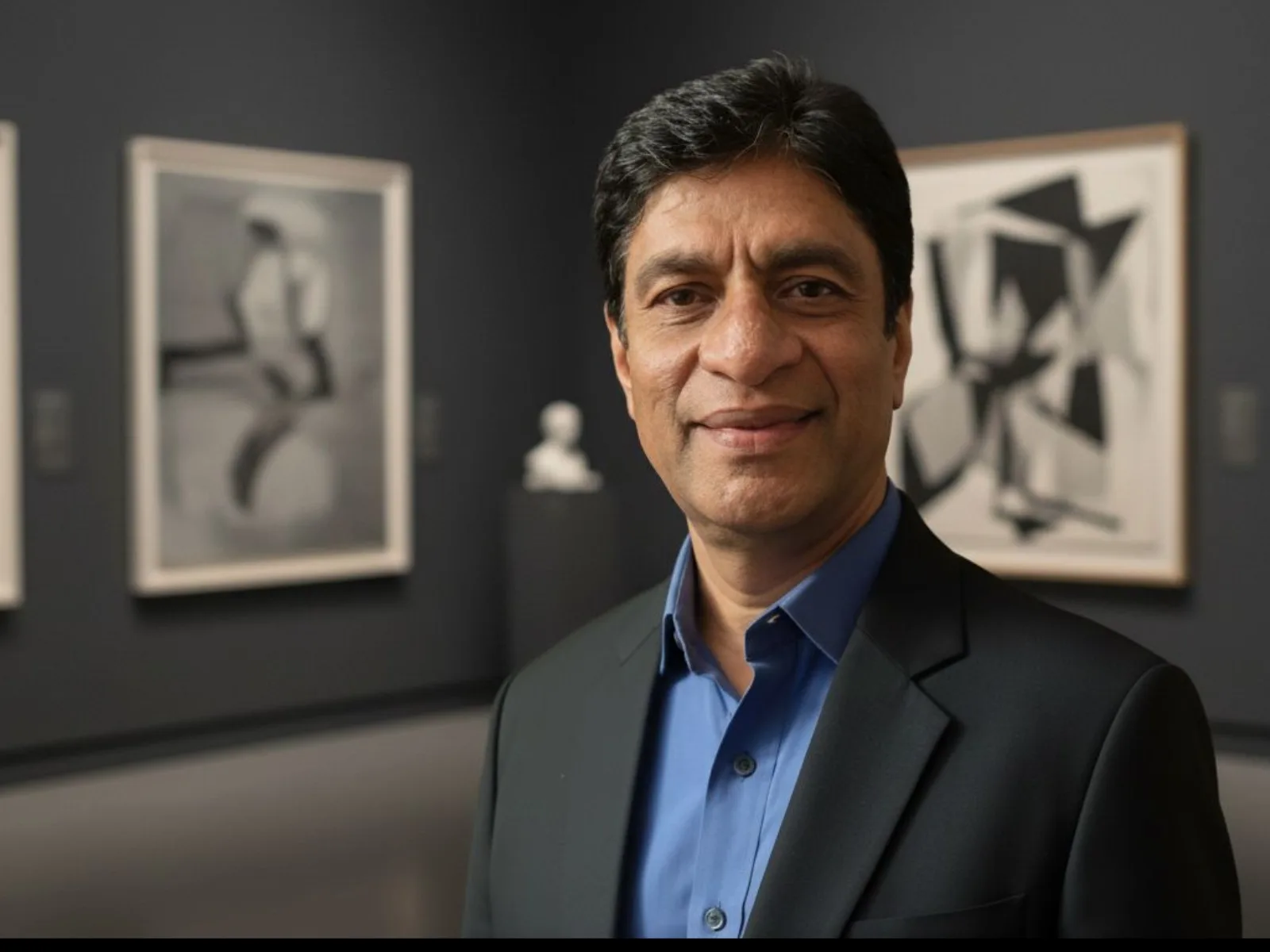
In policing, the difference between respect and suspicion can be razor thin.
An officer may spend years doing his duty quietly, making decisions in difficult situations, dealing with people at their worst moments. Yet all it takes is a single incident — a misunderstanding, an allegation, an unfortunate event — for everything to be questioned. Reputation in such a profession is fragile.
But sometimes, something remarkable happens. Sometimes, when a crisis erupts and the crowd gathers with anger and suspicion, the same public that is ready to accuse suddenly steps forward to defend the officer standing in front of them. Not because of rank. Not because of authority. But because of trust built over time.
That moment arrived once in the career of K. N. Jitendranath, a career police officer who later retired as Deputy Commissioner of Police in Bengaluru. A detainee had died inside a police station. Rumours spread quickly. A crowd gathered. Voices demanded action. Senior officials arrived to calm the situation. Suspensions were announced.
And then something unexpected happened.
When his name was mentioned, the same public that had gathered in anger pushed back. "No," they said. "He is not that kind of officer." The crowd itself defended him.
For Jitendranath, that moment was not the result of strategy or public relations. It was the quiet outcome of a rule he had followed throughout his life — a rule simple enough to explain in a single sentence: Be truthful to your conscience.
That principle had guided him long before he wore a uniform. Long before he joined the police force — a profession he never actually planned to enter. It shaped the way he approached duty, the way he treated people, and the way he navigated the countless unpredictable situations that define police work.
Looking back now, after decades of service, he does not describe his career with grand words. He describes it with simplicity. "I only tried to be sincere to my duties," he says.
And sometimes, sincerity does something remarkable. It builds a reputation that speaks for you — even when you are not there to defend yourself.
Lessons from Home
Long before he entered the police force, the values that would guide Jitendranath's life were already quietly taking shape at home. Not through strict lectures. Not through complicated philosophies. Through example.
His parents lived in a way that made certain things very clear to the children around them: be truthful, be sincere, and be good to people. It was less about what they said and more about how they lived. Honesty was not presented as an abstract virtue. It was simply the way things were done. They expected their children to be useful to society. They expected them to treat others with kindness. And above all, they expected them to remain truthful.
Jitendranath does not recall a single defining conversation where these principles were formally explained. Instead, they were absorbed gradually, in the quiet rhythm of everyday life. Children learn most deeply from what they see repeatedly, and what he saw in his parents was a commitment to living with integrity.
One influence, however, stood out in a slightly different way. His mother was deeply devotional. Prayer, fasting, and spiritual discipline were natural parts of her life. During his younger years, she encouraged devotional practices at home — bhajans, prayers, and small rituals that created a sense of faith within the household. For a young boy growing up in that environment, spirituality was not presented as something distant or ceremonial. It was something personal.
Over time, that influence stayed with him. Even later in life, as a police officer dealing with pressure, conflict, and unpredictable situations, he developed a quiet habit before stepping out for duty. A moment of prayer. Not elaborate rituals — simply a pause to gather himself, to ask for strength, and to begin the day with a sense of clarity.
He admits openly that prayer may not always change the external situation. But it changes something internally. It builds confidence. The belief that whatever situation lies ahead can be faced. That quiet confidence would become particularly important when he eventually entered a profession known for unpredictability and pressure.
Ironically, that profession was never part of his original plan.
The Accidental Policeman
For many officers, the decision to join the police force begins as a childhood ambition.
For Jitendranath, it happened almost by accident.
After completing his graduation, he had imagined a very different path for himself. He wanted to pursue higher studies, explore different fields, and see where his interests might lead. The police service was not something he had actively planned for. But life has a way of changing direction unexpectedly.
At the time, several of his friends were applying for police recruitment. They encouraged him to try as well — not with the expectation that he would necessarily pursue it seriously, but simply to see what might happen. He agreed and appeared for the selection process alongside them.
The outcome was ironic. He cleared it. His friends did not. And just like that, a career path he had never actively pursued suddenly opened in front of him.
Even then, he admits, he did not begin his career with great passion for the profession. In the early days, policing was simply a job — something he had stepped into while figuring out what came next. But as time passed, something about the work began to change his perspective.
He began to see the deeper nature of the profession. Policing placed him directly among people — their problems, their conflicts, their fears, their hopes. Every day brought new situations that demanded judgment, patience, and responsibility. Unlike many other professions, this one offered something unusual: the opportunity to directly help people during moments when they needed support the most.
That realization slowly shifted his attitude. What had begun as an accidental career began to feel meaningful. He started to see policing not just as employment, but as a platform where sincerity could translate into real service. There were opportunities to intervene, to resolve disputes, to protect the vulnerable, and sometimes simply to listen when someone needed help.
And with that realization came a quiet aspiration. He did not want wealth. He did not chase promotions. What he wanted was something much simpler — and in some ways much harder to achieve: he wanted to leave behind a good name. Not the kind that comes from publicity. The kind that comes from people remembering that you treated them fairly.
Faith in Difficult Moments
Police work rarely unfolds in predictable ways. Every day brings situations that cannot be fully prepared for — conflicts, accusations, sudden crises, and moments where decisions must be made without the comfort of certainty. In such environments, pressure becomes a constant companion.
Jitendranath faced many such situations during his career. There were moments when problems arose that could not easily be solved by procedure alone. Moments when external help was not available. Moments when the responsibility to find a solution rested entirely on his own shoulders.
In those situations, he turned inward. The devotional habits he had inherited from his mother began to play a quiet but powerful role in his life. Prayer became less about ritual and more about grounding. Before stepping out for duty, he developed a simple practice: pause, pray, and then begin the day.
It was not about asking for miracles. It was about building confidence. He explains it with characteristic humility. Perhaps, he says, it is simply psychological — a way of reassuring oneself before facing the day's challenges. But whatever the explanation, the effect was real. That small moment of prayer created a sense of steadiness.
When difficult situations arose, that steadiness helped him face them without panic. Over time, his faith deepened through experience. Again and again, he found that when actions were taken with honest intention — without selfish motives, without malice — solutions eventually emerged. Sometimes through unexpected help from others. Sometimes through the support of colleagues. Sometimes through circumstances aligning in ways that could not be predicted.
For him, these moments reinforced a belief that became central to his outlook on life: when your intentions are clear, you are rarely left alone in difficult times. Sometimes the help comes from people. Sometimes it comes from situations resolving themselves. And sometimes, he believes, it comes from something larger than either.
One particular incident during his service would test that belief in a very dramatic way — a night when a single event inside a police station could easily have destroyed his career.
The Night That Could Have Ended Everything
One evening during his service, Jitendranath found himself in a situation that every police officer hopes never to face.
A man had been brought to the station on suspicion of cheating people by collecting money in the name of religious offerings using fake receipts. It was late in the evening when the man was detained. Since Jitendranath had night rounds to attend to, he instructed the officers at the station to keep the man in custody until he returned, after which further questioning could continue. It seemed like a routine decision.
But the night took an unexpected turn.
The young probationers at the station, curious and eager, continued questioning the detainee after Jitendranath left. Meanwhile, the constable assigned to night duty decided to place the man inside the lockup area before resting. The detainee complained of the cold and asked for something to cover himself. The constable, having nothing else at hand, gave him his own raincoat — the kind used by army personnel, with strong belts attached.
Sometime later that night, before Jitendranath even left his house to begin his rounds, the constable arrived at his door in panic.
The detainee had hanged himself.
When Jitendranath rushed to the station, the man was already dead. The belt from the raincoat had been removed, tied to a ventilator high on the wall, and used to hang himself. It was an act that no one had anticipated. But the incident immediately created a storm.
Deaths in police custody are among the most sensitive situations any officer can face. Rumours spread quickly. By the next day, a large crowd had gathered outside the station. People brought the body and placed it in front of the police station, demanding action. Senior officials arrived — the Superintendent of Police, the Deputy Commissioner. The atmosphere was tense. Accusations of murder began circulating among the crowd.
To calm the situation, disciplinary action was announced. First, the constable on duty was suspended. The crowd remained angry. Then the suspension of the head constable was announced. Still the crowd demanded more.
Finally, Jitendranath's name was mentioned.
At that moment, something unexpected happened. Several members of the public — local leaders, advocates, senior citizens — stepped forward and stopped the announcement. "No," they said. "He was not even present here. He is not that kind of officer."
The same public that had gathered in anger began defending him.
Investigations followed. A CID inquiry was conducted. Postmortem examinations confirmed the cause of death. Throughout the investigation, no allegation was sustained against him. Looking back, Jitendranath reflects on that night not with pride, but with quiet relief.
For him, the lesson was clear: people notice how you carry yourself over time. And in the rare moments when circumstances turn against you, that accumulated trust can become your greatest protection.
A Life Without Pretence
After decades of service in policing — including his final role as Deputy Commissioner of Police handling crime in Bengaluru — one might expect Jitendranath to speak about his career with a sense of accomplishment.
Instead, he speaks about it with remarkable simplicity.
He does not describe himself as a decorated officer or a man of authority. When asked about his present life after retirement, he offers a description that surprises many people who hear it. "I am like a daily wage worker," he says with a quiet smile. It is not self-deprecation. It is simply how he sees life.
After retiring from the police service, he did not withdraw from work. Instead, he continued contributing in smaller but meaningful ways. He now serves as a consultant to an industrial unit in Bengaluru that manufactures spare parts for distribution across the country. His involvement is not a rigid daily assignment. He visits when needed, helps solve operational issues, and offers guidance based on his experience.
At the same time, he has taken on another responsibility in a very different field. During the cricket season, particularly when the Indian Premier League is underway, he works with the anti-corruption unit associated with the Board of Control for Cricket in India. In that role, he helps monitor teams and players to ensure that no corrupt practices influence the game.
Even in retirement, the underlying pattern remains the same. Work is not about position. It is about usefulness. Jitendranath says he never chased large financial gains or personal wealth. He lives a simple life now. His two daughters are married and settled, and he spends much of his time quietly between occasional professional responsibilities and the rhythms of everyday life.
There is a sense of acceptance in the way he describes it. Life does not need to be dramatic. It only needs to remain honest.
When Integrity Speaks for You
If there is one thread that runs through the life of K. N. Jitendranath, it is conscience.
He did not enter the police force with a grand vision. The profession came into his life unexpectedly. Yet once inside it, he approached the role with quiet commitment. Every responsibility assigned to him was treated as a duty that deserved honesty. Every decision was measured against a simple internal question: Can I accept this choice?
Over time, that quiet discipline shaped the way people saw him. Not through speeches or declarations. Through consistent conduct.
Years later, when that crisis unfolded outside the police station and an angry crowd demanded accountability, it was not a prepared defence that protected him. It was reputation. The trust built through years of steady conduct. People who had observed his work stepped forward and spoke before he even had to defend himself.
Moments like that are rare in any career. But they reveal something powerful about how integrity works. It rarely produces immediate rewards. It does not guarantee that problems will never arise.
But it builds something stronger than authority.
It builds credibility.
And credibility, once earned, becomes a shield in moments when circumstances turn against you. Not because you planned for it. Not because you demanded it. But because people remember — quietly, accurately, without needing to be reminded — how you treated them when no one was watching.
That memory, in the end, becomes your defence.
Not the one you speak.
The one others speak for you.
Author’s note
K. N. Jitendranath’s story shows what real credibility looks like: carrying out the daily responsibilities of policing with quiet sincerity, holding himself accountable to his own conscience, and continuing to act with fairness in a profession where suspicion can surface overnight. That commitment did not protect him from crisis. When a detainee died in custody, his career could easily have collapsed under public anger and institutional pressure. But years of consistent conduct had already shaped how people saw him. In that moment, it was not rank or authority that spoke for him. It was the public itself. The trust built through countless ordinary interactions became his defence when the situation turned against him, reminding us that credibility is rarely built in dramatic moments. It is built slowly, through choices made long before anyone thinks they might matter.
By Ugesh Sarcar