Wisdom Bank — Anil Singh: Two Drops and a Direction
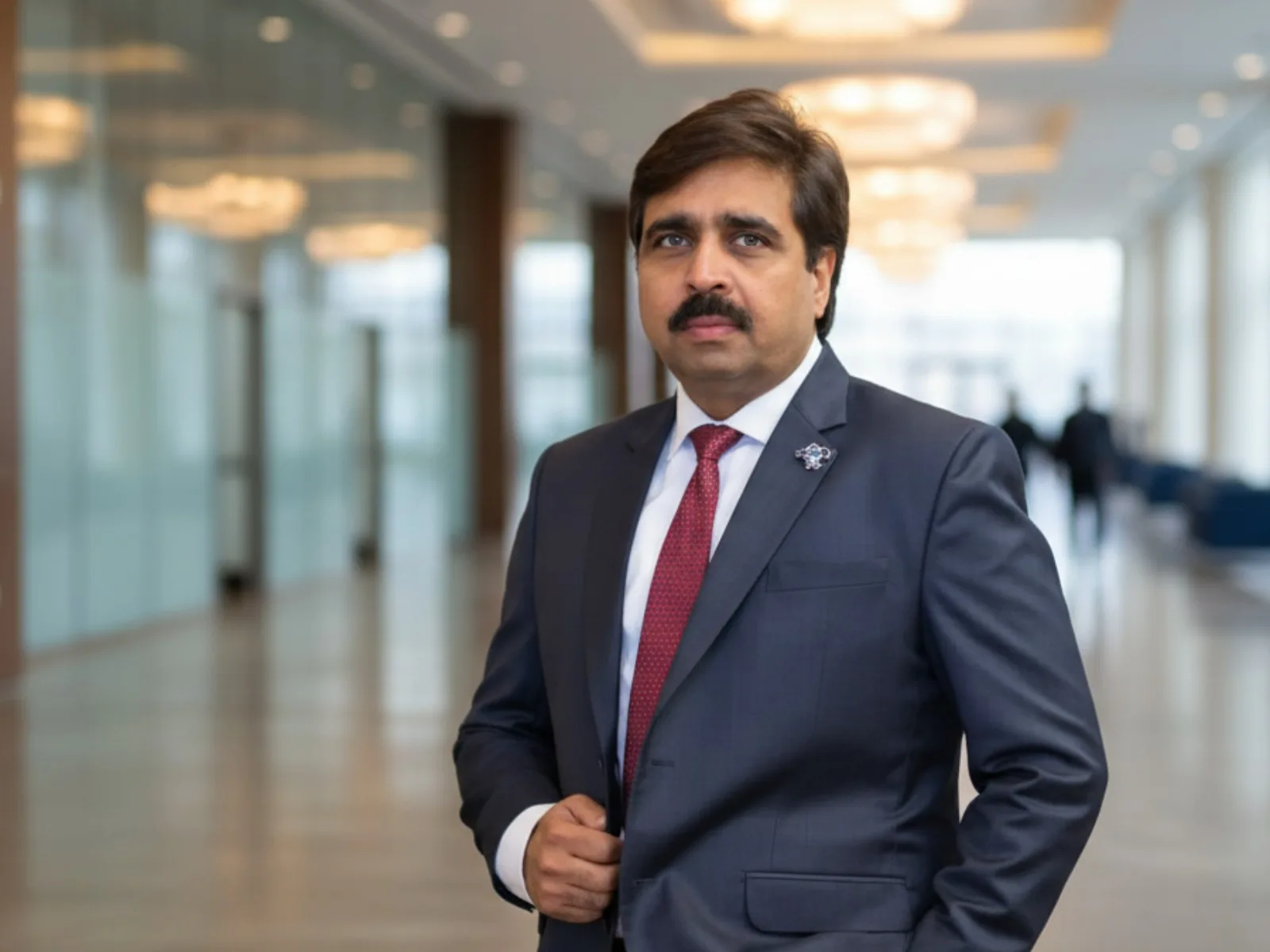
Twenty-five years ago, in a slum in Ahmedabad, a woman placed a child in Anil Singh's hands.
He was there for a polio vaccination drive — his first with Rotary. He had recently joined, still new to the work, still learning the rhythm of it. Volunteers moved through narrow lanes with small vials, going door to door, giving two drops to every child they could reach. Routine work. Simple math. Two drops, one child, move on.
She said the child was five. But the body told a different story — impossibly small, fragile, nearly weightless, with a head disproportionately large for the frame it sat on. He asked the age again. She insisted. Five. He looked at the child and understood that whatever had gone wrong here had gone wrong a long time ago, far beyond the reach of two drops of anything.
Then she bent down and touched his feet. "Sir, whatever you can do, do for my child."
He was still holding the child when she said it. The vaccine would not help. He knew that. She probably knew that too, somewhere beneath the asking. But she was a mother standing in a slum with nothing else to offer her child except the hope that a stranger might try.
So he gave the two drops. Not because they would change the outcome. Because giving them was the only honest thing left to do — the only response that didn't require him to look away.
Someone standing nearby, the man who had brought Anil into Rotary, watched quietly. Then he said something that didn't sound like philosophy at the time, but became it:
"Anil, now your life will change. You have started giving. What you give is not important. The act of giving is."
That sentence landed like a seed in wet soil.
It took years to understand what it grew into.
Usefulness Does Not Wait for Surplus
Most people build a wall between who they are now and who they'll become when conditions improve. They tell themselves: When I have more, I'll give more. When I'm stable, I'll help others. When the timing is right, I'll step forward.
Anil Singh never built that wall.
What shifted after that vaccination drive was not dramatic. It was directional. He began helping wherever he could — sometimes through organised work, sometimes through the kind of small, unplanned gestures that no one records. Over time, the pattern stopped feeling like a choice and became something closer to reflex.
What makes this worth examining is not the scale. It is the timing.
This was not a man distributing from abundance. There were years when finances were uncertain, when stability was something he was still reaching for, when holding back might have been the rational choice. He didn't wait for those seasons to change. If something could be done, he did it.
He had started donating blood as a college student in 1987, long before he had a career, a house, or any certainty about where life would take him. That continued quietly — not as a campaign, not as something to announce — eventually crossing a hundred and twenty donations. At one point, years later, he returned to the same classroom where he had given blood for the first time, decades earlier, and donated again. The same room. The same gesture. A circle completed not for anyone's approval, but for his own sense of continuity.
Later, he and his wife pledged their bodies and organs after death.
For most people, these would be milestones. For Anil, they were extensions of something he had already decided without knowing he had decided it — that usefulness is not a luxury you earn after comfort arrives. It is something you begin with, and carry forward regardless.
The Grammar of Respect
Some principles arrive through grand moments. Others arrive through correction, quietly, at a dinner table.
Early in his marriage, during a visit to relatives, Anil casually addressed his wife as "tu." It was common enough. Many men around him did the same without thinking. Language is invisible until someone makes you see it.
His aunt did.
She waited until they were seated for a meal. Then, without raising her voice, she said: "Anil, I have been married for thirty-five years. Your uncle has never called me 'tu.' If you want respect in life, start by respecting your wife. She is the first 'other' person in your life."
There was nowhere to hide in that sentence. No room for argument, no space for defensiveness.
He changed. Not with resistance. Not gradually. From that day.
And the shift didn't stop with his wife. Over time, it extended through the household — to children, to visitors, to anyone who entered. Language became the architecture of how the family lived together. Everyone was addressed with the same care, the same formality that says I see you as someone who matters.
It did not feel like a rule imposed from outside. It became the culture of the house — so woven into daily life that it stopped being noticeable. Which is exactly how the deepest changes work. They become invisible because they become everything.
Old Age Is a Return to Childhood
There is a Premchand story that Anil read in school — Budhi Kaki. An old woman, forgotten during a family celebration. Left hungry while others ate. She eventually steps outside and eats leftovers meant to be discarded. When the daughter-in-law discovers this, she breaks down and brings food with care.
The story ends with a line that lodged somewhere inside him and never left:
Old age is a return to childhood.
That line kept surfacing through the years. Not as a lesson. As a question. Are you treating the people who once carried you with the same tenderness they gave when you couldn't carry yourself?
His approach to his parents reflected this understanding. If he had something, they would have it too. Not as duty — that word implies burden. As recognition. As the refusal to let proximity breed neglect.
The pattern is the same one that started with two drops in a slum. Give what you have. Give it now. Don't wait to feel ready.
The Phone That Always Rings
Over the years, something formed around Anil Singh that he did not design.
People began calling him. Not for one thing — for everything. A medical emergency. A hospital admission. An accident on the road. An ambulance. A death in the family. A plumber. A contact. A doctor.
They called Anil.
In 2018, when floods tore through Kerala, he didn't wait for updates on the news. He travelled there three times. Not to observe. To understand what was actually needed beneath the visible damage. The silent crisis, he discovered, was not just loss — it was access to safe drinking water.
He facilitated two sustainable water projects. Together, they now provide nearly one lakh litres of clean drinking water every day. One in Angamaly, near Cochin. The other in a village near Thrissur. Not temporary relief. Infrastructure built to continue long after the cameras left.
Later, he played a key role in enabling cervical cancer vaccinations for women who could not afford them, leveraging CSR support to bring preventive healthcare within reach of those the system had bypassed.
And over the years, quietly, without announcement, he paid the education fees for more than two hundred students. The beneficiaries do not know his name — he told only the college principal. The commitment continued until Covid struck his own business and forced it to stop. Not a one-time gesture. A pattern sustained as long as resources allowed.
During Covid itself, when hospital beds were currency and systems had collapsed, he used whatever network he had to connect people with care. Families called in panic at two in the morning. Strangers called on referrals from strangers. He didn't ask who they were or what they could offer in return. He picked up the phone, made calls, pushed doors, and tried to find a way through a system that had stopped functioning for most people. Not always successfully. But always immediately, without calculation, without asking what was in it for him.
In his housing society, people describe it with a sentence that says more about his life than any résumé could: "If you need anything, call Anil."
That sentence was not built through a single act of heroism. It was built through repetition — the accumulation of a thousand small moments where he could have said not now or not my problem and didn't. It is the compound interest of usefulness, paid out over decades, and the returns are not financial. They are trust.
When someone becomes the person others call in crisis, it tells you something about the architecture of their character. It means they have earned, through quiet consistency, the most difficult kind of credibility — the kind that only forms when people watch you over years and conclude: this person will not disappear when things get hard.
What Breaks and What Stays
In 2020, Anil's business was doing well. Growth was steady. Momentum had arrived.
Then an income tax notice froze his accounts. Within days, the Covid lockdown began. For nine months, he had no access to funds. There were employees who depended on him. He paid salaries from savings, then credit cards, then couldn't anymore.
The tax demand was later reduced drastically. But only after the damage was already done.
This is where many people's philosophy meets reality and loses. When the ground shifts, the principles you thought you held often turn out to be preferences — things you believed when it was easy to believe them.
Anil's principle did not change under pressure. It clarified.
He describes it simply. If someone hits your car, you have options. You can escalate, react, create a larger problem than the one that found you. Or you can pause. The incident remains the same. The outcome does not.
He lost money. He rebuilt. He lost it again through circumstances he did not create — the Gujarat earthquake, communal riots that tore through the city, market shifts that punished even the careful. He started in textiles with his father, left due to differences, launched on his own, failed, carried debt. At one point, he mortgaged his wife's jewellery to repay what he owed. Not because he had run out of options, but because he had run out of options that did not compromise someone else's trust.
But what remained through every cycle was something money could not touch: the relationships. Friends from school, college, early career — still present. Family connections, even after seasons of tension, finding their way back.
Money returns. The people who stood by you during the fall may not.
So the priority adjusted. Not through a single dramatic decision. Through repeated, quiet choices about what to protect when everything else is uncertain.
The Ledger That Matters
At fifty-seven, Anil Singh does not describe what he has achieved.
He describes what he wants to continue doing.
"As long as I am here, if I can be useful to someone, I should be."
There is no ambition in that sentence. No performance. Just a man who decided, twenty-five years ago, that giving is not something you earn the right to do after life hands you surplus. It is something you begin before you're ready, continue when it costs you, and refuse to stop when the world makes it hard.
Two drops of vaccine that would not change a child's condition. A hundred and twenty blood donations given quietly over decades. A wife's jewellery pledged to honour a debt. A phone that rings at all hours because people trust that the voice on the other end will say yes.
None of these, on their own, make a story worth telling.
Together, they make a life worth examining.
Because they raise the question most of us spend years avoiding: What are you waiting to have before you start being useful? What level of comfort, what financial milestone, what perfect alignment of circumstances are you demanding before you offer what you already have?
Somewhere, right now, someone near you needs something you could give. Not money. Not time you don't have. Just the willingness to respond when it would be easier not to.
Anil Singh never asked those questions. He just gave the two drops.
And let that be enough to begin.
Author's Note
Anil Singh's story captures what real credibility looks like when it is lived rather than displayed. It is not built through grand gestures or public declarations. It is built through the quiet arithmetic of showing up — before you have enough, during the worst of it, and without keeping score. He pledged organs he still needs. He gave salaries he couldn't afford. He picked up the phone when it would have been easier not to. These are not the actions of someone performing generosity. They are the habits of someone who decided that usefulness is not a reward for success — it is the price of being alive. In doing so, Anil reminds us that credibility is not something others bestow on you. It is something they discover about you, over years, by watching what you do when no one is keeping count.
By Ugesh Sarcar