Wisdom Bank - Sudarshan Singh and the Art of Living One Day at a Time
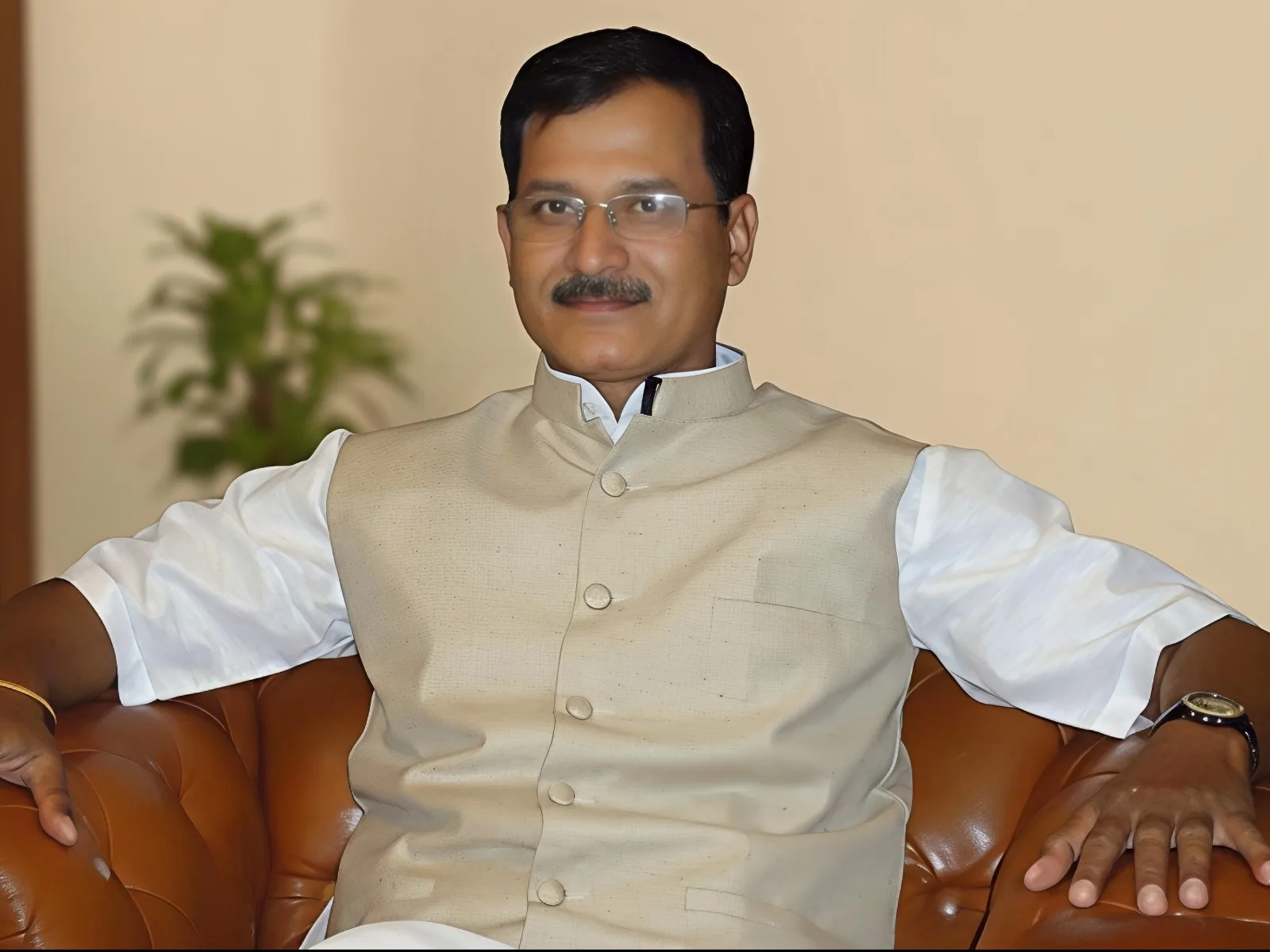
There’s a moment most people miss.
It doesn’t happen when life is loud or when everything is going your way. It happens quietly—often after something has already fallen apart. A plan. An identity. A version of yourself you were certain would define your life.
Sudarshan Singh knows that moment well.
At 16, he was on track to pass out of the Defence. Everything was aligned. Until, just before the finish line, circumstances changed—and he left the training. No warning. No neat explanation. Just a sudden, jarring stop.
For most people, that’s where the story would splinter.
But here’s what makes this story different.
He didn’t chase redemption. He chose not to rush to prove anything. Instead, something quieter began to take shape—an idea that would go on to define everything he did after:
Slow down. Stay patient. Start small. And never let your ego speak louder than your purpose.
That idea would take him from the Indian Air Force to high-stakes missions, from asking for a cup of coffee instead of a job… to quietly building world records that most people would call impossible.
But none of that is the real story.
What you’re about to read isn’t about achievements. It’s about a way of thinking—a way of living—that turns setbacks into clarity, pressure into calm, and ordinary days into something far more meaningful.
By the end of this, you won’t just know what Sudarshan Singh did.
You’ll understand how to think when life doesn’t go the way you planned—and why that might be the best thing that ever happens to you.
The First Fracture
At 16, you don’t expect life to derail.
You expect momentum. You expect clarity. You expect that if you’ve done everything right, the path ahead will unfold exactly as planned.
For Sudarshan Singh, that path led straight into the Defence. He was young, driven, and exactly where he was supposed to be. Until he wasn’t.
Just before passing out, an unexpected turn of events changed everything. He, along with two others, left the training. No ceremony. No closure. Just a question that lingered longer than the moment itself:
Why did this happen?
That question didn’t leave him.
Not immediately. Not even after he moved on.
At that age, he admits, the mind doesn’t always sit with uncertainty. You move forward because you have to. You distract yourself with what’s next. But somewhere beneath the surface, something begins to shift.
Not frustration. Not bitterness.
Curiosity.
If life doesn’t go the way you planned… then what?
That question became the first quiet turning point.
Instead of trying to force his way back into the same story, he chose a different approach—one that would define the rest of his life. He stopped chasing what was lost and started asking a better question:
What else is possible?
That question led him to the Indian Air Force. But more importantly, it led him inward—towards a mindset that wasn’t built on certainty, but on adaptability.
Because when your first plan breaks early, you learn something most people don’t:
Life isn’t something you control.
It’s something you learn to work with.
And if you’re patient enough… it might take you somewhere you never thought to look.
Rebuilding Identity in Silence
The Indian Air Force didn’t just give Sudarshan Singh a career.
It gave him a new way to disappear.
Not in the way you might think. Not by stepping back—but by stepping away from the need to be seen.
Because the world he entered wasn’t one where identity was worn on his sleeve. It was a place where what you did mattered far more than who you said you were.
He moved into the technical branch, completed two engineering degrees, and eventually became part of specialised missions—operations that didn’t follow a schedule, didn’t offer predictability, and certainly didn’t come with recognition.
Flight missions could happen at 2 a.m. Or in the middle of the day. Or not at all—until suddenly, they did.
The stakes were real. The pressure constant. And the margin for error? Almost negligible.
But here’s what’s interesting.
In a world like that, most people either harden… or they break.
He did something else.
He softened his ego.
“If someone says you’re a fool,” he shared, “you accept it. Because that’s their capacity to think. It doesn’t make you a fool.”
That’s not a survival tactic. That’s a philosophy.
And it didn’t come from books. It came from understanding something most people spend years resisting:
Ego is noise. Clarity lives underneath it.
So instead of trying to assert himself, he chose to lower himself. Not in ability—but in posture. In presence.
He learned to live quietly. To not disclose who he was. To let his work exist without announcement.
And in that silence, something powerful took shape.
Perspective.
He often describes it through a simple image:
When a storm comes, the tree that stands rigid is the one that breaks. The one that bends survives—and once the storm passes, it rises again, unchanged at its core.
That became his way of moving through life.
Bend when you must. Stand when it matters.
But never let your identity be so rigid that it shatters under pressure.
Because once you learn how to move like that—quietly, patiently, without ego—you stop reacting to life.
And start understanding it.
The Philosophy Forms
Most people learn lessons when life slows down.
Sudarshan Singh learned his in motion—between missions, under pressure, inside a life where there was no time to pause and reflect in the traditional sense.
And yet, that’s exactly what he did.
Not by stepping away from life, but by going deeper into it.
He began to notice something most people overlook: it’s not the big decisions that shape your life—it’s the small ones you repeat every day.
So he stopped thinking big.
Not because he lacked ambition, but because he understood something sharper:
Big outcomes are built on small, completed actions.
“Do small things,” he says. “Don’t think of doing something very big.”
At first, it sounds counterintuitive.
You’re told to dream big. Think big. Aim big.
But what happens when you do that without control?
You scatter your focus. You start ten things. You finish none.
He chose the opposite.
One task. Full attention. Complete it.
Then move on.
It’s a deceptively simple way to live—but it demands something most people struggle with:
Discipline of attention.
Because when ten things are pulling at you, choosing one feels uncomfortable. It feels like you’re ignoring opportunities. Falling behind. Missing out.
But he saw it differently.
When you focus deeply on one thing, something shifts. Ideas begin to flow. Solutions appear. Momentum builds naturally.
Not because you forced it—but because you stayed with it long enough.
And underneath all of this sat the foundation of everything he believed:
Patience.
Not passive waiting. Not tolerance.
Active patience.
The kind that lets you think clearly before reacting. The kind that gives you space to see multiple ways out of a problem. The kind that stops your mind from getting “bugged up” by small disturbances.
Because once your mind is calm, you begin to see differently.
He would go further—down to the fundamentals.
If you want to understand something, don’t start at the top. Go to the root. Learn from the ground level. From the last person in the system.
Climb back up from there.
Only then do you earn what he calls an “eagle’s eye view”—the ability to see not just the problem, but all the ways it could be solved.
And that changes everything.
Because now, life isn’t a series of obstacles.
It’s a series of situations.
And situations don’t have one answer. They shift. They evolve. They respond to how you approach them.
Which brings him back—again and again—to the same quiet truth:
If you can stay patient… If you can stay grounded… If you can focus on what’s in front of you…
You don’t just solve problems.
You outgrow them.
Reinvention After the Uniform
Leaving a life of structure sounds freeing—until you actually do it.
For 30 years, Sudarshan Singh lived inside a system that defined everything: your role, your rhythm, your purpose. And then, with 13 years still left in service, he chose to step away.
No roadmap. No guaranteed next step.
Just a decision.
Most people, at that point, look for continuity. Something that preserves their status. Their identity. Something that says, “I was this… and I still matter.”
He did the opposite.
He walked into the Delhi Golf Club—not with a pitch, not with expectations—but with a request so simple it almost sounds like a story you’d dismiss as fiction.
He asked for a cup of coffee.
That’s it.
No positioning. No credentials leading the conversation. Just a conversation.
The secretary, understandably surprised, asked him why he was there. And when the moment came—when most people would reach for authority—he chose humility instead.
He handed over his resume and said something few people are willing to say after a lifetime of achievement:
“I would love to work under you.”
Not beside. Not above.
Under.
That one decision reveals more than any achievement that follows.
Because reinvention isn’t about carrying your past forward.
It’s about being willing to start again—without letting your ego negotiate the terms.
He spent three and a half years at DGC. Learning. Observing. Resetting.
Then came the next chapter—Ahmedabad.
At Kalhaar Blues and Greens Golf Club, he stepped into a leadership role as General Manager and stayed for over a decade. And this time, the results spoke loudly—even though he didn’t.
Within the very first year, he got the golf course registered for the World Golf Awards. What followed wasn’t luck—it was consistency.
Five consecutive years. Best Golf Course in India.
But even that isn’t the most important part.
Because while others would settle into success, he was asking a different question:
How will people remember me here?
Not for the title.
Not for the awards.
But for something… different.
And that question would lead him into a series of challenges that didn’t just test limits—
They quietly redefined them.
Doing the Impossible, Quietly
At some point, doing your job well stops being enough.
You begin to ask a different question: What else can be done here that no one is even attempting?
For Sudarshan Singh, that question didn’t come with noise or ambition. It came with curiosity.
And then, action.
It started with something that sounded unreasonable the moment he said it out loud.
A golf record.
Not just any record—but one that required playing 180 holes in a single stretch. No breaks. No shortcuts. Just endurance, focus, and a level of mental resilience most people wouldn’t even attempt.
The response he got was predictable:
“That’s not possible.”
But he wasn’t trying to convince them with words.
He spent three months preparing them. Mentally. Physically. Patiently.
And then they did it.
Limca Book of Records. Then again. And again.
But this is where the story shifts.
Because the next challenge wasn’t just difficult—it was risky.
He set his sights on a larger goal: a Guinness World Record. The existing benchmark stood at 260 holes in a day. His plan?
And to make it even more improbable, he redesigned the game itself—compressing a round of golf, typically played in four and a half hours, into just 40 minutes.
It sounded unrealistic.
Even reckless.
And then came the complication no one could ignore.
One of the two players he was training was in the last stage of cancer.
Doctors warned him. Advised against it. Asked him to reconsider.
He didn’t.
Not out of defiance—but out of belief.
He took responsibility. Signed the consent. And moved forward.
Six rounds in, the player’s body began to give way. Severe cramps. Physical breakdown. The kind of moment where most healthy people would stop.
He chose not to.
He drove the cart himself. Asked the player to hold his hand before each shot. Stayed with him—calm, steady, present.
Three holes later, something shifted.
The cramps were gone.
And they kept going.
Round after round. Hour after hour.
Until they crossed a number that once sounded impossible.
360 holes. A Guinness World Record.
No celebration. No noise.
Just another quiet confirmation of something he had always believed:
Limits are rarely physical. They’re perceptual.
And once you change how someone thinks—about pain, about effort, about possibility—you don’t just help them perform better.
You help them see differently.
He carried that same thinking into other challenges too. Motivating individuals from modest backgrounds. Setting targets that seemed unreasonable. Watching them rise to meet it—not because they were pushed, but because they were guided to believe.
That’s the difference.
He wasn’t chasing records.
He was reshaping what people thought they were capable of.
And he did it the same way he approached everything else:
Without ego. Without noise. Without needing to be seen.
It’s All in the Mind
If you strip away the achievements, the records, the roles—what you’re left with is something far simpler.
A way of thinking.
Sudarshan Singh doesn’t see the world the way most people do. Not because his life was easier—but because somewhere along the way, he realised that perception quietly controls everything.
“90% of people,” he says, “are living in their perception.”
And that’s where things begin to go wrong.
Because when you live inside your perception, you stop questioning it. You assume you’re right. You defend your thinking. You resist correction—not loudly, but subtly.
You don’t even notice it happening.
And over time, that becomes your limitation.
Not your circumstances. Not your opportunities.
Your thinking.
He noticed something else too—something even harder to accept.
Most people don’t lack solutions.
They lack acceptance.
If someone points out a flaw, a mistake, a better way—you resist it. Not because it’s wrong, but because it challenges how you see yourself.
And that’s where growth quietly stops.
Which is why, for him, everything circles back to one principle:
Patience.
Not just patience with situations—but patience with yourself.
The kind that allows you to pause before reacting. The kind that gives you space to listen—even when it’s uncomfortable. The kind that lets you question your own thinking without feeling threatened.
Because once you develop that kind of patience, something shifts.
You stop seeing problems as fixed.
You start seeing them as fluid.
A situation doesn’t have one solution—it has many. And which one you see depends entirely on how calm, how clear, and how open your mind is in that moment.
That’s why two people can face the same situation and walk away with completely different outcomes.
One reacts.
The other reflects.
One resists.
The other adapts.
And over time, that difference compounds.
Not dramatically. Quietly.
Until one life feels heavy… and the other feels light.
For him, the answer was never to control the world outside.
It was to understand the world inside.
Because once you do that—once you realise that your mind is shaping your reality in ways you didn’t notice before—
You stop asking, “Why is this happening to me?”
And you start asking a better question:
“How am I choosing to see this?”
Living One Day at a Time
Some philosophies sound good in theory.
This one changes how you wake up in the morning.
For most of his life, Sudarshan Singh was already operating at a level most people would consider extraordinary—high-pressure missions, leadership roles, world records. And yet, four years ago, something shifted again.
Not externally.
Internally.
He stopped trying to live a long life.
And started living a single day.
Not metaphorically. Literally.
“Today is all I have,” he says.
That one shift changes everything.
Because when you truly believe that today is all you’re guaranteed, your priorities rearrange themselves without effort.
You stop postponing joy. You stop carrying yesterday. You stop negotiating with tomorrow.
You become present.
Not in a vague, philosophical way—but in a practical, almost tangible way.
He wakes up and thanks God for the day. Not out of routine, but out of awareness. This day didn’t have to happen—but it did.
So now the question becomes:
What will you do with it?
For him, the answer is simple.
Make it count.
Wear your best clothes. Eat what you enjoy. Spend time with your family. Speak to your friends. Share what you know with someone who might need it.
Not someday.
Today.
Because when you compress your life into a single day, something unexpected happens:
You stop living casually.
Every interaction becomes intentional. Every moment carries weight—not pressure, but presence.
And at the end of the day, there’s a quiet ritual.
Gratitude.
Not for achievements. Not for milestones.
Just for the day itself.
And then you let it go.
No overthinking. No replaying mistakes. No carrying forward what doesn’t belong to tomorrow.
You close the day like a chapter.
And when the next one begins, you start again.
Fresh.
At 61, he still works 16 to 18 hours a day. Not out of compulsion—but out of engagement.
Because when you stop stretching life across years and start living it in days, you don’t slow down.
You come alive.
What It Means to Be Human
After everything he’s done… After the discipline, the reinvention, the records, the philosophy—
Sudarshan Singh arrives at a question most people don’t stop long enough to ask:
What does it actually mean to be a human being?
Not in a poetic sense.
In a real, grounded, almost uncomfortable sense.
He breaks it down in a way that feels simple—but stays with you longer than expected.
“Human,” he says, comes from humus—soil. The most basic form. The origin. And “being”… is existence. The soul.
Put them together, and what do you get?
A body from the earth. A presence that gives it meaning.
A human being.
It’s a quiet idea—but it reframes everything.
Because if that’s true, then identity isn’t your title. It’s not your past. It’s not even your achievements.
It’s how you exist.
And suddenly, all the pieces of his life begin to connect.
Why he never held onto labels. Why he didn’t introduce himself by rank. Why he preferred to be seen simply as “Mr. Sudarshan Singh.”
Why he could walk into a room and ask for a cup of coffee instead of a position.
Because when you understand that your identity isn’t something to prove—it’s something to live—
You stop performing.
You start being.
And that changes how you move through the world.
You don’t need to showcase who you are. You don’t need validation to confirm your worth. You don’t need noise to feel significant.
You just need alignment.
Between what you think… What you do… And who you are when no one is watching.
That, for him, is the real measure of a life.
Not how loudly it’s lived.
But how deeply.
The Quiet Power of a Different Life
If you look at Sudarshan Singh’s life from a distance, it’s easy to focus on the highlights.
The Air Force. The missions. The records. The reinvention.
But if you look closer, something else becomes clear.
None of those define him.
What defines him is far quieter—and far more accessible.
Patience. Humility. Focus. The ability to let go. The discipline to live fully… just for today.
And maybe that’s why his story stays with you.
Because it doesn’t ask you to become someone extraordinary.
It asks something much harder:
To strip away the noise. To question how you think. To let go of who you’re trying to be… And start paying attention to how you’re actually living.
There’s a moment at the beginning of this story—when everything didn’t go according to plan.
It felt like a setback.
But now, looking back, it feels like something else.
A redirection.
Because sometimes, the life you thought you wanted has to fall apart…
So you can discover the one that was quietly waiting for you all along.
Author's Note
Sudarshan Singh's story shows what real credibility looks like: the willingness to restart without ego, the discipline to focus on what's in front of you rather than what you lost, and the courage to live each day as if it's the only one you're guaranteed. That approach cost him the comfort of certainty, the safety of status, and the luxury of long-term plans — but it gave him something most people spend their entire lives searching for: the ability to be fully present in a life that keeps moving. In a world that rewards noise, his life is a quiet reminder that credibility isn't built through what you announce — it's revealed in how you show up when no one is watching.
By Ugesh Sarcar