Wisdom Bank — Nik Shetty: When the Line Goes Flat
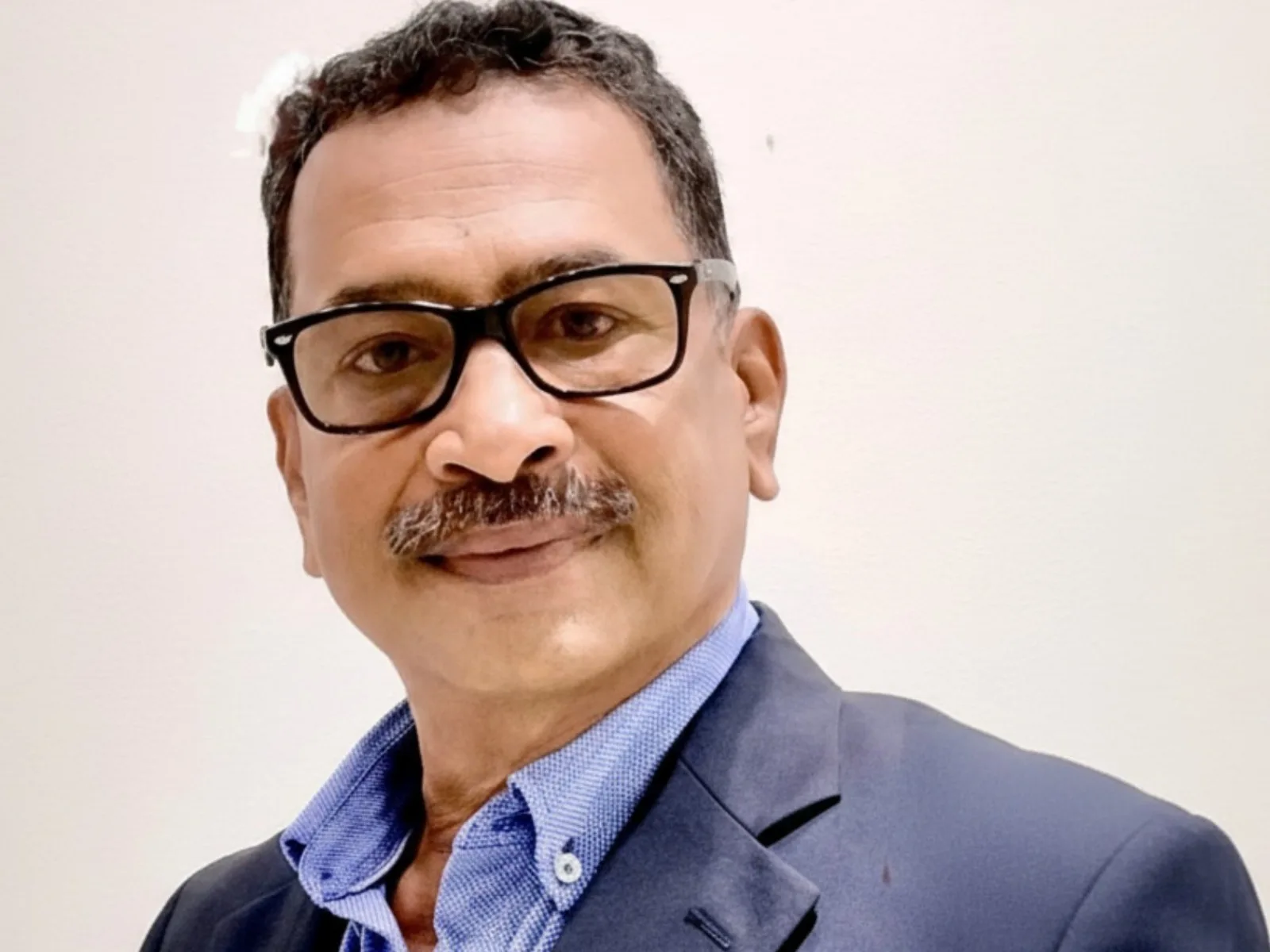
There was a year in Nik Shetty's life when the world shrank to the size of a room.
Not metaphorically. Physically.
A broken leg left him bedridden in Aruba, far from home, with no real support system. The kind of situation where even the smallest human functions become negotiations. He couldn't walk. Couldn't step outside. At times, couldn't even make it to the toilet. So he adapted—quietly, painfully—using what he had. An empty five-litre cola bottle beside the bed. Surviving one day at a time.
Most people would call that rock bottom.
Nik doesn't.
He calls it one of the most beautiful years of his life.
That statement doesn't make sense at first. It shouldn't. Because we are wired to see hardship as something to escape, not something to sit inside and understand. But for Nik, that year did something most success stories conveniently skip—it slowed everything down enough for him to see his life clearly. To question it. To rebuild it from the inside out.
And here's where his story starts to shift.
Because this wasn't the first time life had cornered him. And it wouldn't be the last.
From losing his father at seven... to growing up feeling overlooked in a crowded household... to working through exhaustion just to stay afloat... to rebuilding his life across countries, relationships, and identities—Nik's journey doesn't follow a straight line.
In fact, he would argue it shouldn't.
Because according to him, a straight line means something very different.
And if you stay with his story long enough, you'll understand exactly what he means.
A Childhood Without a Safety Net
Long before Aruba. Before the uniforms, the recognition, the titles—there was a small village in Mangalore, and a boy who learned very early that life doesn't wait for you to be ready.
Nik was seven when his father passed away.
It wasn't just a loss—it was a fracture. The kind that quietly reshapes everything that comes after. His younger brother was born just days later, his mother was left devastated, and the family—though large and joint—couldn't quite fill the gap in the way a child needs.
In big families, it's easy to assume no one falls through the cracks.
But sometimes, that's exactly where a child learns to live.
Nik describes those years not with bitterness, but with clarity. He felt neglected. Not deliberately abandoned, but unseen enough to realise early on: if something was going to change, it would have to come from him.
There's a specific image that stays with you.
A young boy walking to school without chappals.
Coming back, not to rest, but to work in the paddy fields.
No drama. No complaint. Just a rhythm of survival.
That kind of upbringing does something subtle but permanent—it strips away entitlement before it can even form. It replaces it with something else. A quiet, almost stubborn independence. The kind that doesn't announce itself, but shows up later when life gets hard—and refuses to let you fold.
And yet, even in those conditions, something else was taking root.
Not ambition, at least not in the way we usually define it.
But a feeling.
A quiet, persistent thought: "I want to do something different with my life."
The problem was—there was no roadmap. No support system pushing him forward. No one laying out the steps.
Just instinct.
And sometimes, instinct is enough to start moving... but not enough to tell you where you'll land.
That part would come later.
And when it did, it would pull him into a world so different from where he started, it would force him to make one of the first defining choices of his life.
Choosing Hardship Over Comfort
The shift wasn't gradual. It never is.
One day, Nik was a boy from a village—barefoot, working in paddy fields after school. The next, he found himself in Bombay, living with relatives whose life looked nothing like his own.
Everything was different.
The pace. The people. The expectations. The comfort.
It should have felt like an upgrade.
For a while, it did.
But something didn't sit right.
You know that feeling when life suddenly gets easier—but a quiet voice inside you starts asking uncomfortable questions?
Nik heard that voice early.
One day, it got loud enough that he couldn't ignore it anymore.
He remembers breaking down, asking himself a question that most people spend years avoiding: "What am I doing to myself?"
Because he could see where this path led. Comfort now... dependence later. And if life ever pulled that comfort away, he'd be left unprepared.
That realisation hit hard.
Hard enough for him to walk away from it.
Not because he was forced to. But because he chose to.
He went to his relatives and said something that, on the surface, sounds simple—but in reality, takes an unusual kind of clarity:
He didn't want comfort.
He wanted to work. Study. Struggle—on his own terms.
Think about that for a moment.
Most people spend their lives trying to escape hardship. Nik stepped towards it—deliberately.
And life responded the only way it knows how.
It gave him exactly what he asked for.
Work in a canteen. Long days. Short nights. A routine that would break most people within weeks.
Three hours of sleep, if he was lucky.
And still—he kept going.
Not just working. Studying. Training through the NCC naval programme. Preparing himself for something bigger, even if he couldn't fully define what that "something" was yet.
But here's where things get interesting.
Because while Nik was pushing forward, improving, growing—the environment around him began to shift. Not everyone celebrates your progress—especially when it starts to outshine expectations.
It was subtle at first. Then it wasn't.
And once again, Nik found himself at a crossroads.
Stay where it's familiar, but increasingly uncomfortable.
Or step out... again... into uncertainty.
He chose uncertainty.
Again.
Because by now, a pattern was forming.
Every time life tried to hand him stability too early, something inside him pushed back.
Not out of rebellion.
But out of instinct.
And that instinct was about to take him somewhere that would change the trajectory of his life completely.
Rising Through Precision
If you zoomed into Nik's life during this phase, you wouldn't see anything glamorous. No breakthrough moment. No sudden opportunity. No mentor stepping in at the right time. Just repetition. Work. Study. Train. Repeat.
He was working in a canteen, attending college, and simultaneously undergoing naval training through the NCC. Sleep became a luxury—three hours, sometimes less. And yet, there was no sense of burnout in the way we define it today. Because for him, this wasn't overwork. This was direction.
There's a difference.
When you're forced into hardship, it drains you. When you choose it, it builds you.
And Nik had chosen this.
Somewhere in that relentless routine, something began to sharpen. Not just his skills, but his identity. The boy who once felt overlooked in a crowded household was now becoming someone who couldn't be ignored. It started quietly. A selection. An opportunity. A recognition. In his second year itself, he was chosen for the Republic Day Camp in Delhi—a space that represents discipline at the highest level for cadets across the country.
For most, that would be the highlight.
For Nik, it was just the beginning.
Around the same time, he had developed a skill that would unexpectedly change everything—creating miniature models of warships. It wasn't something he was formally taught. It was instinctive. Precise. Detailed. The kind of craft that speaks before you do. And someone noticed. His commander saw his work and asked him to take on a role that didn't even formally exist yet—an instructor. Think about that. A second-year cadet, already stepping into a position of teaching others. That's what happens when preparation meets the smallest opening.
From there, momentum took over.
He became an active ship modelling instructor, working in a role that connected state and central government responsibilities. Year after year, he was called to Delhi—not once, not twice, but ten consecutive times—for the Republic Day Parade. Ten years of standing in spaces where Prime Ministers and Presidents would walk through, inspect, observe. From Indira Gandhi to Narasimha Rao. From Giani Zail Singh to Shankar Dayal Sharma—he was there, part of that ecosystem, receiving them, representing his work.
For ten consecutive years. Presidents, Prime Ministers, Defence Ministers, Chiefs of Armed Forces—he interacted with them all, representing the discipline and craft he'd built from nothing.
For a boy who once walked barefoot to school, that's not just progress.
That's transformation.
But here's the part most people miss.
From the outside, this looks like arrival. Like he's made it. But life doesn't move in straight lines. And just when things begin to stabilise, when recognition starts to feel like a foothold—something shifts.
In Nik's case, it came in the form of opportunity.
The film industry had noticed him.
Leaving Everything Behind
Opportunity rarely arrives looking dangerous. Most of the time, it looks like validation.
His work in creating miniature warships began attracting attention beyond the NCC—advertising agencies, then Bollywood. His models started appearing in films for special-effects work. People from the film industry started reaching out. Directors. Producers. Names that carried weight. It felt like a natural next step. A bigger stage. More visibility. A chance to turn craft into career.
And for a while, it seemed to be working.
He began taking up projects, stepping into a world that thrives on creativity but operates on a completely different set of rules. But the work didn't materialise the way he expected—conversations that went nowhere, projects that stalled, promises that dissolved into politics. If you've ever been in that position, you know the frustration isn't just about the work not happening. It's about realising the system doesn't operate the way you thought it would.
Nik wasn't someone who chased aggressively or demanded outcomes. Not because he didn't care—but because that wasn't his nature. If something didn't work out, he would move on. Quietly.
But even patience has a threshold.
Around him, others were navigating the same struggle—aspiring filmmakers, creators trying to find their footing. They shared ideas, ambitions, and eventually, a decision: If this system isn't working... step outside it. Leave. Not just metaphorically—but physically. Go somewhere new. Somewhere less crowded. Somewhere they could build without the weight of politics and hierarchy pressing down on them.
It sounds bold. Almost romantic.
Start fresh in a new country. Rebuild everything.
And so, they did.
Nik left India and landed in Aruba—an island far removed from everything familiar. No safety net. No guarantees. Just possibility.
For a brief moment, it must have felt like the reset he needed.
A clean slate.
But life has a way of testing you right at the point where you think you've escaped the hardest part.
Within two to three months of arriving, Nik met with a serious accident.
A broken leg.
And just like that, everything stopped.
Collapse and Stillness
When the body breaks, life forces you to stop. Not slow down. Not reconsider. Stop.
For Nik, that stop came suddenly. A few months into a new country, a new beginning, a new attempt at rebuilding—he met with an accident that left him with a broken leg. And just like that, everything he had set in motion... froze. No work. No movement. No independence.
What followed wasn't a few difficult weeks.
It was a year.
A full year of being confined to a bed.
There's a detail here that's hard to ignore—not because it's dramatic, but because it's real. He couldn't even get up to use the toilet. He had to keep an empty bottle beside him just to get through the day. Strip everything away, and that's what life looked like. No titles. No identity. No distractions. Just time.
And most people, in that situation, would count the days in frustration. Measure the loss. Replay what went wrong.
Nik didn't.
Or at least—not for long.
Because somewhere in that stillness, something unexpected began to happen. The same mind that had been constantly occupied—with work, survival, ambition—was suddenly left with nothing to hold on to. And when that happens, it turns inward.
That's where his shift began.
He describes that year not as suffering, but as transformation. A period where he started experiencing something he couldn't fully explain—conversations, dreams, a sense of connection to something beyond the physical world. You don't have to interpret that spiritually to understand its impact.
What matters is this:
He stopped seeing himself as a victim of circumstance.
And started seeing meaning in it.
That shift changes everything.
Because when you believe there is meaning—even in pain—you stop asking "Why is this happening to me?" and start asking "What is this trying to show me?"
And while he was going through this internal transformation, the external world continued to behave exactly as it often does in moments of crisis. People disappeared. The same partners and associates who were part of the plan... left. Took what they could. Moved on. He was left alone. Physically immobile. Financially unstable. Emotionally isolated.
If there was ever a moment where life had stripped him down to nothing—
This was it.
And yet, when he looks back, he doesn't describe it with resentment.
He calls it "a beautiful year."
That's not optimism.
That's perspective earned the hard way.
Because that year didn't just test his endurance.
It rewired how he understood struggle itself.
And once that changes, you don't come out the same person.
You come out... harder to break.
But life wasn't done testing him yet.
Not even close.
Rebuilding, Losing, Rebuilding Again
If that year was meant to break him, it didn't. It changed him—but it didn't finish him.
Because when Nik got back on his feet, he did what he had always done. He started again.
And for a while, life seemed to respond differently this time.
He rebuilt. Found stability. Stepped into roles that carried responsibility and recognition. At one point, he was working as a General Manager for Tommy Hilfiger—a role he'd been offered twice and declined once out of loyalty to a previous employer. On the surface, this looked like the version of life people wait for. Structured. Respected. Stable.
But if his story teaches you anything, it's this:
Stability, for him, never stayed long enough to become permanent.
Because just as things began to settle, they shifted again. He walked away from that role. Not because he had a better plan waiting. But because something wasn't aligning. And when you leave certainty without clarity, life doesn't cushion the fall. It exposes you to it.
What followed was a slow unravelling.
Tension at home began to build. When income becomes uncertain, relationships often carry the weight of that stress. Conversations change. Expectations rise. Small disagreements stretch into something heavier. Nik found himself in the middle of that shift. Trying to rebuild externally, while things internally were becoming fragile.
Financial strain set in.
Not gradually—but deeply enough that survival itself became a question. The kind of situation that chips away not just at your resources—but at your sense of self. Because when you've known stability... losing it feels different. It's not just about what you don't have. It's about what you once did.
And somewhere in the middle of all this, another layer was unfolding.
Distance grew. Not just physically, but emotionally. The strain that had built over time. The quiet reality that some things don't always find their way back. There's no dramatic language here. No blame. Just acceptance. The kind that comes when you've fought long enough to know that not every battle is meant to be won in the way you expected.
And yet, even in this phase—arguably one of the most unstable periods of his life—something else happened.
Not a breakthrough.
A call.
A friend from Canada reached out. A simple question: "Where are you? What are you doing?" And sometimes, that's all it takes. One conversation to shift direction again.
Within a short span, Nik was on a flight. Another country. Another reset. This time, stepping into a role as a Chief Administrative Officer at a dental university. A fresh start—not built on certainty, but on willingness.
If you look at his life from the outside, it might seem unstable.
Too many changes. Too many disruptions. Too many restarts.
But if you look closer, a different pattern emerges.
He never stayed down.
Not once.
Every fall was followed by movement.
Not perfect. Not planned. But forward.
And through all of this—through loss, recovery, success, collapse, and rebuilding—there was one thing that never really left him.
Not ambition.
Not security.
Belief.
Faith as a Framework, Not an Escape
It's easy to misunderstand faith. From the outside, it can look like a crutch. A way to explain away hardship. A soft landing for hard realities.
But that's not how Nik lives it.
For him, faith isn't about asking for an easier life.
It's about asking for the strength to endure a harder one.
There's a line he repeats—a kind of personal contract with his God. Not polished. Not rehearsed. Just raw and direct: "Give me more problems... but give me the strength to face them. And give me the solution as well."
Sit with that for a moment.
Most people pray for problems to disappear.
He asks for the capacity to carry them.
That shift alone explains a lot about how he's been able to move through life the way he has. Because when you stop negotiating with difficulty—when you stop saying "this shouldn't be happening"—you free up energy to deal with what is happening.
Nik's belief is deeply rooted in Lord Shiva, a figure he describes not as gentle, but as intense. A force that tests you to your limits—not to break you, but to reveal what you're made of. And that belief has shaped the way he interprets everything.
Loss isn't random.
Setbacks aren't meaningless.
Even suffering carries intent.
You don't have to agree with that to understand its power. Because this way of thinking does something very practical—it removes the feeling of chaos. It replaces it with structure. With the idea that there is a reason, even if you don't fully understand it yet.
And when you believe that, something interesting happens.
Problems stop feeling like dead ends.
They start feeling like transitions.
Nik describes this almost like a curiosity. When something goes wrong, his first instinct isn't panic—it's anticipation. "What is coming next... good?" That doesn't mean he ignores reality. He's dealt with financial strain. Relationship breakdowns. Health scares. Uncertainty that most people would find overwhelming. But instead of letting those experiences close him off, they've made his belief more... settled. Less reactive. More grounded.
There's also an openness in how he approaches faith that stands out. He doesn't confine it. He speaks about going to temples, but also to churches and mosques. Not out of confusion—but out of acceptance. For him, belief isn't about boundaries. It's about connection.
And over time, that connection has become less about asking—and more about acknowledging.
These days, his practice is simple.
He wakes up. Lights a lamp. Rings a bell. And says thank you.
Not because everything is perfect.
But because, in his words, when he looks at his life—and then looks at the world—his problems don't feel as heavy as they once did.
That's not denial.
That's perspective.
And it's this perspective that ties everything together.
The childhood. The struggle. The rise. The collapse. The rebuilding.
None of it exists in isolation.
It's all part of a pattern he's learned to trust.
A pattern he explains with a metaphor so simple, you almost miss how accurate it is.
The ECG Philosophy
If you walked into a hospital room and looked at a heart monitor, you'd see a line dancing across the screen. Up. Down. Up. Down. Messy. Uneven. Unpredictable. But alive.
Now imagine that same line suddenly going straight.
No movement. No variation. No noise.
That's when the doctors step in.
A straight line doesn't mean peace.
It means the end.
Nik doesn't explain his life through achievements or failures. He explains it through that line. "Life should be like an ECG... up and down. If it becomes a straight line, you're gone."
It sounds simple.
But when you place that idea over everything he's lived through, it changes how you see his story—and maybe your own.
The childhood loss. The years of feeling unseen. The grind that pushed him forward. The recognition that followed. The accident. The stillness. The rebuilding. The collapse. The rebuilding again.
None of it was a deviation.
It was the pattern.
And that's the part most people struggle to accept.
We want stability to be permanent. We want progress to be linear. We want life to settle once we've "earned it." But Nik's life challenges that assumption completely. Because every time his life started to look like that straight line—comfortable, predictable, stable—something disrupted it. Not to punish him. But to keep the line moving. To keep him... alive to it.
That doesn't make the pain easier.
But it does make it meaningful.
Because if the lows are part of the same line as the highs, then they're not interruptions. They're essential.
And once you see life that way, something shifts.
You stop chasing a flat line.
You stop expecting things to stay still.
You stop being surprised when life dips again.
Instead, you start reading the rhythm. Understanding that every fall carries the possibility of rise—and every rise carries the certainty of change.
Nik doesn't claim to have everything figured out. He's still in the middle of it. Still rebuilding. Still navigating relationships, responsibilities, uncertainties. Still hoping his sons find their way. Still wanting to do something meaningful before his time runs out.
But he's no longer asking for a different kind of life.
He's accepted the one he has.
Fully.
And maybe that's the real takeaway here.
Not that life gets easier. Not that things magically work out. But that the goal was never to flatten the line. It was to stay on it. To keep moving with it. To endure the dips without losing yourself—and to meet the highs without clinging to them.
Because the moment everything becomes perfectly still...
You already know what that means.
The Question That Lingers
Somewhere, right now, your life probably doesn't feel steady.
Something is off.
A plan isn't working. A relationship feels strained. A future you imagined isn't unfolding the way you expected.
And if you're honest, a part of you is waiting for things to finally "settle."
For the line to straighten out.
Nik would tell you—that's not the goal.
The movement you're experiencing... the discomfort, the uncertainty, the rise and fall—that's not a sign that something is wrong.
It's a sign that you're in it.
That you're alive to it.
That your story is still unfolding.
So maybe the question isn't:
"Why is my life so unstable?"
Maybe it's:
"Am I learning how to read my own rhythm?"
Because once you do, you stop fearing the dips.
You start understanding them.
And when that happens, something powerful takes place.
You don't just survive your life.
You begin to move with it.
Exactly as it is.
Because the goal was never to stop the line from breaking.
It was to keep it moving—long enough to know you were alive.
Author's Note
Nik Shetty's story is about credibility earned through repeated falls—and the refusal to stop getting back up. At 63, separated, living alone in Canada, working a job that didn't exist six months ago, he still wakes every morning, lights a lamp, and thanks Lord Shiva. Not for rescue. For the strength to endure what rescue hasn't come for. That's what real credibility looks like: choosing to keep the line moving, even when every reason exists to let it flatline.
By Ugesh Sarcar