Wisdom Bank — Sheriar Khan: The Man Who Built His Own Foundation
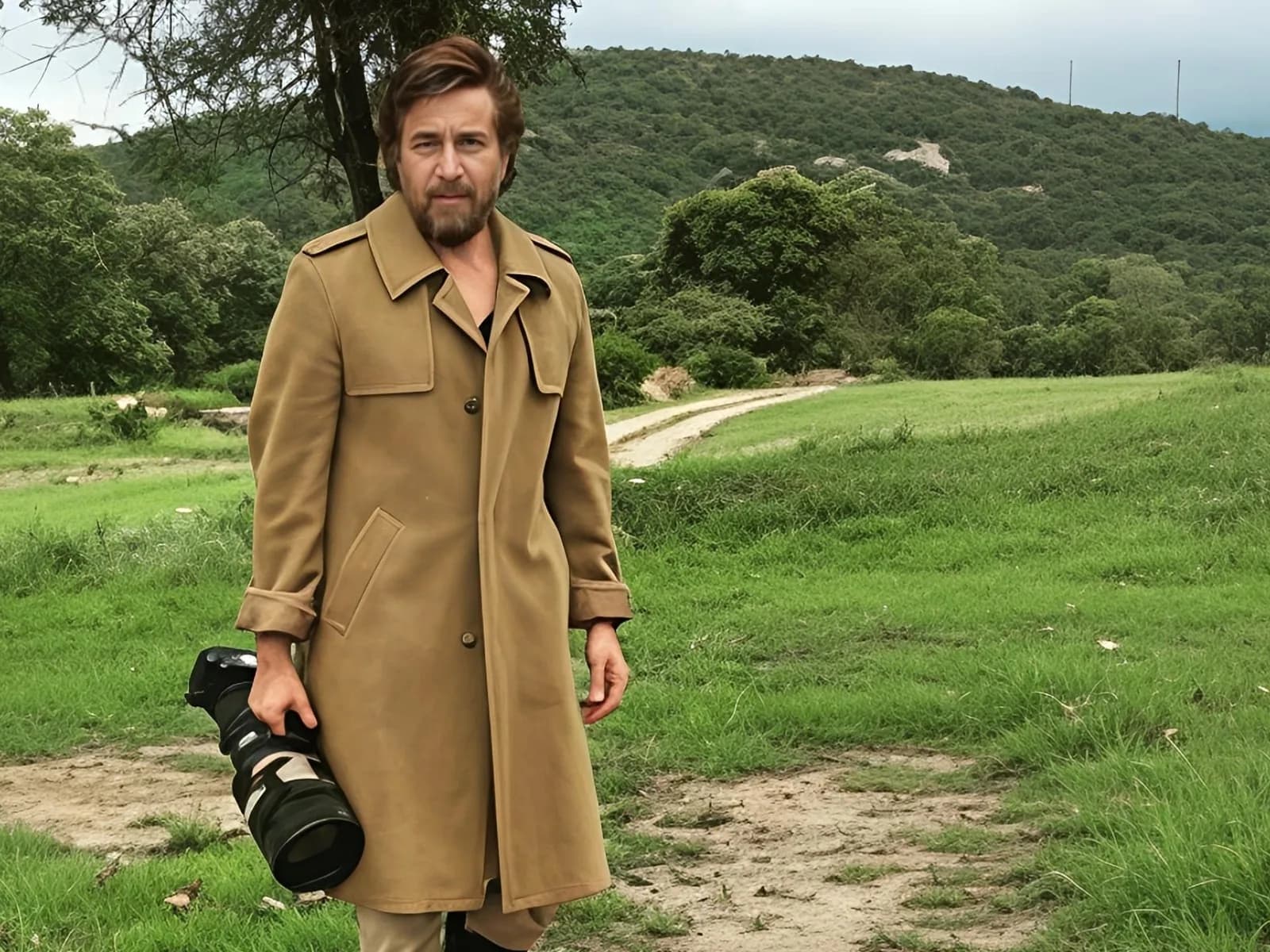
Some men live by principles they never questioned.
They were installed early. Spoken in the house. Reinforced by those around them. And because they arrived first, they felt true.
Sheriar Khan began with those same inherited certainties.
But somewhere between childhood and middle age, he stopped accepting them and started building them.
Not as rebellion. Not as reform.
As honesty.
When he was a boy and something fractured in his family, he made a vow to himself. And then he kept it. When the faith he was born into felt hollow, he didn't leave. He deconstructed it, studied it from zero, and rebuilt a version he could live inside with integrity. When his wife passed away suddenly, the surrender he found wasn't borrowed from ritual or community. It was something he'd constructed alone.
Most people inherit their convictions.
Sheriar Khan builds his.
And the difference isn't philosophical.
It's in what remains standing when everything else falls away.
The Vow
He was young when something in his family broke.
He doesn't elaborate. He doesn't need to. What matters is what it created in him.
A vow.
I will never cheat my wife.
Not as moral posturing. Not as religious duty. Just something that settled inside him, quietly, like sediment after a flood.
And he carried it forward.
Through his entire marriage. Through temptation, through difficulty, through the everyday erosion that wears down most promises.
He kept it.
That vow was the first brick in a foundation he would spend his life building. The first time he chose his own integrity over what was merely permitted.
And that distinction, between allowed and honest, became the fault line his entire spiritual life would form along.
"I Am Not a Born Muslim"
"I am not a born Muslim," he says. "I am a man who has found God in the later stage of my life."
Most people inherit their faith the way they inherit their last name. It's there before memory. It's reinforced by ritual. It's the water they swim in.
Sheriar inherited Islam.
But at some point, he stopped swimming and started studying the water.
He went back to the Quran and read it from zero. Not as a Muslim defending his faith. Not as a scholar performing expertise. As a human being asking: What is actually being said here?
He ignored the sermons. He ignored the standard interpretations. He read the lives of the prophets not as myth but as case studies in alignment. He contemporised himself with their times and asked what work they were actually doing.
And slowly, scripture by scripture, he built his own relationship with what he calls "the Lord of the Universe."
Not the God of his family.
Not the God of tradition.
A God he could surrender to with honesty.
"I saw dim light," he says. "I went after the light and saw a brighter light, and still the journey is going on."
That's the difference between inheritance and construction.
Inheritance is complete on arrival. You receive it whole.
Construction never finishes. It's a lifetime of reading, unlearning, testing, rebuilding. It's uncomfortable. It's lonely. But it's yours.
And when life breaks you, what's yours is what holds.
The Surrender No Ritual Could Prepare Him For
His wife passed away recently.
Suddenly. Without warning.
And in that moment, every borrowed comfort dissolved.
There was no congregation to fall back on. No community of shared grief. No ritual that could absorb the weight.
Just him. And the God he'd spent decades building a relationship with.
"I completely gave myself, surrendered to the will of God, as I understand God," he says.
As I understand God.
Not as tradition dictates. Not as others interpret. As he understands.
That's what constructed faith earns you. When everything falls away, you're not left with secondhand answers. You're left with something you built yourself, tested yourself, and can therefore trust.
"I am still to recover," he says quietly.
The honesty is startling. No performance of strength. No claim that faith has made him whole again.
Just the truth: recovery is ongoing.
Most men would dress that vulnerability in certainty. Sheriar doesn't.
Because constructed faith doesn't promise immunity from pain. It promises something harder.
The strength to sit inside the pain without pretending it's something else.
What Wealth Bought Him (And It Wasn't What You Think)
Sheriar is a qualified engineer. His family were landlords. When his father passed away, the wealth became his.
He built complexes. He expanded the estate. He lived, as he puts it, "by my wits, then on my father's money."
But here's what the wealth actually bought him.
Not comfort. Not status.
Space.
"That wealth gave me the power to walk away from situations and people I don't like," he says.
Most people can't afford that. They stay in jobs that corrode them. They maintain relationships that diminish them. Not because they want to, but because leaving costs too much.
Sheriar had the economic freedom to leave.
And that freedom created something rarer than comfort: time to think.
"That leisure gave me time to read, contemplate, understand even this esoteric and eclectic literature which few people would get access to."
He read philosophy. He read theology. He read across traditions, not as a tourist but as someone searching for convergence.
"I read those things with an open mind. Not as a Muslim or a Hindu or anything. Just as a human being."
Most inherited wealth buys indulgence.
Sheriar's bought him the rarest luxury: the space to construct his own convictions without external pressure.
Not because he was lazy. But because he had the margin to be honest.
The Sum of Beautiful People
"I am actually an addition of all those beautiful people I have met in life," he says. "From some I have learned, from some I have unlearned."
That's not modesty. It's precision.
Sheriar is osmotic. He absorbs. He processes. He integrates. And then he decides what stays and what doesn't.
Not all inherited wisdom survives the test.
Some things he learned from scripture. Some from his parents. Some from strangers. And some he had to discard entirely because they didn't align with the foundation he was building.
"I think I am still to die as a student of life," he says.
That's the stance of someone who understands the size of the universe. Someone who's read enough philosophy to know how little anyone can actually claim to know.
"The moment you say you have become a professor or accomplished man, that is when your fall begins," he says. "Into intellectual chaos."
So he stays open. He keeps reading. He keeps questioning.
Not because he's uncertain.
Because certainty, the borrowed kind, is what he's spent his life rejecting.
What Would You Have to Give Up to Believe Something That's Yours?
There's a question Sheriar's life raises, quietly but persistently.
What would it cost you to believe something that's actually yours?
Not inherited. Not borrowed. Not accepted because it was there first.
Yours.
For Sheriar, it cost the comfort of certainty. The ease of community. The solace of ready-made answers.
When his wife passed, he couldn't lean on ritual. When he questions standard interpretations, he can't lean on consensus.
He's alone with what he's built.
And that loneliness isn't incidental. It's structural.
Constructed faith requires you to give up the one thing inherited faith provides automatically: belonging.
You can't outsource the hard questions. You can't hide in tradition. You can't blame the framework when it doesn't hold.
Because you built it.
So here's the uncomfortable part.
Most of us know, somewhere beneath the surface, that we're living inside beliefs we never tested. Political. Spiritual. Moral. We inherited them. We defend them. But we never actually chose them.
And we don't examine them because examination is expensive.
It costs relationships. It costs certainty. It costs the comfort of being right without having to prove it.
Sheriar paid that cost.
Not once, in a dramatic conversion moment. But daily. For decades.
And what he got in return wasn't peace. It wasn't answers.
It was integrity.
The kind that holds when nothing else does.
So the question isn't whether you should deconstruct your inherited beliefs.
The question is: can you live with yourself if you don't?
Author's Note
Sheriar Khan's story shows what real credibility looks like: a man who made a vow to himself as a boy and kept it for his entire marriage, who didn't perform devotion but rebuilt his faith line by line until it could hold his doubt, whose surrender after his wife's passing wasn't theatrical but private and ongoing. The beliefs that actually matter are the ones you had to build yourself.
By Ugesh Sarcar