Wisdom Bank - Shashi Sinha: The Man Who Refused to Lose Himself
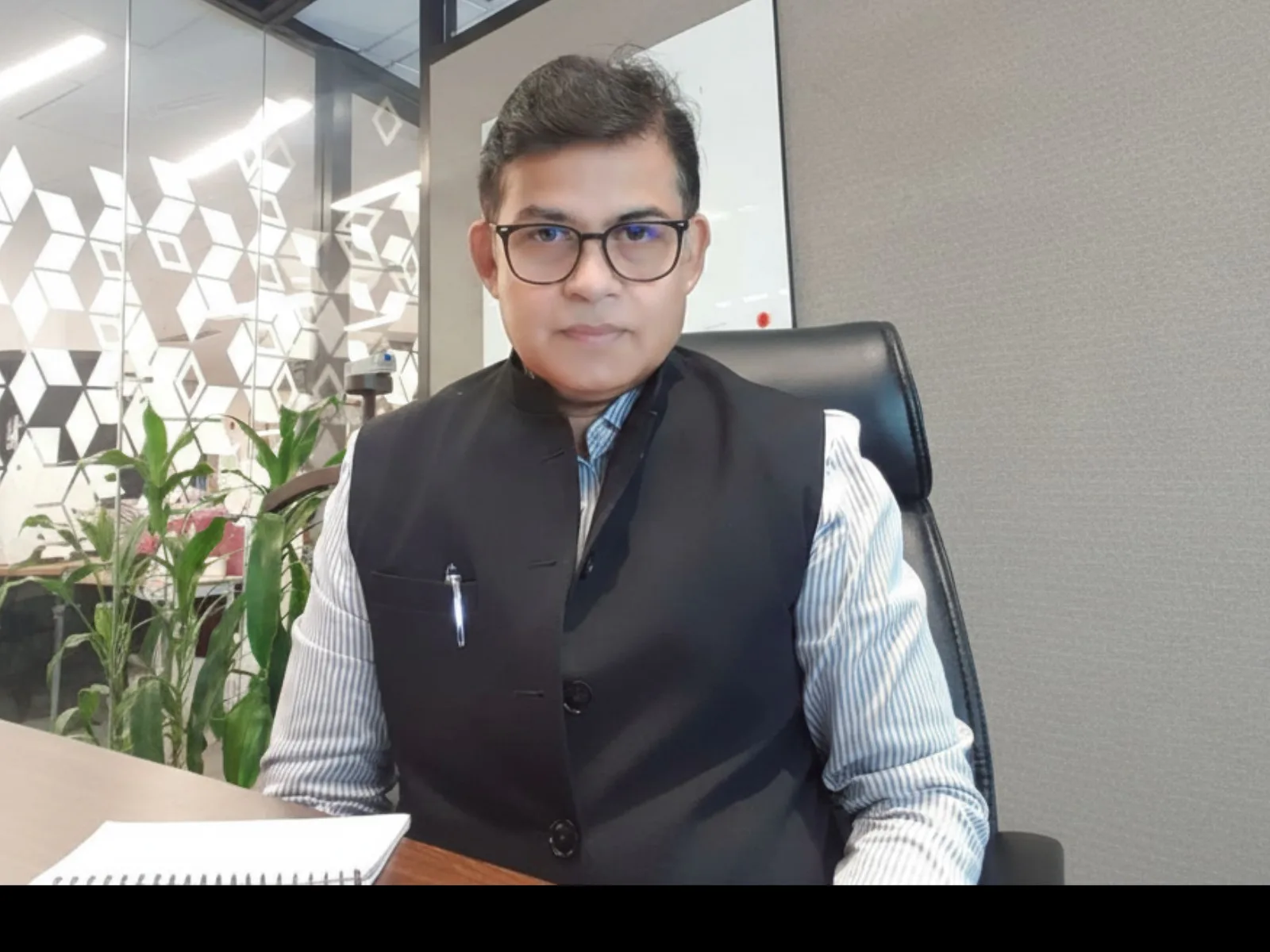
There was a time when Shashi Sinha lived in Mumbai as a paying guest, carrying little more than ambition, loneliness and a stubborn belief that hard work would eventually make room for him.
He did not arrive with influence trailing behind him. No powerful relatives. No corporate lineage. No invisible hand quietly arranging opportunities before he entered the room. Just a young man from Patna trying to survive in a city that rarely pauses long enough to notice who is struggling and who is simply learning how not to drown.
Years later, he would become one of India’s most respected media and advertising leaders, eventually serving as CEO in the airport media business after decades in advertising sales and media management. But that is not the most interesting part of his story.
The interesting part is what happened in all the years nobody was watching.
Because somewhere between rejection, delayed promotions, heartbreak, financial limitations and relentless work, Shashi Sinha built something rarer than a career.
He built an internal compass.
And once you understand how that compass was formed, you begin to understand why people like him endure.
The First Lesson Came With Fear
As a child in Patna, Sinha once stole money.
Like many children, the temptation was small and immediate — a shortcut towards something he wanted but was not allowed to have. He was caught. His father punished him severely.
For many people, that memory would remain about fear.
For him, it became about freedom.
Years later, reflecting on those moments, he realised something unexpected: dishonesty was exhausting. Lies demanded maintenance. You had to remember what you said, build new stories to protect old ones, and carry the anxiety of being discovered. Honesty simplified life. It removed clutter from the mind.
That discovery stayed with him not because someone preached morality to him, but because he experienced what integrity actually felt like in real life. It felt lighter. Cleaner. More peaceful.
That understanding would later shape almost every major decision he made.
A Hidden Novel Changed The Way He Saw Integrity
Some lessons arrive through your own mistakes. Others arrive through watching someone else quietly drift away from their potential.
Growing up, Sinha often heard stories about his uncle from his mother. While everyone believed his uncle was studying, he would secretly hide Hindi novels inside his textbooks and read them instead.
It seemed harmless at first.
But over time, the consequences became visible.
His uncle never fully applied himself academically and eventually settled into a modest job secured through family circumstance after the death of Sinha’s grandfather.
The story stayed with him because it revealed something uncomfortable: integrity is not performance. It is alignment. What you pretend to do and what you actually do eventually become your life.
That idea struck him deeply.
He decided early that he did not want to work hard for appearances, praise or parental approval. Whatever effort he gave would be for himself.
Even today, he says he studies, learns and works not for validation, but because he feels responsible to his own standards.
And perhaps that is what makes his philosophy feel so grounded. It is not moral theatre. It is deeply practical.
Mumbai Did Not Welcome Him Softly
When Sinha moved from Patna to Mumbai, the emotional shift was brutal.
Delhi was the more familiar destination for many families from Bihar. Mumbai felt harsher, farther away, emotionally colder. He arrived without influence, without financial comfort and without the safety net most people quietly rely on when things fall apart.
He remembers the loneliness vividly.
There were days when the city felt completely indifferent to his existence. He had little money, lived modestly and understood very quickly that nobody was coming to rescue him.
And then, somewhere during those early years, a boss told him something that permanently altered the way he viewed work:
“Hard work has no substitute.”
Simple words. But for someone with no fallback plan, they became doctrine.
The instruction was equally simple: do whatever job is given to you diligently, honestly and passionately — and eventually nobody will be able to stop you.
More than three decades later, Sinha still carries that belief with almost frightening clarity. He openly acknowledges that people recognised his effort and helped him along the way. But he is equally clear that nobody carried him.
His work did.
The High Of The Bullseye
Long before airport media and executive leadership, Sinha began his career at The Times of India in advertising and newspaper marketing.
And this is where something fascinating happens in his story.
For all his discipline and philosophical restraint, another side of him suddenly appears: the competitor.
A campaign would be discussed for days. Clients negotiated endlessly. Meetings stretched on. Targets loomed. Then finally, one morning, the newspaper would arrive carrying the advertisement they had fought so hard to secure.
And the rush hit.
He describes it as a “very, very high adrenaline” moment — the kind of emotional surge that only people in deeply competitive environments truly understand. After days of uncertainty, seeing that ad printed in the newspaper felt like hitting the bullseye after missing repeatedly in the dark.
That victory mattered.
Not because it brought applause, but because it briefly validated the struggle.
Then came the setbacks again. Rejections. Failed pitches. Frustrating negotiations. Months where effort produced almost nothing tangible.
And yet those brief moments of victory were enough to restore his energy for the next stretch of the run.
Even today, after decades in leadership, he speaks about those highs with unmistakable excitement.
Because beneath the calmness was always someone who loved the chase.
“I Am My Biggest Possession”
At some point during the interview, Sinha says something so quietly profound that it changes the emotional direction of the entire conversation.
“I am my biggest possession.”
Not his designation. Not his salary. Not even his reputation.
Himself.
That belief was forged during some of the hardest periods of his life.
There was the loneliness of Mumbai. The disappointment of not clearing the civil services examination. A relationship that ended painfully. Three years without promotion because a superior was unhappy with him.
Three years.
In today’s culture, where people are conditioned to expect immediate movement and constant validation, that kind of professional silence can feel emotionally suffocating.
But instead of becoming bitter, Sinha built boundaries inside himself.
His internal dialogue remained remarkably consistent:
Do not lose yourself.
Because once you lose your discipline, your emotional balance and your self-respect, everything else begins collapsing with it.
That idea became his north star. Not revenge. Not entitlement. Not self-pity. Just preservation of the self.
And this is where his story becomes larger than career success.
Because the same emotional architecture that helped him survive corporate indifference later became the foundation on which an entire younger generation in his family would lean.
The Addiction That Never Left Him
Sinha’s obsession with learning began surprisingly early.
By the sixth or seventh standard, reading had already become more than academics. By ninth standard, curiosity had become a permanent habit.
But what shaped him most was not knowledge itself.
It was the discovery that knowledge expands your awareness of ignorance.
The more he read, the more he realised how much remained unknown.
That humility kept him intellectually alive.
Even after more than 32 years in the industry, he still speaks like a student rather than an expert. He references philosophy, classical thinkers and the endless nature of learning with genuine excitement, not performance.
And in an era where certainty is often mistaken for intelligence, that mindset feels unusually refreshing.
The Part Of His Story That Says The Most About Him
You might assume the emotional climax of this story is becoming a CEO.
It is not.
The most revealing part comes much later, almost casually, when he begins talking about his family.
Sinha comes from a large family — two brothers, four sisters, nieces, nephews, daughters and sons spread across generations. Altogether, ten children grew up under his influence in some form.
And he took that responsibility personally.
The same discipline that helped him survive loneliness and rejection now softened into stewardship. The same man who taught himself not to collapse under disappointment became someone others could depend on completely.
He pushed the children to study hard. Challenged entitlement. Paid fees. Bought books. Offered guidance constantly, even when they resisted him or misunderstood his intentions.
There is something deeply moving about the way he describes it. Not dramatic. Not self-congratulatory. Almost instinctive.
“Chota mama will do it.”
And he did.
Today, those children are spread across respected institutions and companies — pursuing careers in science, technology, analytics and global business.
But the larger point is not professional success.
It is inheritance.
Not inheritance of money. Inheritance of mindset.
Hope, Practised Daily
Near the end of the conversation, Sinha says something deceptively simple:
Things may be bad, but they will become good.
In lesser hands, that sentence could sound naïve.
Coming from him, it sounds earned.
Because his optimism is not built on fantasy. It is built on survival.
He speaks with gratitude about caring for his ill father despite financial limitations. They could not afford elite hospitals, but they did whatever they could with dignity and commitment. He speaks about God not with grand declarations, but with quiet appreciation for being guided through difficult periods.
And perhaps that is the final lesson hidden inside his story.
Real resilience is rarely loud.
It does not always announce itself through dramatic victories or inspirational speeches. Sometimes it looks like continuing after rejection, remaining honest when shortcuts exist, working hard without applause, helping others before yourself, and protecting your inner self through every season of life.
People often search for extraordinary success stories because they want proof that greatness exists.
But stories like Shashi Sinha’s offer something more useful.
Proof that character compounds.
Slowly. Quietly. Over decades.
Until one day, without spectacle, a young man who arrived in Mumbai alone becomes the kind of person an entire generation can lean on.
By Ugesh Sarcar