Wisdom Bank - Nitin Patel: The Wealth That Became Bigger When It Was Shared
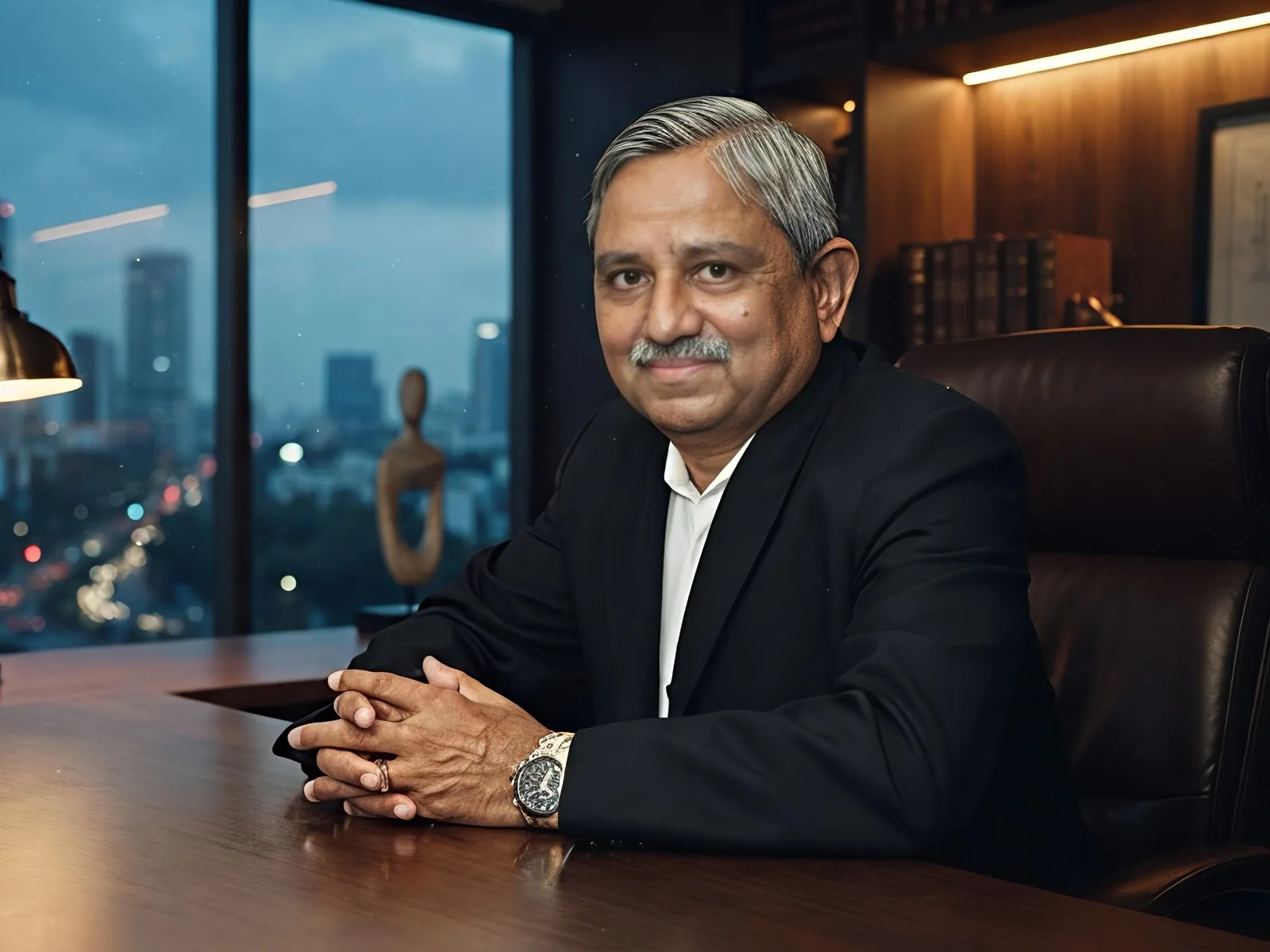
A few shares of Tata Steel once made a young Nitin Patel feel like an owner.
Not a significant owner, of course. The shares were only a tiny fraction of the company. But when Nitin was in the 12th standard, that distinction did not matter much to him.
A friend of his father was teaching him about the stock market. Buy shares in a company, he explained, and you become a partner in that company.
Nitin bought a few.
He remembers feeling proud that he owned a piece of Tata Steel.
Then his father bought shares of Hindustan Lever.
That made the idea even more personal. When products from the company came into the family home, Nitin began looking at them differently. This was, in some small way, their company too. He even began feeling that the household should be buying products from a company he partly owned.
It was a small moment, but something had taken root.
Before Nitin learned about wealth creation, he had learned about ownership.
And perhaps that is where his story really begins.
Because over the next several decades, his understanding of ownership would change. It would move from owning a tiny piece of a company to creating financial freedom for himself, and eventually to helping other people build wealth of their own.
But first, there was a question that stayed with him.
The Question That Stayed With Him
As Nitin moved through engineering college and into working life, his interest in investing never really went away.
He worked in the engineering field and later spent four years in Dubai. But wherever he was working, his mind kept returning to the same idea.
If working could earn you money, could investing help you multiply it?
It was not simply a desire to earn more. Nitin was fascinated by the possibility of making money work over time.
In 1999, he left Dubai and returned to India.
His passion was still investments. But his next chapter did not begin in a stock market office.
It began with medical equipment.
One of his wife's cousins suggested that, since Nitin was free, he could sell medical equipment, including incubators for newborn babies.
There was one obvious problem.
Nitin had never sold a product in his life.
He knew how to make friends with people. He knew how to build relationships. But persuading a doctor to buy a machine was something entirely different.
Then, at a medical conference, he met a salesman who was an established distributor.
Nitin explained that he had never sold anything before and asked how he was supposed to sell these machines to doctors.
The salesman gave him an answer that took only one question.
If you were the doctor, which machine would you buy?
That question changed the way Nitin looked at selling.
The Question Behind the Sale
Nitin had expensive machines and affordable machines.
A young doctor might have less money available and need an affordable machine. A senior doctor might have the means to choose a premium machine.
So why sell everyone the same thing?
The answer was simple: understand the person standing in front of you.
Put yourself in their position.
Then offer them what makes sense for them.
It was a lesson in sales, but it also reflected something much deeper in Nitin's philosophy.
He believes that when you are dealing with another person's money, you should first think about what you would want if you were in their position.
His principle is simple: the other person should gain first. If they benefit, you will eventually benefit too.
That idea would become particularly important once he moved fully into investments.
Because there is a big difference between selling someone a product and being entrusted with their money.
In the first case, you are trying to make a sale.
In the second, you are dealing with someone's hopes, plans and future.
Nitin's instinct was to begin from the other side of the table.
What would I want if this were my money?
It was a principle he had learned long before he had a name for it.
He eventually handed the medical equipment company over to his co-brother.
His detour into sales was over.
But the lesson stayed.
And his attention returned to the subject that had fascinated him since he was a teenager.
Investing.
When Financial Freedom Became the Goal
By 1999, Nitin had reached a ₹1 crore investment target for his family portfolio.
That milestone gave him the confidence to make another decision.
He wanted financial freedom early in life.
He called his venture FinFreedom33 LLP, reflecting his decision to pursue that freedom at 33.
But what happened next is what makes the story more interesting.
Financial freedom did not make Nitin turn inward.
It gave him something to teach.
He began teaching family members and friends how they could work towards financial freedom at an early age. He was investing his own money in mutual funds and began seeing that these products could also be useful to people around him.
So he started explaining.
Then he kept explaining.
And gradually, without one dramatic moment when everything changed, the teaching became a business.
There is something instructive in that progression.
Sometimes a career does not begin with a grand plan.
You become interested in something. You learn it deeply. People around you begin asking questions. You help them. More people ask. Eventually, the thing you once did simply because you knew how to do it becomes the thing people come to you for.
That is what happened with Nitin.
But there was another shift taking place.
His goal was no longer only to become financially free himself.
He wanted to help other people get there too.
He eventually set himself a target: make 100 people crorepatis.
At the time, 100 would have been an ambitious number.
It would not stay 100 for long.
The Man Behind the Principles
There is one person who appears quietly behind almost every principle Nitin talks about.
His father.
When Nitin explains where his values came from, he does not point to a business book or a financial expert.
He points home.
His father worked in a government job and, according to Nitin, was always an honest and non-corrupt man. The family did not have great financial means. There were five brothers and sisters, and there were times when Nitin was conscious of the difference between his family and families who had more.
He remembers seeing children arrive at school in cars.
There was a natural feeling that came with that.
They had more.
But that feeling did not turn into resentment or a willingness to compromise.
The answer was simply to work hard and earn.
Nitin says he never saw his father do anything wrong.
That may sound like a simple statement, but its importance becomes clearer when you consider the environment in which the lesson was learned.
His father had a government salary. He had a large family. Money was not unlimited.
Yet Nitin never remembers him abandoning his principles because circumstances were difficult.
His father also had a remarkable habit of helping people.
When they lived in government quarters, he would help neighbours and take part in their programmes. Even now, Nitin says, his father knows practically everyone around him.
And somehow, the same habit found its way into Nitin's own life.
Today, he says almost everyone in his society knows him. When someone new arrives, he tries to make them feel like a family member.
When asked when this became part of him, Nitin cannot really say.
He simply watched his father doing it.
Some lessons are explained.
Others are absorbed.
The Family That Became Part of the Journey
The values Nitin inherited from his father did not stop with him.
They became part of the family he built with his wife, Shilpa.
Shilpa, now 57, has played a significant role in Nitin's journey. While Nitin focused on growing the business, she handled the many responsibilities that kept the family moving. She raised their daughters, supported the growth of the business and managed the care of Nitin's elderly parents.
Nitin describes her as the backbone of his family.
And there is another part of that story he speaks about with pride.
Their daughters, Anjali, 32, and Anishi, 25, completed their education in engineering and postgraduate finance in New York, USA. They have since followed their father's footsteps and joined him in the business, helping him pursue the next set of goals.
It gives the idea of inheritance in Nitin's story another dimension.
The values he absorbed from his father were passed to the next generation, but not simply as words.
They became a way of working.
A way of helping.
A way of building something together.
The story that began with Nitin learning about investing from his father's generation has now become something shared across his own family.
“Sau Dost Banao, Ek Dushman Mat Banao”
Nitin has a simple philosophy about relationships.
“Sau dost banao, ek dushman mat banao.”
Make a hundred friends. Do not make an enemy.
It sounds almost too simple.
But look at the way he describes his life and the principle becomes more meaningful.
For him, relationships are not transactions.
When someone new comes into the neighbourhood, he wants them to feel supported. When he builds a relationship, he wants the other person to benefit from it.
That is the same thinking that sits behind his approach to investing.
Help the other person first.
If the relationship creates value for them, you create value for yourself too.
It is a very different starting point from asking, What can I get from this person?
Instead, the question becomes:
What can this relationship do for both of us?
That way of thinking has followed Nitin from his personal relationships into his professional life.
And, like so many things in his story, it appears to have been inherited rather than deliberately designed.
The Quiet Strength of Sthitaprajna
Nitin is now 61.
His father is 88.
And there is one word Nitin uses when he tries to describe his father's state of mind: Sthitaprajna.
It is a word that can be difficult to translate fully, but Nitin uses it to describe his father's remarkable steadiness.
He says he has never seen his father under stress.
Not during his working years.
Not while raising a large family.
Not despite the financial limitations they sometimes experienced.
His father simply continued living according to his principles.
And there is an especially touching detail in the way Nitin describes him.
He says that even now, when he sits with his father, his own mind automatically becomes calm.
Think about that for a moment.
We often think of wealth as something that gives us more.
More money.
More possessions.
More choices.
But Nitin's most powerful example of a rich life is a man whose presence gives his son something that money cannot easily buy.
Peace.
His father's influence also explains why Nitin places such importance on doing the right thing even when there is no obvious reward for it.
For him, principles are not rules you bring out when convenient.
They are supposed to become part of the way you live.
Do not litter.
Respect the laws of the land.
Do not do something that your own conscience tells you is wrong.
In Nitin's words, the essence is simple: keep doing the right karma.
The Temptations That Never Became Habits
Everyone encounters choices that can pull them away from what they originally intended to build.
Nitin says he was fortunate to have a good circle of friends during college and later in life.
But there was something else protecting him from distraction.
He had a clear goal for his money.
When he started earning, he wanted to save and create wealth through investment.
Because that purpose was already there, habits such as smoking and drinking never became part of his life.
The same discipline carried into his financial decisions.
He encountered schemes and products that could potentially become traps, but says he was never caught in one.
There is no claim here that he had discovered some magical method of avoiding every bad financial decision.
The more useful lesson is simpler.
When you know what your money is supposed to do for you, it becomes easier to decide what it should not do.
For Nitin, money had a job.
It was supposed to be invested wisely.
It was supposed to create freedom.
And eventually, it was supposed to help other people create that freedom too.
From 100 People to 450
At some point, Nitin's personal financial journey became a much larger ambition.
He wanted to help 100 people become crorepatis.
The goal was not simply about teaching people how to make more money.
It was about passing on what had worked for him.
He had discovered investing as a teenager. He had spent years learning about it. He had built his own financial portfolio. He had explored mutual funds and eventually decided that allowing professional fund managers and their teams to do the research could be a more practical route than trying to research the entire stock market alone.
His analogy is simple.
You may not know how to fly an aircraft, but you can hire a pilot and a team who know how to do it.
The same thinking shaped his approach to mutual funds.
Learn enough to understand what you are doing.
Then use the right expertise instead of assuming you have to do everything yourself.
As Nitin taught people, the original target of 100 began to look different.
By the end of the period he referred to in the interview, he said nearly 450 people would become crorepatis.
The number is striking.
But the most interesting part is not the size of it.
It is how the idea began.
A young man wanted to understand how to multiply his own money.
Years later, he was trying to help hundreds of other people do the same.
That is what happens when knowledge compounds.
One person learns.
That person teaches another.
That person takes action.
And the result eventually reaches far beyond the person who started the process.
What Makes a Good Life?
After decades of thinking about investments and financial freedom, Nitin's view of a good life is remarkably straightforward.
You need health.
You need wealth.
And you need mental peace.
He does not see them as competing priorities.
If you have wealth but poor health, money cannot give you back everything that health provides.
If you have good health but no financial stability, life brings its own difficulties.
And even if you have both, what is the point if you cannot experience them with peace of mind?
It is a practical definition of success.
Not endless accumulation.
Not money for the sake of money.
Enough health to enjoy life.
Enough wealth to live with security and choice.
And enough mental peace to actually appreciate what you have.
For Nitin, the three belong together.
Perhaps that is why his father's example matters so much.
His father did not have extraordinary wealth.
But he had something Nitin clearly values deeply: steadiness.
He held on to his principles.
He helped people.
He raised a large family without making them feel that life had short-changed them.
And even now, simply sitting beside him brings Nitin peace.
What We Leave Behind
There is a point in every financial journey when the numbers stop being the whole story.
At the beginning, Nitin saw a few shares of Tata Steel and felt the thrill of ownership.
Then he spent years thinking about how money could be multiplied wisely.
He worked in engineering.
He went to Dubai.
He returned to India.
He unexpectedly learned the fundamentals of selling medical equipment by putting himself in a doctor's shoes.
He built his own financial freedom.
He created FinFreedom33 LLP.
And then he started teaching.
Along the way, he built a family that became part of that journey. His wife Shilpa became the backbone of the family while supporting the growth of the business and caring for his elderly parents. His daughters, Anjali and Anishi, completed their education and eventually joined their father's footsteps, helping him pursue the next set of goals.
That final transition may be the most important one.
Because there is a difference between knowing something and making that knowledge useful to someone else.
Nitin chose the latter.
His first target was 100 crorepatis.
The number grew to nearly 450.
And suddenly, the story that began with a few tiny shares looks different.
Those shares once made Nitin feel like an owner.
But ownership was never the end of the journey.
Over time, his understanding of wealth expanded.
Wealth could give you freedom.
It could give you security.
It could give you choices.
But it could also give you the ability to help someone else build those things.
That is a different kind of return.
One that does not appear on a portfolio statement.
One that cannot be measured simply by the size of an investment account.
Because behind every person who becomes financially secure is a family, a future and a set of choices that may now be different.
And perhaps that is why Nitin's story ultimately comes back to the principle he has carried for so long:
Put yourself in the other person's shoes.
It began with a salesman teaching him how to sell a medical machine.
It became a way of thinking about investments.
It shaped the way he approaches relationships.
It reflects what he learned from his father.
And eventually, it became a way of defining success.
A life is not only about what you manage to accumulate.
It is also about what becomes possible for other people because of what you learned, what you shared and how you chose to live.
The boy who once felt proud to own a tiny piece of Tata Steel eventually discovered something much larger.
Sometimes, the greatest wealth you can build is the kind that keeps growing after it leaves your hands.
By Ugesh Sarcar