Wisdom Bank - Dr. Arjun Srivatsa: The Fire That Taught a Neurosurgeon How to Keep Going
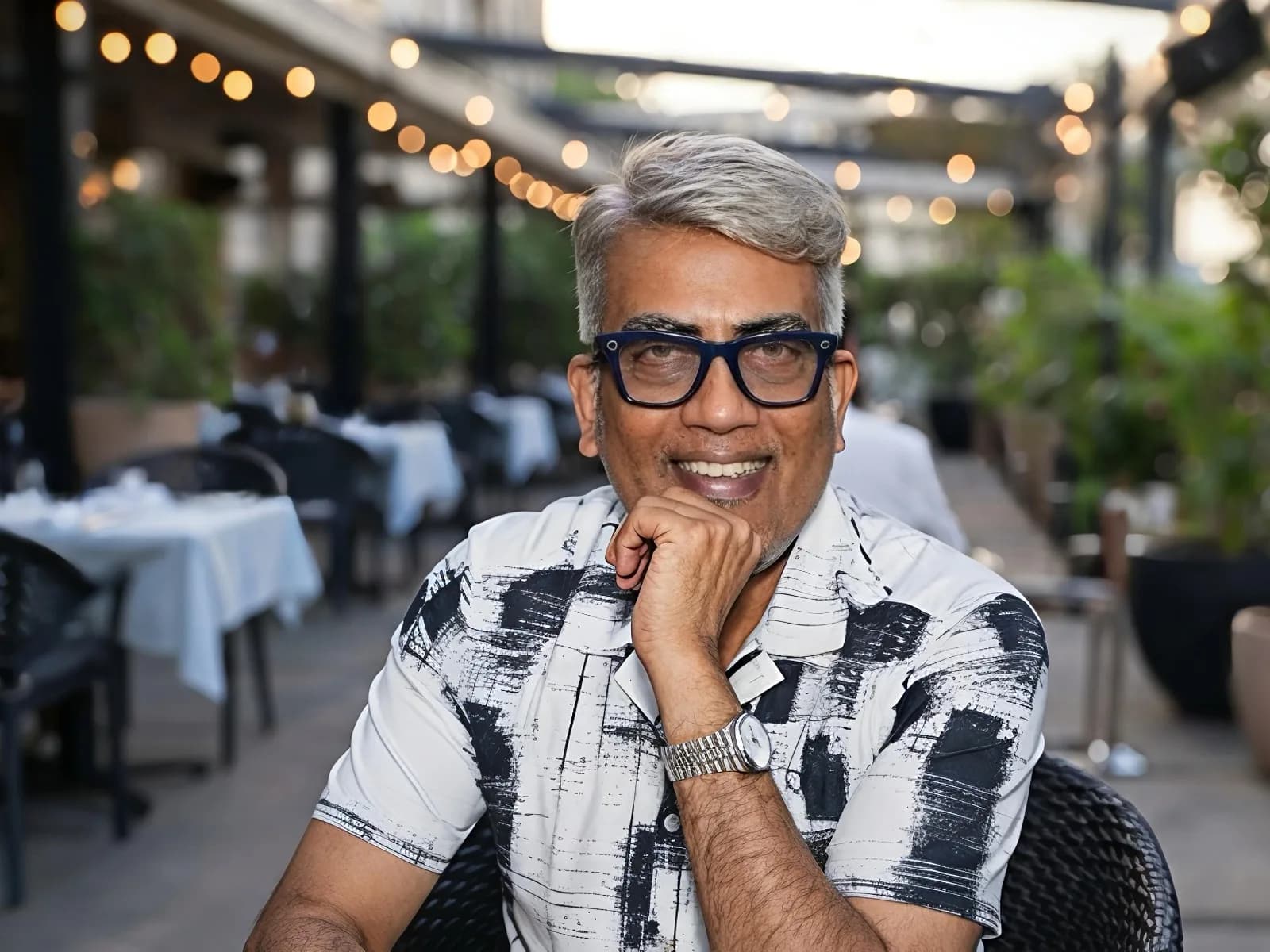
There is a memory from childhood that Dr. Arjun Srivatsa still returns to when life becomes difficult.
He was nine years old, sitting in front of a fire, putting one stick after another into the flames. There were 1,008 of them.
The ghee would feed the fire each time. The flames would rise. He would cry. It was exhausting, he says, one of the most gruelling things he has ever done.
But he kept going.
Today, Dr. Srivatsa is a senior neurosurgeon and spine specialist in Bengaluru, with more than three decades in medicine and over 13,000 surgeries behind him. But the story of how he got there does not really begin with medicine.
It begins with a nine-year-old boy who discovered, perhaps without knowing it, that he could endure more than he thought.
Decades later, through illness, professional setbacks, financial uncertainty and some of the hardest years of his life, that nine-year-old boy remained somewhere in his mind. Whenever things became difficult, he could return to that moment and ask himself a simple question: if I managed that at nine, can I really not get through this?
For Dr. Srivatsa, the answer has always been the same.
Keep going.
It is a deceptively simple philosophy. But when you look closely at his life, you begin to understand where it came from. His determination was not built in an operating theatre. It began much earlier, at home, watching two parents who showed him what perseverance looked like long before he had a word for it.
Before the Surgeon, There Was a Mother
Dr. Srivatsa speaks about his mother with the kind of detail that tells you she was never simply a parent in the background of his childhood.
She was a working woman at a time when that came with its own set of battles. She worked as a journalist, wrote for publications including Femina and Stardust, wrote books, worked as a counsellor and conducted training programmes. She had her own professional life to build, and she did it while navigating the obstacles that came with being a woman working in those years.
Her sons saw all of it.
There were two boys in the family and no daughter, so, as Dr. Srivatsa puts it with a laugh, they were their mother's daughters too. She shared the details of her life with them. They knew where she was and what she was doing. When she went to interview people, they sometimes went along.
As children, they sat beside her while she interviewed well-known personalities. They saw her work up close rather than hearing about it later.
They even became part of the machinery behind her writing. Dr. Srivatsa remembers indexing her articles, numbering them and recording when they appeared.
It sounds like a small childhood task.
It wasn't.
Without realising it, he was watching a woman build a life through persistence.
He also watched her fight when things became genuinely difficult.
When there were problems surrounding his medical school admission, including rejected paperwork, bureaucracy and pressure for money, she refused to accept that money should change hands to solve the problem. Instead, she fought it in court in Delhi.
Later, when Dr. Srivatsa was in Punjab during the unrest following Indira Gandhi's assassination, his mother again refused to accept that circumstances should decide his future. She fought to have him moved back to Karnataka so he could continue his medical education, taking the matter all the way to the Prime Minister.
That was his education in willpower.
Not a lecture. Not a motivational speech.
A child watching his mother say, in effect, No. We are going to find a way.
His father taught him something too, in a quieter way.
He gave up a promotion so that the family could remain in Bombay, allowing his wife to continue pursuing her career while the children stayed where they were.
Looking back, Dr. Srivatsa believes this is where much of his own determination came from.
You learn a great deal from what people tell you. But sometimes you learn far more from what you see them do.
At Nine, He Already Knew
Some children change their minds every few weeks about what they want to become.
Dr. Srivatsa was nine when he decided he wanted to be a neurosurgeon.
There was no dramatic story behind it. No family tragedy involving a brain tumour. No defining event he can point to today.
He simply decided.
“I want to be a brain surgeon.”
That was enough.
The remarkable part was not that a nine-year-old had such an ambitious dream. It was that the dream survived the years that followed.
When he went to the United States for pre-medical studies, a counsellor warned him that becoming a neurosurgeon would be extremely difficult. The training system was competitive, and there was no guarantee that he would reach the end of the path he had imagined.
For someone else, that warning might have been a reason to reconsider.
For him, it was a reason to leave.
He returned to India.
After medical school, he joined the army and encountered another obstacle. Becoming a neurosurgeon through that route would take longer. Again, he made a decision that was consistent with the one he had made as a child.
He left.
The clarity was extraordinary. The path could change, but the destination could not.
That same instinct showed up in another part of his life.
He had knock-knees and flat feet, which made running difficult. So, as a teenager, he decided he would run anyway.
At 16, he was running 14 kilometres every morning.
The detail is almost amusing until you understand what it represents.
He wasn't simply training his body. He was reinforcing an idea about himself: if something matters to me, difficulty alone is not a reason to stop.
That idea would be tested far more severely later.
And life would give him opportunities to find out just how much he could endure.
Then Life Became Personal
At 21, the stakes changed.
Dr. Srivatsa was diagnosed with kidney disease after doctors investigated his high blood pressure. He was told that one day he would need a transplant.
This was 1991.
He was young, in the middle of building the career he had wanted since childhood, and suddenly there was another future sitting quietly in the room with him. One in which his own body might eventually require major surgery.
But he carried on.
He completed his neurosurgical training and moved back to Bangalore. He took his medication, followed his nephrologist's advice and continued with his life.
For years, that was enough.
Then the disease began to progress.
His brother had already made his position clear.
“I'll give you a kidney. Don't worry.”
Whenever you need it, he told him, I will give you one.
There is something quietly powerful about that promise. Dr. Srivatsa was trying to build a life around saving other people's lives, while his brother was making sure he knew that someone was prepared to step in and help save his.
Eventually, the time came.
At the age of 48 years, Dr. Srivatsa underwent the transplant.
The neurosurgeon had become a patient.
And that experience would change something that no textbook could have taught him.
The Doctor on the Other Side of the Door
Doctors spend their professional lives telling patients what needs to happen next.
A diagnosis. A procedure. A recovery plan. Another appointment.
But becoming a patient puts you on the other side of that conversation.
Dr. Srivatsa chose not to hide his transplant from his patients. Patients from India and abroad knew what he was going through.
His response when they thanked him was remarkably simple.
Don't thank me, he would tell them. Pray for me. I am having surgery next month.
The prayers came.
Patients from Iraq, Yemen and India knew. Many sent their blessings.
For Dr. Srivatsa, those prayers became something deeply personal. He speaks about the dua he received from his patients with warmth and humour.
But there was another gift in becoming a patient.
It gave him a clearer understanding of what a person needs when they are frightened and vulnerable.
You need your doctor to be there.
Not merely technically competent, but present. Someone you can trust. Someone whose words make you feel that you are not facing the situation alone.
That understanding became central to the way he treats his own patients.
He tells people something that may sound surprising coming from a surgeon:
“You don't need to get operated by me.”
If you need surgery but you are not comfortable with him, he tells them to find a doctor they trust.
Because, in his view, doubt has no place in a relationship where a patient is placing their body and their future in someone else's hands.
If you have suspicion, anxiety or unanswered questions, he believes you should address them before proceeding. And if the right answer is to choose another doctor, then choose another doctor.
For him, the goal is not to convince someone to have surgery.
It is to help the person make the right decision for themselves.
He learnt that approach from his own teacher, Dr. B. Ramamurthi, whom he describes as another father figure in his life.
What Makes a Good Doctor
Dr. Srivatsa went to Chennai to learn neurosurgery from Dr. B. Ramamurthi, whom he describes as the father of neurosurgery in the country.
Early in his training, Dr. Ramamurthi gave him a lesson that stayed with him.
He told him that he could learn to perform neurosurgery in a matter of months. Becoming a good doctor, however, would take years.
It was a distinction that mattered.
Technical skill can teach you how to perform an operation. It cannot, by itself, teach you how to sit with a frightened patient. It cannot tell you when to reassure someone, when to listen or when to let them walk away.
Dr. Srivatsa says that much of his approach to patients came directly from Dr. Ramamurthi.
Make the patient comfortable.
Because comfort matters to healing.
It explains why he is willing to let a patient walk away if they are not comfortable with him. There is no need to force the relationship. As he puts it, the patient who is meant to come will come.
That philosophy is simple, but it carries an important lesson for anyone facing a major medical decision.
You are allowed to ask questions.
You are allowed to have doubts.
And you are allowed to choose a doctor you trust.
The person holding the scalpel matters. But so does the person who makes you feel safe enough to place your trust in their hands.
The Years Nobody Saw
Success can create a strange illusion.
You see the surgeon at the height of his career and imagine that the road behind him must have been equally smooth.
It wasn't.
Dr. Srivatsa describes 2012 and 2013 as the worst phase of his life. There were professional difficulties, including problems connected to a hospital he had built.
Then, after he had begun to rebuild, COVID arrived.
This time, the problem was larger than any individual decision.
Surgeries stopped. Work disappeared. But the obligations of life did not.
There were EMIs to pay. Children abroad. Financial commitments that continued even when income did not.
For two years, he had to find ways to keep things moving.
He laughs when he remembers some of the improvisation: paying one thing from one source, another from somewhere else, using credit cards, finding whatever jugaad was necessary to get through.
There is something revealing about that laughter.
From the outside, it is easy to imagine that a renowned neurosurgeon must be insulated from the financial fears that ordinary people know.
COVID stripped away that assumption.
When there was no surgery, there was no work. And, as he says bluntly, there was no one in the medical fraternity waiting to take care of a doctor who had fallen on hard times.
So he did what he had done before.
He adapted.
For the next few years, he travelled to Iraq every three months for work, trying to make up for what had been lost.
It wasn't the life he had planned.
But by then, he had learned something important about plans.
You can make them.
You can work towards them.
And then life can rewrite the page.
What matters is what you do next.
What Carries You Through
There is a tendency to talk about resilience as though it means standing completely on your own.
Dr. Srivatsa's story suggests something different.
There were people around him when he needed them.
Friends helped him financially, without questions or judgement. His wife remained quietly supportive through the difficult periods. His brother gave him the kidney he had promised years earlier.
And his patients gave him their prayers.
He does not describe any of this as a grand lesson. He simply remembers the people who showed up.
That matters because resilience is rarely a solitary act.
Sometimes you carry yourself.
Sometimes somebody carries you until you can walk again.
For Dr. Srivatsa, faith is part of that picture too. He believes that God sends people into our lives at the moments we need them.
Perhaps that is why his idea of determination does not sound like blind control.
You can be clear about where you want to go. You can work relentlessly towards it. But you cannot control every turn along the way.
There will be things you cannot prevent.
The question is whether you can keep moving when they arrive.
The Next Stick
Towards the end of the conversation, Dr. Srivatsa returns to something he thinks younger generations could learn from their parents.
Not necessarily to live as their parents did.
To look at what their parents have lived through.
Previous generations experienced enormous changes, he says. They adapted to difficult circumstances and learnt from them. Their experiences are a form of knowledge.
You can take what is useful.
You can leave what is not.
But dismissing an entire generation because “your time is different” means throwing away lessons that may one day become useful to you.
It is fitting that this is where his story comes back to childhood.
Because long before the transplant, the professional setbacks, COVID or the years spent rebuilding his career, there was a nine-year-old boy sitting before a fire.
He did not know what life would eventually ask of him.
He did not know he would become a neurosurgeon. He did not know he would become a patient. He did not know that there would be moments when the career he had built would become uncertain, or that he would have to find ways through financial pressure and professional upheaval.
He only knew that there were 1,008 sticks in front of him.
And he had decided to finish.
That memory stayed.
So when life became difficult later, he could look back at that child and remember something important: he had already done hard things.
He had already discovered that discomfort could be endured.
He had already learnt that the task did not become easier simply because he was tired. The only way through was to keep going.
Perhaps that is the deeper story behind Dr. Srivatsa's life.
Not that determination protects you from hardship.
It doesn't.
Not that success means you have somehow escaped the ordinary fears of illness, money, uncertainty or loss.
It doesn't.
It is that you can be knocked down more than once and still rise.
You can accept help without surrendering your strength.
You can become a patient and emerge with greater empathy for patients.
You can lose your footing and find it again.
And sometimes, when you cannot see the whole road ahead, you only need to remember the next thing you have to do.
For Dr. Srivatsa, perhaps that is still the lesson of the fire.
The flames rise.
You feel the heat.
You wonder how much longer you can keep going.
Then you reach for the next stick.
And put it in the fire.
By Ugesh Sarcar