Wisdom Bank - Tejwinder Singh - How one choice transformed grief into purpose, built one of India's youngest judges, and became a philosophy for life
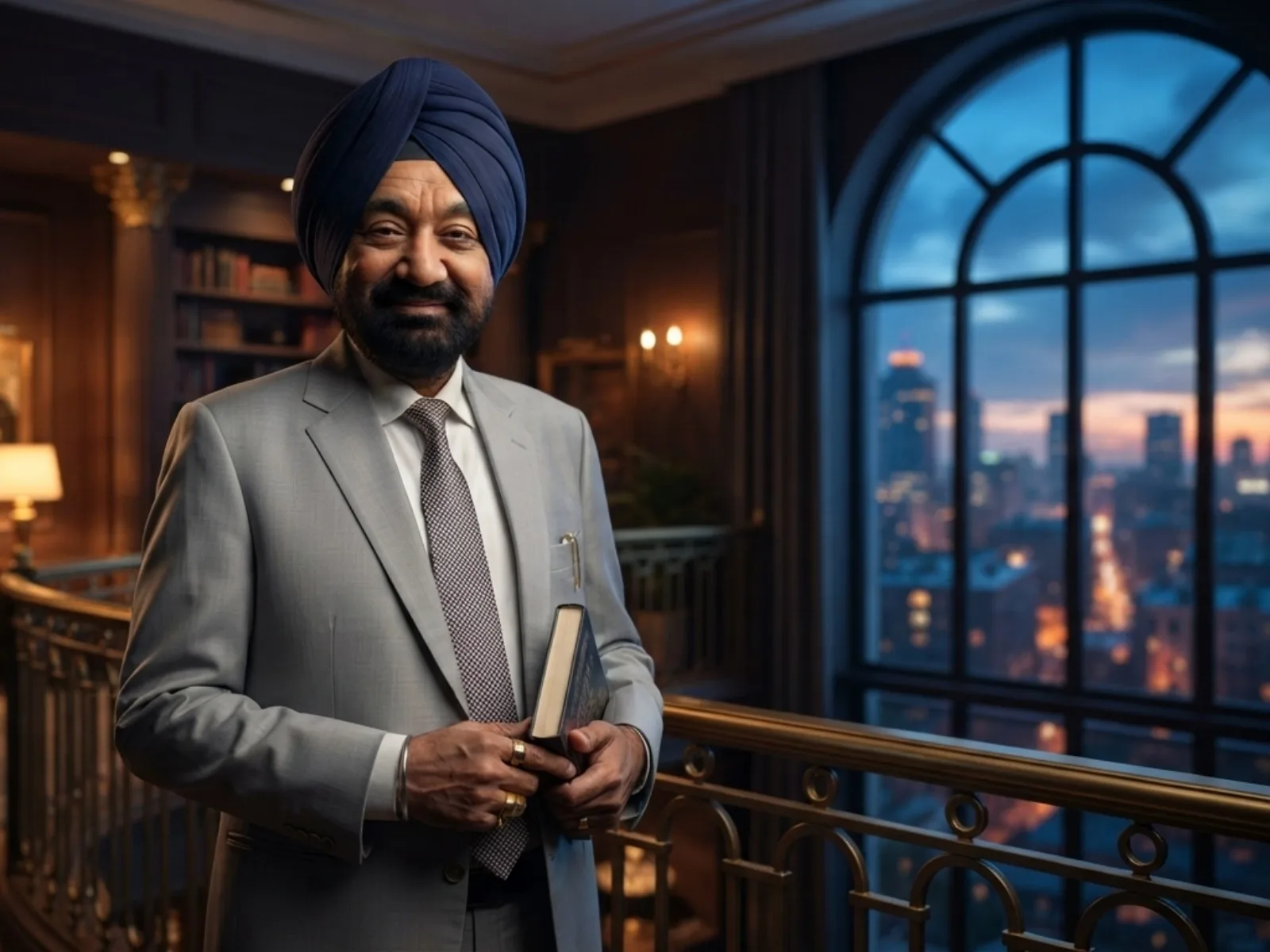
Some doors change your life the moment they close.
At twenty, Tejwinder Singh walked into one such room.
His father had died suddenly. The house that had once echoed with guidance now sat heavy with silence. Outside, life carried on. Friends went to films. Young people his age laughed, celebrated and made plans for the future.
Inside that room, a young man made a decision that would quietly shape the rest of his life.
He would not waste his pain.
Years later, he would recall how he locked himself inside his room and made a promise to himself. Somehow, he would turn this darkest chapter into a positive outcome. It wasn't a grand declaration. There was no audience, no applause and no certainty that it would work.
There was only discipline.
That decision would eventually lead him to clear the Punjab Civil Services (Judicial) examination at just twenty-two, earning him recognition in the Limca Book of Records as the youngest magistrate in the country. A year later, at twenty-three, he joined as a Sub Judge in Ludhiana, the first step in a judicial career that would span more than thirty-four years across Punjab and Chandigarh.
But none of those achievements explain the man.
To understand Tejwinder Singh, you have to begin inside that room.
The First Inheritance
Long before he entered a courtroom, the law had already entered his home.
His father served as a judicial officer in Punjab. Conversations about justice, responsibility and public service were part of everyday life. Looking back, Tejwinder Singh believes that both nature and nurture quietly shape the direction of a person's life. As a child, he found himself drawn to politics and civics while mathematics never truly interested him. Even then, the path ahead was beginning to reveal itself.
His father offered one piece of advice that stayed with him.
If you want to achieve success early in life, prepare for competitive examinations.
Those words took root.
There were no coaching institutes waiting to prepare him. Success depended almost entirely on self-study. He immersed himself in books, often studying for twelve or thirteen hours a day with one clear goal: to succeed on his very first attempt.
Then life intervened.
His father passed away when Tejwinder Singh was only twenty.
The advice remained.
The man who gave it did not.
Many people would have understood if grief had slowed him down.
Instead, it sharpened his resolve.
While others his age spent evenings at films or social gatherings, he spent his behind a closed door with books. Looking back, he never describes those years with self-pity. He simply believes that difficult circumstances reveal what lies within us, and that God helps those who help themselves.
Sometimes the biggest turning points in life happen so quietly that no one notices them.
Until years later.
Twenty-Two
At twenty-two, the years of preparation found their answer.
Tejwinder Singh cleared the Punjab Civil Services (Judicial) examination in his very first attempt. His achievement earned him recognition in the Limca Book of Records as the youngest magistrate in the country.
A year later, at twenty-three, he reported to Ludhiana as a Sub Judge for his first posting, beginning a judicial career that would eventually span more than three decades.
From the outside, it looked like an extraordinary beginning.
Inside the profession, he understood that remarkable success often attracts something besides admiration.
Comparison.
"If a person is at the top," he reflects, "there will always be people wondering why it is him."
He doesn't say this with resentment. He says it as someone who understands human nature.
His response was disarmingly simple.
"My competition is with myself."
It became the principle that guided his career.
He never measured his progress against colleagues, critics or expectations. Every day was simply another opportunity to improve upon the person he had been yesterday.
That quiet philosophy would become even more important once he began presiding over courtrooms.
The Judge Who Refused to Take It Personally
Courtrooms are places where emotions often arrive before reason.
Over thirty-four years on the bench, Tejwinder Singh encountered criminals, anti-social elements, frustrated litigants and people whose anger sometimes spilled into the courtroom itself.
The law gave him authority.
Experience taught him restraint.
Whenever someone disrupted proceedings or behaved disrespectfully, he resisted the temptation to respond emotionally.
Instead, he adopted a mindset that is remarkable in its simplicity.
"I used to look at them like a patient and myself like a doctor."
A doctor does not become offended by a patient's illness.
He tries to understand it.
That became Tejwinder Singh's approach to difficult people.
The court possessed the power to punish contempt. Yet he chose, wherever possible, not to let another person's behaviour dictate his own. He reminded himself that everyone who stood before him carried burdens that were often invisible. Frustration, poor choices and suffering explained many actions, even if they did not excuse them.
That perspective extended far beyond the courtroom.
"If someone has done bad to me," he says, "just ignore it. We are not to take revenge."
Those words carry unusual weight because they were lived, not merely spoken.
His career taught him something many of us spend a lifetime learning.
Not every battle deserves your energy.
Sometimes the greatest strength is refusing to become what hurt you.
When Success Learns to Slow Down
After more than three decades on the bench, retirement arrived.
Many people fear that moment. Titles disappear. Authority fades. The routines that once defined life suddenly stop.
Tejwinder Singh sees it differently.
He laughs that even after retiring, part of him still feels like holding court. Some habits become part of your blood.
But he also believes that every stage of life asks something different of us.
The intensity that carried him through his twenties should not define his seventies.
If he once worked ten hours a day, working five or six now is not surrender.
It is wisdom.
He believes that ambition should never come at the cost of living.
What is the point of working until your final day if you never make time for your family, never see the world around you and never allow yourself to enjoy the life you spent decades building?
In his view, overthinking has quietly become one of the greatest causes of unhappiness. We spend precious time worrying about futures that may never arrive while overlooking the one thing we actually possess.
Today.
Dreams matter.
But dreams should serve your life, not consume it.
The Question He Asked Amitabh Bachchan
Years into his judicial career, Tejwinder Singh had an opportunity to meet Amitabh Bachchan during a film shoot in Chandigarh.
He did not ask for an autograph.
He asked a question.
"You have money. You have success. You have everything. Do you still wish for something?"
The answer stayed with him.
Every day was still a challenge.
Every day still demanded effort.
For Tejwinder Singh, it confirmed something he already believed.
The people who never stop growing are not chasing a finish line.
They simply refuse to stop learning.
Even after retirement, his pursuit of knowledge continues. Having already earned a PhD in law, he is now working towards an LLD, driven by a belief that learning should never end because life never stops teaching.
The Legacy That Matters
It is easy to remember Tejwinder Singh for becoming one of the youngest judicial officers in the country.
It is harder, and perhaps more important, to remember why.
His story is not ultimately about a record.
It is about what happened before the record.
A young man lost his father when he needed him most.
He could not change that.
What he could change was his response.
He chose discipline over despair.
He chose self-improvement over comparison.
He chose compassion over retaliation.
He chose curiosity over complacency.
Looking back, the greatest inheritance his father left him was not a profession.
It was a way of living.
The advice planted in childhood survived long after the man who gave it was gone.
It lived in the long hours of study.
It lived in every courtroom where patience overcame anger.
It lives today in a retired judge who still opens books because he believes there is always something left to learn.
People often think legacies are built through positions, titles or awards.
Most are built much more quietly.
A parent plants an idea.
A child spends the rest of his life proving it was enough.
By Ugesh Sarcar